Equitable Mediation

Author: Joe Dillon, Divorce Mediator

  • How Do I Budget for Life After Divorce in California When Spousal Support Is Involved?

    How Do I Budget for Life After Divorce in California When Spousal Support Is Involved?

    [fusion_builder_container type=”flex” hundred_percent=”no” hundred_percent_height=”no” hundred_percent_height_scroll=”no” align_content=”stretch” flex_align_items=”flex-start” flex_justify_content=”flex-start” flex_wrap=”wrap” hundred_percent_height_center_content=”yes” equal_height_columns=”no” container_tag=”div” hide_on_mobile=”small-visibility,medium-visibility,large-visibility” status=”published” margin_top=”80px” border_style=”solid” box_shadow=”no” box_shadow_blur=”0″ box_shadow_spread=”0″ gradient_start_position=”0″ gradient_end_position=”100″ gradient_type=”linear” radial_direction=”center center” linear_angle=”180″ background_position=”center center” background_repeat=”no-repeat” fade=”no” background_parallax=”none” enable_mobile=”no” parallax_speed=”0.3″ background_blend_mode=”none” background_slider_skip_lazy_loading=”no” background_slider_loop=”yes” background_slider_pause_on_hover=”no” background_slider_slideshow_speed=”5000″ background_slider_animation=”fade” background_slider_direction=”up” background_slider_animation_speed=”800″ video_aspect_ratio=”16:9″ video_loop=”yes” video_mute=”yes” pattern_bg=”none” pattern_bg_style=”default” pattern_bg_opacity=”100″ pattern_bg_blend_mode=”normal” mask_bg=”none” mask_bg_style=”default” mask_bg_opacity=”100″ mask_bg_transform=”left” mask_bg_blend_mode=”normal” absolute=”off” absolute_devices=”small,medium,large” sticky=”off” sticky_devices=”small-visibility,medium-visibility,large-visibility” sticky_transition_offset=”0″ scroll_offset=”0″ animation_direction=”left” animation_speed=”0.3″ animation_delay=”0″ filter_hue=”0″ filter_saturation=”100″ filter_brightness=”100″ filter_contrast=”100″ filter_invert=”0″ filter_sepia=”0″ filter_opacity=”100″ filter_blur=”0″ filter_hue_hover=”0″ filter_saturation_hover=”100″ filter_brightness_hover=”100″ filter_contrast_hover=”100″ filter_invert_hover=”0″ filter_sepia_hover=”0″ filter_opacity_hover=”100″ filter_blur_hover=”0″][fusion_builder_row][fusion_builder_column type=”1_1″ layout=”1_1″ align_self=”auto” content_layout=”column” align_content=”flex-start” valign_content=”flex-start” content_wrap=”wrap” center_content=”no” column_tag=”div” target=”_self” hide_on_mobile=”small-visibility,medium-visibility,large-visibility” sticky_display=”normal,sticky” order_medium=”0″ order_small=”0″ hover_type=”none” border_style=”solid” box_shadow=”no” box_shadow_blur=”0″ box_shadow_spread=”0″ background_type=”single” gradient_start_position=”0″ gradient_end_position=”100″ gradient_type=”linear” radial_direction=”center center” linear_angle=”180″ lazy_load=”none” background_position=”left top” background_repeat=”no-repeat” background_blend_mode=”none” background_slider_skip_lazy_loading=”no” background_slider_loop=”yes” background_slider_pause_on_hover=”no” background_slider_slideshow_speed=”5000″ background_slider_animation=”fade” background_slider_direction=”up” background_slider_animation_speed=”800″ sticky=”off” sticky_devices=”small-visibility,medium-visibility,large-visibility” absolute=”off” filter_type=”regular” filter_hover_element=”self” filter_hue=”0″ filter_saturation=”100″ filter_brightness=”100″ filter_contrast=”100″ filter_invert=”0″ filter_sepia=”0″ filter_opacity=”100″ filter_blur=”0″ filter_hue_hover=”0″ filter_saturation_hover=”100″ filter_brightness_hover=”100″ filter_contrast_hover=”100″ filter_invert_hover=”0″ filter_sepia_hover=”0″ filter_opacity_hover=”100″ filter_blur_hover=”0″ transform_type=”regular” transform_hover_element=”self” transform_scale_x=”1″ transform_scale_y=”1″ transform_translate_x=”0″ transform_translate_y=”0″ transform_rotate=”0″ transform_skew_x=”0″ transform_skew_y=”0″ transform_scale_x_hover=”1″ transform_scale_y_hover=”1″ transform_translate_x_hover=”0″ transform_translate_y_hover=”0″ transform_rotate_hover=”0″ transform_skew_x_hover=”0″ transform_skew_y_hover=”0″ transition_duration=”300″ transition_easing=”ease” scroll_motion_devices=”small-visibility,medium-visibility,large-visibility” animation_direction=”left” animation_speed=”0.3″ animation_delay=”0″ last=”true” border_position=”all” first=”true” min_height=”” link=””][fusion_text columns=”” column_min_width=”” column_spacing=”” rule_style=”” rule_size=”” rule_color=”” hue=”” saturation=”” lightness=”” alpha=”” user_select=”” awb-switch-editor-focus=”” content_alignment_medium=”” content_alignment_small=”left” content_alignment=”left” disable_idd=”no” hide_on_mobile=”small-visibility,medium-visibility,large-visibility” sticky_display=”normal,sticky” class=”” id=”” width_medium=”” width_small=”” width=”” min_width_medium=”” min_width_small=”” min_width=”” max_width_medium=”” max_width_small=”” max_width=”” margin_top_medium=”” margin_right_medium=”” margin_bottom_medium=”” margin_left_medium=”” margin_top_small=”” margin_right_small=”” margin_bottom_small=”” margin_left_small=”” margin_top=”” margin_right=”” margin_bottom=”” margin_left=”” fusion_font_family_text_font=”” fusion_font_variant_text_font=”” font_size=”16px” line_height=”” letter_spacing=”” text_transform=”” text_color=”var(–awb-color6)” render_logics=”” logics=”” animation_type=”” animation_direction=”left” animation_color=”” animation_speed=”0.3″ animation_delay=”0″ animation_offset=””]

    I’ve worked with hundreds of divorcing couples on post-divorce budgeting, and I can tell you that this is where the rubber meets the road. You can negotiate the best spousal support agreement in the world, but if you don’t understand how to budget and manage your money after divorce, you’re going to struggle. Especially in a high-cost-of-living state like California! Let me walk you through how to create a realistic budget that allows you to move forward successfully.

    The harsh math of divorce

    Let’s start with the reality I’ve mentioned throughout these articles: one household is becoming two households. During your marriage, you shared housing costs, utilities, insurance, streaming services, and countless other expenses. After a divorce, you each need your own place with separate costs for everything.

    The exact total household income that supported one family now has to stretch to support two separate households. Even with spousal support helping to balance the incomes, there’s less money available per person than when you were sharing everything. Most divorcing couples experience a decrease in their standard of living, at least initially. Understanding and accepting this reality is the first step toward successful budgeting.

    This doesn’t mean you’ll be destitute. It means you need to be realistic about what your post-divorce lifestyle can look like and plan accordingly.
    Post-divorce households and financial adjustments with California Spousal Support. Call Equitable Mediation at (877) 732-6682 to plan your budget and transition smoothly after divorce.

    Start with an honest assessment of your current spending

    Before you can create a post-divorce budget, you need to understand your marital spending patterns. Pull your bank statements, credit card statements, and any other financial records for the past six to twelve months. Look at where the money actually went, not where you think it went or where it should have gone.

    In mediation, I help couples work through this analysis together. We categorize expenses into major buckets like housing, transportation, food, insurance, healthcare, childcare, entertainment, and discretionary spending. This gives us a baseline understanding of your marital standard of living—what you actually spent to maintain your lifestyle during the marriage.

    This historical data is important because it grounds your post-divorce budget in reality. Maybe you think you can live on $4,000 per month, but when we look at actual spending, your share of marital expenses was closer to $6,000. That gap between perception and reality needs to be addressed.

    Building your post-divorce budget: the receiving spouse

    If you’ll be receiving spousal support, your post-divorce budget needs to account for all your income sources – your own earnings, the spousal support you’ll receive, any child support if applicable, and any other income. Then list all your expenses.

    Start with your fixed expenses—the ones that don’t change month to month. Your rent or mortgage, car payment, insurance premiums, HOA fees if applicable, loan payments, and any other recurring obligations. These are your non-negotiables that must be paid.

    Next, look at your variable but necessary expenses. Utilities, groceries, gas, phone, internet, and healthcare costs that aren’t covered by insurance. These will fluctuate somewhat, but are essential expenses.

    Then comes the more challenging part – discretionary spending. Entertainment, dining out, travel, hobbies, clothing beyond basics, and all the other things that make life enjoyable but aren’t strictly necessary. This is where you’ll likely need to make adjustments to your marital spending.

    Here’s the critical question for receiving spouses: can you cover all your reasonable expenses with the support you’ll receive plus your own income? If the answer is no, you need to either increase your income, decrease your costs, or negotiate different spousal support terms. Hoping it will somehow work out is not a plan.

    Building your post-divorce budget: the paying spouse

    If you’ll be paying spousal support, your budgeting starts with accepting that a significant portion of your income is going to your ex-spouse. That money isn’t available for your expenses. Your budget needs to work with what remains after you’ve paid support and any child support obligations.

    Start by calculating your net income after all taxes and mandatory deductions. Then subtract your support obligations—both spousal and child support, if applicable. What’s left is what you have to live on.

    Now go through the same expense analysis – fixed costs, variable necessities, and discretionary spending. Can you cover your reasonable expenses with what remains? If not, where can you cut? What lifestyle adjustments do you need to make?

    Many paying spouses discover they need to significantly downsize their lifestyle. Maybe you can’t afford to keep the lovely apartment and need to find something more modest. Perhaps you can’t afford your current car payment and need to trade down. Maybe dining out several times a week isn’t realistic anymore. These realizations are harsh but necessary.

    Distinguishing needs from wants

    This is where my financial background really helps couples in mediation. We need to distinguish between needs and wants, between essential expenses and discretionary spending. You need housing, but do you need a three-bedroom apartment or will a two-bedroom work? You need transportation, but do you need a new car with a $900 payment, or can you drive a reliable used car?

    California has a high cost of living, which makes this analysis challenging. Housing alone can consume a considerable percentage of your budget. But even in California, there are choices to be made about where you live, what amenities you require, and how you allocate your limited resources.

    Needs include safe housing in a reasonable area, reliable transportation, adequate food, necessary healthcare, appropriate clothing, and essential utilities. Wants include upgrades, luxuries, entertainment, travel, and lifestyle enhancements beyond necessities.

    In mediation, we work through these categories honestly. I’m not here to judge your spending or tell you what you should value. But I do help you see clearly where your money is going and whether your proposed budget is realistic given your income and support obligations.

    One woman hesitating to make a purchase and another confidently shopping, illustrating financial choices with California Spousal Support. Call Equitable Mediation at (877) 732-6682 to get guidance on budgeting after divorce.

    Planning for when support ends

    If you’re receiving spousal support, you need to plan for the day when those payments stop. Support doesn’t last forever—we’ve discussed the duration extensively. What will your financial situation look like when support ends? Can you cover your expenses with your own income at that point?

    This is why the path to self-sufficiency is so essential. Your post-divorce budget should include investments in yourself—education, training, and career development—that will increase your earning capacity over time. You shouldn’t be planning to live on support indefinitely. You should be planning to transition to self-sufficiency by the time support ends.

    Build this into your budget. Maybe that means setting aside time and money for coursework or certification programs. Perhaps it means gradually increasing your work hours as your children get older. Maybe it means strategic career moves that position you for higher income. Whatever your path to self-sufficiency, it should be reflected in your financial planning.

    The emotional side of budgeting after divorce

    Let’s acknowledge that adjusting to a post-divorce budget isn’t just a math problem—it’s an emotional challenge. You may be grieving the lifestyle you’re losing. You may be angry about the financial impact of divorce. You may feel anxious about making ends meet.

    These feelings are valid, but they can’t drive your financial decisions. You need to separate the emotional processing of divorce from the practical reality of budgeting. Yes, it’s not fair that you have to downsize. Yes, it’s frustrating that your income doesn’t go as far as you’d like. But your budget needs to be based on reality, not wishful thinking or anger.

    In mediation, I help couples work through the emotional aspects of financial adjustment while keeping the focus on practical planning. We acknowledge the difficulty while still doing the work necessary to create workable budgets.

    Why having a mediator with financial expertise matters

    This is where my MBA in Finance and training from the Institute for Divorce Financial Analysis really provide value. Budgeting after divorce isn’t just about listing income and expenses – it’s about financial planning, cash flow analysis, understanding tax implications, and strategic thinking about your financial future.

    I can help you analyze whether your proposed budget is realistic. I can identify areas where you might be under-budgeting for actual costs. I can help you think through timing and cash flow issues. I can suggest strategies for building toward self-sufficiency or managing support obligations efficiently.

    Most importantly, I can help both spouses understand each other’s post-divorce financial reality. When the paying spouse sees the supported spouse’s detailed budget and understands their actual needs, it creates empathy. When the receiving spouse sees what the paying spouse has left to live on after support, it creates perspective. This mutual understanding leads to fairer agreements.

    Your path forward financially

    Budgeting for life after divorce when spousal support is involved requires honest assessment, realistic planning, and a willingness to adjust your expectations. Both paying and receiving spouses face financial challenges. Both need to plan carefully and manage money wisely.

    In mediation, we work through this budgeting process together. We look at the real numbers. We discuss what’s realistic and what’s not. We create a support arrangement that fits within workable budgets for both spouses. And we help you think through not just the immediate post-divorce period but the longer-term path toward financial stability.

    Your post-divorce budget won’t look like your married budget. But with careful planning and realistic expectations, it can support a good life—different from before, but still good. That’s what smart budgeting after divorce makes possible.

    Reviewing financial documents at a kitchen table, representing confidence and financial planning with California Spousal Support. Call Equitable Mediation at (877) 732-6682 to plan your post-divorce finances successfully.

    [/fusion_text][/fusion_builder_column][fusion_builder_column type=”1_1″ layout=”1_1″ align_self=”auto” content_layout=”column” align_content=”flex-start” valign_content=”flex-start” content_wrap=”wrap” center_content=”no” column_tag=”div” target=”_self” hide_on_mobile=”medium-visibility,large-visibility” sticky_display=”normal,sticky” order_medium=”0″ order_small=”0″ margin_top=”60px” margin_bottom=”60px” hover_type=”none” border_style=”solid” box_shadow=”no” box_shadow_blur=”0″ box_shadow_spread=”0″ background_type=”single” gradient_start_position=”0″ gradient_end_position=”100″ gradient_type=”linear” radial_direction=”center center” linear_angle=”180″ lazy_load=”none” background_position=”left top” background_repeat=”no-repeat” background_blend_mode=”none” background_slider_skip_lazy_loading=”no” background_slider_loop=”yes” background_slider_pause_on_hover=”no” background_slider_slideshow_speed=”5000″ background_slider_animation=”fade” background_slider_direction=”up” background_slider_animation_speed=”800″ sticky=”off” sticky_devices=”small-visibility,medium-visibility,large-visibility” absolute=”off” filter_type=”regular” filter_hover_element=”self” filter_hue_hover=”0″ filter_saturation_hover=”100″ filter_brightness_hover=”100″ filter_contrast_hover=”100″ filter_invert_hover=”0″ filter_sepia_hover=”0″ filter_opacity_hover=”100″ filter_blur_hover=”0″ filter_hue=”0″ filter_saturation=”100″ filter_brightness=”100″ filter_contrast=”100″ filter_invert=”0″ filter_sepia=”0″ filter_opacity=”100″ filter_blur=”0″ transform_type=”regular” transform_hover_element=”self” transform_scale_x_hover=”1″ transform_scale_y_hover=”1″ transform_translate_x_hover=”0″ transform_translate_y_hover=”0″ transform_rotate_hover=”0″ transform_skew_x_hover=”0″ transform_skew_y_hover=”0″ transform_scale_x=”1″ transform_scale_y=”1″ transform_translate_x=”0″ transform_translate_y=”0″ transform_rotate=”0″ transform_skew_x=”0″ transform_skew_y=”0″ transition_duration=”300″ transition_easing=”ease” motion_effects=”W10=” scroll_motion_devices=”small-visibility,medium-visibility,large-visibility” animation_direction=”left” animation_speed=”0.3″ animation_delay=”0″ last=”true” border_position=”all” first=”true” min_height=”” link=””][fusion_builder_row_inner][fusion_builder_column_inner type=”1_1″ layout=”1_1″ align_self=”auto” content_layout=”column” align_content=”flex-start” valign_content=”flex-start” content_wrap=”wrap” center_content=”no” column_tag=”div” target=”_self” hide_on_mobile=”small-visibility,medium-visibility,large-visibility” sticky_display=”normal,sticky” order_medium=”0″ order_small=”0″ padding_top=”50px” padding_right=”20px” padding_bottom=”50px” padding_left=”20px” hover_type=”none” border_style=”solid” border_radius_top_left=”30px” border_radius_top_right=”30px” border_radius_bottom_right=”30px” border_radius_bottom_left=”30px” box_shadow=”no” box_shadow_blur=”0″ box_shadow_spread=”0″ background_type=”single” background_color=”#f4f3ef” gradient_start_position=”0″ gradient_end_position=”100″ gradient_type=”linear” radial_direction=”center center” linear_angle=”180″ lazy_load=”none” background_position=”left top” background_repeat=”no-repeat” background_blend_mode=”none” background_slider_skip_lazy_loading=”no” background_slider_loop=”yes” background_slider_pause_on_hover=”no” background_slider_slideshow_speed=”5000″ background_slider_animation=”fade” background_slider_direction=”up” background_slider_animation_speed=”800″ sticky=”off” sticky_devices=”small-visibility,medium-visibility,large-visibility” absolute=”off” filter_type=”regular” filter_hover_element=”self” filter_hue_hover=”0″ filter_saturation_hover=”100″ filter_brightness_hover=”100″ filter_contrast_hover=”100″ filter_invert_hover=”0″ filter_sepia_hover=”0″ filter_opacity_hover=”100″ filter_blur_hover=”0″ filter_hue=”0″ filter_saturation=”100″ filter_brightness=”100″ filter_contrast=”100″ filter_invert=”0″ filter_sepia=”0″ filter_opacity=”100″ filter_blur=”0″ transform_type=”regular” transform_hover_element=”self” transform_scale_x_hover=”1″ transform_scale_y_hover=”1″ transform_translate_x_hover=”0″ transform_translate_y_hover=”0″ transform_rotate_hover=”0″ transform_skew_x_hover=”0″ transform_skew_y_hover=”0″ transform_scale_x=”1″ transform_scale_y=”1″ transform_translate_x=”0″ transform_translate_y=”0″ transform_rotate=”0″ transform_skew_x=”0″ transform_skew_y=”0″ transition_duration=”300″ transition_easing=”ease” motion_effects=”W10=” scroll_motion_devices=”small-visibility,medium-visibility,large-visibility” animation_direction=”left” animation_speed=”0.3″ animation_delay=”0″ last=”true” border_position=”all” first=”true” min_height=”” link=””][fusion_code]ICA8c3R5bGU+CiAgIAoKICAgIC5zbGlkZXItY29udGFpbmVyIHsKICAgICAgLyptYXgtd2lkdGg6IDcwMHB4OyAqLwogICAgbWFyZ2luOiAwIGF1dG87CiAgICBwb3NpdGlvbjogcmVsYXRpdmU7CiAgICAvKiBiYWNrZ3JvdW5kOiB3aGl0ZTsgKi8KICAgIGJvcmRlci1yYWRpdXM6IDE2cHg7CiAgICAvKiBib3gtc2hhZG93OiAwIDAgMTBweCByZ2JhKDAsIDAsIDAsIDAuMSk7ICovCiAgICBwYWRkaW5nOiAyMHB4IDUwcHg7CiAgICB0ZXh0LWFsaWduOiBsZWZ0OwogICAgb3ZlcmZsb3c6IGhpZGRlbjsKICAgIC8qIGhlaWdodDogNTAwcHg7Ki8KICAgIH0KCiAgICAuc2xpZGUgewogICAgICBwb3NpdGlvbjogYWJzb2x1dGU7CiAgICAgIHRvcDogMDsKICAgICAgbGVmdDogMDsKICAgICAgd2lkdGg6IDEwMCU7CiAgICAgIG9wYWNpdHk6IDA7CiAgICAgIHRyYW5zZm9ybTogdHJhbnNsYXRlWCgxMDAlKTsKICAgICAgdHJhbnNpdGlvbjogYWxsIDAuNXMgZWFzZTsKICAgICAgdmlzaWJpbGl0eTogaGlkZGVuOwogICAgfQoKICAgIC5zbGlkZS5hY3RpdmUgewogICAgICBvcGFjaXR5OiAxOwogICAgICB0cmFuc2Zvcm06IHRyYW5zbGF0ZVgoMCk7CiAgICAgIHZpc2liaWxpdHk6IHZpc2libGU7CiAgICAgIHBvc2l0aW9uOiByZWxhdGl2ZTsKICAgIH0KCiAgICAudGl0bGUgewogICAgY29sb3I6ICMyNDdkYjQ7CiAgICBmb250LXNpemU6IDI2cHg7CiAgICBmb250LXdlaWdodDogNjAwOwogICAgbWFyZ2luLWJvdHRvbTogMThweDsKICAgIHRleHQtYWxpZ246IGNlbnRlcjsKICAgIGxpbmUtaGVpZ2h0OiAxLjJlbTsKfQoKICAgIC5jb250ZW50IHsKICAgICAgZm9udC1zaXplOiAxNnB4OwogICAgICBjb2xvcjogIzMzMzsKICAgICAgbGluZS1oZWlnaHQ6IDEuNjsKICAgIH0KCQoJc3Bhbi5zZXAgewogICAgcGFkZGluZy1sZWZ0OiAyNXB4OwogICAgcGFkZGluZy1yaWdodDogMjVweDsKICAgIGNvbG9yOiAjM2EyZjJhOwogICAgZm9udC1zaXplOiAxOHB4OwogICAgZm9udC13ZWlnaHQ6IG5vcm1hbDsKfQoKICAgIC5hdXRob3IgewogICAgICBkaXNwbGF5OiBmbGV4OwogICAgYWxpZ24taXRlbXM6IGNlbnRlcjsKICAgIG1hcmdpbi10b3A6IDMwcHg7CiAgICBqdXN0aWZ5LWNvbnRlbnQ6IGNlbnRlcjsKICAgIH0KCiAgICAuYXV0aG9yIGltZyB7CiAgICAgIGJvcmRlci1yYWRpdXM6IDUwJTsKICAgICAgd2lkdGg6IDcwcHg7CiAgICAgIGhlaWdodDogNzBweDsKICAgICAgbWFyZ2luLXJpZ2h0OiAxNXB4OwogICAgfQoJCgkuYXV0aG9yLWRldGFpbHMgcCB7CiAgICBtYXJnaW4tYm90dG9tOiAwcHg7Cn0KCiAgICAuYXV0aG9yLWRldGFpbHMgewogICAgICBmb250LXNpemU6IDE1cHg7CiAgICB9CgogICAgLmF1dGhvci1kZXRhaWxzIHN0cm9uZyB7CiAgICAgIGNvbG9yOiAjMjQ3MWViOwogICAgfQoKICAgIC5uYXYgewogICAgICBwb3NpdGlvbjogYWJzb2x1dGU7CiAgICAgIHRvcDogNTAlOwogICAgICB0cmFuc2Zvcm06IHRyYW5zbGF0ZVkoLTUwJSk7CiAgICAgIGZvbnQtc2l6ZTogMzBweDsKICAgICAgY29sb3I6ICNhYWE7CiAgICAgIGN1cnNvcjogcG9pbnRlcjsKICAgICAgei1pbmRleDogMTsKICAgIH0KCiAgICAubmF2LmxlZnQgewogICAgICBsZWZ0OiAyMHB4OwogICAgfQoKICAgIC5uYXYucmlnaHQgewogICAgICByaWdodDogMjBweDsKICAgIH0KCiAgICAubmF2OmhvdmVyIHsKICAgICAgY29sb3I6ICMyNDcxZWI7CiAgICB9CgkKCS5hdXRob3ItZGV0YWlscyAuaGVhZC1kZXN7Cgljb2xvcjogIzI0N2RiNDsgCglmb250LXNpemU6IDMwcHg7IAoJZm9udC13ZWlnaHQ6IDUwMDsKCWZvbnQtZmFtaWx5OiJETSBTZXJpZiBEaXNwbGF5IiwgQXJpYWwsIEhlbHZldGljYSwgc2Fucy1zZXJpZjsKCX0KCQoJLmF1dGhvci1kZXRhaWxzIC5zdWItZGVzewoJbGV0dGVyLXNwYWNpbmc6IDNweDsgCgl0ZXh0LXRyYW5zZm9ybTogdXBwZXJjYXNlOyAKCWZvbnQtc2l6ZTogMTZweDsgCgljb2xvcjogIzNhMmYyYTsKCX0KICA8L3N0eWxlPgoKPGRpdiBjbGFzcz0ic2xpZGVyLWNvbnRhaW5lciI+CiAgPCEtLSBTbGlkZSAxIC0tPgogIDxkaXYgY2xhc3M9InNsaWRlIGFjdGl2ZSI+CiAgICA8ZGl2IGNsYXNzPSJjb250ZW50Ij4KICAgICAgPHA+4oCcWW91IG1heSBoYXZlIHJlc2VhcmNoZWQgaG93IGFsaW1vbnkgd29ya3MgaW4geW91ciBzdGF0ZS4gQnV0IGluIG15IGV4cGVyaWVuY2UsIHJlZ2FyZGxlc3Mgb2Ygd2hldGhlciBhIHN0YXRlIG9mZmVycyBndWlkYW5jZSBvbiBob3cgdG8gcmVzb2x2ZSBhbGltb255LCBvZnRlbiwgY291cGxlcyBuZWdvdGlhdGUgdGhlaXIgb3duIGFncmVlbWVudCB0YWlsb3JlZCB0byB0aGVpciB1bmlxdWUgc2l0dWF0aW9uIGFuZCBjaXJjdW1zdGFuY2VzLjwvcD4KICAgICAgPHA+U28geW91IGhhdmUgYSBsb3Qgb2YgZmxleGliaWxpdHkgYW5kIGNhbiBtYWludGFpbiBhIGxvdCBvZiBjb250cm9sIGlmIHlvdSBuZWdvdGlhdGUgdGhlIHRlcm1zIG9mIGFsaW1vbnkgb3V0IG9mIGNvdXJ0IHdpdGggdGhlIGhlbHAgb2YgYSBza2lsbGVkIHByb2Zlc3Npb25hbCB1c2luZyBhbiBhbHRlcm5hdGl2ZSBkaXNwdXRlIHJlc29sdXRpb24gcHJvY2VzcyBsaWtlIDxhIGhyZWY9Ii9yZXNvdXJjZXMvY29sbGFib3JhdGl2ZS1kaXZvcmNlLXZzLW1lZGlhdGlvbiIgcmVsPSJub29wZW5lciI+ZGl2b3JjZSBtZWRpYXRpb24gb3IgYSBjb2xsYWJvcmF0aXZlIGRpdm9yY2UgPC9hPi48L3A+CiAgICAgIDxwPllvdSBhbmQgeW91ciBzb29uLXRvLWJlIGV4LXNwb3VzZSB3aWxsIG1vcmUgbGlrZWx5IGNvbWUgdG8gYW4gYWxpbW9ueSBhcnJhbmdlbWVudCB0aGF0J3MgYWNjZXB0YWJsZSB0byBib3RoIG9mIHlvdS4iPHA+CiAgICA8L2Rpdj4KICAgIDxkaXYgY2xhc3M9ImF1dGhvciI+CiAgICAgIDxpbWcgc3JjPSIvd3AtY29udGVudC91cGxvYWRzLzIwMjUvMDYvZXF1aXRhYmxlLW1lZGlhdGlvbi10ZWFtLWpvZS1kaWxsb24ud2VicCIgYWx0PSJKb2UgRGlsbG9uIGhlYWRzaG90IiAvPgogICAgICA8ZGl2IGNsYXNzPSJhdXRob3ItZGV0YWlscyI+CiAgICAgICAgPHA+IDxzcGFuIGNsYXNzPSJoZWFkLWRlcyI+IEpvZSBEaWxsb248L3NwYW4+IDxzcGFuIGNsYXNzPSJzZXAiPnw8L3NwYW4+IDxzcGFuIGNsYXNzPSJzdWItZGVzIj5EaXZvcmNlIE1lZGlhdG9yICYgRm91bmRlcjwvc3Bhbj48L3A+CiAgICAgIDwvZGl2PgogICAgPC9kaXY+CiAgPC9kaXY+CiAgPCEtLSBBcnJvd3MgLS0+CiAgPCEtLSA8ZGl2IGNsYXNzPSJuYXYgbGVmdCIgb25jbGljaz0icHJldlNsaWRlKCkiPiYjMTAwOTQ7PC9kaXY+CiAgPGRpdiBjbGFzcz0ibmF2IHJpZ2h0IiBvbmNsaWNrPSJuZXh0U2xpZGUoKSI+JiMxMDA5NTs8L2Rpdj4gLS0+CjwvZGl2PgoKPHNjcmlwdD4KICBsZXQgY3VycmVudFNsaWRlID0gMDsKICBjb25zdCBzbGlkZXMgPSBkb2N1bWVudC5xdWVyeVNlbGVjdG9yQWxsKCcuc2xpZGUnKTsKCiAgZnVuY3Rpb24gc2hvd1NsaWRlKGluZGV4KSB7CiAgICBzbGlkZXMuZm9yRWFjaCgocywgaSkgPT4gewogICAgICBzLmNsYXNzTGlzdC5yZW1vdmUoJ2FjdGl2ZScpOwogICAgfSk7CiAgICBzbGlkZXNbaW5kZXhdLmNsYXNzTGlzdC5hZGQoJ2FjdGl2ZScpOwogIH0KCiAgZnVuY3Rpb24gbmV4dFNsaWRlKCkgewogICAgY3VycmVudFNsaWRlID0gKGN1cnJlbnRTbGlkZSArIDEpICUgc2xpZGVzLmxlbmd0aDsKICAgIHNob3dTbGlkZShjdXJyZW50U2xpZGUpOwogIH0KCiAgZnVuY3Rpb24gcHJldlNsaWRlKCkgewogICAgY3VycmVudFNsaWRlID0gKGN1cnJlbnRTbGlkZSAtIDEgKyBzbGlkZXMubGVuZ3RoKSAlIHNsaWRlcy5sZW5ndGg7CiAgICBzaG93U2xpZGUoY3VycmVudFNsaWRlKTsKICB9Cjwvc2NyaXB0Pg==[/fusion_code][/fusion_builder_column_inner][/fusion_builder_row_inner][/fusion_builder_column][/fusion_builder_row][/fusion_builder_container][fusion_builder_container type=”flex” hundred_percent=”no” hundred_percent_height=”no” hundred_percent_height_scroll=”no” align_content=”stretch” flex_align_items=”flex-start” flex_justify_content=”flex-start” flex_wrap=”wrap” hundred_percent_height_center_content=”yes” equal_height_columns=”no” container_tag=”div” hide_on_mobile=”small-visibility,medium-visibility,large-visibility” status=”published” padding_bottom_medium=”50px” padding_bottom_small=”30px” padding_top=”100px” padding_bottom=”100px” border_style=”solid” box_shadow=”no” box_shadow_blur=”0″ box_shadow_spread=”0″ gradient_start_position=”0″ gradient_end_position=”100″ gradient_type=”linear” radial_direction=”center center” linear_angle=”180″ background_position=”center center” background_repeat=”no-repeat” fade=”no” background_parallax=”none” enable_mobile=”no” parallax_speed=”0.3″ background_blend_mode=”none” background_slider_skip_lazy_loading=”no” background_slider_loop=”yes” background_slider_pause_on_hover=”no” background_slider_slideshow_speed=”5000″ background_slider_animation=”fade” background_slider_direction=”up” background_slider_animation_speed=”800″ video_aspect_ratio=”16:9″ video_loop=”yes” video_mute=”yes” pattern_bg=”none” pattern_bg_style=”default” pattern_bg_opacity=”100″ pattern_bg_blend_mode=”normal” mask_bg=”none” mask_bg_style=”default” mask_bg_opacity=”100″ mask_bg_transform=”left” mask_bg_blend_mode=”normal” absolute=”off” absolute_devices=”small,medium,large” sticky=”off” sticky_devices=”small-visibility,medium-visibility,large-visibility” sticky_transition_offset=”0″ scroll_offset=”0″ animation_direction=”left” animation_speed=”0.3″ animation_delay=”0″ filter_hue=”0″ filter_saturation=”100″ filter_brightness=”100″ filter_contrast=”100″ filter_invert=”0″ filter_sepia=”0″ filter_opacity=”100″ filter_blur=”0″ filter_hue_hover=”0″ filter_saturation_hover=”100″ filter_brightness_hover=”100″ filter_contrast_hover=”100″ filter_invert_hover=”0″ filter_sepia_hover=”0″ filter_opacity_hover=”100″ filter_blur_hover=”0″ admin_label=”FAQ” admin_toggled=”no”][fusion_builder_row][fusion_builder_column type=”1_1″ layout=”1_1″ align_self=”auto” content_layout=”column” align_content=”flex-start” valign_content=”flex-start” content_wrap=”wrap” center_content=”no” column_tag=”div” target=”_self” hide_on_mobile=”small-visibility,medium-visibility,large-visibility” sticky_display=”normal,sticky” order_medium=”0″ order_small=”0″ hover_type=”none” border_style=”solid” box_shadow=”no” box_shadow_blur=”0″ box_shadow_spread=”0″ background_type=”single” gradient_start_position=”0″ gradient_end_position=”100″ gradient_type=”linear” radial_direction=”center center” linear_angle=”180″ lazy_load=”none” background_position=”left top” background_repeat=”no-repeat” background_blend_mode=”none” background_slider_skip_lazy_loading=”no” background_slider_loop=”yes” background_slider_pause_on_hover=”no” background_slider_slideshow_speed=”5000″ background_slider_animation=”fade” background_slider_direction=”up” background_slider_animation_speed=”800″ sticky=”off” sticky_devices=”small-visibility,medium-visibility,large-visibility” absolute=”off” filter_type=”regular” filter_hover_element=”self” filter_hue_hover=”0″ filter_saturation_hover=”100″ filter_brightness_hover=”100″ filter_contrast_hover=”100″ filter_invert_hover=”0″ filter_sepia_hover=”0″ filter_opacity_hover=”100″ filter_blur_hover=”0″ filter_hue=”0″ filter_saturation=”100″ filter_brightness=”100″ filter_contrast=”100″ filter_invert=”0″ filter_sepia=”0″ filter_opacity=”100″ filter_blur=”0″ transform_type=”regular” transform_hover_element=”self” transform_scale_x_hover=”1″ transform_scale_y_hover=”1″ transform_translate_x_hover=”0″ transform_translate_y_hover=”0″ transform_rotate_hover=”0″ transform_skew_x_hover=”0″ transform_skew_y_hover=”0″ transform_scale_x=”1″ transform_scale_y=”1″ transform_translate_x=”0″ transform_translate_y=”0″ transform_rotate=”0″ transform_skew_x=”0″ transform_skew_y=”0″ transition_duration=”300″ transition_easing=”ease” motion_effects=”W10=” scroll_motion_devices=”small-visibility,medium-visibility,large-visibility” animation_direction=”left” animation_speed=”0.3″ animation_delay=”0″ last=”true” border_position=”all” first=”true” min_height=”” link=””][fusion_title title_type=”text” scroll_reveal_effect=”color_change” scroll_reveal_basis=”chars” scroll_reveal_behavior=”always” scroll_reveal_duration=”500″ scroll_reveal_stagger=”200″ scroll_reveal_delay=”0″ scroll_reveal_above_fold=”yes” marquee_direction=”left” marquee_mask_edges=”no” marquee_speed=”15000″ rotation_effect=”bounceIn” display_time=”1200″ highlight_effect=”circle” loop_animation=”once” highlight_animation_duration=”1500″ highlight_width=”9″ highlight_smudge_effect=”no” highlight_top_margin=”0″ title_link=”off” link_target=”_self” hide_on_mobile=”small-visibility,medium-visibility,large-visibility” sticky_display=”normal,sticky” content_align_small=”left” content_align=”left” size=”2″ font_size=”38px” text_color=”var(–awb-color4)” text_shadow=”no” text_shadow_blur=”0″ text_stroke=”no” text_stroke_size=”1″ text_overflow=”none” margin_top=”0px” margin_bottom=”60px” gradient_font=”no” gradient_start_position=”0″ gradient_end_position=”100″ gradient_type=”linear” radial_direction=”center center” linear_angle=”180″ style_type=”default” animation_type=”fade” animation_direction=”static” animation_speed=”1.0″ animation_delay=”0.5″]

    FAQs About Alimony in California

    [/fusion_title][fusion_accordion type=”toggles” hide_on_mobile=”small-visibility,medium-visibility,large-visibility” boxed_mode=”yes” border_size=”2″ border_color=”#d8e8f2″ hover_color=”#f4f3ef” padding_top=”10px” padding_right=”5px” padding_bottom=”10px” padding_left=”5px” title_tag=”h4″ fusion_font_family_title_font=”Poppins” fusion_font_variant_title_font=”600″ title_font_size=”18px” title_color=”var(–awb-color6)” icon_size=”25px” icon_color=”#d8e8f2″ icon_boxed_mode=”no” icon_box_color=”#d8e8f2″ icon_alignment=”right” content_font_size=”16px” content_color=”var(–awb-color6)” toggle_hover_accent_color=”var(–awb-color6)” toggle_active_accent_color=”var(–awb-color6)”][fusion_toggle title=”1. What is alimony in California, and how does it work?” open=”no” title_color=”var(–awb-color8)” content_color=”var(–awb-color8)”]

    Alimony, legally referred to as spousal support or maintenance in California, is a court-ordered financial payment that one spouse provides to the other during separation, divorce proceedings, or after the marriage has been dissolved. The fundamental purpose of these support payments is to assist the lower-earning spouse in maintaining a reasonable standard of living and achieving financial independence following the end of the marital relationship. California Family Code sections 4320 through 4360 govern how spousal maintenance operates within the state’s family law system. The process works in two distinct phases: temporary support during divorce proceedings (sometimes called pendente lite support) and long-term or permanent support established in the final divorce judgment. Courts evaluate numerous factors when making support determinations, including each party’s earning capacity, the marital standard of living, the duration of the marriage, and the financial needs and abilities of both spouses. Unlike child support, which follows specific calculation guidelines, spousal maintenance awards involve considerable judicial discretion based on the unique circumstances of each divorcing couple.

    [/fusion_toggle][fusion_toggle title=”2. How long does alimony last in California?” open=”no” title_color=”var(–awb-color8)” content_color=”var(–awb-color8)”]

    The duration of spousal support payments in California primarily depends on the length of the marriage and the type of support ordered. For marriages lasting fewer than ten years (considered short-term marriages), California courts commonly establish support duration at approximately half the length of the marriage. For example, if a couple was married for six years, the supported spouse might receive maintenance for roughly three years, although this is a general guideline rather than a strict rule. Marriages of ten years or longer are classified as long-duration marriages under California Family Code Section 4336, and these cases receive different treatment. For long-duration marriages, judges retain jurisdiction indefinitely and cannot set a definite termination date at the time of judgment, meaning support could potentially continue for many years depending on circumstances. However, this does not guarantee lifetime alimony; instead, it means the court can revisit and modify the support arrangement as long as the order remains active. Support automatically terminates upon certain events, including the death of either party, the remarriage of the supported spouse, or when the court determines the supported spouse no longer needs assistance or has become self-supporting. The reasonable period for support is determined by how long it would take the supported spouse to obtain the education, training, or work experience necessary to become financially independent.

    [/fusion_toggle][fusion_toggle title=”3. What factors do California courts consider when determining alimony?” open=”no” title_color=”var(–awb-color8)” content_color=”var(–awb-color8)”]

    California judges must evaluate an extensive list of statutory factors outlined in Family Code Section 4320 when determining both the amount and duration of long-term spousal support. These mandatory considerations include the marketable skills and earning capacity of each spouse, along with the job market for those particular skills and any time or expenses required for the supported spouse to acquire education or training for employment. Courts examine the extent to which the supported spouse’s earning capacity was impaired by periods of unemployment during the marriage to permit devotion to domestic duties, recognizing career sacrifices made for the family’s benefit. The standard of living established during the marriage carries significant weight, as courts attempt to allow both parties to maintain a lifestyle reasonably comparable to what they enjoyed while married. Each party’s assets, debts, income from all sources, and overall financial needs are analyzed in detail. The court also considers the duration of the marriage, recognizing that longer marriages typically warrant longer support obligations. The age and health of both spouses factor into determinations, as physical or mental conditions may affect earning ability and financial needs. The ability of the supporting spouse to pay support while meeting their own reasonable needs is balanced against the needs of the spouse seeking support. Additional factors include documented evidence of domestic violence, the balance of hardships to each party, and the goal that the supported spouse become self-supporting within a reasonable period. Tax consequences, though changed by recent federal law, remain relevant for California state tax purposes. Finally, judges may consider any other factors deemed just and equitable in the particular circumstances of the case.

    [/fusion_toggle][fusion_toggle title=”4. Is there a formula for calculating spousal support in California?” open=”no” title_color=”var(–awb-color8)” content_color=”var(–awb-color8)”]

    California employs different approaches for temporary versus permanent spousal support calculations. For temporary support during divorce proceedings, most counties use a computer-based guideline formula, often called the “DissoMaster” or “XSpouse” calculator, which generates a support amount based primarily on the parties’ incomes and certain deductions. A common rough estimate suggests taking 35 to 45 percent of the higher earner’s income and subtracting 40 to 50 percent of the lower earner’s income, though actual calculations involve more complexity. This computerized approach provides consistency and predictability during the interim period while the divorce is pending. However, for long-term or permanent spousal support established in the final divorce judgment, California law explicitly prohibits using a formula. Instead, it requires judges to apply the comprehensive Family Code Section 4320 factors discussed above. Courts must consider each statutory factor and make specific findings about the circumstances of the marriage, earning capacities, needs, standard of living, and other relevant considerations. This means there is no mathematical formula or calculator that can definitively determine permanent support amounts; instead, each case requires individualized analysis of the unique facts and circumstances. The judge exercises considerable discretion in weighing these factors and determining what constitutes a fair and reasonable support arrangement. Spouses can negotiate and agree upon any support amount and duration they find mutually acceptable. Still, if they cannot reach an agreement, the judge must use the multi-factor analysis rather than any predetermined calculation to establish the support order.

    [/fusion_toggle][fusion_toggle title=”5. What is the 10-year rule for alimony in California?” open=”no” title_color=”var(–awb-color8)” content_color=”var(–awb-color8)”]

    The widely misunderstood “ten-year rule” refers to how California courts treat marriages of long duration, defined explicitly in California Family Code Section 4336 as marriages lasting ten years or more from the date of marriage to the date of separation. The misconception is that crossing the ten-year threshold automatically guarantees lifetime alimony payments, but this is legally incorrect. What actually happens for marriages of long duration is that the court retains jurisdiction to review and modify spousal support orders indefinitely, meaning there is no automatic cutoff date for the court’s authority to revisit support. For marriages under ten years, courts commonly set support duration at approximately half the marriage length. Once that period expires, the court generally loses jurisdiction unless the order explicitly reserves jurisdiction. In contrast, for long-duration marriages, even though the judge cannot set a definite termination date at the time of judgment, they can establish a review date when the supported spouse must demonstrate continued need for support or face termination. California public policy has evolved away from the outdated concept of permanent lifetime support, as recognized by case law emphasizing that spousal support should last only as long as reasonably necessary for the supported spouse to become self-supporting. The ten-year milestone is significant because it affects the court’s ongoing jurisdiction over support matters, allowing for continued review and modification based on changing circumstances. Still, it does not create an entitlement to indefinite support regardless of circumstances. Factors such as retirement, remarriage, cohabitation, changes in income, or the supported spouse achieving self-sufficiency can all lead to modification or termination even in long-duration marriages.

    [/fusion_toggle][fusion_toggle title=”6. Does remarriage or cohabitation affect alimony payments in California?” open=”no” title_color=”var(–awb-color8)” content_color=”var(–awb-color8)”]

    Remarriage and cohabitation have distinctly different legal effects on spousal support obligations in California. Under California Family Code Section 4337, if the spouse receiving support remarries, spousal support automatically terminates without requiring a court hearing or further legal proceedings. This automatic termination reflects the legal presumption that the new spouse assumes financial responsibility for supporting the remarried party. The supported spouse has a legal obligation to notify the paying spouse about the remarriage; failure to do so can result in a court order requiring repayment of support improperly received after remarriage. This automatic termination rule applies unless the parties’ divorce settlement agreement states explicitly otherwise—spouses can negotiate arrangements where support continues despite remarriage, though this is uncommon. Past-due support obligations and any vested lump-sum payments remain enforceable despite remarriage. Cohabitation—living with a new romantic partner without marriage—does not automatically terminate support but can provide grounds for modification or termination. Under California Family Code Section 4323, cohabitation with a non-marital partner may be considered a changed circumstance that justifies reducing or ending support payments. The paying spouse must file a motion with the court requesting modification and demonstrate that the supported spouse is cohabitating with a partner in a relationship resembling marriage. The court examines whether cohabitation has reduced the supported spouse’s financial needs because they share living expenses and receive support from their new partner. Simply having a roommate does not necessarily qualify, as courts look for evidence of a romantic, committed relationship involving mutual financial support and sharing of resources. The supported spouse can rebut the presumption by proving they still require support despite the living arrangement. The burden falls on the paying spouse to prove that circumstances have changed sufficiently to warrant modification.

    [/fusion_toggle][fusion_toggle title=”7. Can alimony be modified or terminated in California?” open=”no” title_color=”var(–awb-color8)” content_color=”var(–awb-color8)”]California law permits both modification and termination of spousal support orders when circumstances significantly change. However, the process and requirements differ based on the type of support and the duration of marriage. Either spouse can request modification by filing a Request for Order with the family court that issued the original support judgment. The moving party must demonstrate a “material change of circumstances” since the original support order—substantial changes in either party’s financial situation that make the current support amount unfair or inappropriate. Examples of qualifying changes include the paying spouse experiencing involuntary job loss, significant income reduction, disability, or legitimate retirement (typically around age 65), which may justify decreasing support. Conversely, substantial income increases by either party might warrant modification—the paying spouse’s higher earnings could support increased payments, while the supported spouse’s improved income might justify reduction or termination. Health issues, severe illness, or disability affecting either party’s earning capacity or expenses can trigger modifications. The supported spouse’s failure to make reasonable efforts toward self-sufficiency despite court warnings (known as a Gavron warning under Family Code Section 4320) may lead to reduced support or termination. Courts can assign “imputed income” to a supported spouse who voluntarily remains unemployed or underemployed despite having marketable skills and available employment opportunities. Cohabitation with a new partner, as discussed above, can justify modification even without remarriage. For marriages under ten years, once the support order expires, courts generally lose jurisdiction to modify unless jurisdiction was specifically reserved. For marriages of extended duration (ten years or more), courts retain indefinite authority to review and modify support. Parties can also negotiate modification agreements outside of court, but court approval is required to make the changes legally enforceable. Temporary support orders during divorce proceedings can be modified more easily than final support orders. It’s important to note that modifications typically take effect only from the date of filing the request, not retroactively, so timing matters significantly.[/fusion_toggle][fusion_toggle title=”8. What are the tax implications of alimony payments in California?” open=”no” title_color=”var(–awb-color8)” content_color=”var(–awb-color8)”]

    The tax treatment of spousal support in California is undergoing a significant change that depends on when your divorce agreement is finalized. California recently enacted Senate Bill 711, which will conform California’s tax treatment of spousal support to federal law starting January 1, 2026.

    For divorce agreements or court orders executed on or after January 1, 2019 but before January 1, 2026, there is a split between federal and state tax treatment. Federal law eliminated the tax deduction for alimony payments made by the paying spouse, and recipients no longer report spousal support as taxable income on federal returns. However, California did not conform to these federal changes during this period. For California state income tax purposes, spousal support remained tax-deductible for the paying spouse on their California state return, and the receiving spouse had to report support payments as taxable income on their California state tax return. This created a disconnect between federal and state tax treatment, requiring taxpayers to make adjustments on Schedule CA when filing California returns to account for the different treatment of alimony.

    Starting January 1, 2026, Senate Bill 711 changes this split treatment for new agreements. For any spousal support agreement entered into after December 31, 2025, spousal support will be neither deductible for the paying spouse nor taxable income for the receiving spouse at both the federal and California state level. This creates complete tax neutrality and eliminates the confusing split treatment that existed from 2019 through 2025. The new tax treatment also applies to modifications of existing agreements made after December 31, 2025, but only if the modification expressly provides that Senate Bill 711 applies. If you modify an existing pre-2026 agreement without specifically invoking SB 711, the old split tax treatment should continue to apply to that agreement.

    For divorce or separation agreements executed on or before December 31, 2018, the original tax rules continue to apply at both federal and state levels. Payments remain deductible for the payor and taxable income for the recipient on both federal and California returns, and this federal AGI (Adjusted Gross Income) figure carries over to the California return without adjustment.

    [/fusion_toggle][fusion_toggle title=”9. Who qualifies for alimony in California, and what disqualifies someone?” open=”no” awb-switch-editor-focus=”Qualification for spousal support in California is not automatic and depends on demonstrating financial need and disparity between the spouses’ circumstances. Generally, the spouse with significantly lower income or earning capacity may qualify for support if they can establish that they need financial assistance to maintain a reasonable standard of living while working toward self-sufficiency. Key qualifying factors include a demonstrable income disparity between spouses, where one spouse lacks sufficient property or income to maintain reasonable needs and the marital standard of living. The supported spouse must demonstrate a need for time to acquire education, training, or work experience that will make them employable and self-supporting, especially if they have sacrificed career opportunities during the marriage to fulfill domestic duties or support their partner’s career advancement. Marriages where one spouse is the primary wage earner and the other handles domestic responsibilities or raises children often result in support awards. Courts examine whether the requesting spouse’s earning capacity was diminished during the marriage due to an extended absence from the workforce. Several circumstances can disqualify someone from receiving spousal support or result in denial or termination. If the spouse requesting support has a comparable or higher income, substantial assets, or significant financial resources making support unnecessary, they likely won’t qualify. A valid prenuptial or postnuptial agreement waiving spousal support rights is generally enforceable, disqualifying the spouse from seeking court-ordered support unless the contract was executed under duress, fraud, or other circumstances making it unconscionable. Short-term marriages (especially those under three years) may not warrant support, or support duration may be very limited. Evidence that the supported spouse is not making reasonable good-faith efforts toward self-sufficiency despite court orders can lead to termination, especially with a Gavron warning in effect. Remarriage automatically disqualifies the former spouse from continued support. A supported spouse who has achieved self-sufficiency and no longer requires assistance will have support terminated. Receipt of substantial inheritance, lottery winnings, or other financial windfalls may eliminate the need for support. California law also provides that a spouse convicted of domestic violence against their partner may receive reduced support or be ordered to pay additional support beyond what would usually be awarded. Voluntary unemployment or underemployment when capable of working can result in imputed income, reducing or eliminating support eligibility.” title_color=”var(–awb-color8)” content_color=”var(–awb-color8)”]

    Qualification for spousal support in California is not automatic and depends on demonstrating financial need and disparity between the spouses’ circumstances. Generally, the spouse with significantly lower income or earning capacity may qualify for support if they can establish that they need financial assistance to maintain a reasonable standard of living while working toward self-sufficiency. Key qualifying factors include a demonstrable income disparity between spouses, where one spouse lacks sufficient property or income to maintain reasonable needs and the marital standard of living. The supported spouse must demonstrate a need for time to acquire education, training, or work experience that will make them employable and self-supporting, especially if they have sacrificed career opportunities during the marriage to fulfill domestic duties or support their partner’s career advancement. Marriages where one spouse is the primary wage earner and the other handles domestic responsibilities or raises children often result in support awards. Courts examine whether the requesting spouse’s earning capacity was diminished during the marriage due to an extended absence from the workforce. Several circumstances can disqualify someone from receiving spousal support or result in denial or termination. If the spouse requesting support has a comparable or higher income, substantial assets, or significant financial resources making support unnecessary, they likely won’t qualify. A valid prenuptial or postnuptial agreement waiving spousal support rights is generally enforceable, disqualifying the spouse from seeking court-ordered support unless the contract was executed under duress, fraud, or other circumstances making it unconscionable. Short-term marriages (especially those under three years) may not warrant support, or support duration may be very limited. Evidence that the supported spouse is not making reasonable good-faith efforts toward self-sufficiency despite court orders can lead to termination, especially with a Gavron warning in effect. Remarriage automatically disqualifies the former spouse from continued support. A supported spouse who has achieved self-sufficiency and no longer requires assistance will have support terminated. Receipt of substantial inheritance, lottery winnings, or other financial windfalls may eliminate the need for support. California law also provides that a spouse convicted of domestic violence against their partner may receive reduced support or be ordered to pay additional support beyond what would usually be awarded. Voluntary unemployment or underemployment when capable of working can result in imputed income, reducing or eliminating support eligibility.

    [/fusion_toggle][fusion_toggle title=”10. What are the different types of alimony in California?” open=”no” title_color=”var(–awb-color8)” content_color=”var(–awb-color8)”]

    California recognizes several distinct types of spousal support, each serving different purposes during and after the divorce process. Temporary spousal support, also known as pendente lite support (Latin for “pending litigation”), is awarded. At the same time, the divorce case is actively ongoing, from the time one party files for divorce until the final judgment is entered. This temporary support helps the lower-earning spouse maintain financial stability and pay living expenses during what can be a lengthy divorce process. Courts typically calculate temporary support using standardized guideline formulas based primarily on income differences between the spouses, providing quick determinations without extensive litigation over the numerous Family Code Section 4320 factors. Permanent or long-term spousal support is established in the final divorce judgment and continues after the divorce is finalized. Despite the term “permanent,” this support is not necessarily lifelong but instead continues for whatever duration the court deems appropriate based on a comprehensive analysis of all statutory factors. Long-term support requires a detailed examination of the 4320 factors and cannot be calculated by formula. Rehabilitative alimony is a specific type of support designed to provide financial assistance while the supported spouse obtains education, vocational training, or work experience necessary to become self-sufficient. Courts favor rehabilitative support that has a defined end date and a clear plan for the supported spouse to reenter the workforce or enhance their earning capacity. This type commonly applies in shorter marriages where the lower-earning spouse needs only temporary assistance to reestablish their career. Reimbursement spousal support compensates one spouse for financial contributions made toward the other spouse’s education, training, or career development during the marriage. For example, if one spouse worked to put the other through medical school with the understanding that both would benefit from increased future earnings, reimbursement support acknowledges those contributions. Lump-sum alimony provides a one-time payment or property transfer instead of ongoing monthly fees. This arrangement can give finality and avoid continued financial entanglement between former spouses. Modifiable versus non-modifiable support is another important distinction—parties can negotiate that support payments remain fixed and cannot be modified regardless of changed circumstances, or they can preserve the court’s jurisdiction to modify support as circumstances warrant. Couples can also agree to “Smith-Ostler” orders, which include support based on both a base amount and a percentage of any bonuses, commissions, or additional income earned by the paying spouse. However, these orders can be complicated to administer and enforce.

    [/fusion_toggle][/fusion_accordion][fusion_code]PHN0eWxlPgogIC8qIEZyb250IGVuZCBvbmx5OiBzdGFydCBoaWRkZW4gYW5kIGZhZGUgaW4gKi8KYm9keTpub3QoLmZ1c2lvbi1idWlsZGVyLWxpdmUpIC5mdXNpb24tcGFuZWwgewogIG9wYWNpdHk6IDA7CiAgdHJhbnNpdGlvbjogb3BhY2l0eSAwLjZzIGVhc2Utb3V0Owp9CmJvZHk6bm90KC5mdXNpb24tYnVpbGRlci1saXZlKSAuZnVzaW9uLXBhbmVsLmFuaW1hdGUgewogIG9wYWNpdHk6IDE7Cn0KCi8qIEJ1aWxkZXI6IGFsd2F5cyB2aXNpYmxlLCBldmVuIHdoZW4gdGhlIGNsYXNzIGlzIG9uIGEgY29sdW1uICovCmJvZHkuZnVzaW9uLWJ1aWxkZXItbGl2ZSAuZnVzaW9uLXBhbmVsLAouZnVzaW9uLWJ1aWxkZXItbGl2ZS1lbGVtZW50LmZ1c2lvbi1wYW5lbCwKLmZ1c2lvbi1idWlsZGVyLWxpdmUgLmZ1c2lvbi1idWlsZGVyLWNvbHVtbi5mdXNpb24tcGFuZWwsCi5mdXNpb24tYnVpbGRlci1saXZlIC5mdXNpb24tYnVpbGRlci1jb2x1bW4tb3V0ZXIuZnVzaW9uLXBhbmVsIHsKICBvcGFjaXR5OiAxICFpbXBvcnRhbnQ7Cn0KPC9zdHlsZT4KCjxzY3JpcHQ+Ci8qTGF6eSBMb2FkIEFuaW1hdGlvbiovCmRvY3VtZW50LmFkZEV2ZW50TGlzdGVuZXIoIkRPTUNvbnRlbnRMb2FkZWQiLCBmdW5jdGlvbiAoKSB7CiAgY29uc3QgZWxlbWVudHMgPSBkb2N1bWVudC5xdWVyeVNlbGVjdG9yQWxsKCIuZnVzaW9uLXBhbmVsIik7CgogIGZ1bmN0aW9uIGFuaW1hdGVPblNjcm9sbCgpIHsKICAgIGNvbnN0IHRyaWdnZXJQb2ludCA9IHdpbmRvdy5pbm5lckhlaWdodCAqICgzIC8gNCk7CgogICAgZWxlbWVudHMuZm9yRWFjaChlbCA9PiB7CiAgICAgIGNvbnN0IHJlY3QgPSBlbC5nZXRCb3VuZGluZ0NsaWVudFJlY3QoKTsKICAgICAgaWYgKHJlY3QudG9wIDw9IHRyaWdnZXJQb2ludCAmJiAhZWwuY2xhc3NMaXN0LmNvbnRhaW5zKCJhbmltYXRlIikpIHsKICAgICAgICBlbC5jbGFzc0xpc3QuYWRkKCJhbmltYXRlIik7CiAgICAgIH0KICAgIH0pOwogIH0KCiAgd2luZG93LmFkZEV2ZW50TGlzdGVuZXIoInNjcm9sbCIsIGFuaW1hdGVPblNjcm9sbCk7CiAgYW5pbWF0ZU9uU2Nyb2xsKCk7Cn0pOwogIDwvc2NyaXB0Pgo=[/fusion_code][/fusion_builder_column][/fusion_builder_row][/fusion_builder_container][fusion_builder_container type=”flex” hundred_percent=”no” hundred_percent_height=”no” hundred_percent_height_scroll=”no” align_content=”stretch” flex_align_items=”flex-start” flex_justify_content=”flex-start” flex_wrap=”wrap” hundred_percent_height_center_content=”yes” equal_height_columns=”no” container_tag=”div” hide_on_mobile=”small-visibility,medium-visibility,large-visibility” status=”published” padding_top=”50px” border_style=”solid” box_shadow=”no” box_shadow_blur=”0″ box_shadow_spread=”0″ gradient_start_position=”0″ gradient_end_position=”100″ gradient_type=”linear” radial_direction=”center center” linear_angle=”180″ background_position=”center center” background_repeat=”no-repeat” fade=”no” background_parallax=”none” enable_mobile=”no” parallax_speed=”0.3″ background_blend_mode=”none” background_slider_skip_lazy_loading=”no” background_slider_loop=”yes” background_slider_pause_on_hover=”no” background_slider_slideshow_speed=”5000″ background_slider_animation=”fade” background_slider_direction=”up” background_slider_animation_speed=”800″ video_aspect_ratio=”16:9″ video_loop=”yes” video_mute=”yes” pattern_bg=”none” pattern_bg_style=”default” pattern_bg_opacity=”100″ pattern_bg_blend_mode=”normal” mask_bg=”none” mask_bg_style=”default” mask_bg_opacity=”100″ mask_bg_transform=”left” mask_bg_blend_mode=”normal” absolute=”off” absolute_devices=”small,medium,large” sticky=”off” sticky_devices=”small-visibility,medium-visibility,large-visibility” sticky_transition_offset=”0″ scroll_offset=”0″ animation_direction=”left” animation_speed=”0.3″ animation_delay=”0″ filter_hue=”0″ filter_saturation=”100″ filter_brightness=”100″ filter_contrast=”100″ filter_invert=”0″ filter_sepia=”0″ filter_opacity=”100″ filter_blur=”0″ filter_hue_hover=”0″ filter_saturation_hover=”100″ filter_brightness_hover=”100″ filter_contrast_hover=”100″ filter_invert_hover=”0″ filter_sepia_hover=”0″ filter_opacity_hover=”100″ filter_blur_hover=”0″ admin_label=”Call to Action” admin_toggled=”yes”][fusion_builder_row][fusion_builder_column type=”1_1″ layout=”60.00″ align_self=”auto” content_layout=”column” align_content=”flex-start” valign_content=”flex-start” content_wrap=”wrap” center_content=”no” column_tag=”div” target=”_self” hide_on_mobile=”small-visibility,medium-visibility,large-visibility” sticky_display=”normal,sticky” order_medium=”0″ order_small=”0″ hover_type=”none” border_style=”solid” box_shadow=”no” box_shadow_blur=”0″ box_shadow_spread=”0″ background_type=”single” gradient_start_position=”0″ gradient_end_position=”100″ gradient_type=”linear” radial_direction=”center center” linear_angle=”180″ lazy_load=”none” background_position=”left top” background_repeat=”no-repeat” background_blend_mode=”none” background_slider_skip_lazy_loading=”no” background_slider_loop=”yes” background_slider_pause_on_hover=”no” background_slider_slideshow_speed=”5000″ background_slider_animation=”fade” background_slider_direction=”up” background_slider_animation_speed=”800″ sticky=”off” sticky_devices=”small-visibility,medium-visibility,large-visibility” absolute=”off” filter_type=”regular” filter_hover_element=”self” filter_hue_hover=”0″ filter_saturation_hover=”100″ filter_brightness_hover=”100″ filter_contrast_hover=”100″ filter_invert_hover=”0″ filter_sepia_hover=”0″ filter_opacity_hover=”100″ filter_blur_hover=”0″ filter_hue=”0″ filter_saturation=”100″ filter_brightness=”100″ filter_contrast=”100″ filter_invert=”0″ filter_sepia=”0″ filter_opacity=”100″ filter_blur=”0″ transform_type=”regular” transform_hover_element=”self” transform_scale_x_hover=”1″ transform_scale_y_hover=”1″ transform_translate_x_hover=”0″ transform_translate_y_hover=”0″ transform_rotate_hover=”0″ transform_skew_x_hover=”0″ transform_skew_y_hover=”0″ transform_scale_x=”1″ transform_scale_y=”1″ transform_translate_x=”0″ transform_translate_y=”0″ transform_rotate=”0″ transform_skew_x=”0″ transform_skew_y=”0″ transition_duration=”300″ transition_easing=”ease” motion_effects=”W10=” scroll_motion_devices=”small-visibility,medium-visibility,large-visibility” animation_direction=”left” animation_speed=”0.3″ animation_delay=”0″ last=”true” border_position=”all” first=”true” min_height=”” link=””][fusion_builder_row_inner][fusion_builder_column_inner type=”1_1″ layout=”1_1″ align_self=”auto” content_layout=”column” align_content=”flex-start” valign_content=”flex-start” content_wrap=”wrap” center_content=”no” column_tag=”div” target=”_self” hide_on_mobile=”small-visibility,medium-visibility,large-visibility” sticky_display=”normal,sticky” order_medium=”0″ order_small=”0″ padding_top=”50px” padding_right=”20px” padding_bottom=”50px” padding_left=”20px” hover_type=”none” border_style=”solid” border_radius_top_left=”30px” border_radius_top_right=”30px” border_radius_bottom_right=”30px” border_radius_bottom_left=”30px” box_shadow=”no” box_shadow_blur=”0″ box_shadow_spread=”0″ background_type=”single” background_color=”#d8e8f2″ gradient_start_position=”0″ gradient_end_position=”100″ gradient_type=”linear” radial_direction=”center center” linear_angle=”180″ lazy_load=”none” background_position=”left top” background_repeat=”no-repeat” background_blend_mode=”none” background_slider_skip_lazy_loading=”no” background_slider_loop=”yes” background_slider_pause_on_hover=”no” background_slider_slideshow_speed=”5000″ background_slider_animation=”fade” background_slider_direction=”up” background_slider_animation_speed=”800″ sticky=”off” sticky_devices=”small-visibility,medium-visibility,large-visibility” absolute=”off” filter_type=”regular” filter_hover_element=”self” filter_hue_hover=”0″ filter_saturation_hover=”100″ filter_brightness_hover=”100″ filter_contrast_hover=”100″ filter_invert_hover=”0″ filter_sepia_hover=”0″ filter_opacity_hover=”100″ filter_blur_hover=”0″ filter_hue=”0″ filter_saturation=”100″ filter_brightness=”100″ filter_contrast=”100″ filter_invert=”0″ filter_sepia=”0″ filter_opacity=”100″ filter_blur=”0″ transform_type=”regular” transform_hover_element=”self” transform_scale_x_hover=”1″ transform_scale_y_hover=”1″ transform_translate_x_hover=”0″ transform_translate_y_hover=”0″ transform_rotate_hover=”0″ transform_skew_x_hover=”0″ transform_skew_y_hover=”0″ transform_scale_x=”1″ transform_scale_y=”1″ transform_translate_x=”0″ transform_translate_y=”0″ transform_rotate=”0″ transform_skew_x=”0″ transform_skew_y=”0″ transition_duration=”300″ transition_easing=”ease” motion_effects=”W10=” scroll_motion_devices=”small-visibility,medium-visibility,large-visibility” animation_direction=”left” animation_speed=”0.3″ animation_delay=”0″ last=”true” border_position=”all” first=”true” min_height=”” link=””][fusion_title title_type=”text” scroll_reveal_effect=”color_change” scroll_reveal_basis=”chars” scroll_reveal_behavior=”always” scroll_reveal_duration=”500″ scroll_reveal_stagger=”200″ scroll_reveal_delay=”0″ scroll_reveal_above_fold=”yes” marquee_direction=”left” marquee_mask_edges=”no” marquee_speed=”15000″ rotation_effect=”bounceIn” display_time=”1200″ highlight_effect=”circle” loop_animation=”once” highlight_animation_duration=”1500″ highlight_width=”9″ highlight_smudge_effect=”no” highlight_top_margin=”0″ title_link=”off” link_target=”_self” hide_on_mobile=”small-visibility,medium-visibility,large-visibility” sticky_display=”normal,sticky” content_align_small=”center” content_align=”center” size=”2″ font_size=”38px” text_color=”var(–awb-color4)” text_shadow=”no” text_shadow_blur=”0″ text_stroke=”no” text_stroke_size=”1″ text_overflow=”none” margin_top=”0px” gradient_font=”no” gradient_start_position=”0″ gradient_end_position=”100″ gradient_type=”linear” radial_direction=”center center” linear_angle=”180″ style_type=”default” animation_type=”fade” animation_direction=”static” animation_speed=”1.0″ animation_delay=”0.5″]

    Lay the groundwork for a peaceful divorce

    [/fusion_title][fusion_button link=”/tag/courses-kits” enable_hover_text_icon=”no” title=”Explore Courses” target=”_self” aria_role_button=”0″ alignment=”center” hide_on_mobile=”small-visibility,medium-visibility,large-visibility” sticky_display=”normal,sticky” class=”btn-style-blue” color=”custom” button_gradient_top_color_hover=”var(–awb-color4)” button_gradient_top_color=”var(–awb-custom_color_2)” button_gradient_bottom_color_hover=”var(–awb-color4)” button_gradient_bottom_color=”var(–awb-color4)” linear_angle=”180″ accent_color=”var(–awb-color5)” border_top=”2px” border_right=”2px” border_bottom=”2px” border_left=”2px” border_radius_top_left=”30px” border_radius_top_right=”30px” border_radius_bottom_right=”30px” border_radius_bottom_left=”30px” border_hover_color=”var(–awb-color5)” border_color=”var(–awb-color5)” size=”large” fusion_font_family_button_font=”Poppins” fusion_font_variant_button_font=”700″ font_size=”16px” stretch=”default” margin_top=”22px” icon_position=”left” icon_divider=”no” hover_transition=”none” animation_type=”fade” animation_direction=”static” animation_speed=”1.0″ animation_delay=”0.5″]Explore Courses[/fusion_button][/fusion_builder_column_inner][/fusion_builder_row_inner][/fusion_builder_column][/fusion_builder_row][/fusion_builder_container][fusion_global id=”2082″]

  • How Does Spousal Support Affect My Taxes in California?

    How Does Spousal Support Affect My Taxes in California?

    [fusion_builder_container type=”flex” hundred_percent=”no” hundred_percent_height=”no” hundred_percent_height_scroll=”no” align_content=”stretch” flex_align_items=”flex-start” flex_justify_content=”flex-start” flex_wrap=”wrap” hundred_percent_height_center_content=”yes” equal_height_columns=”no” container_tag=”div” hide_on_mobile=”small-visibility,medium-visibility,large-visibility” status=”published” margin_top=”80px” border_style=”solid” box_shadow=”no” box_shadow_blur=”0″ box_shadow_spread=”0″ gradient_start_position=”0″ gradient_end_position=”100″ gradient_type=”linear” radial_direction=”center center” linear_angle=”180″ background_position=”center center” background_repeat=”no-repeat” fade=”no” background_parallax=”none” enable_mobile=”no” parallax_speed=”0.3″ background_blend_mode=”none” background_slider_skip_lazy_loading=”no” background_slider_loop=”yes” background_slider_pause_on_hover=”no” background_slider_slideshow_speed=”5000″ background_slider_animation=”fade” background_slider_direction=”up” background_slider_animation_speed=”800″ video_aspect_ratio=”16:9″ video_loop=”yes” video_mute=”yes” pattern_bg=”none” pattern_bg_style=”default” pattern_bg_opacity=”100″ pattern_bg_blend_mode=”normal” mask_bg=”none” mask_bg_style=”default” mask_bg_opacity=”100″ mask_bg_transform=”left” mask_bg_blend_mode=”normal” absolute=”off” absolute_devices=”small,medium,large” sticky=”off” sticky_devices=”small-visibility,medium-visibility,large-visibility” sticky_transition_offset=”0″ scroll_offset=”0″ animation_direction=”left” animation_speed=”0.3″ animation_delay=”0″ filter_hue=”0″ filter_saturation=”100″ filter_brightness=”100″ filter_contrast=”100″ filter_invert=”0″ filter_sepia=”0″ filter_opacity=”100″ filter_blur=”0″ filter_hue_hover=”0″ filter_saturation_hover=”100″ filter_brightness_hover=”100″ filter_contrast_hover=”100″ filter_invert_hover=”0″ filter_sepia_hover=”0″ filter_opacity_hover=”100″ filter_blur_hover=”0″][fusion_builder_row][fusion_builder_column type=”1_1″ layout=”1_1″ align_self=”auto” content_layout=”column” align_content=”flex-start” valign_content=”flex-start” content_wrap=”wrap” center_content=”no” column_tag=”div” target=”_self” hide_on_mobile=”small-visibility,medium-visibility,large-visibility” sticky_display=”normal,sticky” order_medium=”0″ order_small=”0″ hover_type=”none” border_style=”solid” box_shadow=”no” box_shadow_blur=”0″ box_shadow_spread=”0″ background_type=”single” gradient_start_position=”0″ gradient_end_position=”100″ gradient_type=”linear” radial_direction=”center center” linear_angle=”180″ lazy_load=”none” background_position=”left top” background_repeat=”no-repeat” background_blend_mode=”none” background_slider_skip_lazy_loading=”no” background_slider_loop=”yes” background_slider_pause_on_hover=”no” background_slider_slideshow_speed=”5000″ background_slider_animation=”fade” background_slider_direction=”up” background_slider_animation_speed=”800″ sticky=”off” sticky_devices=”small-visibility,medium-visibility,large-visibility” absolute=”off” filter_type=”regular” filter_hover_element=”self” filter_hue=”0″ filter_saturation=”100″ filter_brightness=”100″ filter_contrast=”100″ filter_invert=”0″ filter_sepia=”0″ filter_opacity=”100″ filter_blur=”0″ filter_hue_hover=”0″ filter_saturation_hover=”100″ filter_brightness_hover=”100″ filter_contrast_hover=”100″ filter_invert_hover=”0″ filter_sepia_hover=”0″ filter_opacity_hover=”100″ filter_blur_hover=”0″ transform_type=”regular” transform_hover_element=”self” transform_scale_x=”1″ transform_scale_y=”1″ transform_translate_x=”0″ transform_translate_y=”0″ transform_rotate=”0″ transform_skew_x=”0″ transform_skew_y=”0″ transform_scale_x_hover=”1″ transform_scale_y_hover=”1″ transform_translate_x_hover=”0″ transform_translate_y_hover=”0″ transform_rotate_hover=”0″ transform_skew_x_hover=”0″ transform_skew_y_hover=”0″ transition_duration=”300″ transition_easing=”ease” scroll_motion_devices=”small-visibility,medium-visibility,large-visibility” animation_direction=”left” animation_speed=”0.3″ animation_delay=”0″ last=”true” border_position=”all” first=”true” min_height=”” link=””][fusion_text columns=”” column_min_width=”” column_spacing=”” rule_style=”” rule_size=”” rule_color=”” hue=”” saturation=”” lightness=”” alpha=”” user_select=”” awb-switch-editor-focus=”” content_alignment_medium=”” content_alignment_small=”left” content_alignment=”left” disable_idd=”no” hide_on_mobile=”small-visibility,medium-visibility,large-visibility” sticky_display=”normal,sticky” class=”” id=”” width_medium=”” width_small=”” width=”” min_width_medium=”” min_width_small=”” min_width=”” max_width_medium=”” max_width_small=”” max_width=”” margin_top_medium=”” margin_right_medium=”” margin_bottom_medium=”” margin_left_medium=”” margin_top_small=”” margin_right_small=”” margin_bottom_small=”” margin_left_small=”” margin_top=”” margin_right=”” margin_bottom=”” margin_left=”” fusion_font_family_text_font=”” fusion_font_variant_text_font=”” font_size=”16px” line_height=”” letter_spacing=”” text_transform=”” text_color=”var(–awb-color6)” animation_type=”” animation_direction=”left” animation_color=”” animation_speed=”0.3″ animation_delay=”0″ animation_offset=”” logics=””]

    If you think understanding spousal support amounts and duration is complicated, wait until you try to figure out the tax implications! This is where things get genuinely confusing, and I’m not exaggerating when I say that California has created one of the most perplexing spousal support tax situations in the country.

    But here’s critical news if you’re divorcing in 2026 or later: California just changed the rules. Starting January 1, 2026, California will finally conform to federal tax law for spousal support. This means the split tax treatment I’m about to describe will only apply to agreements finalized before the end of 2025. Let me explain what this means for you.

    The current situation through December 31, 2025

    Right now, federal and California state tax law treat spousal support completely differently. What’s not deductible or taxable at the federal level IS deductible and taxable at the state level. This creates a split treatment that confuses taxpayers, accountants, and even some attorneys.

    Before January 1, 2019, the paying spouse could deduct alimony payments from their taxable income, and the receiving spouse had to report it as taxable income. This created a tax benefit that could be shared between spouses and made spousal support more economically efficient.

    Then came the Tax Cuts and Jobs Act of 2017, which eliminated the alimony deduction for federal taxes. For any divorce or separation agreement executed after December 31, 2018, spousal support is no longer deductible by the payer and no longer taxable income to the recipient at the federal level.

    This was a massive change. It fundamentally altered the economics of spousal support because the paying spouse now pays with fully taxed dollars, while the receiving spouse receives tax-free money.

    California said “not so fast”—but only temporarily

    When the federal government eliminated the alimony deduction, California chose not to follow suit. For California state income tax purposes, spousal support has remained deductible by the paying spouse and still counts as taxable income for the receiving spouse through the end of 2025.

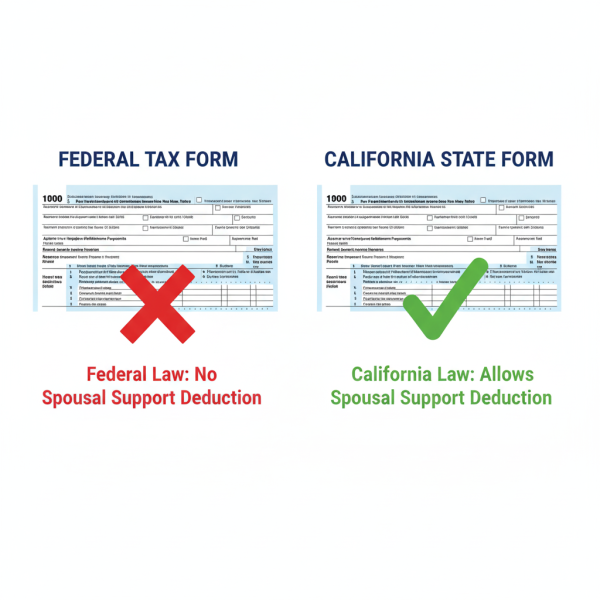
    This created an unusual situation where you have one tax treatment for federal taxes and a completely different tax treatment for California state taxes. The same spousal support payment is not deductible on your federal return, but is deductible on your California return. It’s not federally taxable income to the recipient, but it is taxable income for California purposes.

    The big change starting January 1, 2026

    California recently enacted Senate Bill 711, which will conform California’s tax treatment of spousal support to federal law. For any spousal support agreement entered into after December 31, 2025, spousal support will be neither deductible for the paying spouse nor taxable income for the receiving spouse at both the federal and California state level.

    This change also applies to modifications of existing agreements made after December 31, 2025, but only if the modification expressly provides that Senate Bill 711 applies. If you have an existing spousal support agreement in California and you modify it after 2025 without specifically invoking SB 711, the old tax treatment should continue to apply to that agreement.

    What this means if you’re finalizing your divorce before 2026

    If your divorce agreement is executed before January 1, 2026, you’ll still have the split tax treatment I described. Let me use real numbers to show how this works. Say you’re paying $3,000 per month in spousal support, or $36,000 per year. You’re in the 24% federal tax bracket and the 9.3% California tax bracket.

    For your federal taxes, you get no deduction for that $36,000. It comes out of your after-tax income. If you’re earning $150,000, you’re taxed on the full $150,000 at the federal level.

    For your California taxes, you can deduct that $36,000. So your California taxable income would be $114,000, saving you about $3,348 in California state taxes.

    Now flip to the receiving spouse. They receive $36,000 in spousal support. For federal tax purposes, they pay no tax on it—it’s tax-free income. For California tax purposes, they have to report it as income and pay California income tax on it. If they’re in the 9.3% California bracket, they’d owe about $3,348 in California taxes on that support.

    See how this works? The federal and state treatments are mirror images, but the confusion of tracking this split treatment is real. And it affects how much support each spouse actually values.

    Split-screen showing federal tax form with no deduction and California form with deduction checkmark, highlighting tax differences for California Spousal Support. Call Equitable Mediation at (877) 732-6682 for guidance on managing spousal support taxes.

    What this means if you’re finalizing your divorce in 2026 or later

    If your divorce agreement is executed on or after January 1, 2026, the tax treatment becomes much simpler. Spousal support will be completely tax-neutral. The paying spouse gets no deduction at either the federal or state level. The receiving spouse owes no tax on the support at either the federal or state level.

    This simplification eliminates the confusion of tracking different treatments for federal and state returns, but it also changes the economics of spousal support negotiations. The paying spouse will be paying entirely with after-tax dollars and will receive no tax benefit whatsoever. The receiving spouse will be receiving entirely tax-free income.

    Important timing for California Spousal Support tax rules. Call Equitable Mediation at (877) 732-6682 to plan spousal support with optimal tax timing.

    The timing matters enormously

    If you’re in the middle of divorce negotiations and your case might extend into 2026, timing becomes a critical strategic consideration. Finalizing your agreement before December 31, 2025 means you’ll maintain the California deduction and taxable treatment. Finalizing after January 1, 2026 means you’ll have the simpler but potentially less tax-efficient fully tax-neutral treatment.

    Which is better? It depends entirely on your specific circumstances, your relative tax brackets, and your financial situations. In some cases, the California deduction provides real value that can make higher support amounts economically feasible. In other cases, the simplicity and predictability of the new tax-neutral treatment might be preferable.

    Man analyzing financial documents and calendar for strategic planning of California Spousal Support taxes. Call Equitable Mediation at (877) 732-6682 for expert alimony tax guidance.

    The negotiation implications are significant

    This change fundamentally affects how we need to think about spousal support negotiations, making a mediator with financial expertise even more invaluable. We need to think through the real after-tax economics of any support proposal under the specific tax regime that will apply to your agreement.

    For agreements finalized before 2026 with the split treatment, there’s still some tax efficiency to work with. The paying spouse receives a California state deduction, which effectively subsidizes part of the support through reduced state taxes. The receiving spouse pays California tax, but often at a lower rate. This creates some tax benefit that can be shared between spouses.

    For agreements finalized in 2026 or later with full tax neutrality, there’s no tax benefit to work with at all. The paying spouse is paying entirely with after-tax dollars with no deductions anywhere. This means they have less ability to pay higher amounts because they get no tax break whatsoever. From a paying spouse’s perspective, every dollar of support costs them a full dollar of earnings.

    From the receiving spouse’s perspective, they’re getting entirely tax-free money, which is valuable. But without the California deduction benefiting the paying spouse, there may be less money available to negotiate for in the first place.

    In mediation, I help couples calculate the real after-tax value of different support proposals under whichever tax regime will apply to their agreement. We can’t just look at the gross numbers—we need to understand what each spouse actually nets after all taxes are paid. This kind of analysis requires understanding the federal and California tax treatment and doing the math correctly for your specific timing.

    You can still choose not to take the California deduction (for pre-2026 agreements)

    For agreements finalized before January 1, 2026, you’re not required to take the California state tax deduction for spousal support. You can choose not to claim it as a deduction on your state taxes, which means the receiving spouse doesn’t have to report it as taxable income for California purposes. This essentially allows you to opt into the post-2025 treatment even if your agreement is finalized before 2026.

    Why would you ever choose not to take a tax deduction? There are actually several good reasons. Maybe you want to simplify your taxes and align your federal and state treatment. Maybe you’re negotiating a specific support amount and you’re willing to give up the California deduction in exchange for other concessions. Maybe you’re trying to structure your agreement in a way that will feel more fair and sustainable over time.

    In mediation, we can discuss whether it makes sense to opt out of the California tax treatment for pre-2026 agreements. We can run the numbers both ways and see which approach creates better overall outcomes for your specific situation. This flexibility is one of the advantages of negotiating cooperatively—you can structure your agreement in ways that make the most sense for your circumstances.

    The complexity of doing your taxes

    For agreements finalized before 2026, let me be honest about the practical challenges you’ll face at tax time. You’ll need to complete your federal tax return treating spousal support as neither deductible nor taxable. Then you’ll need to complete your California return with spousal support treated as deductible for the payer and taxable for the recipient.

    Your tax software should handle this automatically if you input the information correctly, but you need to make sure you’re categorizing things properly. If you work with an accountant, they need to understand this split treatment. Not all tax preparers are entirely up to speed on the spousal support rules, particularly this federal-state split.

    For agreements finalized in 2026 or later, your taxes become much simpler. You’ll treat spousal support the same way on both your federal and California returns—as neither deductible nor taxable. This eliminates much of the confusion and potential for error.

    You’ll still need to report spousal support correctly to the IRS and the Franchise Tax Board. There are specific forms and reporting requirements. Getting this wrong can trigger audits or notices you’ll need to address.

    Documentation matters

    Because of the tax implications and the timing of this change, documenting your spousal support agreement is more critical than ever. Your divorce settlement agreement should clearly specify the amount of support, the duration, and the date the agreement is executed. The execution date determines which tax regime applies to your agreement.

    If your agreement is executed before January 1, 2026, you should specify whether you’re opting out of the California tax treatment. If you modify an existing agreement after December 31, 2025, you need to specify whether the modification expressly invokes Senate Bill 711 and adopts the new tax-neutral treatment.

    If you’re taking the California deduction for a pre-2026 agreement, you need to be prepared to document that these payments meet the legal requirements for deductible alimony. They must be made pursuant to a divorce or separation agreement, paid to or on behalf of your ex-spouse, and designated as spousal support.

    Why my financial expertise matters here

    I’m not a CPA or a tax attorney, and I always recommend clients work with qualified tax professionals for specific tax advice. But having a mediator who understands the financial and tax implications of spousal support arrangements is invaluable when negotiating your agreement, especially during this transition period.

    I can help you understand the after-tax economics of different proposals under the tax regime that will apply to your agreement. I can explain how the timing of your agreement execution affects your tax treatment. I can help you think through whether it makes sense to finalize before or after the 2026 change, or whether to opt out of California tax treatment for a pre-2026 agreement. I can structure support arrangements that are tax-efficient and compliant with the rules.

    This is precisely where my MBA in Finance and my training from the Institute for Divorce Financial Analysis come into play. The tax implications of spousal support aren’t just technical details—they’re fundamental to determining what amounts are fair and sustainable. Getting this wrong can cost you thousands of dollars or create arrangements that don’t actually work financially.

    The bottom line on taxes and support

    The tax treatment of spousal support in California is changing in a major way. Through December 31, 2025, California has a split treatment where federal and state law diverge. Starting January 1, 2026, California will conform to federal law and spousal support will be tax-neutral at both levels for new agreements.

    This transition creates both complexity and opportunity. The timing of your agreement execution matters enormously. Understanding whether the split treatment or the tax-neutral treatment applies to your situation is critical to negotiating fair spousal support. You need to look beyond the gross numbers and understand the after-tax reality under the specific tax regime that applies to your agreement.

    In mediation, we work through these tax implications together so you can make informed decisions about support that reflect the real financial impact on both of you. The tax rules are complex and changing, but your agreement doesn’t have to be confusing. It just needs to be thoughtfully structured by someone like me who understands what’s at stake and can help you navigate this transition effectively.

    [/fusion_text][/fusion_builder_column][fusion_builder_column type=”1_1″ layout=”1_1″ align_self=”auto” content_layout=”column” align_content=”flex-start” valign_content=”flex-start” content_wrap=”wrap” center_content=”no” column_tag=”div” target=”_self” hide_on_mobile=”medium-visibility,large-visibility” sticky_display=”normal,sticky” order_medium=”0″ order_small=”0″ margin_top=”60px” margin_bottom=”60px” hover_type=”none” border_style=”solid” box_shadow=”no” box_shadow_blur=”0″ box_shadow_spread=”0″ background_type=”single” gradient_start_position=”0″ gradient_end_position=”100″ gradient_type=”linear” radial_direction=”center center” linear_angle=”180″ lazy_load=”none” background_position=”left top” background_repeat=”no-repeat” background_blend_mode=”none” background_slider_skip_lazy_loading=”no” background_slider_loop=”yes” background_slider_pause_on_hover=”no” background_slider_slideshow_speed=”5000″ background_slider_animation=”fade” background_slider_direction=”up” background_slider_animation_speed=”800″ sticky=”off” sticky_devices=”small-visibility,medium-visibility,large-visibility” absolute=”off” filter_type=”regular” filter_hover_element=”self” filter_hue_hover=”0″ filter_saturation_hover=”100″ filter_brightness_hover=”100″ filter_contrast_hover=”100″ filter_invert_hover=”0″ filter_sepia_hover=”0″ filter_opacity_hover=”100″ filter_blur_hover=”0″ filter_hue=”0″ filter_saturation=”100″ filter_brightness=”100″ filter_contrast=”100″ filter_invert=”0″ filter_sepia=”0″ filter_opacity=”100″ filter_blur=”0″ transform_type=”regular” transform_hover_element=”self” transform_scale_x_hover=”1″ transform_scale_y_hover=”1″ transform_translate_x_hover=”0″ transform_translate_y_hover=”0″ transform_rotate_hover=”0″ transform_skew_x_hover=”0″ transform_skew_y_hover=”0″ transform_scale_x=”1″ transform_scale_y=”1″ transform_translate_x=”0″ transform_translate_y=”0″ transform_rotate=”0″ transform_skew_x=”0″ transform_skew_y=”0″ transition_duration=”300″ transition_easing=”ease” motion_effects=”W10=” scroll_motion_devices=”small-visibility,medium-visibility,large-visibility” animation_direction=”left” animation_speed=”0.3″ animation_delay=”0″ last=”true” border_position=”all” first=”true” min_height=”” link=””][fusion_builder_row_inner][fusion_builder_column_inner type=”1_1″ layout=”1_1″ align_self=”auto” content_layout=”column” align_content=”flex-start” valign_content=”flex-start” content_wrap=”wrap” center_content=”no” column_tag=”div” target=”_self” hide_on_mobile=”small-visibility,medium-visibility,large-visibility” sticky_display=”normal,sticky” order_medium=”0″ order_small=”0″ padding_top=”50px” padding_right=”20px” padding_bottom=”50px” padding_left=”20px” hover_type=”none” border_style=”solid” border_radius_top_left=”30px” border_radius_top_right=”30px” border_radius_bottom_right=”30px” border_radius_bottom_left=”30px” box_shadow=”no” box_shadow_blur=”0″ box_shadow_spread=”0″ background_type=”single” background_color=”#f4f3ef” gradient_start_position=”0″ gradient_end_position=”100″ gradient_type=”linear” radial_direction=”center center” linear_angle=”180″ lazy_load=”none” background_position=”left top” background_repeat=”no-repeat” background_blend_mode=”none” background_slider_skip_lazy_loading=”no” background_slider_loop=”yes” background_slider_pause_on_hover=”no” background_slider_slideshow_speed=”5000″ background_slider_animation=”fade” background_slider_direction=”up” background_slider_animation_speed=”800″ sticky=”off” sticky_devices=”small-visibility,medium-visibility,large-visibility” absolute=”off” filter_type=”regular” filter_hover_element=”self” filter_hue_hover=”0″ filter_saturation_hover=”100″ filter_brightness_hover=”100″ filter_contrast_hover=”100″ filter_invert_hover=”0″ filter_sepia_hover=”0″ filter_opacity_hover=”100″ filter_blur_hover=”0″ filter_hue=”0″ filter_saturation=”100″ filter_brightness=”100″ filter_contrast=”100″ filter_invert=”0″ filter_sepia=”0″ filter_opacity=”100″ filter_blur=”0″ transform_type=”regular” transform_hover_element=”self” transform_scale_x_hover=”1″ transform_scale_y_hover=”1″ transform_translate_x_hover=”0″ transform_translate_y_hover=”0″ transform_rotate_hover=”0″ transform_skew_x_hover=”0″ transform_skew_y_hover=”0″ transform_scale_x=”1″ transform_scale_y=”1″ transform_translate_x=”0″ transform_translate_y=”0″ transform_rotate=”0″ transform_skew_x=”0″ transform_skew_y=”0″ transition_duration=”300″ transition_easing=”ease” motion_effects=”W10=” scroll_motion_devices=”small-visibility,medium-visibility,large-visibility” animation_direction=”left” animation_speed=”0.3″ animation_delay=”0″ last=”true” border_position=”all” first=”true” min_height=”” link=””][fusion_code]ICA8c3R5bGU+CiAgIAoKICAgIC5zbGlkZXItY29udGFpbmVyIHsKICAgICAgLyptYXgtd2lkdGg6IDcwMHB4OyAqLwogICAgbWFyZ2luOiAwIGF1dG87CiAgICBwb3NpdGlvbjogcmVsYXRpdmU7CiAgICAvKiBiYWNrZ3JvdW5kOiB3aGl0ZTsgKi8KICAgIGJvcmRlci1yYWRpdXM6IDE2cHg7CiAgICAvKiBib3gtc2hhZG93OiAwIDAgMTBweCByZ2JhKDAsIDAsIDAsIDAuMSk7ICovCiAgICBwYWRkaW5nOiAyMHB4IDUwcHg7CiAgICB0ZXh0LWFsaWduOiBsZWZ0OwogICAgb3ZlcmZsb3c6IGhpZGRlbjsKICAgIC8qIGhlaWdodDogNTAwcHg7Ki8KICAgIH0KCiAgICAuc2xpZGUgewogICAgICBwb3NpdGlvbjogYWJzb2x1dGU7CiAgICAgIHRvcDogMDsKICAgICAgbGVmdDogMDsKICAgICAgd2lkdGg6IDEwMCU7CiAgICAgIG9wYWNpdHk6IDA7CiAgICAgIHRyYW5zZm9ybTogdHJhbnNsYXRlWCgxMDAlKTsKICAgICAgdHJhbnNpdGlvbjogYWxsIDAuNXMgZWFzZTsKICAgICAgdmlzaWJpbGl0eTogaGlkZGVuOwogICAgfQoKICAgIC5zbGlkZS5hY3RpdmUgewogICAgICBvcGFjaXR5OiAxOwogICAgICB0cmFuc2Zvcm06IHRyYW5zbGF0ZVgoMCk7CiAgICAgIHZpc2liaWxpdHk6IHZpc2libGU7CiAgICAgIHBvc2l0aW9uOiByZWxhdGl2ZTsKICAgIH0KCiAgICAudGl0bGUgewogICAgY29sb3I6ICMyNDdkYjQ7CiAgICBmb250LXNpemU6IDI2cHg7CiAgICBmb250LXdlaWdodDogNjAwOwogICAgbWFyZ2luLWJvdHRvbTogMThweDsKICAgIHRleHQtYWxpZ246IGNlbnRlcjsKICAgIGxpbmUtaGVpZ2h0OiAxLjJlbTsKfQoKICAgIC5jb250ZW50IHsKICAgICAgZm9udC1zaXplOiAxNnB4OwogICAgICBjb2xvcjogIzMzMzsKICAgICAgbGluZS1oZWlnaHQ6IDEuNjsKICAgIH0KCQoJc3Bhbi5zZXAgewogICAgcGFkZGluZy1sZWZ0OiAyNXB4OwogICAgcGFkZGluZy1yaWdodDogMjVweDsKICAgIGNvbG9yOiAjM2EyZjJhOwogICAgZm9udC1zaXplOiAxOHB4OwogICAgZm9udC13ZWlnaHQ6IG5vcm1hbDsKfQoKICAgIC5hdXRob3IgewogICAgICBkaXNwbGF5OiBmbGV4OwogICAgYWxpZ24taXRlbXM6IGNlbnRlcjsKICAgIG1hcmdpbi10b3A6IDMwcHg7CiAgICBqdXN0aWZ5LWNvbnRlbnQ6IGNlbnRlcjsKICAgIH0KCiAgICAuYXV0aG9yIGltZyB7CiAgICAgIGJvcmRlci1yYWRpdXM6IDUwJTsKICAgICAgd2lkdGg6IDcwcHg7CiAgICAgIGhlaWdodDogNzBweDsKICAgICAgbWFyZ2luLXJpZ2h0OiAxNXB4OwogICAgfQoJCgkuYXV0aG9yLWRldGFpbHMgcCB7CiAgICBtYXJnaW4tYm90dG9tOiAwcHg7Cn0KCiAgICAuYXV0aG9yLWRldGFpbHMgewogICAgICBmb250LXNpemU6IDE1cHg7CiAgICB9CgogICAgLmF1dGhvci1kZXRhaWxzIHN0cm9uZyB7CiAgICAgIGNvbG9yOiAjMjQ3MWViOwogICAgfQoKICAgIC5uYXYgewogICAgICBwb3NpdGlvbjogYWJzb2x1dGU7CiAgICAgIHRvcDogNTAlOwogICAgICB0cmFuc2Zvcm06IHRyYW5zbGF0ZVkoLTUwJSk7CiAgICAgIGZvbnQtc2l6ZTogMzBweDsKICAgICAgY29sb3I6ICNhYWE7CiAgICAgIGN1cnNvcjogcG9pbnRlcjsKICAgICAgei1pbmRleDogMTsKICAgIH0KCiAgICAubmF2LmxlZnQgewogICAgICBsZWZ0OiAyMHB4OwogICAgfQoKICAgIC5uYXYucmlnaHQgewogICAgICByaWdodDogMjBweDsKICAgIH0KCiAgICAubmF2OmhvdmVyIHsKICAgICAgY29sb3I6ICMyNDcxZWI7CiAgICB9CgkKCS5hdXRob3ItZGV0YWlscyAuaGVhZC1kZXN7Cgljb2xvcjogIzI0N2RiNDsgCglmb250LXNpemU6IDMwcHg7IAoJZm9udC13ZWlnaHQ6IDUwMDsKCWZvbnQtZmFtaWx5OiJETSBTZXJpZiBEaXNwbGF5IiwgQXJpYWwsIEhlbHZldGljYSwgc2Fucy1zZXJpZjsKCX0KCQoJLmF1dGhvci1kZXRhaWxzIC5zdWItZGVzewoJbGV0dGVyLXNwYWNpbmc6IDNweDsgCgl0ZXh0LXRyYW5zZm9ybTogdXBwZXJjYXNlOyAKCWZvbnQtc2l6ZTogMTZweDsgCgljb2xvcjogIzNhMmYyYTsKCX0KICA8L3N0eWxlPgoKPGRpdiBjbGFzcz0ic2xpZGVyLWNvbnRhaW5lciI+CiAgPCEtLSBTbGlkZSAxIC0tPgogIDxkaXYgY2xhc3M9InNsaWRlIGFjdGl2ZSI+CiAgICA8ZGl2IGNsYXNzPSJjb250ZW50Ij4KICAgICAgPHA+4oCcWW91IG1heSBoYXZlIHJlc2VhcmNoZWQgaG93IGFsaW1vbnkgd29ya3MgaW4geW91ciBzdGF0ZS4gQnV0IGluIG15IGV4cGVyaWVuY2UsIHJlZ2FyZGxlc3Mgb2Ygd2hldGhlciBhIHN0YXRlIG9mZmVycyBndWlkYW5jZSBvbiBob3cgdG8gcmVzb2x2ZSBhbGltb255LCBvZnRlbiwgY291cGxlcyBuZWdvdGlhdGUgdGhlaXIgb3duIGFncmVlbWVudCB0YWlsb3JlZCB0byB0aGVpciB1bmlxdWUgc2l0dWF0aW9uIGFuZCBjaXJjdW1zdGFuY2VzLjwvcD4KICAgICAgPHA+U28geW91IGhhdmUgYSBsb3Qgb2YgZmxleGliaWxpdHkgYW5kIGNhbiBtYWludGFpbiBhIGxvdCBvZiBjb250cm9sIGlmIHlvdSBuZWdvdGlhdGUgdGhlIHRlcm1zIG9mIGFsaW1vbnkgb3V0IG9mIGNvdXJ0IHdpdGggdGhlIGhlbHAgb2YgYSBza2lsbGVkIHByb2Zlc3Npb25hbCB1c2luZyBhbiBhbHRlcm5hdGl2ZSBkaXNwdXRlIHJlc29sdXRpb24gcHJvY2VzcyBsaWtlIDxhIGhyZWY9Ii9yZXNvdXJjZXMvY29sbGFib3JhdGl2ZS1kaXZvcmNlLXZzLW1lZGlhdGlvbiIgcmVsPSJub29wZW5lciI+ZGl2b3JjZSBtZWRpYXRpb24gb3IgYSBjb2xsYWJvcmF0aXZlIGRpdm9yY2UgPC9hPi48L3A+CiAgICAgIDxwPllvdSBhbmQgeW91ciBzb29uLXRvLWJlIGV4LXNwb3VzZSB3aWxsIG1vcmUgbGlrZWx5IGNvbWUgdG8gYW4gYWxpbW9ueSBhcnJhbmdlbWVudCB0aGF0J3MgYWNjZXB0YWJsZSB0byBib3RoIG9mIHlvdS4iPHA+CiAgICA8L2Rpdj4KICAgIDxkaXYgY2xhc3M9ImF1dGhvciI+CiAgICAgIDxpbWcgc3JjPSIvd3AtY29udGVudC91cGxvYWRzLzIwMjUvMDYvZXF1aXRhYmxlLW1lZGlhdGlvbi10ZWFtLWpvZS1kaWxsb24ud2VicCIgYWx0PSJKb2UgRGlsbG9uIGhlYWRzaG90IiAvPgogICAgICA8ZGl2IGNsYXNzPSJhdXRob3ItZGV0YWlscyI+CiAgICAgICAgPHA+IDxzcGFuIGNsYXNzPSJoZWFkLWRlcyI+IEpvZSBEaWxsb248L3NwYW4+IDxzcGFuIGNsYXNzPSJzZXAiPnw8L3NwYW4+IDxzcGFuIGNsYXNzPSJzdWItZGVzIj5EaXZvcmNlIE1lZGlhdG9yICYgRm91bmRlcjwvc3Bhbj48L3A+CiAgICAgIDwvZGl2PgogICAgPC9kaXY+CiAgPC9kaXY+CiAgPCEtLSBBcnJvd3MgLS0+CiAgPCEtLSA8ZGl2IGNsYXNzPSJuYXYgbGVmdCIgb25jbGljaz0icHJldlNsaWRlKCkiPiYjMTAwOTQ7PC9kaXY+CiAgPGRpdiBjbGFzcz0ibmF2IHJpZ2h0IiBvbmNsaWNrPSJuZXh0U2xpZGUoKSI+JiMxMDA5NTs8L2Rpdj4gLS0+CjwvZGl2PgoKPHNjcmlwdD4KICBsZXQgY3VycmVudFNsaWRlID0gMDsKICBjb25zdCBzbGlkZXMgPSBkb2N1bWVudC5xdWVyeVNlbGVjdG9yQWxsKCcuc2xpZGUnKTsKCiAgZnVuY3Rpb24gc2hvd1NsaWRlKGluZGV4KSB7CiAgICBzbGlkZXMuZm9yRWFjaCgocywgaSkgPT4gewogICAgICBzLmNsYXNzTGlzdC5yZW1vdmUoJ2FjdGl2ZScpOwogICAgfSk7CiAgICBzbGlkZXNbaW5kZXhdLmNsYXNzTGlzdC5hZGQoJ2FjdGl2ZScpOwogIH0KCiAgZnVuY3Rpb24gbmV4dFNsaWRlKCkgewogICAgY3VycmVudFNsaWRlID0gKGN1cnJlbnRTbGlkZSArIDEpICUgc2xpZGVzLmxlbmd0aDsKICAgIHNob3dTbGlkZShjdXJyZW50U2xpZGUpOwogIH0KCiAgZnVuY3Rpb24gcHJldlNsaWRlKCkgewogICAgY3VycmVudFNsaWRlID0gKGN1cnJlbnRTbGlkZSAtIDEgKyBzbGlkZXMubGVuZ3RoKSAlIHNsaWRlcy5sZW5ndGg7CiAgICBzaG93U2xpZGUoY3VycmVudFNsaWRlKTsKICB9Cjwvc2NyaXB0Pg==[/fusion_code][/fusion_builder_column_inner][/fusion_builder_row_inner][/fusion_builder_column][/fusion_builder_row][/fusion_builder_container][fusion_builder_container type=”flex” hundred_percent=”no” hundred_percent_height=”no” hundred_percent_height_scroll=”no” align_content=”stretch” flex_align_items=”flex-start” flex_justify_content=”flex-start” flex_wrap=”wrap” hundred_percent_height_center_content=”yes” equal_height_columns=”no” container_tag=”div” hide_on_mobile=”small-visibility,medium-visibility,large-visibility” status=”published” padding_bottom_medium=”50px” padding_bottom_small=”30px” padding_top=”100px” padding_bottom=”100px” border_style=”solid” box_shadow=”no” box_shadow_blur=”0″ box_shadow_spread=”0″ gradient_start_position=”0″ gradient_end_position=”100″ gradient_type=”linear” radial_direction=”center center” linear_angle=”180″ background_position=”center center” background_repeat=”no-repeat” fade=”no” background_parallax=”none” enable_mobile=”no” parallax_speed=”0.3″ background_blend_mode=”none” background_slider_skip_lazy_loading=”no” background_slider_loop=”yes” background_slider_pause_on_hover=”no” background_slider_slideshow_speed=”5000″ background_slider_animation=”fade” background_slider_direction=”up” background_slider_animation_speed=”800″ video_aspect_ratio=”16:9″ video_loop=”yes” video_mute=”yes” pattern_bg=”none” pattern_bg_style=”default” pattern_bg_opacity=”100″ pattern_bg_blend_mode=”normal” mask_bg=”none” mask_bg_style=”default” mask_bg_opacity=”100″ mask_bg_transform=”left” mask_bg_blend_mode=”normal” absolute=”off” absolute_devices=”small,medium,large” sticky=”off” sticky_devices=”small-visibility,medium-visibility,large-visibility” sticky_transition_offset=”0″ scroll_offset=”0″ animation_direction=”left” animation_speed=”0.3″ animation_delay=”0″ filter_hue=”0″ filter_saturation=”100″ filter_brightness=”100″ filter_contrast=”100″ filter_invert=”0″ filter_sepia=”0″ filter_opacity=”100″ filter_blur=”0″ filter_hue_hover=”0″ filter_saturation_hover=”100″ filter_brightness_hover=”100″ filter_contrast_hover=”100″ filter_invert_hover=”0″ filter_sepia_hover=”0″ filter_opacity_hover=”100″ filter_blur_hover=”0″ admin_label=”FAQ” admin_toggled=”no”][fusion_builder_row][fusion_builder_column type=”1_1″ layout=”1_1″ align_self=”auto” content_layout=”column” align_content=”flex-start” valign_content=”flex-start” content_wrap=”wrap” center_content=”no” column_tag=”div” target=”_self” hide_on_mobile=”small-visibility,medium-visibility,large-visibility” sticky_display=”normal,sticky” order_medium=”0″ order_small=”0″ hover_type=”none” border_style=”solid” box_shadow=”no” box_shadow_blur=”0″ box_shadow_spread=”0″ background_type=”single” gradient_start_position=”0″ gradient_end_position=”100″ gradient_type=”linear” radial_direction=”center center” linear_angle=”180″ lazy_load=”none” background_position=”left top” background_repeat=”no-repeat” background_blend_mode=”none” background_slider_skip_lazy_loading=”no” background_slider_loop=”yes” background_slider_pause_on_hover=”no” background_slider_slideshow_speed=”5000″ background_slider_animation=”fade” background_slider_direction=”up” background_slider_animation_speed=”800″ sticky=”off” sticky_devices=”small-visibility,medium-visibility,large-visibility” absolute=”off” filter_type=”regular” filter_hover_element=”self” filter_hue_hover=”0″ filter_saturation_hover=”100″ filter_brightness_hover=”100″ filter_contrast_hover=”100″ filter_invert_hover=”0″ filter_sepia_hover=”0″ filter_opacity_hover=”100″ filter_blur_hover=”0″ filter_hue=”0″ filter_saturation=”100″ filter_brightness=”100″ filter_contrast=”100″ filter_invert=”0″ filter_sepia=”0″ filter_opacity=”100″ filter_blur=”0″ transform_type=”regular” transform_hover_element=”self” transform_scale_x_hover=”1″ transform_scale_y_hover=”1″ transform_translate_x_hover=”0″ transform_translate_y_hover=”0″ transform_rotate_hover=”0″ transform_skew_x_hover=”0″ transform_skew_y_hover=”0″ transform_scale_x=”1″ transform_scale_y=”1″ transform_translate_x=”0″ transform_translate_y=”0″ transform_rotate=”0″ transform_skew_x=”0″ transform_skew_y=”0″ transition_duration=”300″ transition_easing=”ease” motion_effects=”W10=” scroll_motion_devices=”small-visibility,medium-visibility,large-visibility” animation_direction=”left” animation_speed=”0.3″ animation_delay=”0″ last=”true” border_position=”all” first=”true” min_height=”” link=””][fusion_title title_type=”text” scroll_reveal_effect=”color_change” scroll_reveal_basis=”chars” scroll_reveal_behavior=”always” scroll_reveal_duration=”500″ scroll_reveal_stagger=”200″ scroll_reveal_delay=”0″ scroll_reveal_above_fold=”yes” marquee_direction=”left” marquee_mask_edges=”no” marquee_speed=”15000″ rotation_effect=”bounceIn” display_time=”1200″ highlight_effect=”circle” loop_animation=”once” highlight_animation_duration=”1500″ highlight_width=”9″ highlight_smudge_effect=”no” highlight_top_margin=”0″ title_link=”off” link_target=”_self” hide_on_mobile=”small-visibility,medium-visibility,large-visibility” sticky_display=”normal,sticky” content_align_small=”left” content_align=”left” size=”2″ font_size=”38px” text_color=”var(–awb-color4)” text_shadow=”no” text_shadow_blur=”0″ text_stroke=”no” text_stroke_size=”1″ text_overflow=”none” margin_top=”0px” margin_bottom=”60px” gradient_font=”no” gradient_start_position=”0″ gradient_end_position=”100″ gradient_type=”linear” radial_direction=”center center” linear_angle=”180″ style_type=”default” animation_type=”fade” animation_direction=”static” animation_speed=”1.0″ animation_delay=”0.5″]

    FAQs About Alimony in California

    [/fusion_title][fusion_accordion type=”toggles” hide_on_mobile=”small-visibility,medium-visibility,large-visibility” boxed_mode=”yes” border_size=”2″ border_color=”#d8e8f2″ hover_color=”#f4f3ef” padding_top=”10px” padding_right=”5px” padding_bottom=”10px” padding_left=”5px” title_tag=”h4″ fusion_font_family_title_font=”Poppins” fusion_font_variant_title_font=”600″ title_font_size=”18px” title_color=”var(–awb-color6)” icon_size=”25px” icon_color=”#d8e8f2″ icon_boxed_mode=”no” icon_box_color=”#d8e8f2″ icon_alignment=”right” content_font_size=”16px” content_color=”var(–awb-color6)” toggle_hover_accent_color=”var(–awb-color6)” toggle_active_accent_color=”var(–awb-color6)”][fusion_toggle title=”1. What is alimony in California, and how does it work?” open=”no” title_color=”var(–awb-color8)” content_color=”var(–awb-color8)”]

    Alimony, legally referred to as spousal support or maintenance in California, is a court-ordered financial payment that one spouse provides to the other during separation, divorce proceedings, or after the marriage has been dissolved. The fundamental purpose of these support payments is to assist the lower-earning spouse in maintaining a reasonable standard of living and achieving financial independence following the end of the marital relationship. California Family Code sections 4320 through 4360 govern how spousal maintenance operates within the state’s family law system. The process works in two distinct phases: temporary support during divorce proceedings (sometimes called pendente lite support) and long-term or permanent support established in the final divorce judgment. Courts evaluate numerous factors when making support determinations, including each party’s earning capacity, the marital standard of living, the duration of the marriage, and the financial needs and abilities of both spouses. Unlike child support, which follows specific calculation guidelines, spousal maintenance awards involve considerable judicial discretion based on the unique circumstances of each divorcing couple.

    [/fusion_toggle][fusion_toggle title=”2. How long does alimony last in California?” open=”no” title_color=”var(–awb-color8)” content_color=”var(–awb-color8)”]

    The duration of spousal support payments in California primarily depends on the length of the marriage and the type of support ordered. For marriages lasting fewer than ten years (considered short-term marriages), California courts commonly establish support duration at approximately half the length of the marriage. For example, if a couple was married for six years, the supported spouse might receive maintenance for roughly three years, although this is a general guideline rather than a strict rule. Marriages of ten years or longer are classified as long-duration marriages under California Family Code Section 4336, and these cases receive different treatment. For long-duration marriages, judges retain jurisdiction indefinitely and cannot set a definite termination date at the time of judgment, meaning support could potentially continue for many years depending on circumstances. However, this does not guarantee lifetime alimony; instead, it means the court can revisit and modify the support arrangement as long as the order remains active. Support automatically terminates upon certain events, including the death of either party, the remarriage of the supported spouse, or when the court determines the supported spouse no longer needs assistance or has become self-supporting. The reasonable period for support is determined by how long it would take the supported spouse to obtain the education, training, or work experience necessary to become financially independent.

    [/fusion_toggle][fusion_toggle title=”3. What factors do California courts consider when determining alimony?” open=”no” title_color=”var(–awb-color8)” content_color=”var(–awb-color8)”]

    California judges must evaluate an extensive list of statutory factors outlined in Family Code Section 4320 when determining both the amount and duration of long-term spousal support. These mandatory considerations include the marketable skills and earning capacity of each spouse, along with the job market for those particular skills and any time or expenses required for the supported spouse to acquire education or training for employment. Courts examine the extent to which the supported spouse’s earning capacity was impaired by periods of unemployment during the marriage to permit devotion to domestic duties, recognizing career sacrifices made for the family’s benefit. The standard of living established during the marriage carries significant weight, as courts attempt to allow both parties to maintain a lifestyle reasonably comparable to what they enjoyed while married. Each party’s assets, debts, income from all sources, and overall financial needs are analyzed in detail. The court also considers the duration of the marriage, recognizing that longer marriages typically warrant longer support obligations. The age and health of both spouses factor into determinations, as physical or mental conditions may affect earning ability and financial needs. The ability of the supporting spouse to pay support while meeting their own reasonable needs is balanced against the needs of the spouse seeking support. Additional factors include documented evidence of domestic violence, the balance of hardships to each party, and the goal that the supported spouse become self-supporting within a reasonable period. Tax consequences, though changed by recent federal law, remain relevant for California state tax purposes. Finally, judges may consider any other factors deemed just and equitable in the particular circumstances of the case.

    [/fusion_toggle][fusion_toggle title=”4. Is there a formula for calculating spousal support in California?” open=”no” title_color=”var(–awb-color8)” content_color=”var(–awb-color8)”]

    California employs different approaches for temporary versus permanent spousal support calculations. For temporary support during divorce proceedings, most counties use a computer-based guideline formula, often called the “DissoMaster” or “XSpouse” calculator, which generates a support amount based primarily on the parties’ incomes and certain deductions. A common rough estimate suggests taking 35 to 45 percent of the higher earner’s income and subtracting 40 to 50 percent of the lower earner’s income, though actual calculations involve more complexity. This computerized approach provides consistency and predictability during the interim period while the divorce is pending. However, for long-term or permanent spousal support established in the final divorce judgment, California law explicitly prohibits using a formula. Instead, it requires judges to apply the comprehensive Family Code Section 4320 factors discussed above. Courts must consider each statutory factor and make specific findings about the circumstances of the marriage, earning capacities, needs, standard of living, and other relevant considerations. This means there is no mathematical formula or calculator that can definitively determine permanent support amounts; instead, each case requires individualized analysis of the unique facts and circumstances. The judge exercises considerable discretion in weighing these factors and determining what constitutes a fair and reasonable support arrangement. Spouses can negotiate and agree upon any support amount and duration they find mutually acceptable. Still, if they cannot reach an agreement, the judge must use the multi-factor analysis rather than any predetermined calculation to establish the support order.

    [/fusion_toggle][fusion_toggle title=”5. What is the 10-year rule for alimony in California?” open=”no” title_color=”var(–awb-color8)” content_color=”var(–awb-color8)”]

    The widely misunderstood “ten-year rule” refers to how California courts treat marriages of long duration, defined explicitly in California Family Code Section 4336 as marriages lasting ten years or more from the date of marriage to the date of separation. The misconception is that crossing the ten-year threshold automatically guarantees lifetime alimony payments, but this is legally incorrect. What actually happens for marriages of long duration is that the court retains jurisdiction to review and modify spousal support orders indefinitely, meaning there is no automatic cutoff date for the court’s authority to revisit support. For marriages under ten years, courts commonly set support duration at approximately half the marriage length. Once that period expires, the court generally loses jurisdiction unless the order explicitly reserves jurisdiction. In contrast, for long-duration marriages, even though the judge cannot set a definite termination date at the time of judgment, they can establish a review date when the supported spouse must demonstrate continued need for support or face termination. California public policy has evolved away from the outdated concept of permanent lifetime support, as recognized by case law emphasizing that spousal support should last only as long as reasonably necessary for the supported spouse to become self-supporting. The ten-year milestone is significant because it affects the court’s ongoing jurisdiction over support matters, allowing for continued review and modification based on changing circumstances. Still, it does not create an entitlement to indefinite support regardless of circumstances. Factors such as retirement, remarriage, cohabitation, changes in income, or the supported spouse achieving self-sufficiency can all lead to modification or termination even in long-duration marriages.

    [/fusion_toggle][fusion_toggle title=”6. Does remarriage or cohabitation affect alimony payments in California?” open=”no” title_color=”var(–awb-color8)” content_color=”var(–awb-color8)”]

    Remarriage and cohabitation have distinctly different legal effects on spousal support obligations in California. Under California Family Code Section 4337, if the spouse receiving support remarries, spousal support automatically terminates without requiring a court hearing or further legal proceedings. This automatic termination reflects the legal presumption that the new spouse assumes financial responsibility for supporting the remarried party. The supported spouse has a legal obligation to notify the paying spouse about the remarriage; failure to do so can result in a court order requiring repayment of support improperly received after remarriage. This automatic termination rule applies unless the parties’ divorce settlement agreement states explicitly otherwise—spouses can negotiate arrangements where support continues despite remarriage, though this is uncommon. Past-due support obligations and any vested lump-sum payments remain enforceable despite remarriage. Cohabitation—living with a new romantic partner without marriage—does not automatically terminate support but can provide grounds for modification or termination. Under California Family Code Section 4323, cohabitation with a non-marital partner may be considered a changed circumstance that justifies reducing or ending support payments. The paying spouse must file a motion with the court requesting modification and demonstrate that the supported spouse is cohabitating with a partner in a relationship resembling marriage. The court examines whether cohabitation has reduced the supported spouse’s financial needs because they share living expenses and receive support from their new partner. Simply having a roommate does not necessarily qualify, as courts look for evidence of a romantic, committed relationship involving mutual financial support and sharing of resources. The supported spouse can rebut the presumption by proving they still require support despite the living arrangement. The burden falls on the paying spouse to prove that circumstances have changed sufficiently to warrant modification.

    [/fusion_toggle][fusion_toggle title=”7. Can alimony be modified or terminated in California?” open=”no” title_color=”var(–awb-color8)” content_color=”var(–awb-color8)”]California law permits both modification and termination of spousal support orders when circumstances significantly change. However, the process and requirements differ based on the type of support and the duration of marriage. Either spouse can request modification by filing a Request for Order with the family court that issued the original support judgment. The moving party must demonstrate a “material change of circumstances” since the original support order—substantial changes in either party’s financial situation that make the current support amount unfair or inappropriate. Examples of qualifying changes include the paying spouse experiencing involuntary job loss, significant income reduction, disability, or legitimate retirement (typically around age 65), which may justify decreasing support. Conversely, substantial income increases by either party might warrant modification—the paying spouse’s higher earnings could support increased payments, while the supported spouse’s improved income might justify reduction or termination. Health issues, severe illness, or disability affecting either party’s earning capacity or expenses can trigger modifications. The supported spouse’s failure to make reasonable efforts toward self-sufficiency despite court warnings (known as a Gavron warning under Family Code Section 4320) may lead to reduced support or termination. Courts can assign “imputed income” to a supported spouse who voluntarily remains unemployed or underemployed despite having marketable skills and available employment opportunities. Cohabitation with a new partner, as discussed above, can justify modification even without remarriage. For marriages under ten years, once the support order expires, courts generally lose jurisdiction to modify unless jurisdiction was specifically reserved. For marriages of extended duration (ten years or more), courts retain indefinite authority to review and modify support. Parties can also negotiate modification agreements outside of court, but court approval is required to make the changes legally enforceable. Temporary support orders during divorce proceedings can be modified more easily than final support orders. It’s important to note that modifications typically take effect only from the date of filing the request, not retroactively, so timing matters significantly.[/fusion_toggle][fusion_toggle title=”8. What are the tax implications of alimony payments in California?” open=”no” title_color=”var(–awb-color8)” content_color=”var(–awb-color8)”]

    The tax treatment of spousal support in California is undergoing a significant change that depends on when your divorce agreement is finalized. California recently enacted Senate Bill 711, which will conform California’s tax treatment of spousal support to federal law starting January 1, 2026.

    For divorce agreements or court orders executed on or after January 1, 2019 but before January 1, 2026, there is a split between federal and state tax treatment. Federal law eliminated the tax deduction for alimony payments made by the paying spouse, and recipients no longer report spousal support as taxable income on federal returns. However, California did not conform to these federal changes during this period. For California state income tax purposes, spousal support remained tax-deductible for the paying spouse on their California state return, and the receiving spouse had to report support payments as taxable income on their California state tax return. This created a disconnect between federal and state tax treatment, requiring taxpayers to make adjustments on Schedule CA when filing California returns to account for the different treatment of alimony.

    Starting January 1, 2026, Senate Bill 711 changes this split treatment for new agreements. For any spousal support agreement entered into after December 31, 2025, spousal support will be neither deductible for the paying spouse nor taxable income for the receiving spouse at both the federal and California state level. This creates complete tax neutrality and eliminates the confusing split treatment that existed from 2019 through 2025. The new tax treatment also applies to modifications of existing agreements made after December 31, 2025, but only if the modification expressly provides that Senate Bill 711 applies. If you modify an existing pre-2026 agreement without specifically invoking SB 711, the old split tax treatment should continue to apply to that agreement.

    For divorce or separation agreements executed on or before December 31, 2018, the original tax rules continue to apply at both federal and state levels. Payments remain deductible for the payor and taxable income for the recipient on both federal and California returns, and this federal AGI (Adjusted Gross Income) figure carries over to the California return without adjustment.

    [/fusion_toggle][fusion_toggle title=”9. Who qualifies for alimony in California, and what disqualifies someone?” open=”no” awb-switch-editor-focus=”Qualification for spousal support in California is not automatic and depends on demonstrating financial need and disparity between the spouses’ circumstances. Generally, the spouse with significantly lower income or earning capacity may qualify for support if they can establish that they need financial assistance to maintain a reasonable standard of living while working toward self-sufficiency. Key qualifying factors include a demonstrable income disparity between spouses, where one spouse lacks sufficient property or income to maintain reasonable needs and the marital standard of living. The supported spouse must demonstrate a need for time to acquire education, training, or work experience that will make them employable and self-supporting, especially if they have sacrificed career opportunities during the marriage to fulfill domestic duties or support their partner’s career advancement. Marriages where one spouse is the primary wage earner and the other handles domestic responsibilities or raises children often result in support awards. Courts examine whether the requesting spouse’s earning capacity was diminished during the marriage due to an extended absence from the workforce. Several circumstances can disqualify someone from receiving spousal support or result in denial or termination. If the spouse requesting support has a comparable or higher income, substantial assets, or significant financial resources making support unnecessary, they likely won’t qualify. A valid prenuptial or postnuptial agreement waiving spousal support rights is generally enforceable, disqualifying the spouse from seeking court-ordered support unless the contract was executed under duress, fraud, or other circumstances making it unconscionable. Short-term marriages (especially those under three years) may not warrant support, or support duration may be very limited. Evidence that the supported spouse is not making reasonable good-faith efforts toward self-sufficiency despite court orders can lead to termination, especially with a Gavron warning in effect. Remarriage automatically disqualifies the former spouse from continued support. A supported spouse who has achieved self-sufficiency and no longer requires assistance will have support terminated. Receipt of substantial inheritance, lottery winnings, or other financial windfalls may eliminate the need for support. California law also provides that a spouse convicted of domestic violence against their partner may receive reduced support or be ordered to pay additional support beyond what would usually be awarded. Voluntary unemployment or underemployment when capable of working can result in imputed income, reducing or eliminating support eligibility.” title_color=”var(–awb-color8)” content_color=”var(–awb-color8)”]

    Qualification for spousal support in California is not automatic and depends on demonstrating financial need and disparity between the spouses’ circumstances. Generally, the spouse with significantly lower income or earning capacity may qualify for support if they can establish that they need financial assistance to maintain a reasonable standard of living while working toward self-sufficiency. Key qualifying factors include a demonstrable income disparity between spouses, where one spouse lacks sufficient property or income to maintain reasonable needs and the marital standard of living. The supported spouse must demonstrate a need for time to acquire education, training, or work experience that will make them employable and self-supporting, especially if they have sacrificed career opportunities during the marriage to fulfill domestic duties or support their partner’s career advancement. Marriages where one spouse is the primary wage earner and the other handles domestic responsibilities or raises children often result in support awards. Courts examine whether the requesting spouse’s earning capacity was diminished during the marriage due to an extended absence from the workforce. Several circumstances can disqualify someone from receiving spousal support or result in denial or termination. If the spouse requesting support has a comparable or higher income, substantial assets, or significant financial resources making support unnecessary, they likely won’t qualify. A valid prenuptial or postnuptial agreement waiving spousal support rights is generally enforceable, disqualifying the spouse from seeking court-ordered support unless the contract was executed under duress, fraud, or other circumstances making it unconscionable. Short-term marriages (especially those under three years) may not warrant support, or support duration may be very limited. Evidence that the supported spouse is not making reasonable good-faith efforts toward self-sufficiency despite court orders can lead to termination, especially with a Gavron warning in effect. Remarriage automatically disqualifies the former spouse from continued support. A supported spouse who has achieved self-sufficiency and no longer requires assistance will have support terminated. Receipt of substantial inheritance, lottery winnings, or other financial windfalls may eliminate the need for support. California law also provides that a spouse convicted of domestic violence against their partner may receive reduced support or be ordered to pay additional support beyond what would usually be awarded. Voluntary unemployment or underemployment when capable of working can result in imputed income, reducing or eliminating support eligibility.

    [/fusion_toggle][fusion_toggle title=”10. What are the different types of alimony in California?” open=”no” title_color=”var(–awb-color8)” content_color=”var(–awb-color8)”]

    California recognizes several distinct types of spousal support, each serving different purposes during and after the divorce process. Temporary spousal support, also known as pendente lite support (Latin for “pending litigation”), is awarded. At the same time, the divorce case is actively ongoing, from the time one party files for divorce until the final judgment is entered. This temporary support helps the lower-earning spouse maintain financial stability and pay living expenses during what can be a lengthy divorce process. Courts typically calculate temporary support using standardized guideline formulas based primarily on income differences between the spouses, providing quick determinations without extensive litigation over the numerous Family Code Section 4320 factors. Permanent or long-term spousal support is established in the final divorce judgment and continues after the divorce is finalized. Despite the term “permanent,” this support is not necessarily lifelong but instead continues for whatever duration the court deems appropriate based on a comprehensive analysis of all statutory factors. Long-term support requires a detailed examination of the 4320 factors and cannot be calculated by formula. Rehabilitative alimony is a specific type of support designed to provide financial assistance while the supported spouse obtains education, vocational training, or work experience necessary to become self-sufficient. Courts favor rehabilitative support that has a defined end date and a clear plan for the supported spouse to reenter the workforce or enhance their earning capacity. This type commonly applies in shorter marriages where the lower-earning spouse needs only temporary assistance to reestablish their career. Reimbursement spousal support compensates one spouse for financial contributions made toward the other spouse’s education, training, or career development during the marriage. For example, if one spouse worked to put the other through medical school with the understanding that both would benefit from increased future earnings, reimbursement support acknowledges those contributions. Lump-sum alimony provides a one-time payment or property transfer instead of ongoing monthly fees. This arrangement can give finality and avoid continued financial entanglement between former spouses. Modifiable versus non-modifiable support is another important distinction—parties can negotiate that support payments remain fixed and cannot be modified regardless of changed circumstances, or they can preserve the court’s jurisdiction to modify support as circumstances warrant. Couples can also agree to “Smith-Ostler” orders, which include support based on both a base amount and a percentage of any bonuses, commissions, or additional income earned by the paying spouse. However, these orders can be complicated to administer and enforce.

    [/fusion_toggle][/fusion_accordion][fusion_code]PHN0eWxlPgogIC8qIEZyb250IGVuZCBvbmx5OiBzdGFydCBoaWRkZW4gYW5kIGZhZGUgaW4gKi8KYm9keTpub3QoLmZ1c2lvbi1idWlsZGVyLWxpdmUpIC5mdXNpb24tcGFuZWwgewogIG9wYWNpdHk6IDA7CiAgdHJhbnNpdGlvbjogb3BhY2l0eSAwLjZzIGVhc2Utb3V0Owp9CmJvZHk6bm90KC5mdXNpb24tYnVpbGRlci1saXZlKSAuZnVzaW9uLXBhbmVsLmFuaW1hdGUgewogIG9wYWNpdHk6IDE7Cn0KCi8qIEJ1aWxkZXI6IGFsd2F5cyB2aXNpYmxlLCBldmVuIHdoZW4gdGhlIGNsYXNzIGlzIG9uIGEgY29sdW1uICovCmJvZHkuZnVzaW9uLWJ1aWxkZXItbGl2ZSAuZnVzaW9uLXBhbmVsLAouZnVzaW9uLWJ1aWxkZXItbGl2ZS1lbGVtZW50LmZ1c2lvbi1wYW5lbCwKLmZ1c2lvbi1idWlsZGVyLWxpdmUgLmZ1c2lvbi1idWlsZGVyLWNvbHVtbi5mdXNpb24tcGFuZWwsCi5mdXNpb24tYnVpbGRlci1saXZlIC5mdXNpb24tYnVpbGRlci1jb2x1bW4tb3V0ZXIuZnVzaW9uLXBhbmVsIHsKICBvcGFjaXR5OiAxICFpbXBvcnRhbnQ7Cn0KPC9zdHlsZT4KCjxzY3JpcHQ+Ci8qTGF6eSBMb2FkIEFuaW1hdGlvbiovCmRvY3VtZW50LmFkZEV2ZW50TGlzdGVuZXIoIkRPTUNvbnRlbnRMb2FkZWQiLCBmdW5jdGlvbiAoKSB7CiAgY29uc3QgZWxlbWVudHMgPSBkb2N1bWVudC5xdWVyeVNlbGVjdG9yQWxsKCIuZnVzaW9uLXBhbmVsIik7CgogIGZ1bmN0aW9uIGFuaW1hdGVPblNjcm9sbCgpIHsKICAgIGNvbnN0IHRyaWdnZXJQb2ludCA9IHdpbmRvdy5pbm5lckhlaWdodCAqICgzIC8gNCk7CgogICAgZWxlbWVudHMuZm9yRWFjaChlbCA9PiB7CiAgICAgIGNvbnN0IHJlY3QgPSBlbC5nZXRCb3VuZGluZ0NsaWVudFJlY3QoKTsKICAgICAgaWYgKHJlY3QudG9wIDw9IHRyaWdnZXJQb2ludCAmJiAhZWwuY2xhc3NMaXN0LmNvbnRhaW5zKCJhbmltYXRlIikpIHsKICAgICAgICBlbC5jbGFzc0xpc3QuYWRkKCJhbmltYXRlIik7CiAgICAgIH0KICAgIH0pOwogIH0KCiAgd2luZG93LmFkZEV2ZW50TGlzdGVuZXIoInNjcm9sbCIsIGFuaW1hdGVPblNjcm9sbCk7CiAgYW5pbWF0ZU9uU2Nyb2xsKCk7Cn0pOwogIDwvc2NyaXB0Pgo=[/fusion_code][/fusion_builder_column][/fusion_builder_row][/fusion_builder_container][fusion_builder_container type=”flex” hundred_percent=”no” hundred_percent_height=”no” hundred_percent_height_scroll=”no” align_content=”stretch” flex_align_items=”flex-start” flex_justify_content=”flex-start” flex_wrap=”wrap” hundred_percent_height_center_content=”yes” equal_height_columns=”no” container_tag=”div” hide_on_mobile=”small-visibility,medium-visibility,large-visibility” status=”published” padding_top=”50px” border_style=”solid” box_shadow=”no” box_shadow_blur=”0″ box_shadow_spread=”0″ gradient_start_position=”0″ gradient_end_position=”100″ gradient_type=”linear” radial_direction=”center center” linear_angle=”180″ background_position=”center center” background_repeat=”no-repeat” fade=”no” background_parallax=”none” enable_mobile=”no” parallax_speed=”0.3″ background_blend_mode=”none” background_slider_skip_lazy_loading=”no” background_slider_loop=”yes” background_slider_pause_on_hover=”no” background_slider_slideshow_speed=”5000″ background_slider_animation=”fade” background_slider_direction=”up” background_slider_animation_speed=”800″ video_aspect_ratio=”16:9″ video_loop=”yes” video_mute=”yes” pattern_bg=”none” pattern_bg_style=”default” pattern_bg_opacity=”100″ pattern_bg_blend_mode=”normal” mask_bg=”none” mask_bg_style=”default” mask_bg_opacity=”100″ mask_bg_transform=”left” mask_bg_blend_mode=”normal” absolute=”off” absolute_devices=”small,medium,large” sticky=”off” sticky_devices=”small-visibility,medium-visibility,large-visibility” sticky_transition_offset=”0″ scroll_offset=”0″ animation_direction=”left” animation_speed=”0.3″ animation_delay=”0″ filter_hue=”0″ filter_saturation=”100″ filter_brightness=”100″ filter_contrast=”100″ filter_invert=”0″ filter_sepia=”0″ filter_opacity=”100″ filter_blur=”0″ filter_hue_hover=”0″ filter_saturation_hover=”100″ filter_brightness_hover=”100″ filter_contrast_hover=”100″ filter_invert_hover=”0″ filter_sepia_hover=”0″ filter_opacity_hover=”100″ filter_blur_hover=”0″ admin_label=”Call to Action” admin_toggled=”yes”][fusion_builder_row][fusion_builder_column type=”1_1″ layout=”60.00″ align_self=”auto” content_layout=”column” align_content=”flex-start” valign_content=”flex-start” content_wrap=”wrap” center_content=”no” column_tag=”div” target=”_self” hide_on_mobile=”small-visibility,medium-visibility,large-visibility” sticky_display=”normal,sticky” order_medium=”0″ order_small=”0″ hover_type=”none” border_style=”solid” box_shadow=”no” box_shadow_blur=”0″ box_shadow_spread=”0″ background_type=”single” gradient_start_position=”0″ gradient_end_position=”100″ gradient_type=”linear” radial_direction=”center center” linear_angle=”180″ lazy_load=”none” background_position=”left top” background_repeat=”no-repeat” background_blend_mode=”none” background_slider_skip_lazy_loading=”no” background_slider_loop=”yes” background_slider_pause_on_hover=”no” background_slider_slideshow_speed=”5000″ background_slider_animation=”fade” background_slider_direction=”up” background_slider_animation_speed=”800″ sticky=”off” sticky_devices=”small-visibility,medium-visibility,large-visibility” absolute=”off” filter_type=”regular” filter_hover_element=”self” filter_hue_hover=”0″ filter_saturation_hover=”100″ filter_brightness_hover=”100″ filter_contrast_hover=”100″ filter_invert_hover=”0″ filter_sepia_hover=”0″ filter_opacity_hover=”100″ filter_blur_hover=”0″ filter_hue=”0″ filter_saturation=”100″ filter_brightness=”100″ filter_contrast=”100″ filter_invert=”0″ filter_sepia=”0″ filter_opacity=”100″ filter_blur=”0″ transform_type=”regular” transform_hover_element=”self” transform_scale_x_hover=”1″ transform_scale_y_hover=”1″ transform_translate_x_hover=”0″ transform_translate_y_hover=”0″ transform_rotate_hover=”0″ transform_skew_x_hover=”0″ transform_skew_y_hover=”0″ transform_scale_x=”1″ transform_scale_y=”1″ transform_translate_x=”0″ transform_translate_y=”0″ transform_rotate=”0″ transform_skew_x=”0″ transform_skew_y=”0″ transition_duration=”300″ transition_easing=”ease” motion_effects=”W10=” scroll_motion_devices=”small-visibility,medium-visibility,large-visibility” animation_direction=”left” animation_speed=”0.3″ animation_delay=”0″ last=”true” border_position=”all” first=”true” min_height=”” link=””][fusion_builder_row_inner][fusion_builder_column_inner type=”1_1″ layout=”1_1″ align_self=”auto” content_layout=”column” align_content=”flex-start” valign_content=”flex-start” content_wrap=”wrap” center_content=”no” column_tag=”div” target=”_self” hide_on_mobile=”small-visibility,medium-visibility,large-visibility” sticky_display=”normal,sticky” order_medium=”0″ order_small=”0″ padding_top=”50px” padding_right=”20px” padding_bottom=”50px” padding_left=”20px” hover_type=”none” border_style=”solid” border_radius_top_left=”30px” border_radius_top_right=”30px” border_radius_bottom_right=”30px” border_radius_bottom_left=”30px” box_shadow=”no” box_shadow_blur=”0″ box_shadow_spread=”0″ background_type=”single” background_color=”#d8e8f2″ gradient_start_position=”0″ gradient_end_position=”100″ gradient_type=”linear” radial_direction=”center center” linear_angle=”180″ lazy_load=”none” background_position=”left top” background_repeat=”no-repeat” background_blend_mode=”none” background_slider_skip_lazy_loading=”no” background_slider_loop=”yes” background_slider_pause_on_hover=”no” background_slider_slideshow_speed=”5000″ background_slider_animation=”fade” background_slider_direction=”up” background_slider_animation_speed=”800″ sticky=”off” sticky_devices=”small-visibility,medium-visibility,large-visibility” absolute=”off” filter_type=”regular” filter_hover_element=”self” filter_hue_hover=”0″ filter_saturation_hover=”100″ filter_brightness_hover=”100″ filter_contrast_hover=”100″ filter_invert_hover=”0″ filter_sepia_hover=”0″ filter_opacity_hover=”100″ filter_blur_hover=”0″ filter_hue=”0″ filter_saturation=”100″ filter_brightness=”100″ filter_contrast=”100″ filter_invert=”0″ filter_sepia=”0″ filter_opacity=”100″ filter_blur=”0″ transform_type=”regular” transform_hover_element=”self” transform_scale_x_hover=”1″ transform_scale_y_hover=”1″ transform_translate_x_hover=”0″ transform_translate_y_hover=”0″ transform_rotate_hover=”0″ transform_skew_x_hover=”0″ transform_skew_y_hover=”0″ transform_scale_x=”1″ transform_scale_y=”1″ transform_translate_x=”0″ transform_translate_y=”0″ transform_rotate=”0″ transform_skew_x=”0″ transform_skew_y=”0″ transition_duration=”300″ transition_easing=”ease” motion_effects=”W10=” scroll_motion_devices=”small-visibility,medium-visibility,large-visibility” animation_direction=”left” animation_speed=”0.3″ animation_delay=”0″ last=”true” border_position=”all” first=”true” min_height=”” link=””][fusion_title title_type=”text” scroll_reveal_effect=”color_change” scroll_reveal_basis=”chars” scroll_reveal_behavior=”always” scroll_reveal_duration=”500″ scroll_reveal_stagger=”200″ scroll_reveal_delay=”0″ scroll_reveal_above_fold=”yes” marquee_direction=”left” marquee_mask_edges=”no” marquee_speed=”15000″ rotation_effect=”bounceIn” display_time=”1200″ highlight_effect=”circle” loop_animation=”once” highlight_animation_duration=”1500″ highlight_width=”9″ highlight_smudge_effect=”no” highlight_top_margin=”0″ title_link=”off” link_target=”_self” hide_on_mobile=”small-visibility,medium-visibility,large-visibility” sticky_display=”normal,sticky” content_align_small=”center” content_align=”center” size=”2″ font_size=”38px” text_color=”var(–awb-color4)” text_shadow=”no” text_shadow_blur=”0″ text_stroke=”no” text_stroke_size=”1″ text_overflow=”none” margin_top=”0px” gradient_font=”no” gradient_start_position=”0″ gradient_end_position=”100″ gradient_type=”linear” radial_direction=”center center” linear_angle=”180″ style_type=”default” animation_type=”fade” animation_direction=”static” animation_speed=”1.0″ animation_delay=”0.5″]

    Lay the groundwork for a peaceful divorce

    [/fusion_title][fusion_button link=”/tag/courses-kits” enable_hover_text_icon=”no” title=”Explore Courses” target=”_self” aria_role_button=”0″ alignment=”center” hide_on_mobile=”small-visibility,medium-visibility,large-visibility” sticky_display=”normal,sticky” class=”btn-style-blue” color=”custom” button_gradient_top_color_hover=”var(–awb-color4)” button_gradient_top_color=”var(–awb-custom_color_2)” button_gradient_bottom_color_hover=”var(–awb-color4)” button_gradient_bottom_color=”var(–awb-color4)” linear_angle=”180″ accent_color=”var(–awb-color5)” border_top=”2px” border_right=”2px” border_bottom=”2px” border_left=”2px” border_radius_top_left=”30px” border_radius_top_right=”30px” border_radius_bottom_right=”30px” border_radius_bottom_left=”30px” border_hover_color=”var(–awb-color5)” border_color=”var(–awb-color5)” size=”large” fusion_font_family_button_font=”Poppins” fusion_font_variant_button_font=”700″ font_size=”16px” stretch=”default” margin_top=”22px” icon_position=”left” icon_divider=”no” hover_transition=”none” animation_type=”fade” animation_direction=”static” animation_speed=”1.0″ animation_delay=”0.5″]Explore Courses[/fusion_button][/fusion_builder_column_inner][/fusion_builder_row_inner][/fusion_builder_column][/fusion_builder_row][/fusion_builder_container][fusion_global id=”2082″]

  • Can California Spousal Support Be Paid in a Lump Sum Instead of Monthly Payments?

    Can California Spousal Support Be Paid in a Lump Sum Instead of Monthly Payments?

    [fusion_builder_container type=”flex” hundred_percent=”no” hundred_percent_height=”no” hundred_percent_height_scroll=”no” align_content=”stretch” flex_align_items=”flex-start” flex_justify_content=”flex-start” flex_wrap=”wrap” hundred_percent_height_center_content=”yes” equal_height_columns=”no” container_tag=”div” hide_on_mobile=”small-visibility,medium-visibility,large-visibility” status=”published” margin_top=”80px” border_style=”solid” box_shadow=”no” box_shadow_blur=”0″ box_shadow_spread=”0″ gradient_start_position=”0″ gradient_end_position=”100″ gradient_type=”linear” radial_direction=”center center” linear_angle=”180″ background_position=”center center” background_repeat=”no-repeat” fade=”no” background_parallax=”none” enable_mobile=”no” parallax_speed=”0.3″ background_blend_mode=”none” background_slider_skip_lazy_loading=”no” background_slider_loop=”yes” background_slider_pause_on_hover=”no” background_slider_slideshow_speed=”5000″ background_slider_animation=”fade” background_slider_direction=”up” background_slider_animation_speed=”800″ video_aspect_ratio=”16:9″ video_loop=”yes” video_mute=”yes” pattern_bg=”none” pattern_bg_style=”default” pattern_bg_opacity=”100″ pattern_bg_blend_mode=”normal” mask_bg=”none” mask_bg_style=”default” mask_bg_opacity=”100″ mask_bg_transform=”left” mask_bg_blend_mode=”normal” absolute=”off” absolute_devices=”small,medium,large” sticky=”off” sticky_devices=”small-visibility,medium-visibility,large-visibility” sticky_transition_offset=”0″ scroll_offset=”0″ animation_direction=”left” animation_speed=”0.3″ animation_delay=”0″ filter_hue=”0″ filter_saturation=”100″ filter_brightness=”100″ filter_contrast=”100″ filter_invert=”0″ filter_sepia=”0″ filter_opacity=”100″ filter_blur=”0″ filter_hue_hover=”0″ filter_saturation_hover=”100″ filter_brightness_hover=”100″ filter_contrast_hover=”100″ filter_invert_hover=”0″ filter_sepia_hover=”0″ filter_opacity_hover=”100″ filter_blur_hover=”0″][fusion_builder_row][fusion_builder_column type=”1_1″ layout=”1_1″ align_self=”auto” content_layout=”column” align_content=”flex-start” valign_content=”flex-start” content_wrap=”wrap” center_content=”no” column_tag=”div” target=”_self” hide_on_mobile=”small-visibility,medium-visibility,large-visibility” sticky_display=”normal,sticky” order_medium=”0″ order_small=”0″ hover_type=”none” border_style=”solid” box_shadow=”no” box_shadow_blur=”0″ box_shadow_spread=”0″ background_type=”single” gradient_start_position=”0″ gradient_end_position=”100″ gradient_type=”linear” radial_direction=”center center” linear_angle=”180″ lazy_load=”none” background_position=”left top” background_repeat=”no-repeat” background_blend_mode=”none” background_slider_skip_lazy_loading=”no” background_slider_loop=”yes” background_slider_pause_on_hover=”no” background_slider_slideshow_speed=”5000″ background_slider_animation=”fade” background_slider_direction=”up” background_slider_animation_speed=”800″ sticky=”off” sticky_devices=”small-visibility,medium-visibility,large-visibility” absolute=”off” filter_type=”regular” filter_hover_element=”self” filter_hue=”0″ filter_saturation=”100″ filter_brightness=”100″ filter_contrast=”100″ filter_invert=”0″ filter_sepia=”0″ filter_opacity=”100″ filter_blur=”0″ filter_hue_hover=”0″ filter_saturation_hover=”100″ filter_brightness_hover=”100″ filter_contrast_hover=”100″ filter_invert_hover=”0″ filter_sepia_hover=”0″ filter_opacity_hover=”100″ filter_blur_hover=”0″ transform_type=”regular” transform_hover_element=”self” transform_scale_x=”1″ transform_scale_y=”1″ transform_translate_x=”0″ transform_translate_y=”0″ transform_rotate=”0″ transform_skew_x=”0″ transform_skew_y=”0″ transform_scale_x_hover=”1″ transform_scale_y_hover=”1″ transform_translate_x_hover=”0″ transform_translate_y_hover=”0″ transform_rotate_hover=”0″ transform_skew_x_hover=”0″ transform_skew_y_hover=”0″ transition_duration=”300″ transition_easing=”ease” scroll_motion_devices=”small-visibility,medium-visibility,large-visibility” animation_direction=”left” animation_speed=”0.3″ animation_delay=”0″ last=”true” border_position=”all” first=”true” min_height=”” link=””][fusion_text columns=”” column_min_width=”” column_spacing=”” rule_style=”” rule_size=”” rule_color=”” hue=”” saturation=”” lightness=”” alpha=”” user_select=”” awb-switch-editor-focus=”” content_alignment_medium=”” content_alignment_small=”left” content_alignment=”left” disable_idd=”no” hide_on_mobile=”small-visibility,medium-visibility,large-visibility” sticky_display=”normal,sticky” class=”” id=”” width_medium=”” width_small=”” width=”” min_width_medium=”” min_width_small=”” min_width=”” max_width_medium=”” max_width_small=”” max_width=”” margin_top_medium=”” margin_right_medium=”” margin_bottom_medium=”” margin_left_medium=”” margin_top_small=”” margin_right_small=”” margin_bottom_small=”” margin_left_small=”” margin_top=”” margin_right=”” margin_bottom=”” margin_left=”” fusion_font_family_text_font=”” fusion_font_variant_text_font=”” font_size=”16px” line_height=”” letter_spacing=”” text_transform=”” text_color=”var(–awb-color6)” animation_type=”” animation_direction=”left” animation_color=”” animation_speed=”0.3″ animation_delay=”0″ animation_offset=”” logics=””]

    Most people assume spousal support means monthly checks that continue for years. But in California, you can structure support as a one-time lump-sum payment rather than ongoing monthly obligations. This is often called a spousal support buyout, and it can be an attractive alternative for the right couple in the right circumstances.

    Like most decisions in divorce, lump sum support has significant advantages and real drawbacks. Let me walk you through how it works, when it makes sense, and what you need to watch out for—especially here in California, where the specifics of our economy create unique considerations.

    What is a lump sum spousal support buyout?

    Instead of paying spousal support monthly for a specified period, the paying spouse transfers a lump sum of cash or assets to the other spouse, and that’s it—the support obligation is satisfied—no more monthly payments, no ongoing financial connection, clean break.

    For example, let’s say the calculation suggests $3,000 per month for 5 years, totaling $180,000. Instead of making 60 monthly payments, the paying spouse might transfer $150,000 (discounted for present value) as a one-time payment, and spousal support would be done.

    Split comparison of stacked monthly payment envelopes versus a single large check illustrating options for California Spousal Support. For guidance on structuring fair spousal support, call Equitable Mediation at (877) 732-6682.

    The lump sum can be cash, but in California it often consists of some form of assets—stock, retirement accounts, real estate equity, or other property. This is where things get interesting and where you need to be careful.

    The California tech economy twist

    Here in California, with our tech-heavy economy, lump-sum buyouts often involve company stock. Maybe one spouse works for a tech company and has substantial equity compensation. Rather than paying monthly support for years, they transfer a portion of their stock holdings to buy out the support obligation.

    This can work beautifully, but…

    Tech company valuations can be extraordinarily volatile. A stock portfolio worth $200,000 today might be worth $300,000 in six months or $100,000 in six months. We’ve all watched companies soar and crash. If you’re accepting stock as your lump sum support buyout, you’re taking on significant investment risk.

    In mediation, when we discuss stock-based buyouts, I help couples understand this risk clearly. Are you comfortable with volatility? Do you have the financial literacy to manage a stock portfolio? Do you understand that the value could decline substantially? These aren’t hypothetical concerns—I’ve seen situations where the supported spouse accepted stock that dropped 40% in value within a year of the divorce.

    Tablet displaying volatile stock market chart representing risks of lump sum payments in California Spousal Support. Call Equitable Mediation at (877) 732-6682 for expert financial guidance during spousal support planning.

    If you’re going to accept stock as part of a lump sum buyout, consider diversifying immediately. Yes, there may be tax implications, but protecting yourself from catastrophic loss of value might be worth it. This is precisely the kind of financial analysis where my MBA background helps couples think through the real-world implications of their choices.

    Trading the house for alimony

    Another standard lump sum structure in California is trading home equity for spousal support. Maybe you jointly own a home with substantial equity. Instead of paying monthly support, one spouse keeps the entire house while the other spouse gives up their equity share in exchange for eliminating the support obligation.

    Here’s the appeal: the supported spouse gets a valuable asset and a place to live. The paying spouse eliminates years of monthly obligations. Clean, simple, done.

    But while you’ve indeed received something of significant value when you get the house, you absolutely must ensure you have ongoing cash flow to meet the expenses of owning that asset. And in California, those expenses are substantial!

    Think about what it actually costs to own a home here: mortgage payments (unless the house is paid off), property taxes that can run $10,000 to $30,000 annually or more, homeowners’ insurance, HOA fees if applicable, maintenance, repairs, and utilities. California housing isn’t just expensive to buy—it’s expensive to maintain.

    I’ve seen situations where the supported spouse successfully negotiates to keep the house rather than receive California spousal support, only to find themselves house-rich but cash-poor. They have this valuable asset, but struggle to pay property taxes and basic maintenance costs. Within a couple of years, they’re forced to sell the house anyway, but now they’ve lost years of monthly support they desperately needed.

    Worried woman calculating bills showing cash flow challenges while paying California Spousal Support. For help structuring fair and manageable spousal support, call Equitable Mediation at (877) 732-6682.

    In mediation, when couples consider trading the house for support, we do a detailed cash flow analysis. What will your monthly expenses be? What income will you have? Can you actually afford to keep this house without monthly support?

    Sometimes the answer is yes—maybe you’re going back to work at a good salary, or you have other income sources. Sometimes the answer is no, and we need a different structure.

    The pros of lump sum spousal support

    The most significant advantage is finality. Both spouses can make a clean break with no ongoing financial ties. The paying spouse doesn’t have to write a check every month for the next decade. The supported spouse doesn’t have to worry about whether the payment will arrive on time or what happens if the paying spouse loses their job.

    From a paying spouse’s perspective, the lump sum often costs less in total than monthly payments over time. When we calculate present value—what future payments are worth in today’s dollars—there’s typically a discount. Paying $150,000 today might eliminate a $180,000 obligation spread over five years.

    For the supported spouse, there are advantages too. You get immediate access to substantial funds or assets. You can invest the money to buy a home, fund your education, or build financial security. You’re not dependent on your ex-spouse’s continued ability or willingness to pay.

    Lump-sum arrangements also eliminate future disputes over support. No arguments about modification if circumstances change. No going back to court. No enforcement issues if payments stop. It’s settled and done.

    The cons and risks you need to understand

    For the paying spouse, coming up with a lump sum requires either substantial liquid assets or the ability to liquidate assets, often triggering tax consequences. If you need to sell investments to raise cash, you might face capital gains taxes. If you’re withdrawing from retirement accounts early, you might face taxes and penalties.

    From the supported spouse’s perspective, you’re taking on the responsibility of managing a lump sum wisely. Get monthly payments for five years, and you have a predictable cash flow. Get $150,000 upfront, and you need to make it last: invest, budget it properly, and don’t blow through it.

    Another risk is that alimony typically terminates upon remarriage. But if you’ve done a lump-sum buyout and the supported spouse remarries within 6 months of the divorce, the paying spouse has no recourse. The money or assets are already transferred. You can’t get them back just because the circumstances that would have terminated monthly support have occurred.

    I’ve seen paying spouses feel deeply burned by this scenario—they paid out a substantial lump sum, only for their ex-spouse to remarry quickly. Had they structured it as monthly payments, those payments would have ended at remarriage. With a lump sum, what’s done is done.

    There’s also the risk of changed circumstances that affect fairness. What if the supported spouse becomes disabled and can’t work? With monthly support, there might be grounds for modification or extension. With a lump sum, too bad – the deal is done.

    What if the paying spouse loses their job right after making the lump sum payment? Unlike monthly payments that might be modifiable, the lump sum can’t be un-transferred.

    When lump sum buyouts work well

    Despite the risks, lump-sum arrangements are appropriate in certain situations. They’re great when both spouses want a clean break and neither wants an ongoing financial connection. They work well when the paying spouse has sufficient liquid assets to make the payment without hardship. They’re attractive when the supported spouse is financially sophisticated enough to manage the lump sum wisely.

    Lump sum buyouts also make sense when there’s significant animosity and you want to minimize future contact. Monthly payments mean ongoing interaction, at least financially. A lump sum means you’re done.

    How do we structure these in mediation?

    When couples in my practice want to explore lump-sum support, we work through a detailed financial analysis. We calculate the total monthly payments over the anticipated duration. We apply the appropriate present-value discount. We review the available assets for transfer and their tax implications. We examine whether the supported spouse can realistically manage without ongoing monthly cash flow.

    We also discuss timing and structure. Maybe it’s a partial lump sum combined with reduced monthly payments—a hybrid approach that provides both immediate funds and ongoing cash flow. Maybe we should structure the lump-sum payment into two or three installments rather than all at once.

    The key is that both spouses understand precisely what they’re agreeing to, including the risks and the finality of the arrangement.

    Making an informed choice

    Lump sum spousal support can be an excellent solution for the right couple. But it’s not right for everyone, and the unique aspects of California’s economy—particularly stock volatility and housing costs—create specific risks you need to understand.

    In mediation, we can explore whether a lump sum structure makes sense for your situation and craft an arrangement that works. The choice is yours, but it should be an informed choice based on a realistic analysis of your financial circumstances and needs.

    Your spousal support doesn’t have to follow the monthly payment model. But whatever structure you choose should reflect a clear-eyed understanding of the implications.

    [/fusion_text][/fusion_builder_column][fusion_builder_column type=”1_1″ layout=”1_1″ align_self=”auto” content_layout=”column” align_content=”flex-start” valign_content=”flex-start” content_wrap=”wrap” center_content=”no” column_tag=”div” target=”_self” hide_on_mobile=”medium-visibility,large-visibility” sticky_display=”normal,sticky” order_medium=”0″ order_small=”0″ margin_top=”60px” margin_bottom=”60px” hover_type=”none” border_style=”solid” box_shadow=”no” box_shadow_blur=”0″ box_shadow_spread=”0″ background_type=”single” gradient_start_position=”0″ gradient_end_position=”100″ gradient_type=”linear” radial_direction=”center center” linear_angle=”180″ lazy_load=”none” background_position=”left top” background_repeat=”no-repeat” background_blend_mode=”none” background_slider_skip_lazy_loading=”no” background_slider_loop=”yes” background_slider_pause_on_hover=”no” background_slider_slideshow_speed=”5000″ background_slider_animation=”fade” background_slider_direction=”up” background_slider_animation_speed=”800″ sticky=”off” sticky_devices=”small-visibility,medium-visibility,large-visibility” absolute=”off” filter_type=”regular” filter_hover_element=”self” filter_hue_hover=”0″ filter_saturation_hover=”100″ filter_brightness_hover=”100″ filter_contrast_hover=”100″ filter_invert_hover=”0″ filter_sepia_hover=”0″ filter_opacity_hover=”100″ filter_blur_hover=”0″ filter_hue=”0″ filter_saturation=”100″ filter_brightness=”100″ filter_contrast=”100″ filter_invert=”0″ filter_sepia=”0″ filter_opacity=”100″ filter_blur=”0″ transform_type=”regular” transform_hover_element=”self” transform_scale_x_hover=”1″ transform_scale_y_hover=”1″ transform_translate_x_hover=”0″ transform_translate_y_hover=”0″ transform_rotate_hover=”0″ transform_skew_x_hover=”0″ transform_skew_y_hover=”0″ transform_scale_x=”1″ transform_scale_y=”1″ transform_translate_x=”0″ transform_translate_y=”0″ transform_rotate=”0″ transform_skew_x=”0″ transform_skew_y=”0″ transition_duration=”300″ transition_easing=”ease” motion_effects=”W10=” scroll_motion_devices=”small-visibility,medium-visibility,large-visibility” animation_direction=”left” animation_speed=”0.3″ animation_delay=”0″ last=”true” border_position=”all” first=”true” min_height=”” link=””][fusion_builder_row_inner][fusion_builder_column_inner type=”1_1″ layout=”1_1″ align_self=”auto” content_layout=”column” align_content=”flex-start” valign_content=”flex-start” content_wrap=”wrap” center_content=”no” column_tag=”div” target=”_self” hide_on_mobile=”small-visibility,medium-visibility,large-visibility” sticky_display=”normal,sticky” order_medium=”0″ order_small=”0″ padding_top=”50px” padding_right=”20px” padding_bottom=”50px” padding_left=”20px” hover_type=”none” border_style=”solid” border_radius_top_left=”30px” border_radius_top_right=”30px” border_radius_bottom_right=”30px” border_radius_bottom_left=”30px” box_shadow=”no” box_shadow_blur=”0″ box_shadow_spread=”0″ background_type=”single” background_color=”#f4f3ef” gradient_start_position=”0″ gradient_end_position=”100″ gradient_type=”linear” radial_direction=”center center” linear_angle=”180″ lazy_load=”none” background_position=”left top” background_repeat=”no-repeat” background_blend_mode=”none” background_slider_skip_lazy_loading=”no” background_slider_loop=”yes” background_slider_pause_on_hover=”no” background_slider_slideshow_speed=”5000″ background_slider_animation=”fade” background_slider_direction=”up” background_slider_animation_speed=”800″ sticky=”off” sticky_devices=”small-visibility,medium-visibility,large-visibility” absolute=”off” filter_type=”regular” filter_hover_element=”self” filter_hue_hover=”0″ filter_saturation_hover=”100″ filter_brightness_hover=”100″ filter_contrast_hover=”100″ filter_invert_hover=”0″ filter_sepia_hover=”0″ filter_opacity_hover=”100″ filter_blur_hover=”0″ filter_hue=”0″ filter_saturation=”100″ filter_brightness=”100″ filter_contrast=”100″ filter_invert=”0″ filter_sepia=”0″ filter_opacity=”100″ filter_blur=”0″ transform_type=”regular” transform_hover_element=”self” transform_scale_x_hover=”1″ transform_scale_y_hover=”1″ transform_translate_x_hover=”0″ transform_translate_y_hover=”0″ transform_rotate_hover=”0″ transform_skew_x_hover=”0″ transform_skew_y_hover=”0″ transform_scale_x=”1″ transform_scale_y=”1″ transform_translate_x=”0″ transform_translate_y=”0″ transform_rotate=”0″ transform_skew_x=”0″ transform_skew_y=”0″ transition_duration=”300″ transition_easing=”ease” motion_effects=”W10=” scroll_motion_devices=”small-visibility,medium-visibility,large-visibility” animation_direction=”left” animation_speed=”0.3″ animation_delay=”0″ last=”true” border_position=”all” first=”true” min_height=”” link=””][fusion_code]ICA8c3R5bGU+CiAgIAoKICAgIC5zbGlkZXItY29udGFpbmVyIHsKICAgICAgLyptYXgtd2lkdGg6IDcwMHB4OyAqLwogICAgbWFyZ2luOiAwIGF1dG87CiAgICBwb3NpdGlvbjogcmVsYXRpdmU7CiAgICAvKiBiYWNrZ3JvdW5kOiB3aGl0ZTsgKi8KICAgIGJvcmRlci1yYWRpdXM6IDE2cHg7CiAgICAvKiBib3gtc2hhZG93OiAwIDAgMTBweCByZ2JhKDAsIDAsIDAsIDAuMSk7ICovCiAgICBwYWRkaW5nOiAyMHB4IDUwcHg7CiAgICB0ZXh0LWFsaWduOiBsZWZ0OwogICAgb3ZlcmZsb3c6IGhpZGRlbjsKICAgIC8qIGhlaWdodDogNTAwcHg7Ki8KICAgIH0KCiAgICAuc2xpZGUgewogICAgICBwb3NpdGlvbjogYWJzb2x1dGU7CiAgICAgIHRvcDogMDsKICAgICAgbGVmdDogMDsKICAgICAgd2lkdGg6IDEwMCU7CiAgICAgIG9wYWNpdHk6IDA7CiAgICAgIHRyYW5zZm9ybTogdHJhbnNsYXRlWCgxMDAlKTsKICAgICAgdHJhbnNpdGlvbjogYWxsIDAuNXMgZWFzZTsKICAgICAgdmlzaWJpbGl0eTogaGlkZGVuOwogICAgfQoKICAgIC5zbGlkZS5hY3RpdmUgewogICAgICBvcGFjaXR5OiAxOwogICAgICB0cmFuc2Zvcm06IHRyYW5zbGF0ZVgoMCk7CiAgICAgIHZpc2liaWxpdHk6IHZpc2libGU7CiAgICAgIHBvc2l0aW9uOiByZWxhdGl2ZTsKICAgIH0KCiAgICAudGl0bGUgewogICAgY29sb3I6ICMyNDdkYjQ7CiAgICBmb250LXNpemU6IDI2cHg7CiAgICBmb250LXdlaWdodDogNjAwOwogICAgbWFyZ2luLWJvdHRvbTogMThweDsKICAgIHRleHQtYWxpZ246IGNlbnRlcjsKICAgIGxpbmUtaGVpZ2h0OiAxLjJlbTsKfQoKICAgIC5jb250ZW50IHsKICAgICAgZm9udC1zaXplOiAxNnB4OwogICAgICBjb2xvcjogIzMzMzsKICAgICAgbGluZS1oZWlnaHQ6IDEuNjsKICAgIH0KCQoJc3Bhbi5zZXAgewogICAgcGFkZGluZy1sZWZ0OiAyNXB4OwogICAgcGFkZGluZy1yaWdodDogMjVweDsKICAgIGNvbG9yOiAjM2EyZjJhOwogICAgZm9udC1zaXplOiAxOHB4OwogICAgZm9udC13ZWlnaHQ6IG5vcm1hbDsKfQoKICAgIC5hdXRob3IgewogICAgICBkaXNwbGF5OiBmbGV4OwogICAgYWxpZ24taXRlbXM6IGNlbnRlcjsKICAgIG1hcmdpbi10b3A6IDMwcHg7CiAgICBqdXN0aWZ5LWNvbnRlbnQ6IGNlbnRlcjsKICAgIH0KCiAgICAuYXV0aG9yIGltZyB7CiAgICAgIGJvcmRlci1yYWRpdXM6IDUwJTsKICAgICAgd2lkdGg6IDcwcHg7CiAgICAgIGhlaWdodDogNzBweDsKICAgICAgbWFyZ2luLXJpZ2h0OiAxNXB4OwogICAgfQoJCgkuYXV0aG9yLWRldGFpbHMgcCB7CiAgICBtYXJnaW4tYm90dG9tOiAwcHg7Cn0KCiAgICAuYXV0aG9yLWRldGFpbHMgewogICAgICBmb250LXNpemU6IDE1cHg7CiAgICB9CgogICAgLmF1dGhvci1kZXRhaWxzIHN0cm9uZyB7CiAgICAgIGNvbG9yOiAjMjQ3MWViOwogICAgfQoKICAgIC5uYXYgewogICAgICBwb3NpdGlvbjogYWJzb2x1dGU7CiAgICAgIHRvcDogNTAlOwogICAgICB0cmFuc2Zvcm06IHRyYW5zbGF0ZVkoLTUwJSk7CiAgICAgIGZvbnQtc2l6ZTogMzBweDsKICAgICAgY29sb3I6ICNhYWE7CiAgICAgIGN1cnNvcjogcG9pbnRlcjsKICAgICAgei1pbmRleDogMTsKICAgIH0KCiAgICAubmF2LmxlZnQgewogICAgICBsZWZ0OiAyMHB4OwogICAgfQoKICAgIC5uYXYucmlnaHQgewogICAgICByaWdodDogMjBweDsKICAgIH0KCiAgICAubmF2OmhvdmVyIHsKICAgICAgY29sb3I6ICMyNDcxZWI7CiAgICB9CgkKCS5hdXRob3ItZGV0YWlscyAuaGVhZC1kZXN7Cgljb2xvcjogIzI0N2RiNDsgCglmb250LXNpemU6IDMwcHg7IAoJZm9udC13ZWlnaHQ6IDUwMDsKCWZvbnQtZmFtaWx5OiJETSBTZXJpZiBEaXNwbGF5IiwgQXJpYWwsIEhlbHZldGljYSwgc2Fucy1zZXJpZjsKCX0KCQoJLmF1dGhvci1kZXRhaWxzIC5zdWItZGVzewoJbGV0dGVyLXNwYWNpbmc6IDNweDsgCgl0ZXh0LXRyYW5zZm9ybTogdXBwZXJjYXNlOyAKCWZvbnQtc2l6ZTogMTZweDsgCgljb2xvcjogIzNhMmYyYTsKCX0KICA8L3N0eWxlPgoKPGRpdiBjbGFzcz0ic2xpZGVyLWNvbnRhaW5lciI+CiAgPCEtLSBTbGlkZSAxIC0tPgogIDxkaXYgY2xhc3M9InNsaWRlIGFjdGl2ZSI+CiAgICA8ZGl2IGNsYXNzPSJjb250ZW50Ij4KICAgICAgPHA+4oCcWW91IG1heSBoYXZlIHJlc2VhcmNoZWQgaG93IGFsaW1vbnkgd29ya3MgaW4geW91ciBzdGF0ZS4gQnV0IGluIG15IGV4cGVyaWVuY2UsIHJlZ2FyZGxlc3Mgb2Ygd2hldGhlciBhIHN0YXRlIG9mZmVycyBndWlkYW5jZSBvbiBob3cgdG8gcmVzb2x2ZSBhbGltb255LCBvZnRlbiwgY291cGxlcyBuZWdvdGlhdGUgdGhlaXIgb3duIGFncmVlbWVudCB0YWlsb3JlZCB0byB0aGVpciB1bmlxdWUgc2l0dWF0aW9uIGFuZCBjaXJjdW1zdGFuY2VzLjwvcD4KICAgICAgPHA+U28geW91IGhhdmUgYSBsb3Qgb2YgZmxleGliaWxpdHkgYW5kIGNhbiBtYWludGFpbiBhIGxvdCBvZiBjb250cm9sIGlmIHlvdSBuZWdvdGlhdGUgdGhlIHRlcm1zIG9mIGFsaW1vbnkgb3V0IG9mIGNvdXJ0IHdpdGggdGhlIGhlbHAgb2YgYSBza2lsbGVkIHByb2Zlc3Npb25hbCB1c2luZyBhbiBhbHRlcm5hdGl2ZSBkaXNwdXRlIHJlc29sdXRpb24gcHJvY2VzcyBsaWtlIDxhIGhyZWY9Ii9yZXNvdXJjZXMvY29sbGFib3JhdGl2ZS1kaXZvcmNlLXZzLW1lZGlhdGlvbiIgcmVsPSJub29wZW5lciI+ZGl2b3JjZSBtZWRpYXRpb24gb3IgYSBjb2xsYWJvcmF0aXZlIGRpdm9yY2UgPC9hPi48L3A+CiAgICAgIDxwPllvdSBhbmQgeW91ciBzb29uLXRvLWJlIGV4LXNwb3VzZSB3aWxsIG1vcmUgbGlrZWx5IGNvbWUgdG8gYW4gYWxpbW9ueSBhcnJhbmdlbWVudCB0aGF0J3MgYWNjZXB0YWJsZSB0byBib3RoIG9mIHlvdS4iPHA+CiAgICA8L2Rpdj4KICAgIDxkaXYgY2xhc3M9ImF1dGhvciI+CiAgICAgIDxpbWcgc3JjPSIvd3AtY29udGVudC91cGxvYWRzLzIwMjUvMDYvZXF1aXRhYmxlLW1lZGlhdGlvbi10ZWFtLWpvZS1kaWxsb24ud2VicCIgYWx0PSJKb2UgRGlsbG9uIGhlYWRzaG90IiAvPgogICAgICA8ZGl2IGNsYXNzPSJhdXRob3ItZGV0YWlscyI+CiAgICAgICAgPHA+IDxzcGFuIGNsYXNzPSJoZWFkLWRlcyI+IEpvZSBEaWxsb248L3NwYW4+IDxzcGFuIGNsYXNzPSJzZXAiPnw8L3NwYW4+IDxzcGFuIGNsYXNzPSJzdWItZGVzIj5EaXZvcmNlIE1lZGlhdG9yICYgRm91bmRlcjwvc3Bhbj48L3A+CiAgICAgIDwvZGl2PgogICAgPC9kaXY+CiAgPC9kaXY+CiAgPCEtLSBBcnJvd3MgLS0+CiAgPCEtLSA8ZGl2IGNsYXNzPSJuYXYgbGVmdCIgb25jbGljaz0icHJldlNsaWRlKCkiPiYjMTAwOTQ7PC9kaXY+CiAgPGRpdiBjbGFzcz0ibmF2IHJpZ2h0IiBvbmNsaWNrPSJuZXh0U2xpZGUoKSI+JiMxMDA5NTs8L2Rpdj4gLS0+CjwvZGl2PgoKPHNjcmlwdD4KICBsZXQgY3VycmVudFNsaWRlID0gMDsKICBjb25zdCBzbGlkZXMgPSBkb2N1bWVudC5xdWVyeVNlbGVjdG9yQWxsKCcuc2xpZGUnKTsKCiAgZnVuY3Rpb24gc2hvd1NsaWRlKGluZGV4KSB7CiAgICBzbGlkZXMuZm9yRWFjaCgocywgaSkgPT4gewogICAgICBzLmNsYXNzTGlzdC5yZW1vdmUoJ2FjdGl2ZScpOwogICAgfSk7CiAgICBzbGlkZXNbaW5kZXhdLmNsYXNzTGlzdC5hZGQoJ2FjdGl2ZScpOwogIH0KCiAgZnVuY3Rpb24gbmV4dFNsaWRlKCkgewogICAgY3VycmVudFNsaWRlID0gKGN1cnJlbnRTbGlkZSArIDEpICUgc2xpZGVzLmxlbmd0aDsKICAgIHNob3dTbGlkZShjdXJyZW50U2xpZGUpOwogIH0KCiAgZnVuY3Rpb24gcHJldlNsaWRlKCkgewogICAgY3VycmVudFNsaWRlID0gKGN1cnJlbnRTbGlkZSAtIDEgKyBzbGlkZXMubGVuZ3RoKSAlIHNsaWRlcy5sZW5ndGg7CiAgICBzaG93U2xpZGUoY3VycmVudFNsaWRlKTsKICB9Cjwvc2NyaXB0Pg==[/fusion_code][/fusion_builder_column_inner][/fusion_builder_row_inner][/fusion_builder_column][/fusion_builder_row][/fusion_builder_container][fusion_builder_container type=”flex” hundred_percent=”no” hundred_percent_height=”no” hundred_percent_height_scroll=”no” align_content=”stretch” flex_align_items=”flex-start” flex_justify_content=”flex-start” flex_wrap=”wrap” hundred_percent_height_center_content=”yes” equal_height_columns=”no” container_tag=”div” hide_on_mobile=”small-visibility,medium-visibility,large-visibility” status=”published” padding_bottom_medium=”50px” padding_bottom_small=”30px” padding_top=”100px” padding_bottom=”100px” border_style=”solid” box_shadow=”no” box_shadow_blur=”0″ box_shadow_spread=”0″ gradient_start_position=”0″ gradient_end_position=”100″ gradient_type=”linear” radial_direction=”center center” linear_angle=”180″ background_position=”center center” background_repeat=”no-repeat” fade=”no” background_parallax=”none” enable_mobile=”no” parallax_speed=”0.3″ background_blend_mode=”none” background_slider_skip_lazy_loading=”no” background_slider_loop=”yes” background_slider_pause_on_hover=”no” background_slider_slideshow_speed=”5000″ background_slider_animation=”fade” background_slider_direction=”up” background_slider_animation_speed=”800″ video_aspect_ratio=”16:9″ video_loop=”yes” video_mute=”yes” pattern_bg=”none” pattern_bg_style=”default” pattern_bg_opacity=”100″ pattern_bg_blend_mode=”normal” mask_bg=”none” mask_bg_style=”default” mask_bg_opacity=”100″ mask_bg_transform=”left” mask_bg_blend_mode=”normal” absolute=”off” absolute_devices=”small,medium,large” sticky=”off” sticky_devices=”small-visibility,medium-visibility,large-visibility” sticky_transition_offset=”0″ scroll_offset=”0″ animation_direction=”left” animation_speed=”0.3″ animation_delay=”0″ filter_hue=”0″ filter_saturation=”100″ filter_brightness=”100″ filter_contrast=”100″ filter_invert=”0″ filter_sepia=”0″ filter_opacity=”100″ filter_blur=”0″ filter_hue_hover=”0″ filter_saturation_hover=”100″ filter_brightness_hover=”100″ filter_contrast_hover=”100″ filter_invert_hover=”0″ filter_sepia_hover=”0″ filter_opacity_hover=”100″ filter_blur_hover=”0″ admin_label=”FAQ” admin_toggled=”no”][fusion_builder_row][fusion_builder_column type=”1_1″ layout=”1_1″ align_self=”auto” content_layout=”column” align_content=”flex-start” valign_content=”flex-start” content_wrap=”wrap” center_content=”no” column_tag=”div” target=”_self” hide_on_mobile=”small-visibility,medium-visibility,large-visibility” sticky_display=”normal,sticky” order_medium=”0″ order_small=”0″ hover_type=”none” border_style=”solid” box_shadow=”no” box_shadow_blur=”0″ box_shadow_spread=”0″ background_type=”single” gradient_start_position=”0″ gradient_end_position=”100″ gradient_type=”linear” radial_direction=”center center” linear_angle=”180″ lazy_load=”none” background_position=”left top” background_repeat=”no-repeat” background_blend_mode=”none” background_slider_skip_lazy_loading=”no” background_slider_loop=”yes” background_slider_pause_on_hover=”no” background_slider_slideshow_speed=”5000″ background_slider_animation=”fade” background_slider_direction=”up” background_slider_animation_speed=”800″ sticky=”off” sticky_devices=”small-visibility,medium-visibility,large-visibility” absolute=”off” filter_type=”regular” filter_hover_element=”self” filter_hue_hover=”0″ filter_saturation_hover=”100″ filter_brightness_hover=”100″ filter_contrast_hover=”100″ filter_invert_hover=”0″ filter_sepia_hover=”0″ filter_opacity_hover=”100″ filter_blur_hover=”0″ filter_hue=”0″ filter_saturation=”100″ filter_brightness=”100″ filter_contrast=”100″ filter_invert=”0″ filter_sepia=”0″ filter_opacity=”100″ filter_blur=”0″ transform_type=”regular” transform_hover_element=”self” transform_scale_x_hover=”1″ transform_scale_y_hover=”1″ transform_translate_x_hover=”0″ transform_translate_y_hover=”0″ transform_rotate_hover=”0″ transform_skew_x_hover=”0″ transform_skew_y_hover=”0″ transform_scale_x=”1″ transform_scale_y=”1″ transform_translate_x=”0″ transform_translate_y=”0″ transform_rotate=”0″ transform_skew_x=”0″ transform_skew_y=”0″ transition_duration=”300″ transition_easing=”ease” motion_effects=”W10=” scroll_motion_devices=”small-visibility,medium-visibility,large-visibility” animation_direction=”left” animation_speed=”0.3″ animation_delay=”0″ last=”true” border_position=”all” first=”true” min_height=”” link=””][fusion_title title_type=”text” scroll_reveal_effect=”color_change” scroll_reveal_basis=”chars” scroll_reveal_behavior=”always” scroll_reveal_duration=”500″ scroll_reveal_stagger=”200″ scroll_reveal_delay=”0″ scroll_reveal_above_fold=”yes” marquee_direction=”left” marquee_mask_edges=”no” marquee_speed=”15000″ rotation_effect=”bounceIn” display_time=”1200″ highlight_effect=”circle” loop_animation=”once” highlight_animation_duration=”1500″ highlight_width=”9″ highlight_smudge_effect=”no” highlight_top_margin=”0″ title_link=”off” link_target=”_self” hide_on_mobile=”small-visibility,medium-visibility,large-visibility” sticky_display=”normal,sticky” content_align_small=”left” content_align=”left” size=”2″ font_size=”38px” text_color=”var(–awb-color4)” text_shadow=”no” text_shadow_blur=”0″ text_stroke=”no” text_stroke_size=”1″ text_overflow=”none” margin_top=”0px” margin_bottom=”60px” gradient_font=”no” gradient_start_position=”0″ gradient_end_position=”100″ gradient_type=”linear” radial_direction=”center center” linear_angle=”180″ style_type=”default” animation_type=”fade” animation_direction=”static” animation_speed=”1.0″ animation_delay=”0.5″]

    FAQs About Alimony in California

    [/fusion_title][fusion_accordion type=”toggles” hide_on_mobile=”small-visibility,medium-visibility,large-visibility” boxed_mode=”yes” border_size=”2″ border_color=”#d8e8f2″ hover_color=”#f4f3ef” padding_top=”10px” padding_right=”5px” padding_bottom=”10px” padding_left=”5px” title_tag=”h4″ fusion_font_family_title_font=”Poppins” fusion_font_variant_title_font=”600″ title_font_size=”18px” title_color=”var(–awb-color6)” icon_size=”25px” icon_color=”#d8e8f2″ icon_boxed_mode=”no” icon_box_color=”#d8e8f2″ icon_alignment=”right” content_font_size=”16px” content_color=”var(–awb-color6)” toggle_hover_accent_color=”var(–awb-color6)” toggle_active_accent_color=”var(–awb-color6)”][fusion_toggle title=”1. What is alimony in California, and how does it work?” open=”no” title_color=”var(–awb-color8)” content_color=”var(–awb-color8)”]

    Alimony, legally referred to as spousal support or maintenance in California, is a court-ordered financial payment that one spouse provides to the other during separation, divorce proceedings, or after the marriage has been dissolved. The fundamental purpose of these support payments is to assist the lower-earning spouse in maintaining a reasonable standard of living and achieving financial independence following the end of the marital relationship. California Family Code sections 4320 through 4360 govern how spousal maintenance operates within the state’s family law system. The process works in two distinct phases: temporary support during divorce proceedings (sometimes called pendente lite support) and long-term or permanent support established in the final divorce judgment. Courts evaluate numerous factors when making support determinations, including each party’s earning capacity, the marital standard of living, the duration of the marriage, and the financial needs and abilities of both spouses. Unlike child support, which follows specific calculation guidelines, spousal maintenance awards involve considerable judicial discretion based on the unique circumstances of each divorcing couple.

    [/fusion_toggle][fusion_toggle title=”2. How long does alimony last in California?” open=”no” title_color=”var(–awb-color8)” content_color=”var(–awb-color8)”]

    The duration of spousal support payments in California primarily depends on the length of the marriage and the type of support ordered. For marriages lasting fewer than ten years (considered short-term marriages), California courts commonly establish support duration at approximately half the length of the marriage. For example, if a couple was married for six years, the supported spouse might receive maintenance for roughly three years, although this is a general guideline rather than a strict rule. Marriages of ten years or longer are classified as long-duration marriages under California Family Code Section 4336, and these cases receive different treatment. For long-duration marriages, judges retain jurisdiction indefinitely and cannot set a definite termination date at the time of judgment, meaning support could potentially continue for many years depending on circumstances. However, this does not guarantee lifetime alimony; instead, it means the court can revisit and modify the support arrangement as long as the order remains active. Support automatically terminates upon certain events, including the death of either party, the remarriage of the supported spouse, or when the court determines the supported spouse no longer needs assistance or has become self-supporting. The reasonable period for support is determined by how long it would take the supported spouse to obtain the education, training, or work experience necessary to become financially independent.

    [/fusion_toggle][fusion_toggle title=”3. What factors do California courts consider when determining alimony?” open=”no” title_color=”var(–awb-color8)” content_color=”var(–awb-color8)”]

    California judges must evaluate an extensive list of statutory factors outlined in Family Code Section 4320 when determining both the amount and duration of long-term spousal support. These mandatory considerations include the marketable skills and earning capacity of each spouse, along with the job market for those particular skills and any time or expenses required for the supported spouse to acquire education or training for employment. Courts examine the extent to which the supported spouse’s earning capacity was impaired by periods of unemployment during the marriage to permit devotion to domestic duties, recognizing career sacrifices made for the family’s benefit. The standard of living established during the marriage carries significant weight, as courts attempt to allow both parties to maintain a lifestyle reasonably comparable to what they enjoyed while married. Each party’s assets, debts, income from all sources, and overall financial needs are analyzed in detail. The court also considers the duration of the marriage, recognizing that longer marriages typically warrant longer support obligations. The age and health of both spouses factor into determinations, as physical or mental conditions may affect earning ability and financial needs. The ability of the supporting spouse to pay support while meeting their own reasonable needs is balanced against the needs of the spouse seeking support. Additional factors include documented evidence of domestic violence, the balance of hardships to each party, and the goal that the supported spouse become self-supporting within a reasonable period. Tax consequences, though changed by recent federal law, remain relevant for California state tax purposes. Finally, judges may consider any other factors deemed just and equitable in the particular circumstances of the case.

    [/fusion_toggle][fusion_toggle title=”4. Is there a formula for calculating spousal support in California?” open=”no” title_color=”var(–awb-color8)” content_color=”var(–awb-color8)”]

    California employs different approaches for temporary versus permanent spousal support calculations. For temporary support during divorce proceedings, most counties use a computer-based guideline formula, often called the “DissoMaster” or “XSpouse” calculator, which generates a support amount based primarily on the parties’ incomes and certain deductions. A common rough estimate suggests taking 35 to 45 percent of the higher earner’s income and subtracting 40 to 50 percent of the lower earner’s income, though actual calculations involve more complexity. This computerized approach provides consistency and predictability during the interim period while the divorce is pending. However, for long-term or permanent spousal support established in the final divorce judgment, California law explicitly prohibits using a formula. Instead, it requires judges to apply the comprehensive Family Code Section 4320 factors discussed above. Courts must consider each statutory factor and make specific findings about the circumstances of the marriage, earning capacities, needs, standard of living, and other relevant considerations. This means there is no mathematical formula or calculator that can definitively determine permanent support amounts; instead, each case requires individualized analysis of the unique facts and circumstances. The judge exercises considerable discretion in weighing these factors and determining what constitutes a fair and reasonable support arrangement. Spouses can negotiate and agree upon any support amount and duration they find mutually acceptable. Still, if they cannot reach an agreement, the judge must use the multi-factor analysis rather than any predetermined calculation to establish the support order.

    [/fusion_toggle][fusion_toggle title=”5. What is the 10-year rule for alimony in California?” open=”no” title_color=”var(–awb-color8)” content_color=”var(–awb-color8)”]

    The widely misunderstood “ten-year rule” refers to how California courts treat marriages of long duration, defined explicitly in California Family Code Section 4336 as marriages lasting ten years or more from the date of marriage to the date of separation. The misconception is that crossing the ten-year threshold automatically guarantees lifetime alimony payments, but this is legally incorrect. What actually happens for marriages of long duration is that the court retains jurisdiction to review and modify spousal support orders indefinitely, meaning there is no automatic cutoff date for the court’s authority to revisit support. For marriages under ten years, courts commonly set support duration at approximately half the marriage length. Once that period expires, the court generally loses jurisdiction unless the order explicitly reserves jurisdiction. In contrast, for long-duration marriages, even though the judge cannot set a definite termination date at the time of judgment, they can establish a review date when the supported spouse must demonstrate continued need for support or face termination. California public policy has evolved away from the outdated concept of permanent lifetime support, as recognized by case law emphasizing that spousal support should last only as long as reasonably necessary for the supported spouse to become self-supporting. The ten-year milestone is significant because it affects the court’s ongoing jurisdiction over support matters, allowing for continued review and modification based on changing circumstances. Still, it does not create an entitlement to indefinite support regardless of circumstances. Factors such as retirement, remarriage, cohabitation, changes in income, or the supported spouse achieving self-sufficiency can all lead to modification or termination even in long-duration marriages.

    [/fusion_toggle][fusion_toggle title=”6. Does remarriage or cohabitation affect alimony payments in California?” open=”no” title_color=”var(–awb-color8)” content_color=”var(–awb-color8)”]

    Remarriage and cohabitation have distinctly different legal effects on spousal support obligations in California. Under California Family Code Section 4337, if the spouse receiving support remarries, spousal support automatically terminates without requiring a court hearing or further legal proceedings. This automatic termination reflects the legal presumption that the new spouse assumes financial responsibility for supporting the remarried party. The supported spouse has a legal obligation to notify the paying spouse about the remarriage; failure to do so can result in a court order requiring repayment of support improperly received after remarriage. This automatic termination rule applies unless the parties’ divorce settlement agreement states explicitly otherwise—spouses can negotiate arrangements where support continues despite remarriage, though this is uncommon. Past-due support obligations and any vested lump-sum payments remain enforceable despite remarriage. Cohabitation—living with a new romantic partner without marriage—does not automatically terminate support but can provide grounds for modification or termination. Under California Family Code Section 4323, cohabitation with a non-marital partner may be considered a changed circumstance that justifies reducing or ending support payments. The paying spouse must file a motion with the court requesting modification and demonstrate that the supported spouse is cohabitating with a partner in a relationship resembling marriage. The court examines whether cohabitation has reduced the supported spouse’s financial needs because they share living expenses and receive support from their new partner. Simply having a roommate does not necessarily qualify, as courts look for evidence of a romantic, committed relationship involving mutual financial support and sharing of resources. The supported spouse can rebut the presumption by proving they still require support despite the living arrangement. The burden falls on the paying spouse to prove that circumstances have changed sufficiently to warrant modification.

    [/fusion_toggle][fusion_toggle title=”7. Can alimony be modified or terminated in California?” open=”no” title_color=”var(–awb-color8)” content_color=”var(–awb-color8)”]California law permits both modification and termination of spousal support orders when circumstances significantly change. However, the process and requirements differ based on the type of support and the duration of marriage. Either spouse can request modification by filing a Request for Order with the family court that issued the original support judgment. The moving party must demonstrate a “material change of circumstances” since the original support order—substantial changes in either party’s financial situation that make the current support amount unfair or inappropriate. Examples of qualifying changes include the paying spouse experiencing involuntary job loss, significant income reduction, disability, or legitimate retirement (typically around age 65), which may justify decreasing support. Conversely, substantial income increases by either party might warrant modification—the paying spouse’s higher earnings could support increased payments, while the supported spouse’s improved income might justify reduction or termination. Health issues, severe illness, or disability affecting either party’s earning capacity or expenses can trigger modifications. The supported spouse’s failure to make reasonable efforts toward self-sufficiency despite court warnings (known as a Gavron warning under Family Code Section 4320) may lead to reduced support or termination. Courts can assign “imputed income” to a supported spouse who voluntarily remains unemployed or underemployed despite having marketable skills and available employment opportunities. Cohabitation with a new partner, as discussed above, can justify modification even without remarriage. For marriages under ten years, once the support order expires, courts generally lose jurisdiction to modify unless jurisdiction was specifically reserved. For marriages of extended duration (ten years or more), courts retain indefinite authority to review and modify support. Parties can also negotiate modification agreements outside of court, but court approval is required to make the changes legally enforceable. Temporary support orders during divorce proceedings can be modified more easily than final support orders. It’s important to note that modifications typically take effect only from the date of filing the request, not retroactively, so timing matters significantly.[/fusion_toggle][fusion_toggle title=”8. What are the tax implications of alimony payments in California?” open=”no” title_color=”var(–awb-color8)” content_color=”var(–awb-color8)”]

    The tax treatment of spousal support in California is undergoing a significant change that depends on when your divorce agreement is finalized. California recently enacted Senate Bill 711, which will conform California’s tax treatment of spousal support to federal law starting January 1, 2026.

    For divorce agreements or court orders executed on or after January 1, 2019 but before January 1, 2026, there is a split between federal and state tax treatment. Federal law eliminated the tax deduction for alimony payments made by the paying spouse, and recipients no longer report spousal support as taxable income on federal returns. However, California did not conform to these federal changes during this period. For California state income tax purposes, spousal support remained tax-deductible for the paying spouse on their California state return, and the receiving spouse had to report support payments as taxable income on their California state tax return. This created a disconnect between federal and state tax treatment, requiring taxpayers to make adjustments on Schedule CA when filing California returns to account for the different treatment of alimony.

    Starting January 1, 2026, Senate Bill 711 changes this split treatment for new agreements. For any spousal support agreement entered into after December 31, 2025, spousal support will be neither deductible for the paying spouse nor taxable income for the receiving spouse at both the federal and California state level. This creates complete tax neutrality and eliminates the confusing split treatment that existed from 2019 through 2025. The new tax treatment also applies to modifications of existing agreements made after December 31, 2025, but only if the modification expressly provides that Senate Bill 711 applies. If you modify an existing pre-2026 agreement without specifically invoking SB 711, the old split tax treatment should continue to apply to that agreement.

    For divorce or separation agreements executed on or before December 31, 2018, the original tax rules continue to apply at both federal and state levels. Payments remain deductible for the payor and taxable income for the recipient on both federal and California returns, and this federal AGI (Adjusted Gross Income) figure carries over to the California return without adjustment.

    [/fusion_toggle][fusion_toggle title=”9. Who qualifies for alimony in California, and what disqualifies someone?” open=”no” awb-switch-editor-focus=”Qualification for spousal support in California is not automatic and depends on demonstrating financial need and disparity between the spouses’ circumstances. Generally, the spouse with significantly lower income or earning capacity may qualify for support if they can establish that they need financial assistance to maintain a reasonable standard of living while working toward self-sufficiency. Key qualifying factors include a demonstrable income disparity between spouses, where one spouse lacks sufficient property or income to maintain reasonable needs and the marital standard of living. The supported spouse must demonstrate a need for time to acquire education, training, or work experience that will make them employable and self-supporting, especially if they have sacrificed career opportunities during the marriage to fulfill domestic duties or support their partner’s career advancement. Marriages where one spouse is the primary wage earner and the other handles domestic responsibilities or raises children often result in support awards. Courts examine whether the requesting spouse’s earning capacity was diminished during the marriage due to an extended absence from the workforce. Several circumstances can disqualify someone from receiving spousal support or result in denial or termination. If the spouse requesting support has a comparable or higher income, substantial assets, or significant financial resources making support unnecessary, they likely won’t qualify. A valid prenuptial or postnuptial agreement waiving spousal support rights is generally enforceable, disqualifying the spouse from seeking court-ordered support unless the contract was executed under duress, fraud, or other circumstances making it unconscionable. Short-term marriages (especially those under three years) may not warrant support, or support duration may be very limited. Evidence that the supported spouse is not making reasonable good-faith efforts toward self-sufficiency despite court orders can lead to termination, especially with a Gavron warning in effect. Remarriage automatically disqualifies the former spouse from continued support. A supported spouse who has achieved self-sufficiency and no longer requires assistance will have support terminated. Receipt of substantial inheritance, lottery winnings, or other financial windfalls may eliminate the need for support. California law also provides that a spouse convicted of domestic violence against their partner may receive reduced support or be ordered to pay additional support beyond what would usually be awarded. Voluntary unemployment or underemployment when capable of working can result in imputed income, reducing or eliminating support eligibility.” title_color=”var(–awb-color8)” content_color=”var(–awb-color8)”]

    Qualification for spousal support in California is not automatic and depends on demonstrating financial need and disparity between the spouses’ circumstances. Generally, the spouse with significantly lower income or earning capacity may qualify for support if they can establish that they need financial assistance to maintain a reasonable standard of living while working toward self-sufficiency. Key qualifying factors include a demonstrable income disparity between spouses, where one spouse lacks sufficient property or income to maintain reasonable needs and the marital standard of living. The supported spouse must demonstrate a need for time to acquire education, training, or work experience that will make them employable and self-supporting, especially if they have sacrificed career opportunities during the marriage to fulfill domestic duties or support their partner’s career advancement. Marriages where one spouse is the primary wage earner and the other handles domestic responsibilities or raises children often result in support awards. Courts examine whether the requesting spouse’s earning capacity was diminished during the marriage due to an extended absence from the workforce. Several circumstances can disqualify someone from receiving spousal support or result in denial or termination. If the spouse requesting support has a comparable or higher income, substantial assets, or significant financial resources making support unnecessary, they likely won’t qualify. A valid prenuptial or postnuptial agreement waiving spousal support rights is generally enforceable, disqualifying the spouse from seeking court-ordered support unless the contract was executed under duress, fraud, or other circumstances making it unconscionable. Short-term marriages (especially those under three years) may not warrant support, or support duration may be very limited. Evidence that the supported spouse is not making reasonable good-faith efforts toward self-sufficiency despite court orders can lead to termination, especially with a Gavron warning in effect. Remarriage automatically disqualifies the former spouse from continued support. A supported spouse who has achieved self-sufficiency and no longer requires assistance will have support terminated. Receipt of substantial inheritance, lottery winnings, or other financial windfalls may eliminate the need for support. California law also provides that a spouse convicted of domestic violence against their partner may receive reduced support or be ordered to pay additional support beyond what would usually be awarded. Voluntary unemployment or underemployment when capable of working can result in imputed income, reducing or eliminating support eligibility.

    [/fusion_toggle][fusion_toggle title=”10. What are the different types of alimony in California?” open=”no” title_color=”var(–awb-color8)” content_color=”var(–awb-color8)”]

    California recognizes several distinct types of spousal support, each serving different purposes during and after the divorce process. Temporary spousal support, also known as pendente lite support (Latin for “pending litigation”), is awarded. At the same time, the divorce case is actively ongoing, from the time one party files for divorce until the final judgment is entered. This temporary support helps the lower-earning spouse maintain financial stability and pay living expenses during what can be a lengthy divorce process. Courts typically calculate temporary support using standardized guideline formulas based primarily on income differences between the spouses, providing quick determinations without extensive litigation over the numerous Family Code Section 4320 factors. Permanent or long-term spousal support is established in the final divorce judgment and continues after the divorce is finalized. Despite the term “permanent,” this support is not necessarily lifelong but instead continues for whatever duration the court deems appropriate based on a comprehensive analysis of all statutory factors. Long-term support requires a detailed examination of the 4320 factors and cannot be calculated by formula. Rehabilitative alimony is a specific type of support designed to provide financial assistance while the supported spouse obtains education, vocational training, or work experience necessary to become self-sufficient. Courts favor rehabilitative support that has a defined end date and a clear plan for the supported spouse to reenter the workforce or enhance their earning capacity. This type commonly applies in shorter marriages where the lower-earning spouse needs only temporary assistance to reestablish their career. Reimbursement spousal support compensates one spouse for financial contributions made toward the other spouse’s education, training, or career development during the marriage. For example, if one spouse worked to put the other through medical school with the understanding that both would benefit from increased future earnings, reimbursement support acknowledges those contributions. Lump-sum alimony provides a one-time payment or property transfer instead of ongoing monthly fees. This arrangement can give finality and avoid continued financial entanglement between former spouses. Modifiable versus non-modifiable support is another important distinction—parties can negotiate that support payments remain fixed and cannot be modified regardless of changed circumstances, or they can preserve the court’s jurisdiction to modify support as circumstances warrant. Couples can also agree to “Smith-Ostler” orders, which include support based on both a base amount and a percentage of any bonuses, commissions, or additional income earned by the paying spouse. However, these orders can be complicated to administer and enforce.

    [/fusion_toggle][/fusion_accordion][fusion_code]PHN0eWxlPgogIC8qIEZyb250IGVuZCBvbmx5OiBzdGFydCBoaWRkZW4gYW5kIGZhZGUgaW4gKi8KYm9keTpub3QoLmZ1c2lvbi1idWlsZGVyLWxpdmUpIC5mdXNpb24tcGFuZWwgewogIG9wYWNpdHk6IDA7CiAgdHJhbnNpdGlvbjogb3BhY2l0eSAwLjZzIGVhc2Utb3V0Owp9CmJvZHk6bm90KC5mdXNpb24tYnVpbGRlci1saXZlKSAuZnVzaW9uLXBhbmVsLmFuaW1hdGUgewogIG9wYWNpdHk6IDE7Cn0KCi8qIEJ1aWxkZXI6IGFsd2F5cyB2aXNpYmxlLCBldmVuIHdoZW4gdGhlIGNsYXNzIGlzIG9uIGEgY29sdW1uICovCmJvZHkuZnVzaW9uLWJ1aWxkZXItbGl2ZSAuZnVzaW9uLXBhbmVsLAouZnVzaW9uLWJ1aWxkZXItbGl2ZS1lbGVtZW50LmZ1c2lvbi1wYW5lbCwKLmZ1c2lvbi1idWlsZGVyLWxpdmUgLmZ1c2lvbi1idWlsZGVyLWNvbHVtbi5mdXNpb24tcGFuZWwsCi5mdXNpb24tYnVpbGRlci1saXZlIC5mdXNpb24tYnVpbGRlci1jb2x1bW4tb3V0ZXIuZnVzaW9uLXBhbmVsIHsKICBvcGFjaXR5OiAxICFpbXBvcnRhbnQ7Cn0KPC9zdHlsZT4KCjxzY3JpcHQ+Ci8qTGF6eSBMb2FkIEFuaW1hdGlvbiovCmRvY3VtZW50LmFkZEV2ZW50TGlzdGVuZXIoIkRPTUNvbnRlbnRMb2FkZWQiLCBmdW5jdGlvbiAoKSB7CiAgY29uc3QgZWxlbWVudHMgPSBkb2N1bWVudC5xdWVyeVNlbGVjdG9yQWxsKCIuZnVzaW9uLXBhbmVsIik7CgogIGZ1bmN0aW9uIGFuaW1hdGVPblNjcm9sbCgpIHsKICAgIGNvbnN0IHRyaWdnZXJQb2ludCA9IHdpbmRvdy5pbm5lckhlaWdodCAqICgzIC8gNCk7CgogICAgZWxlbWVudHMuZm9yRWFjaChlbCA9PiB7CiAgICAgIGNvbnN0IHJlY3QgPSBlbC5nZXRCb3VuZGluZ0NsaWVudFJlY3QoKTsKICAgICAgaWYgKHJlY3QudG9wIDw9IHRyaWdnZXJQb2ludCAmJiAhZWwuY2xhc3NMaXN0LmNvbnRhaW5zKCJhbmltYXRlIikpIHsKICAgICAgICBlbC5jbGFzc0xpc3QuYWRkKCJhbmltYXRlIik7CiAgICAgIH0KICAgIH0pOwogIH0KCiAgd2luZG93LmFkZEV2ZW50TGlzdGVuZXIoInNjcm9sbCIsIGFuaW1hdGVPblNjcm9sbCk7CiAgYW5pbWF0ZU9uU2Nyb2xsKCk7Cn0pOwogIDwvc2NyaXB0Pgo=[/fusion_code][/fusion_builder_column][/fusion_builder_row][/fusion_builder_container][fusion_builder_container type=”flex” hundred_percent=”no” hundred_percent_height=”no” hundred_percent_height_scroll=”no” align_content=”stretch” flex_align_items=”flex-start” flex_justify_content=”flex-start” flex_wrap=”wrap” hundred_percent_height_center_content=”yes” equal_height_columns=”no” container_tag=”div” hide_on_mobile=”small-visibility,medium-visibility,large-visibility” status=”published” padding_top=”50px” border_style=”solid” box_shadow=”no” box_shadow_blur=”0″ box_shadow_spread=”0″ gradient_start_position=”0″ gradient_end_position=”100″ gradient_type=”linear” radial_direction=”center center” linear_angle=”180″ background_position=”center center” background_repeat=”no-repeat” fade=”no” background_parallax=”none” enable_mobile=”no” parallax_speed=”0.3″ background_blend_mode=”none” background_slider_skip_lazy_loading=”no” background_slider_loop=”yes” background_slider_pause_on_hover=”no” background_slider_slideshow_speed=”5000″ background_slider_animation=”fade” background_slider_direction=”up” background_slider_animation_speed=”800″ video_aspect_ratio=”16:9″ video_loop=”yes” video_mute=”yes” pattern_bg=”none” pattern_bg_style=”default” pattern_bg_opacity=”100″ pattern_bg_blend_mode=”normal” mask_bg=”none” mask_bg_style=”default” mask_bg_opacity=”100″ mask_bg_transform=”left” mask_bg_blend_mode=”normal” absolute=”off” absolute_devices=”small,medium,large” sticky=”off” sticky_devices=”small-visibility,medium-visibility,large-visibility” sticky_transition_offset=”0″ scroll_offset=”0″ animation_direction=”left” animation_speed=”0.3″ animation_delay=”0″ filter_hue=”0″ filter_saturation=”100″ filter_brightness=”100″ filter_contrast=”100″ filter_invert=”0″ filter_sepia=”0″ filter_opacity=”100″ filter_blur=”0″ filter_hue_hover=”0″ filter_saturation_hover=”100″ filter_brightness_hover=”100″ filter_contrast_hover=”100″ filter_invert_hover=”0″ filter_sepia_hover=”0″ filter_opacity_hover=”100″ filter_blur_hover=”0″ admin_label=”Call to Action” admin_toggled=”yes”][fusion_builder_row][fusion_builder_column type=”1_1″ layout=”60.00″ align_self=”auto” content_layout=”column” align_content=”flex-start” valign_content=”flex-start” content_wrap=”wrap” center_content=”no” column_tag=”div” target=”_self” hide_on_mobile=”small-visibility,medium-visibility,large-visibility” sticky_display=”normal,sticky” order_medium=”0″ order_small=”0″ hover_type=”none” border_style=”solid” box_shadow=”no” box_shadow_blur=”0″ box_shadow_spread=”0″ background_type=”single” gradient_start_position=”0″ gradient_end_position=”100″ gradient_type=”linear” radial_direction=”center center” linear_angle=”180″ lazy_load=”none” background_position=”left top” background_repeat=”no-repeat” background_blend_mode=”none” background_slider_skip_lazy_loading=”no” background_slider_loop=”yes” background_slider_pause_on_hover=”no” background_slider_slideshow_speed=”5000″ background_slider_animation=”fade” background_slider_direction=”up” background_slider_animation_speed=”800″ sticky=”off” sticky_devices=”small-visibility,medium-visibility,large-visibility” absolute=”off” filter_type=”regular” filter_hover_element=”self” filter_hue_hover=”0″ filter_saturation_hover=”100″ filter_brightness_hover=”100″ filter_contrast_hover=”100″ filter_invert_hover=”0″ filter_sepia_hover=”0″ filter_opacity_hover=”100″ filter_blur_hover=”0″ filter_hue=”0″ filter_saturation=”100″ filter_brightness=”100″ filter_contrast=”100″ filter_invert=”0″ filter_sepia=”0″ filter_opacity=”100″ filter_blur=”0″ transform_type=”regular” transform_hover_element=”self” transform_scale_x_hover=”1″ transform_scale_y_hover=”1″ transform_translate_x_hover=”0″ transform_translate_y_hover=”0″ transform_rotate_hover=”0″ transform_skew_x_hover=”0″ transform_skew_y_hover=”0″ transform_scale_x=”1″ transform_scale_y=”1″ transform_translate_x=”0″ transform_translate_y=”0″ transform_rotate=”0″ transform_skew_x=”0″ transform_skew_y=”0″ transition_duration=”300″ transition_easing=”ease” motion_effects=”W10=” scroll_motion_devices=”small-visibility,medium-visibility,large-visibility” animation_direction=”left” animation_speed=”0.3″ animation_delay=”0″ last=”true” border_position=”all” first=”true” min_height=”” link=””][fusion_builder_row_inner][fusion_builder_column_inner type=”1_1″ layout=”1_1″ align_self=”auto” content_layout=”column” align_content=”flex-start” valign_content=”flex-start” content_wrap=”wrap” center_content=”no” column_tag=”div” target=”_self” hide_on_mobile=”small-visibility,medium-visibility,large-visibility” sticky_display=”normal,sticky” order_medium=”0″ order_small=”0″ padding_top=”50px” padding_right=”20px” padding_bottom=”50px” padding_left=”20px” hover_type=”none” border_style=”solid” border_radius_top_left=”30px” border_radius_top_right=”30px” border_radius_bottom_right=”30px” border_radius_bottom_left=”30px” box_shadow=”no” box_shadow_blur=”0″ box_shadow_spread=”0″ background_type=”single” background_color=”#d8e8f2″ gradient_start_position=”0″ gradient_end_position=”100″ gradient_type=”linear” radial_direction=”center center” linear_angle=”180″ lazy_load=”none” background_position=”left top” background_repeat=”no-repeat” background_blend_mode=”none” background_slider_skip_lazy_loading=”no” background_slider_loop=”yes” background_slider_pause_on_hover=”no” background_slider_slideshow_speed=”5000″ background_slider_animation=”fade” background_slider_direction=”up” background_slider_animation_speed=”800″ sticky=”off” sticky_devices=”small-visibility,medium-visibility,large-visibility” absolute=”off” filter_type=”regular” filter_hover_element=”self” filter_hue_hover=”0″ filter_saturation_hover=”100″ filter_brightness_hover=”100″ filter_contrast_hover=”100″ filter_invert_hover=”0″ filter_sepia_hover=”0″ filter_opacity_hover=”100″ filter_blur_hover=”0″ filter_hue=”0″ filter_saturation=”100″ filter_brightness=”100″ filter_contrast=”100″ filter_invert=”0″ filter_sepia=”0″ filter_opacity=”100″ filter_blur=”0″ transform_type=”regular” transform_hover_element=”self” transform_scale_x_hover=”1″ transform_scale_y_hover=”1″ transform_translate_x_hover=”0″ transform_translate_y_hover=”0″ transform_rotate_hover=”0″ transform_skew_x_hover=”0″ transform_skew_y_hover=”0″ transform_scale_x=”1″ transform_scale_y=”1″ transform_translate_x=”0″ transform_translate_y=”0″ transform_rotate=”0″ transform_skew_x=”0″ transform_skew_y=”0″ transition_duration=”300″ transition_easing=”ease” motion_effects=”W10=” scroll_motion_devices=”small-visibility,medium-visibility,large-visibility” animation_direction=”left” animation_speed=”0.3″ animation_delay=”0″ last=”true” border_position=”all” first=”true” min_height=”” link=””][fusion_title title_type=”text” scroll_reveal_effect=”color_change” scroll_reveal_basis=”chars” scroll_reveal_behavior=”always” scroll_reveal_duration=”500″ scroll_reveal_stagger=”200″ scroll_reveal_delay=”0″ scroll_reveal_above_fold=”yes” marquee_direction=”left” marquee_mask_edges=”no” marquee_speed=”15000″ rotation_effect=”bounceIn” display_time=”1200″ highlight_effect=”circle” loop_animation=”once” highlight_animation_duration=”1500″ highlight_width=”9″ highlight_smudge_effect=”no” highlight_top_margin=”0″ title_link=”off” link_target=”_self” hide_on_mobile=”small-visibility,medium-visibility,large-visibility” sticky_display=”normal,sticky” content_align_small=”center” content_align=”center” size=”2″ font_size=”38px” text_color=”var(–awb-color4)” text_shadow=”no” text_shadow_blur=”0″ text_stroke=”no” text_stroke_size=”1″ text_overflow=”none” margin_top=”0px” gradient_font=”no” gradient_start_position=”0″ gradient_end_position=”100″ gradient_type=”linear” radial_direction=”center center” linear_angle=”180″ style_type=”default” animation_type=”fade” animation_direction=”static” animation_speed=”1.0″ animation_delay=”0.5″]

    Lay the groundwork for a peaceful divorce

    [/fusion_title][fusion_button link=”/tag/courses-kits” enable_hover_text_icon=”no” title=”Explore Courses” target=”_self” aria_role_button=”0″ alignment=”center” hide_on_mobile=”small-visibility,medium-visibility,large-visibility” sticky_display=”normal,sticky” class=”btn-style-blue” color=”custom” button_gradient_top_color_hover=”var(–awb-color4)” button_gradient_top_color=”var(–awb-custom_color_2)” button_gradient_bottom_color_hover=”var(–awb-color4)” button_gradient_bottom_color=”var(–awb-color4)” linear_angle=”180″ accent_color=”var(–awb-color5)” border_top=”2px” border_right=”2px” border_bottom=”2px” border_left=”2px” border_radius_top_left=”30px” border_radius_top_right=”30px” border_radius_bottom_right=”30px” border_radius_bottom_left=”30px” border_hover_color=”var(–awb-color5)” border_color=”var(–awb-color5)” size=”large” fusion_font_family_button_font=”Poppins” fusion_font_variant_button_font=”700″ font_size=”16px” stretch=”default” margin_top=”22px” icon_position=”left” icon_divider=”no” hover_transition=”none” animation_type=”fade” animation_direction=”static” animation_speed=”1.0″ animation_delay=”0.5″]Explore Courses[/fusion_button][/fusion_builder_column_inner][/fusion_builder_row_inner][/fusion_builder_column][/fusion_builder_row][/fusion_builder_container][fusion_global id=”2082″]

  • How Long Does Alimony Last in California?

    How Long Does Alimony Last in California?

    [fusion_builder_container type=”flex” hundred_percent=”no” hundred_percent_height=”no” hundred_percent_height_scroll=”no” align_content=”stretch” flex_align_items=”flex-start” flex_justify_content=”flex-start” flex_wrap=”wrap” hundred_percent_height_center_content=”yes” equal_height_columns=”no” container_tag=”div” hide_on_mobile=”small-visibility,medium-visibility,large-visibility” status=”published” margin_top=”80px” border_style=”solid” box_shadow=”no” box_shadow_blur=”0″ box_shadow_spread=”0″ gradient_start_position=”0″ gradient_end_position=”100″ gradient_type=”linear” radial_direction=”center center” linear_angle=”180″ background_position=”center center” background_repeat=”no-repeat” fade=”no” background_parallax=”none” enable_mobile=”no” parallax_speed=”0.3″ background_blend_mode=”none” background_slider_skip_lazy_loading=”no” background_slider_loop=”yes” background_slider_pause_on_hover=”no” background_slider_slideshow_speed=”5000″ background_slider_animation=”fade” background_slider_direction=”up” background_slider_animation_speed=”800″ video_aspect_ratio=”16:9″ video_loop=”yes” video_mute=”yes” pattern_bg=”none” pattern_bg_style=”default” pattern_bg_opacity=”100″ pattern_bg_blend_mode=”normal” mask_bg=”none” mask_bg_style=”default” mask_bg_opacity=”100″ mask_bg_transform=”left” mask_bg_blend_mode=”normal” absolute=”off” absolute_devices=”small,medium,large” sticky=”off” sticky_devices=”small-visibility,medium-visibility,large-visibility” sticky_transition_offset=”0″ scroll_offset=”0″ animation_direction=”left” animation_speed=”0.3″ animation_delay=”0″ filter_hue=”0″ filter_saturation=”100″ filter_brightness=”100″ filter_contrast=”100″ filter_invert=”0″ filter_sepia=”0″ filter_opacity=”100″ filter_blur=”0″ filter_hue_hover=”0″ filter_saturation_hover=”100″ filter_brightness_hover=”100″ filter_contrast_hover=”100″ filter_invert_hover=”0″ filter_sepia_hover=”0″ filter_opacity_hover=”100″ filter_blur_hover=”0″][fusion_builder_row][fusion_builder_column type=”1_1″ layout=”1_1″ align_self=”auto” content_layout=”column” align_content=”flex-start” valign_content=”flex-start” content_wrap=”wrap” center_content=”no” column_tag=”div” target=”_self” hide_on_mobile=”small-visibility,medium-visibility,large-visibility” sticky_display=”normal,sticky” order_medium=”0″ order_small=”0″ hover_type=”none” border_style=”solid” box_shadow=”no” box_shadow_blur=”0″ box_shadow_spread=”0″ background_type=”single” gradient_start_position=”0″ gradient_end_position=”100″ gradient_type=”linear” radial_direction=”center center” linear_angle=”180″ lazy_load=”none” background_position=”left top” background_repeat=”no-repeat” background_blend_mode=”none” background_slider_skip_lazy_loading=”no” background_slider_loop=”yes” background_slider_pause_on_hover=”no” background_slider_slideshow_speed=”5000″ background_slider_animation=”fade” background_slider_direction=”up” background_slider_animation_speed=”800″ sticky=”off” sticky_devices=”small-visibility,medium-visibility,large-visibility” absolute=”off” filter_type=”regular” filter_hover_element=”self” filter_hue=”0″ filter_saturation=”100″ filter_brightness=”100″ filter_contrast=”100″ filter_invert=”0″ filter_sepia=”0″ filter_opacity=”100″ filter_blur=”0″ filter_hue_hover=”0″ filter_saturation_hover=”100″ filter_brightness_hover=”100″ filter_contrast_hover=”100″ filter_invert_hover=”0″ filter_sepia_hover=”0″ filter_opacity_hover=”100″ filter_blur_hover=”0″ transform_type=”regular” transform_hover_element=”self” transform_scale_x=”1″ transform_scale_y=”1″ transform_translate_x=”0″ transform_translate_y=”0″ transform_rotate=”0″ transform_skew_x=”0″ transform_skew_y=”0″ transform_scale_x_hover=”1″ transform_scale_y_hover=”1″ transform_translate_x_hover=”0″ transform_translate_y_hover=”0″ transform_rotate_hover=”0″ transform_skew_x_hover=”0″ transform_skew_y_hover=”0″ transition_duration=”300″ transition_easing=”ease” scroll_motion_devices=”small-visibility,medium-visibility,large-visibility” animation_direction=”left” animation_speed=”0.3″ animation_delay=”0″ last=”true” border_position=”all” first=”true” min_height=”” link=””][fusion_text columns=”” column_min_width=”” column_spacing=”” rule_style=”” rule_size=”” rule_color=”” hue=”” saturation=”” lightness=”” alpha=”” user_select=”” awb-switch-editor-focus=”” content_alignment_medium=”” content_alignment_small=”left” content_alignment=”left” disable_idd=”no” hide_on_mobile=”small-visibility,medium-visibility,large-visibility” sticky_display=”normal,sticky” class=”” id=”” width_medium=”” width_small=”” width=”” min_width_medium=”” min_width_small=”” min_width=”” max_width_medium=”” max_width_small=”” max_width=”” margin_top_medium=”” margin_right_medium=”” margin_bottom_medium=”” margin_left_medium=”” margin_top_small=”” margin_right_small=”” margin_bottom_small=”” margin_left_small=”” margin_top=”” margin_right=”” margin_bottom=”” margin_left=”” fusion_font_family_text_font=”” fusion_font_variant_text_font=”” font_size=”16px” line_height=”” letter_spacing=”” text_transform=”” text_color=”var(–awb-color6)” animation_type=”” animation_direction=”left” animation_color=”” animation_speed=”0.3″ animation_delay=”0″ animation_offset=”” logics=””]

    The answer to how long alimony lasts in California is frustratingly vague.

    It depends.

    But understanding what it depends on —and, more importantly, that you have choices about duration in mediation —can help you approach this question with less anxiety and more clarity.

    Two very different types of support

    Before we can talk about duration, you need to understand that California actually has two distinct types of spousal support, and they work differently when it comes to how long they last.

    Temporary spousal support is precisely what it sounds like – support paid while your divorce is pending. From the time you separate until your divorce is finalized, one spouse may pay temporary support to the other. This type of support automatically ends when your divorce judgment is entered. Its duration, however, is as long as your divorce takes, whether that’s six months or two years.

    Permanent spousal support is the ongoing support ordered as part of your final divorce judgment. Despite the name “permanent,” this doesn’t usually mean forever. It means the support is part of your permanent divorce judgment, as opposed to the temporary orders. How long permanent support actually lasts varies tremendously based on the circumstances we’ll discuss below.

    Minimalist timeline showing temporary and long-term alimony phases presented by Equitable Mediation. Call (877) 732-6682 for guidance on understanding your support duration.

    The goal: self-sufficiency within a reasonable time

    California has a clear objective regarding spousal support duration: the supported spouse should become self-supporting within a reasonable period of time. The law actually states this explicitly. Support isn’t meant to create a permanent dependency – it’s meant to provide a bridge while the supported spouse works toward meeting their own needs.

    What’s a “reasonable period of time”? That’s where things get subjective and fact-specific. For one couple, reasonable might mean two years while the supported spouse completes a nursing degree. For another couple, reasonable might mean 10 years, given the supported spouse’s age and the decades away from the workforce. California doesn’t give you a precise answer – it gives you a framework for thinking about what makes sense.

    This is actually good news, because it means duration can be tailored to your actual circumstances rather than being dictated by a rigid formula that might not fit your situation.

    What affects how long support lasts

    Multiple factors influence alimony support duration in California, many of which we’ve discussed in previous articles. The length of your marriage is significant—we covered this extensively when we discussed the half-the-marriage guideline for shorter marriages and the flexibility for marriages over ten years. But the length of marriage isn’t the only consideration.

    The supported spouse’s earning capacity matters significantly in alimony cases. If you have marketable skills and can realistically return to well-paying employment quickly, support duration will likely be shorter. If you’ve been out of the workforce for twenty years and need substantial retraining, the duration will likely be longer.

    Age and health factor into the analysis. A 35-year-old in good health can be expected to rebuild a career in ways that a 60-year-old with chronic health issues cannot. California law acknowledges these realities when determining the reasonable duration of support.

    Balanced scale representing the factors that determine how long alimony lasts in California, created to support Equitable Mediation’s guidance. Call (877) 732-6682 for help negotiating fair support terms.

    Whether there are young children requiring care can extend support beyond what the length of the marriage alone would suggest. We covered previously – the primary caregiver of young children may not be able to return to full-time work immediately, which affects how long support should continue.

    The marital standard of living matters too. If maintaining anything close to your marital lifestyle requires the supported spouse to achieve a certain income level, and that takes time, it affects duration. Support isn’t meant to maintain the marital standard forever, but the transition period should be realistic.

    Common duration arrangements I see in mediation

    While every case is unique, specific patterns emerge in the support agreements I help couples create. For marriages under 10 years, I commonly see support lasting somewhere between half the marriage length and the full length of the marriage, depending on the factors we’ve discussed. A seven-year marriage might result in support for three to seven years, with the specific duration depending on circumstances.

    For longer marriages, especially those over twenty years, I often see support that lasts usually one year for every year you were married – but not always! The idea is that support continues while both spouses are in their working years, but the obligation doesn’t extend indefinitely into retirement when the paying spouse’s income typically decreases.

    I also frequently structure support with built-in review periods rather than fixed end dates. Maybe we agree to support for five years, with a review at that point to determine whether continued support is appropriate. This approach works well when there’s uncertainty about future circumstances.

    Step-down arrangements are another standard structure. Instead of full support for X years and then nothing, we might design support that gradually decreases over time as the supported spouse rebuilds earning capacity. This creates a smoother transition for both spouses.

    Events that terminate support

    Regardless of the duration you agree to, or a court orders, certain events automatically terminate spousal support in California unless you specifically agree otherwise. If the supported spouse remarries, support ends. If either spouse dies, support ends unless you’ve arranged for life insurance to continue payments.

    Suppose the supported spouse begins cohabiting with a new partner in a marriage-like relationship. In that case, the paying spouse can request a suspension or even termination of support, though this requires going to court to prove the cohabitation. These are the default rules, but in mediation, you can agree to different terms if they make sense for your situation.

    The beauty of deciding the duration yourselves

    Here’s what I want you to understand clearly: in mediation, you and your spouse get to decide how long spousal support should last, regardless of what guidelines suggest or what anyone else thinks.

    The half-the-marriage rule does not bind you. You’re not constrained by what similar cases might have done. You can create a duration that makes sense for your unique circumstances and that both of you find fair.

    This flexibility is one of the most significant advantages of mediation over litigation. In court, a judge applies the law and the guidelines and issues an order. You get what the judge thinks is appropriate, and your input is limited. In mediation, you craft the agreement together, with complete understanding of the reasoning and full buy-in to the outcome.

    Couple reviewing documents together to understand how long alimony lasts in California, with support from Equitable Mediation. Call (877) 732-6682 for compassionate spousal support guidance.

    I’ve helped couples negotiate support durations that fall outside typical patterns when it made sense for their situation. The key is that both spouses understand why the duration is what it is, and both find it fair. When you’ve negotiated it together, you’re far more likely to comply and far less likely to fight about it later.

    Planning your future with clarity

    Understanding how long support will last is critical for both spouses’ ability to plan their financial futures. If you’re the paying spouse, you need to know how long this obligation will last so you can plan for retirement, buying a home, and other major financial decisions. If you’re the supported spouse, you need to know how long you have to become self-supporting so you can plan your education, career development, and lifestyle accordingly.

    This is why having clear, specific agreements about duration is so important. Ambiguity creates anxiety and often leads to conflict down the road. Whether support lasts three years, ten years, or until retirement, both spouses should understand precisely what the terms are.

    Your duration decision

    How long spousal support lasts in California can range from a few years to decades, depending on your circumstances. The state provides guidelines and principles, but ultimately, the duration should be what makes sense for your specific situation—what allows the supported spouse reasonable time to become self-supporting while being fair to the paying spouse.

    In mediation, you control this decision. You can create a duration that works for both of you, that reflects your real circumstances, and that allows both of you to move forward with clarity.

    Your support duration doesn’t have to match what some guideline says or what your friend’s divorce looked like. It should match what’s fair and workable for you.

    [/fusion_text][/fusion_builder_column][fusion_builder_column type=”1_1″ layout=”1_1″ align_self=”auto” content_layout=”column” align_content=”flex-start” valign_content=”flex-start” content_wrap=”wrap” center_content=”no” column_tag=”div” target=”_self” hide_on_mobile=”medium-visibility,large-visibility” sticky_display=”normal,sticky” order_medium=”0″ order_small=”0″ margin_top=”60px” margin_bottom=”60px” hover_type=”none” border_style=”solid” box_shadow=”no” box_shadow_blur=”0″ box_shadow_spread=”0″ background_type=”single” gradient_start_position=”0″ gradient_end_position=”100″ gradient_type=”linear” radial_direction=”center center” linear_angle=”180″ lazy_load=”none” background_position=”left top” background_repeat=”no-repeat” background_blend_mode=”none” background_slider_skip_lazy_loading=”no” background_slider_loop=”yes” background_slider_pause_on_hover=”no” background_slider_slideshow_speed=”5000″ background_slider_animation=”fade” background_slider_direction=”up” background_slider_animation_speed=”800″ sticky=”off” sticky_devices=”small-visibility,medium-visibility,large-visibility” absolute=”off” filter_type=”regular” filter_hover_element=”self” filter_hue_hover=”0″ filter_saturation_hover=”100″ filter_brightness_hover=”100″ filter_contrast_hover=”100″ filter_invert_hover=”0″ filter_sepia_hover=”0″ filter_opacity_hover=”100″ filter_blur_hover=”0″ filter_hue=”0″ filter_saturation=”100″ filter_brightness=”100″ filter_contrast=”100″ filter_invert=”0″ filter_sepia=”0″ filter_opacity=”100″ filter_blur=”0″ transform_type=”regular” transform_hover_element=”self” transform_scale_x_hover=”1″ transform_scale_y_hover=”1″ transform_translate_x_hover=”0″ transform_translate_y_hover=”0″ transform_rotate_hover=”0″ transform_skew_x_hover=”0″ transform_skew_y_hover=”0″ transform_scale_x=”1″ transform_scale_y=”1″ transform_translate_x=”0″ transform_translate_y=”0″ transform_rotate=”0″ transform_skew_x=”0″ transform_skew_y=”0″ transition_duration=”300″ transition_easing=”ease” motion_effects=”W10=” scroll_motion_devices=”small-visibility,medium-visibility,large-visibility” animation_direction=”left” animation_speed=”0.3″ animation_delay=”0″ last=”true” border_position=”all” first=”true” min_height=”” link=””][fusion_builder_row_inner][fusion_builder_column_inner type=”1_1″ layout=”1_1″ align_self=”auto” content_layout=”column” align_content=”flex-start” valign_content=”flex-start” content_wrap=”wrap” center_content=”no” column_tag=”div” target=”_self” hide_on_mobile=”small-visibility,medium-visibility,large-visibility” sticky_display=”normal,sticky” order_medium=”0″ order_small=”0″ padding_top=”50px” padding_right=”20px” padding_bottom=”50px” padding_left=”20px” hover_type=”none” border_style=”solid” border_radius_top_left=”30px” border_radius_top_right=”30px” border_radius_bottom_right=”30px” border_radius_bottom_left=”30px” box_shadow=”no” box_shadow_blur=”0″ box_shadow_spread=”0″ background_type=”single” background_color=”#f4f3ef” gradient_start_position=”0″ gradient_end_position=”100″ gradient_type=”linear” radial_direction=”center center” linear_angle=”180″ lazy_load=”none” background_position=”left top” background_repeat=”no-repeat” background_blend_mode=”none” background_slider_skip_lazy_loading=”no” background_slider_loop=”yes” background_slider_pause_on_hover=”no” background_slider_slideshow_speed=”5000″ background_slider_animation=”fade” background_slider_direction=”up” background_slider_animation_speed=”800″ sticky=”off” sticky_devices=”small-visibility,medium-visibility,large-visibility” absolute=”off” filter_type=”regular” filter_hover_element=”self” filter_hue_hover=”0″ filter_saturation_hover=”100″ filter_brightness_hover=”100″ filter_contrast_hover=”100″ filter_invert_hover=”0″ filter_sepia_hover=”0″ filter_opacity_hover=”100″ filter_blur_hover=”0″ filter_hue=”0″ filter_saturation=”100″ filter_brightness=”100″ filter_contrast=”100″ filter_invert=”0″ filter_sepia=”0″ filter_opacity=”100″ filter_blur=”0″ transform_type=”regular” transform_hover_element=”self” transform_scale_x_hover=”1″ transform_scale_y_hover=”1″ transform_translate_x_hover=”0″ transform_translate_y_hover=”0″ transform_rotate_hover=”0″ transform_skew_x_hover=”0″ transform_skew_y_hover=”0″ transform_scale_x=”1″ transform_scale_y=”1″ transform_translate_x=”0″ transform_translate_y=”0″ transform_rotate=”0″ transform_skew_x=”0″ transform_skew_y=”0″ transition_duration=”300″ transition_easing=”ease” motion_effects=”W10=” scroll_motion_devices=”small-visibility,medium-visibility,large-visibility” animation_direction=”left” animation_speed=”0.3″ animation_delay=”0″ last=”true” border_position=”all” first=”true” min_height=”” link=””][fusion_code]ICA8c3R5bGU+CiAgIAoKICAgIC5zbGlkZXItY29udGFpbmVyIHsKICAgICAgLyptYXgtd2lkdGg6IDcwMHB4OyAqLwogICAgbWFyZ2luOiAwIGF1dG87CiAgICBwb3NpdGlvbjogcmVsYXRpdmU7CiAgICAvKiBiYWNrZ3JvdW5kOiB3aGl0ZTsgKi8KICAgIGJvcmRlci1yYWRpdXM6IDE2cHg7CiAgICAvKiBib3gtc2hhZG93OiAwIDAgMTBweCByZ2JhKDAsIDAsIDAsIDAuMSk7ICovCiAgICBwYWRkaW5nOiAyMHB4IDUwcHg7CiAgICB0ZXh0LWFsaWduOiBsZWZ0OwogICAgb3ZlcmZsb3c6IGhpZGRlbjsKICAgIC8qIGhlaWdodDogNTAwcHg7Ki8KICAgIH0KCiAgICAuc2xpZGUgewogICAgICBwb3NpdGlvbjogYWJzb2x1dGU7CiAgICAgIHRvcDogMDsKICAgICAgbGVmdDogMDsKICAgICAgd2lkdGg6IDEwMCU7CiAgICAgIG9wYWNpdHk6IDA7CiAgICAgIHRyYW5zZm9ybTogdHJhbnNsYXRlWCgxMDAlKTsKICAgICAgdHJhbnNpdGlvbjogYWxsIDAuNXMgZWFzZTsKICAgICAgdmlzaWJpbGl0eTogaGlkZGVuOwogICAgfQoKICAgIC5zbGlkZS5hY3RpdmUgewogICAgICBvcGFjaXR5OiAxOwogICAgICB0cmFuc2Zvcm06IHRyYW5zbGF0ZVgoMCk7CiAgICAgIHZpc2liaWxpdHk6IHZpc2libGU7CiAgICAgIHBvc2l0aW9uOiByZWxhdGl2ZTsKICAgIH0KCiAgICAudGl0bGUgewogICAgY29sb3I6ICMyNDdkYjQ7CiAgICBmb250LXNpemU6IDI2cHg7CiAgICBmb250LXdlaWdodDogNjAwOwogICAgbWFyZ2luLWJvdHRvbTogMThweDsKICAgIHRleHQtYWxpZ246IGNlbnRlcjsKICAgIGxpbmUtaGVpZ2h0OiAxLjJlbTsKfQoKICAgIC5jb250ZW50IHsKICAgICAgZm9udC1zaXplOiAxNnB4OwogICAgICBjb2xvcjogIzMzMzsKICAgICAgbGluZS1oZWlnaHQ6IDEuNjsKICAgIH0KCQoJc3Bhbi5zZXAgewogICAgcGFkZGluZy1sZWZ0OiAyNXB4OwogICAgcGFkZGluZy1yaWdodDogMjVweDsKICAgIGNvbG9yOiAjM2EyZjJhOwogICAgZm9udC1zaXplOiAxOHB4OwogICAgZm9udC13ZWlnaHQ6IG5vcm1hbDsKfQoKICAgIC5hdXRob3IgewogICAgICBkaXNwbGF5OiBmbGV4OwogICAgYWxpZ24taXRlbXM6IGNlbnRlcjsKICAgIG1hcmdpbi10b3A6IDMwcHg7CiAgICBqdXN0aWZ5LWNvbnRlbnQ6IGNlbnRlcjsKICAgIH0KCiAgICAuYXV0aG9yIGltZyB7CiAgICAgIGJvcmRlci1yYWRpdXM6IDUwJTsKICAgICAgd2lkdGg6IDcwcHg7CiAgICAgIGhlaWdodDogNzBweDsKICAgICAgbWFyZ2luLXJpZ2h0OiAxNXB4OwogICAgfQoJCgkuYXV0aG9yLWRldGFpbHMgcCB7CiAgICBtYXJnaW4tYm90dG9tOiAwcHg7Cn0KCiAgICAuYXV0aG9yLWRldGFpbHMgewogICAgICBmb250LXNpemU6IDE1cHg7CiAgICB9CgogICAgLmF1dGhvci1kZXRhaWxzIHN0cm9uZyB7CiAgICAgIGNvbG9yOiAjMjQ3MWViOwogICAgfQoKICAgIC5uYXYgewogICAgICBwb3NpdGlvbjogYWJzb2x1dGU7CiAgICAgIHRvcDogNTAlOwogICAgICB0cmFuc2Zvcm06IHRyYW5zbGF0ZVkoLTUwJSk7CiAgICAgIGZvbnQtc2l6ZTogMzBweDsKICAgICAgY29sb3I6ICNhYWE7CiAgICAgIGN1cnNvcjogcG9pbnRlcjsKICAgICAgei1pbmRleDogMTsKICAgIH0KCiAgICAubmF2LmxlZnQgewogICAgICBsZWZ0OiAyMHB4OwogICAgfQoKICAgIC5uYXYucmlnaHQgewogICAgICByaWdodDogMjBweDsKICAgIH0KCiAgICAubmF2OmhvdmVyIHsKICAgICAgY29sb3I6ICMyNDcxZWI7CiAgICB9CgkKCS5hdXRob3ItZGV0YWlscyAuaGVhZC1kZXN7Cgljb2xvcjogIzI0N2RiNDsgCglmb250LXNpemU6IDMwcHg7IAoJZm9udC13ZWlnaHQ6IDUwMDsKCWZvbnQtZmFtaWx5OiJETSBTZXJpZiBEaXNwbGF5IiwgQXJpYWwsIEhlbHZldGljYSwgc2Fucy1zZXJpZjsKCX0KCQoJLmF1dGhvci1kZXRhaWxzIC5zdWItZGVzewoJbGV0dGVyLXNwYWNpbmc6IDNweDsgCgl0ZXh0LXRyYW5zZm9ybTogdXBwZXJjYXNlOyAKCWZvbnQtc2l6ZTogMTZweDsgCgljb2xvcjogIzNhMmYyYTsKCX0KICA8L3N0eWxlPgoKPGRpdiBjbGFzcz0ic2xpZGVyLWNvbnRhaW5lciI+CiAgPCEtLSBTbGlkZSAxIC0tPgogIDxkaXYgY2xhc3M9InNsaWRlIGFjdGl2ZSI+CiAgICA8ZGl2IGNsYXNzPSJjb250ZW50Ij4KICAgICAgPHA+4oCcWW91IG1heSBoYXZlIHJlc2VhcmNoZWQgaG93IGFsaW1vbnkgd29ya3MgaW4geW91ciBzdGF0ZS4gQnV0IGluIG15IGV4cGVyaWVuY2UsIHJlZ2FyZGxlc3Mgb2Ygd2hldGhlciBhIHN0YXRlIG9mZmVycyBndWlkYW5jZSBvbiBob3cgdG8gcmVzb2x2ZSBhbGltb255LCBvZnRlbiwgY291cGxlcyBuZWdvdGlhdGUgdGhlaXIgb3duIGFncmVlbWVudCB0YWlsb3JlZCB0byB0aGVpciB1bmlxdWUgc2l0dWF0aW9uIGFuZCBjaXJjdW1zdGFuY2VzLjwvcD4KICAgICAgPHA+U28geW91IGhhdmUgYSBsb3Qgb2YgZmxleGliaWxpdHkgYW5kIGNhbiBtYWludGFpbiBhIGxvdCBvZiBjb250cm9sIGlmIHlvdSBuZWdvdGlhdGUgdGhlIHRlcm1zIG9mIGFsaW1vbnkgb3V0IG9mIGNvdXJ0IHdpdGggdGhlIGhlbHAgb2YgYSBza2lsbGVkIHByb2Zlc3Npb25hbCB1c2luZyBhbiBhbHRlcm5hdGl2ZSBkaXNwdXRlIHJlc29sdXRpb24gcHJvY2VzcyBsaWtlIDxhIGhyZWY9Ii9yZXNvdXJjZXMvY29sbGFib3JhdGl2ZS1kaXZvcmNlLXZzLW1lZGlhdGlvbiIgcmVsPSJub29wZW5lciI+ZGl2b3JjZSBtZWRpYXRpb24gb3IgYSBjb2xsYWJvcmF0aXZlIGRpdm9yY2UgPC9hPi48L3A+CiAgICAgIDxwPllvdSBhbmQgeW91ciBzb29uLXRvLWJlIGV4LXNwb3VzZSB3aWxsIG1vcmUgbGlrZWx5IGNvbWUgdG8gYW4gYWxpbW9ueSBhcnJhbmdlbWVudCB0aGF0J3MgYWNjZXB0YWJsZSB0byBib3RoIG9mIHlvdS4iPHA+CiAgICA8L2Rpdj4KICAgIDxkaXYgY2xhc3M9ImF1dGhvciI+CiAgICAgIDxpbWcgc3JjPSIvd3AtY29udGVudC91cGxvYWRzLzIwMjUvMDYvZXF1aXRhYmxlLW1lZGlhdGlvbi10ZWFtLWpvZS1kaWxsb24ud2VicCIgYWx0PSJKb2UgRGlsbG9uIGhlYWRzaG90IiAvPgogICAgICA8ZGl2IGNsYXNzPSJhdXRob3ItZGV0YWlscyI+CiAgICAgICAgPHA+IDxzcGFuIGNsYXNzPSJoZWFkLWRlcyI+IEpvZSBEaWxsb248L3NwYW4+IDxzcGFuIGNsYXNzPSJzZXAiPnw8L3NwYW4+IDxzcGFuIGNsYXNzPSJzdWItZGVzIj5EaXZvcmNlIE1lZGlhdG9yICYgRm91bmRlcjwvc3Bhbj48L3A+CiAgICAgIDwvZGl2PgogICAgPC9kaXY+CiAgPC9kaXY+CiAgPCEtLSBBcnJvd3MgLS0+CiAgPCEtLSA8ZGl2IGNsYXNzPSJuYXYgbGVmdCIgb25jbGljaz0icHJldlNsaWRlKCkiPiYjMTAwOTQ7PC9kaXY+CiAgPGRpdiBjbGFzcz0ibmF2IHJpZ2h0IiBvbmNsaWNrPSJuZXh0U2xpZGUoKSI+JiMxMDA5NTs8L2Rpdj4gLS0+CjwvZGl2PgoKPHNjcmlwdD4KICBsZXQgY3VycmVudFNsaWRlID0gMDsKICBjb25zdCBzbGlkZXMgPSBkb2N1bWVudC5xdWVyeVNlbGVjdG9yQWxsKCcuc2xpZGUnKTsKCiAgZnVuY3Rpb24gc2hvd1NsaWRlKGluZGV4KSB7CiAgICBzbGlkZXMuZm9yRWFjaCgocywgaSkgPT4gewogICAgICBzLmNsYXNzTGlzdC5yZW1vdmUoJ2FjdGl2ZScpOwogICAgfSk7CiAgICBzbGlkZXNbaW5kZXhdLmNsYXNzTGlzdC5hZGQoJ2FjdGl2ZScpOwogIH0KCiAgZnVuY3Rpb24gbmV4dFNsaWRlKCkgewogICAgY3VycmVudFNsaWRlID0gKGN1cnJlbnRTbGlkZSArIDEpICUgc2xpZGVzLmxlbmd0aDsKICAgIHNob3dTbGlkZShjdXJyZW50U2xpZGUpOwogIH0KCiAgZnVuY3Rpb24gcHJldlNsaWRlKCkgewogICAgY3VycmVudFNsaWRlID0gKGN1cnJlbnRTbGlkZSAtIDEgKyBzbGlkZXMubGVuZ3RoKSAlIHNsaWRlcy5sZW5ndGg7CiAgICBzaG93U2xpZGUoY3VycmVudFNsaWRlKTsKICB9Cjwvc2NyaXB0Pg==[/fusion_code][/fusion_builder_column_inner][/fusion_builder_row_inner][/fusion_builder_column][/fusion_builder_row][/fusion_builder_container][fusion_builder_container type=”flex” hundred_percent=”no” hundred_percent_height=”no” hundred_percent_height_scroll=”no” align_content=”stretch” flex_align_items=”flex-start” flex_justify_content=”flex-start” flex_wrap=”wrap” hundred_percent_height_center_content=”yes” equal_height_columns=”no” container_tag=”div” hide_on_mobile=”small-visibility,medium-visibility,large-visibility” status=”published” padding_bottom_medium=”50px” padding_bottom_small=”30px” padding_top=”100px” padding_bottom=”100px” border_style=”solid” box_shadow=”no” box_shadow_blur=”0″ box_shadow_spread=”0″ gradient_start_position=”0″ gradient_end_position=”100″ gradient_type=”linear” radial_direction=”center center” linear_angle=”180″ background_position=”center center” background_repeat=”no-repeat” fade=”no” background_parallax=”none” enable_mobile=”no” parallax_speed=”0.3″ background_blend_mode=”none” background_slider_skip_lazy_loading=”no” background_slider_loop=”yes” background_slider_pause_on_hover=”no” background_slider_slideshow_speed=”5000″ background_slider_animation=”fade” background_slider_direction=”up” background_slider_animation_speed=”800″ video_aspect_ratio=”16:9″ video_loop=”yes” video_mute=”yes” pattern_bg=”none” pattern_bg_style=”default” pattern_bg_opacity=”100″ pattern_bg_blend_mode=”normal” mask_bg=”none” mask_bg_style=”default” mask_bg_opacity=”100″ mask_bg_transform=”left” mask_bg_blend_mode=”normal” absolute=”off” absolute_devices=”small,medium,large” sticky=”off” sticky_devices=”small-visibility,medium-visibility,large-visibility” sticky_transition_offset=”0″ scroll_offset=”0″ animation_direction=”left” animation_speed=”0.3″ animation_delay=”0″ filter_hue=”0″ filter_saturation=”100″ filter_brightness=”100″ filter_contrast=”100″ filter_invert=”0″ filter_sepia=”0″ filter_opacity=”100″ filter_blur=”0″ filter_hue_hover=”0″ filter_saturation_hover=”100″ filter_brightness_hover=”100″ filter_contrast_hover=”100″ filter_invert_hover=”0″ filter_sepia_hover=”0″ filter_opacity_hover=”100″ filter_blur_hover=”0″ admin_label=”FAQ” admin_toggled=”no”][fusion_builder_row][fusion_builder_column type=”1_1″ layout=”1_1″ align_self=”auto” content_layout=”column” align_content=”flex-start” valign_content=”flex-start” content_wrap=”wrap” center_content=”no” column_tag=”div” target=”_self” hide_on_mobile=”small-visibility,medium-visibility,large-visibility” sticky_display=”normal,sticky” order_medium=”0″ order_small=”0″ hover_type=”none” border_style=”solid” box_shadow=”no” box_shadow_blur=”0″ box_shadow_spread=”0″ background_type=”single” gradient_start_position=”0″ gradient_end_position=”100″ gradient_type=”linear” radial_direction=”center center” linear_angle=”180″ lazy_load=”none” background_position=”left top” background_repeat=”no-repeat” background_blend_mode=”none” background_slider_skip_lazy_loading=”no” background_slider_loop=”yes” background_slider_pause_on_hover=”no” background_slider_slideshow_speed=”5000″ background_slider_animation=”fade” background_slider_direction=”up” background_slider_animation_speed=”800″ sticky=”off” sticky_devices=”small-visibility,medium-visibility,large-visibility” absolute=”off” filter_type=”regular” filter_hover_element=”self” filter_hue_hover=”0″ filter_saturation_hover=”100″ filter_brightness_hover=”100″ filter_contrast_hover=”100″ filter_invert_hover=”0″ filter_sepia_hover=”0″ filter_opacity_hover=”100″ filter_blur_hover=”0″ filter_hue=”0″ filter_saturation=”100″ filter_brightness=”100″ filter_contrast=”100″ filter_invert=”0″ filter_sepia=”0″ filter_opacity=”100″ filter_blur=”0″ transform_type=”regular” transform_hover_element=”self” transform_scale_x_hover=”1″ transform_scale_y_hover=”1″ transform_translate_x_hover=”0″ transform_translate_y_hover=”0″ transform_rotate_hover=”0″ transform_skew_x_hover=”0″ transform_skew_y_hover=”0″ transform_scale_x=”1″ transform_scale_y=”1″ transform_translate_x=”0″ transform_translate_y=”0″ transform_rotate=”0″ transform_skew_x=”0″ transform_skew_y=”0″ transition_duration=”300″ transition_easing=”ease” motion_effects=”W10=” scroll_motion_devices=”small-visibility,medium-visibility,large-visibility” animation_direction=”left” animation_speed=”0.3″ animation_delay=”0″ last=”true” border_position=”all” first=”true” min_height=”” link=””][fusion_title title_type=”text” scroll_reveal_effect=”color_change” scroll_reveal_basis=”chars” scroll_reveal_behavior=”always” scroll_reveal_duration=”500″ scroll_reveal_stagger=”200″ scroll_reveal_delay=”0″ scroll_reveal_above_fold=”yes” marquee_direction=”left” marquee_mask_edges=”no” marquee_speed=”15000″ rotation_effect=”bounceIn” display_time=”1200″ highlight_effect=”circle” loop_animation=”once” highlight_animation_duration=”1500″ highlight_width=”9″ highlight_smudge_effect=”no” highlight_top_margin=”0″ title_link=”off” link_target=”_self” hide_on_mobile=”small-visibility,medium-visibility,large-visibility” sticky_display=”normal,sticky” content_align_small=”left” content_align=”left” size=”2″ font_size=”38px” text_color=”var(–awb-color4)” text_shadow=”no” text_shadow_blur=”0″ text_stroke=”no” text_stroke_size=”1″ text_overflow=”none” margin_top=”0px” margin_bottom=”60px” gradient_font=”no” gradient_start_position=”0″ gradient_end_position=”100″ gradient_type=”linear” radial_direction=”center center” linear_angle=”180″ style_type=”default” animation_type=”fade” animation_direction=”static” animation_speed=”1.0″ animation_delay=”0.5″]

    FAQs About Alimony in California

    [/fusion_title][fusion_accordion type=”toggles” hide_on_mobile=”small-visibility,medium-visibility,large-visibility” boxed_mode=”yes” border_size=”2″ border_color=”#d8e8f2″ hover_color=”#f4f3ef” padding_top=”10px” padding_right=”5px” padding_bottom=”10px” padding_left=”5px” title_tag=”h4″ fusion_font_family_title_font=”Poppins” fusion_font_variant_title_font=”600″ title_font_size=”18px” title_color=”var(–awb-color6)” icon_size=”25px” icon_color=”#d8e8f2″ icon_boxed_mode=”no” icon_box_color=”#d8e8f2″ icon_alignment=”right” content_font_size=”16px” content_color=”var(–awb-color6)” toggle_hover_accent_color=”var(–awb-color6)” toggle_active_accent_color=”var(–awb-color6)”][fusion_toggle title=”1. What is alimony in California, and how does it work?” open=”no” title_color=”var(–awb-color8)” content_color=”var(–awb-color8)”]

    Alimony, legally referred to as spousal support or maintenance in California, is a court-ordered financial payment that one spouse provides to the other during separation, divorce proceedings, or after the marriage has been dissolved. The fundamental purpose of these support payments is to assist the lower-earning spouse in maintaining a reasonable standard of living and achieving financial independence following the end of the marital relationship. California Family Code sections 4320 through 4360 govern how spousal maintenance operates within the state’s family law system. The process works in two distinct phases: temporary support during divorce proceedings (sometimes called pendente lite support) and long-term or permanent support established in the final divorce judgment. Courts evaluate numerous factors when making support determinations, including each party’s earning capacity, the marital standard of living, the duration of the marriage, and the financial needs and abilities of both spouses. Unlike child support, which follows specific calculation guidelines, spousal maintenance awards involve considerable judicial discretion based on the unique circumstances of each divorcing couple.

    [/fusion_toggle][fusion_toggle title=”2. How long does alimony last in California?” open=”no” title_color=”var(–awb-color8)” content_color=”var(–awb-color8)”]

    The duration of spousal support payments in California primarily depends on the length of the marriage and the type of support ordered. For marriages lasting fewer than ten years (considered short-term marriages), California courts commonly establish support duration at approximately half the length of the marriage. For example, if a couple was married for six years, the supported spouse might receive maintenance for roughly three years, although this is a general guideline rather than a strict rule. Marriages of ten years or longer are classified as long-duration marriages under California Family Code Section 4336, and these cases receive different treatment. For long-duration marriages, judges retain jurisdiction indefinitely and cannot set a definite termination date at the time of judgment, meaning support could potentially continue for many years depending on circumstances. However, this does not guarantee lifetime alimony; instead, it means the court can revisit and modify the support arrangement as long as the order remains active. Support automatically terminates upon certain events, including the death of either party, the remarriage of the supported spouse, or when the court determines the supported spouse no longer needs assistance or has become self-supporting. The reasonable period for support is determined by how long it would take the supported spouse to obtain the education, training, or work experience necessary to become financially independent.

    [/fusion_toggle][fusion_toggle title=”3. What factors do California courts consider when determining alimony?” open=”no” title_color=”var(–awb-color8)” content_color=”var(–awb-color8)”]

    California judges must evaluate an extensive list of statutory factors outlined in Family Code Section 4320 when determining both the amount and duration of long-term spousal support. These mandatory considerations include the marketable skills and earning capacity of each spouse, along with the job market for those particular skills and any time or expenses required for the supported spouse to acquire education or training for employment. Courts examine the extent to which the supported spouse’s earning capacity was impaired by periods of unemployment during the marriage to permit devotion to domestic duties, recognizing career sacrifices made for the family’s benefit. The standard of living established during the marriage carries significant weight, as courts attempt to allow both parties to maintain a lifestyle reasonably comparable to what they enjoyed while married. Each party’s assets, debts, income from all sources, and overall financial needs are analyzed in detail. The court also considers the duration of the marriage, recognizing that longer marriages typically warrant longer support obligations. The age and health of both spouses factor into determinations, as physical or mental conditions may affect earning ability and financial needs. The ability of the supporting spouse to pay support while meeting their own reasonable needs is balanced against the needs of the spouse seeking support. Additional factors include documented evidence of domestic violence, the balance of hardships to each party, and the goal that the supported spouse become self-supporting within a reasonable period. Tax consequences, though changed by recent federal law, remain relevant for California state tax purposes. Finally, judges may consider any other factors deemed just and equitable in the particular circumstances of the case.

    [/fusion_toggle][fusion_toggle title=”4. Is there a formula for calculating spousal support in California?” open=”no” title_color=”var(–awb-color8)” content_color=”var(–awb-color8)”]

    California employs different approaches for temporary versus permanent spousal support calculations. For temporary support during divorce proceedings, most counties use a computer-based guideline formula, often called the “DissoMaster” or “XSpouse” calculator, which generates a support amount based primarily on the parties’ incomes and certain deductions. A common rough estimate suggests taking 35 to 45 percent of the higher earner’s income and subtracting 40 to 50 percent of the lower earner’s income, though actual calculations involve more complexity. This computerized approach provides consistency and predictability during the interim period while the divorce is pending. However, for long-term or permanent spousal support established in the final divorce judgment, California law explicitly prohibits using a formula. Instead, it requires judges to apply the comprehensive Family Code Section 4320 factors discussed above. Courts must consider each statutory factor and make specific findings about the circumstances of the marriage, earning capacities, needs, standard of living, and other relevant considerations. This means there is no mathematical formula or calculator that can definitively determine permanent support amounts; instead, each case requires individualized analysis of the unique facts and circumstances. The judge exercises considerable discretion in weighing these factors and determining what constitutes a fair and reasonable support arrangement. Spouses can negotiate and agree upon any support amount and duration they find mutually acceptable. Still, if they cannot reach an agreement, the judge must use the multi-factor analysis rather than any predetermined calculation to establish the support order.

    [/fusion_toggle][fusion_toggle title=”5. What is the 10-year rule for alimony in California?” open=”no” title_color=”var(–awb-color8)” content_color=”var(–awb-color8)”]

    The widely misunderstood “ten-year rule” refers to how California courts treat marriages of long duration, defined explicitly in California Family Code Section 4336 as marriages lasting ten years or more from the date of marriage to the date of separation. The misconception is that crossing the ten-year threshold automatically guarantees lifetime alimony payments, but this is legally incorrect. What actually happens for marriages of long duration is that the court retains jurisdiction to review and modify spousal support orders indefinitely, meaning there is no automatic cutoff date for the court’s authority to revisit support. For marriages under ten years, courts commonly set support duration at approximately half the marriage length. Once that period expires, the court generally loses jurisdiction unless the order explicitly reserves jurisdiction. In contrast, for long-duration marriages, even though the judge cannot set a definite termination date at the time of judgment, they can establish a review date when the supported spouse must demonstrate continued need for support or face termination. California public policy has evolved away from the outdated concept of permanent lifetime support, as recognized by case law emphasizing that spousal support should last only as long as reasonably necessary for the supported spouse to become self-supporting. The ten-year milestone is significant because it affects the court’s ongoing jurisdiction over support matters, allowing for continued review and modification based on changing circumstances. Still, it does not create an entitlement to indefinite support regardless of circumstances. Factors such as retirement, remarriage, cohabitation, changes in income, or the supported spouse achieving self-sufficiency can all lead to modification or termination even in long-duration marriages.

    [/fusion_toggle][fusion_toggle title=”6. Does remarriage or cohabitation affect alimony payments in California?” open=”no” title_color=”var(–awb-color8)” content_color=”var(–awb-color8)”]

    Remarriage and cohabitation have distinctly different legal effects on spousal support obligations in California. Under California Family Code Section 4337, if the spouse receiving support remarries, spousal support automatically terminates without requiring a court hearing or further legal proceedings. This automatic termination reflects the legal presumption that the new spouse assumes financial responsibility for supporting the remarried party. The supported spouse has a legal obligation to notify the paying spouse about the remarriage; failure to do so can result in a court order requiring repayment of support improperly received after remarriage. This automatic termination rule applies unless the parties’ divorce settlement agreement states explicitly otherwise—spouses can negotiate arrangements where support continues despite remarriage, though this is uncommon. Past-due support obligations and any vested lump-sum payments remain enforceable despite remarriage. Cohabitation—living with a new romantic partner without marriage—does not automatically terminate support but can provide grounds for modification or termination. Under California Family Code Section 4323, cohabitation with a non-marital partner may be considered a changed circumstance that justifies reducing or ending support payments. The paying spouse must file a motion with the court requesting modification and demonstrate that the supported spouse is cohabitating with a partner in a relationship resembling marriage. The court examines whether cohabitation has reduced the supported spouse’s financial needs because they share living expenses and receive support from their new partner. Simply having a roommate does not necessarily qualify, as courts look for evidence of a romantic, committed relationship involving mutual financial support and sharing of resources. The supported spouse can rebut the presumption by proving they still require support despite the living arrangement. The burden falls on the paying spouse to prove that circumstances have changed sufficiently to warrant modification.

    [/fusion_toggle][fusion_toggle title=”7. Can alimony be modified or terminated in California?” open=”no” title_color=”var(–awb-color8)” content_color=”var(–awb-color8)”]California law permits both modification and termination of spousal support orders when circumstances significantly change. However, the process and requirements differ based on the type of support and the duration of marriage. Either spouse can request modification by filing a Request for Order with the family court that issued the original support judgment. The moving party must demonstrate a “material change of circumstances” since the original support order—substantial changes in either party’s financial situation that make the current support amount unfair or inappropriate. Examples of qualifying changes include the paying spouse experiencing involuntary job loss, significant income reduction, disability, or legitimate retirement (typically around age 65), which may justify decreasing support. Conversely, substantial income increases by either party might warrant modification—the paying spouse’s higher earnings could support increased payments, while the supported spouse’s improved income might justify reduction or termination. Health issues, severe illness, or disability affecting either party’s earning capacity or expenses can trigger modifications. The supported spouse’s failure to make reasonable efforts toward self-sufficiency despite court warnings (known as a Gavron warning under Family Code Section 4320) may lead to reduced support or termination. Courts can assign “imputed income” to a supported spouse who voluntarily remains unemployed or underemployed despite having marketable skills and available employment opportunities. Cohabitation with a new partner, as discussed above, can justify modification even without remarriage. For marriages under ten years, once the support order expires, courts generally lose jurisdiction to modify unless jurisdiction was specifically reserved. For marriages of extended duration (ten years or more), courts retain indefinite authority to review and modify support. Parties can also negotiate modification agreements outside of court, but court approval is required to make the changes legally enforceable. Temporary support orders during divorce proceedings can be modified more easily than final support orders. It’s important to note that modifications typically take effect only from the date of filing the request, not retroactively, so timing matters significantly.[/fusion_toggle][fusion_toggle title=”8. What are the tax implications of alimony payments in California?” open=”no” title_color=”var(–awb-color8)” content_color=”var(–awb-color8)”]

    The tax treatment of spousal support in California is undergoing a significant change that depends on when your divorce agreement is finalized. California recently enacted Senate Bill 711, which will conform California’s tax treatment of spousal support to federal law starting January 1, 2026.

    For divorce agreements or court orders executed on or after January 1, 2019 but before January 1, 2026, there is a split between federal and state tax treatment. Federal law eliminated the tax deduction for alimony payments made by the paying spouse, and recipients no longer report spousal support as taxable income on federal returns. However, California did not conform to these federal changes during this period. For California state income tax purposes, spousal support remained tax-deductible for the paying spouse on their California state return, and the receiving spouse had to report support payments as taxable income on their California state tax return. This created a disconnect between federal and state tax treatment, requiring taxpayers to make adjustments on Schedule CA when filing California returns to account for the different treatment of alimony.

    Starting January 1, 2026, Senate Bill 711 changes this split treatment for new agreements. For any spousal support agreement entered into after December 31, 2025, spousal support will be neither deductible for the paying spouse nor taxable income for the receiving spouse at both the federal and California state level. This creates complete tax neutrality and eliminates the confusing split treatment that existed from 2019 through 2025. The new tax treatment also applies to modifications of existing agreements made after December 31, 2025, but only if the modification expressly provides that Senate Bill 711 applies. If you modify an existing pre-2026 agreement without specifically invoking SB 711, the old split tax treatment should continue to apply to that agreement.

    For divorce or separation agreements executed on or before December 31, 2018, the original tax rules continue to apply at both federal and state levels. Payments remain deductible for the payor and taxable income for the recipient on both federal and California returns, and this federal AGI (Adjusted Gross Income) figure carries over to the California return without adjustment.

    [/fusion_toggle][fusion_toggle title=”9. Who qualifies for alimony in California, and what disqualifies someone?” open=”no” awb-switch-editor-focus=”Qualification for spousal support in California is not automatic and depends on demonstrating financial need and disparity between the spouses’ circumstances. Generally, the spouse with significantly lower income or earning capacity may qualify for support if they can establish that they need financial assistance to maintain a reasonable standard of living while working toward self-sufficiency. Key qualifying factors include a demonstrable income disparity between spouses, where one spouse lacks sufficient property or income to maintain reasonable needs and the marital standard of living. The supported spouse must demonstrate a need for time to acquire education, training, or work experience that will make them employable and self-supporting, especially if they have sacrificed career opportunities during the marriage to fulfill domestic duties or support their partner’s career advancement. Marriages where one spouse is the primary wage earner and the other handles domestic responsibilities or raises children often result in support awards. Courts examine whether the requesting spouse’s earning capacity was diminished during the marriage due to an extended absence from the workforce. Several circumstances can disqualify someone from receiving spousal support or result in denial or termination. If the spouse requesting support has a comparable or higher income, substantial assets, or significant financial resources making support unnecessary, they likely won’t qualify. A valid prenuptial or postnuptial agreement waiving spousal support rights is generally enforceable, disqualifying the spouse from seeking court-ordered support unless the contract was executed under duress, fraud, or other circumstances making it unconscionable. Short-term marriages (especially those under three years) may not warrant support, or support duration may be very limited. Evidence that the supported spouse is not making reasonable good-faith efforts toward self-sufficiency despite court orders can lead to termination, especially with a Gavron warning in effect. Remarriage automatically disqualifies the former spouse from continued support. A supported spouse who has achieved self-sufficiency and no longer requires assistance will have support terminated. Receipt of substantial inheritance, lottery winnings, or other financial windfalls may eliminate the need for support. California law also provides that a spouse convicted of domestic violence against their partner may receive reduced support or be ordered to pay additional support beyond what would usually be awarded. Voluntary unemployment or underemployment when capable of working can result in imputed income, reducing or eliminating support eligibility.” title_color=”var(–awb-color8)” content_color=”var(–awb-color8)”]

    Qualification for spousal support in California is not automatic and depends on demonstrating financial need and disparity between the spouses’ circumstances. Generally, the spouse with significantly lower income or earning capacity may qualify for support if they can establish that they need financial assistance to maintain a reasonable standard of living while working toward self-sufficiency. Key qualifying factors include a demonstrable income disparity between spouses, where one spouse lacks sufficient property or income to maintain reasonable needs and the marital standard of living. The supported spouse must demonstrate a need for time to acquire education, training, or work experience that will make them employable and self-supporting, especially if they have sacrificed career opportunities during the marriage to fulfill domestic duties or support their partner’s career advancement. Marriages where one spouse is the primary wage earner and the other handles domestic responsibilities or raises children often result in support awards. Courts examine whether the requesting spouse’s earning capacity was diminished during the marriage due to an extended absence from the workforce. Several circumstances can disqualify someone from receiving spousal support or result in denial or termination. If the spouse requesting support has a comparable or higher income, substantial assets, or significant financial resources making support unnecessary, they likely won’t qualify. A valid prenuptial or postnuptial agreement waiving spousal support rights is generally enforceable, disqualifying the spouse from seeking court-ordered support unless the contract was executed under duress, fraud, or other circumstances making it unconscionable. Short-term marriages (especially those under three years) may not warrant support, or support duration may be very limited. Evidence that the supported spouse is not making reasonable good-faith efforts toward self-sufficiency despite court orders can lead to termination, especially with a Gavron warning in effect. Remarriage automatically disqualifies the former spouse from continued support. A supported spouse who has achieved self-sufficiency and no longer requires assistance will have support terminated. Receipt of substantial inheritance, lottery winnings, or other financial windfalls may eliminate the need for support. California law also provides that a spouse convicted of domestic violence against their partner may receive reduced support or be ordered to pay additional support beyond what would usually be awarded. Voluntary unemployment or underemployment when capable of working can result in imputed income, reducing or eliminating support eligibility.

    [/fusion_toggle][fusion_toggle title=”10. What are the different types of alimony in California?” open=”no” title_color=”var(–awb-color8)” content_color=”var(–awb-color8)”]

    California recognizes several distinct types of spousal support, each serving different purposes during and after the divorce process. Temporary spousal support, also known as pendente lite support (Latin for “pending litigation”), is awarded. At the same time, the divorce case is actively ongoing, from the time one party files for divorce until the final judgment is entered. This temporary support helps the lower-earning spouse maintain financial stability and pay living expenses during what can be a lengthy divorce process. Courts typically calculate temporary support using standardized guideline formulas based primarily on income differences between the spouses, providing quick determinations without extensive litigation over the numerous Family Code Section 4320 factors. Permanent or long-term spousal support is established in the final divorce judgment and continues after the divorce is finalized. Despite the term “permanent,” this support is not necessarily lifelong but instead continues for whatever duration the court deems appropriate based on a comprehensive analysis of all statutory factors. Long-term support requires a detailed examination of the 4320 factors and cannot be calculated by formula. Rehabilitative alimony is a specific type of support designed to provide financial assistance while the supported spouse obtains education, vocational training, or work experience necessary to become self-sufficient. Courts favor rehabilitative support that has a defined end date and a clear plan for the supported spouse to reenter the workforce or enhance their earning capacity. This type commonly applies in shorter marriages where the lower-earning spouse needs only temporary assistance to reestablish their career. Reimbursement spousal support compensates one spouse for financial contributions made toward the other spouse’s education, training, or career development during the marriage. For example, if one spouse worked to put the other through medical school with the understanding that both would benefit from increased future earnings, reimbursement support acknowledges those contributions. Lump-sum alimony provides a one-time payment or property transfer instead of ongoing monthly fees. This arrangement can give finality and avoid continued financial entanglement between former spouses. Modifiable versus non-modifiable support is another important distinction—parties can negotiate that support payments remain fixed and cannot be modified regardless of changed circumstances, or they can preserve the court’s jurisdiction to modify support as circumstances warrant. Couples can also agree to “Smith-Ostler” orders, which include support based on both a base amount and a percentage of any bonuses, commissions, or additional income earned by the paying spouse. However, these orders can be complicated to administer and enforce.

    [/fusion_toggle][/fusion_accordion][fusion_code]PHN0eWxlPgogIC8qIEZyb250IGVuZCBvbmx5OiBzdGFydCBoaWRkZW4gYW5kIGZhZGUgaW4gKi8KYm9keTpub3QoLmZ1c2lvbi1idWlsZGVyLWxpdmUpIC5mdXNpb24tcGFuZWwgewogIG9wYWNpdHk6IDA7CiAgdHJhbnNpdGlvbjogb3BhY2l0eSAwLjZzIGVhc2Utb3V0Owp9CmJvZHk6bm90KC5mdXNpb24tYnVpbGRlci1saXZlKSAuZnVzaW9uLXBhbmVsLmFuaW1hdGUgewogIG9wYWNpdHk6IDE7Cn0KCi8qIEJ1aWxkZXI6IGFsd2F5cyB2aXNpYmxlLCBldmVuIHdoZW4gdGhlIGNsYXNzIGlzIG9uIGEgY29sdW1uICovCmJvZHkuZnVzaW9uLWJ1aWxkZXItbGl2ZSAuZnVzaW9uLXBhbmVsLAouZnVzaW9uLWJ1aWxkZXItbGl2ZS1lbGVtZW50LmZ1c2lvbi1wYW5lbCwKLmZ1c2lvbi1idWlsZGVyLWxpdmUgLmZ1c2lvbi1idWlsZGVyLWNvbHVtbi5mdXNpb24tcGFuZWwsCi5mdXNpb24tYnVpbGRlci1saXZlIC5mdXNpb24tYnVpbGRlci1jb2x1bW4tb3V0ZXIuZnVzaW9uLXBhbmVsIHsKICBvcGFjaXR5OiAxICFpbXBvcnRhbnQ7Cn0KPC9zdHlsZT4KCjxzY3JpcHQ+Ci8qTGF6eSBMb2FkIEFuaW1hdGlvbiovCmRvY3VtZW50LmFkZEV2ZW50TGlzdGVuZXIoIkRPTUNvbnRlbnRMb2FkZWQiLCBmdW5jdGlvbiAoKSB7CiAgY29uc3QgZWxlbWVudHMgPSBkb2N1bWVudC5xdWVyeVNlbGVjdG9yQWxsKCIuZnVzaW9uLXBhbmVsIik7CgogIGZ1bmN0aW9uIGFuaW1hdGVPblNjcm9sbCgpIHsKICAgIGNvbnN0IHRyaWdnZXJQb2ludCA9IHdpbmRvdy5pbm5lckhlaWdodCAqICgzIC8gNCk7CgogICAgZWxlbWVudHMuZm9yRWFjaChlbCA9PiB7CiAgICAgIGNvbnN0IHJlY3QgPSBlbC5nZXRCb3VuZGluZ0NsaWVudFJlY3QoKTsKICAgICAgaWYgKHJlY3QudG9wIDw9IHRyaWdnZXJQb2ludCAmJiAhZWwuY2xhc3NMaXN0LmNvbnRhaW5zKCJhbmltYXRlIikpIHsKICAgICAgICBlbC5jbGFzc0xpc3QuYWRkKCJhbmltYXRlIik7CiAgICAgIH0KICAgIH0pOwogIH0KCiAgd2luZG93LmFkZEV2ZW50TGlzdGVuZXIoInNjcm9sbCIsIGFuaW1hdGVPblNjcm9sbCk7CiAgYW5pbWF0ZU9uU2Nyb2xsKCk7Cn0pOwogIDwvc2NyaXB0Pgo=[/fusion_code][/fusion_builder_column][/fusion_builder_row][/fusion_builder_container][fusion_builder_container type=”flex” hundred_percent=”no” hundred_percent_height=”no” hundred_percent_height_scroll=”no” align_content=”stretch” flex_align_items=”flex-start” flex_justify_content=”flex-start” flex_wrap=”wrap” hundred_percent_height_center_content=”yes” equal_height_columns=”no” container_tag=”div” hide_on_mobile=”small-visibility,medium-visibility,large-visibility” status=”published” padding_top=”50px” border_style=”solid” box_shadow=”no” box_shadow_blur=”0″ box_shadow_spread=”0″ gradient_start_position=”0″ gradient_end_position=”100″ gradient_type=”linear” radial_direction=”center center” linear_angle=”180″ background_position=”center center” background_repeat=”no-repeat” fade=”no” background_parallax=”none” enable_mobile=”no” parallax_speed=”0.3″ background_blend_mode=”none” background_slider_skip_lazy_loading=”no” background_slider_loop=”yes” background_slider_pause_on_hover=”no” background_slider_slideshow_speed=”5000″ background_slider_animation=”fade” background_slider_direction=”up” background_slider_animation_speed=”800″ video_aspect_ratio=”16:9″ video_loop=”yes” video_mute=”yes” pattern_bg=”none” pattern_bg_style=”default” pattern_bg_opacity=”100″ pattern_bg_blend_mode=”normal” mask_bg=”none” mask_bg_style=”default” mask_bg_opacity=”100″ mask_bg_transform=”left” mask_bg_blend_mode=”normal” absolute=”off” absolute_devices=”small,medium,large” sticky=”off” sticky_devices=”small-visibility,medium-visibility,large-visibility” sticky_transition_offset=”0″ scroll_offset=”0″ animation_direction=”left” animation_speed=”0.3″ animation_delay=”0″ filter_hue=”0″ filter_saturation=”100″ filter_brightness=”100″ filter_contrast=”100″ filter_invert=”0″ filter_sepia=”0″ filter_opacity=”100″ filter_blur=”0″ filter_hue_hover=”0″ filter_saturation_hover=”100″ filter_brightness_hover=”100″ filter_contrast_hover=”100″ filter_invert_hover=”0″ filter_sepia_hover=”0″ filter_opacity_hover=”100″ filter_blur_hover=”0″ admin_label=”Call to Action” admin_toggled=”yes”][fusion_builder_row][fusion_builder_column type=”1_1″ layout=”60.00″ align_self=”auto” content_layout=”column” align_content=”flex-start” valign_content=”flex-start” content_wrap=”wrap” center_content=”no” column_tag=”div” target=”_self” hide_on_mobile=”small-visibility,medium-visibility,large-visibility” sticky_display=”normal,sticky” order_medium=”0″ order_small=”0″ hover_type=”none” border_style=”solid” box_shadow=”no” box_shadow_blur=”0″ box_shadow_spread=”0″ background_type=”single” gradient_start_position=”0″ gradient_end_position=”100″ gradient_type=”linear” radial_direction=”center center” linear_angle=”180″ lazy_load=”none” background_position=”left top” background_repeat=”no-repeat” background_blend_mode=”none” background_slider_skip_lazy_loading=”no” background_slider_loop=”yes” background_slider_pause_on_hover=”no” background_slider_slideshow_speed=”5000″ background_slider_animation=”fade” background_slider_direction=”up” background_slider_animation_speed=”800″ sticky=”off” sticky_devices=”small-visibility,medium-visibility,large-visibility” absolute=”off” filter_type=”regular” filter_hover_element=”self” filter_hue_hover=”0″ filter_saturation_hover=”100″ filter_brightness_hover=”100″ filter_contrast_hover=”100″ filter_invert_hover=”0″ filter_sepia_hover=”0″ filter_opacity_hover=”100″ filter_blur_hover=”0″ filter_hue=”0″ filter_saturation=”100″ filter_brightness=”100″ filter_contrast=”100″ filter_invert=”0″ filter_sepia=”0″ filter_opacity=”100″ filter_blur=”0″ transform_type=”regular” transform_hover_element=”self” transform_scale_x_hover=”1″ transform_scale_y_hover=”1″ transform_translate_x_hover=”0″ transform_translate_y_hover=”0″ transform_rotate_hover=”0″ transform_skew_x_hover=”0″ transform_skew_y_hover=”0″ transform_scale_x=”1″ transform_scale_y=”1″ transform_translate_x=”0″ transform_translate_y=”0″ transform_rotate=”0″ transform_skew_x=”0″ transform_skew_y=”0″ transition_duration=”300″ transition_easing=”ease” motion_effects=”W10=” scroll_motion_devices=”small-visibility,medium-visibility,large-visibility” animation_direction=”left” animation_speed=”0.3″ animation_delay=”0″ last=”true” border_position=”all” first=”true” min_height=”” link=””][fusion_builder_row_inner][fusion_builder_column_inner type=”1_1″ layout=”1_1″ align_self=”auto” content_layout=”column” align_content=”flex-start” valign_content=”flex-start” content_wrap=”wrap” center_content=”no” column_tag=”div” target=”_self” hide_on_mobile=”small-visibility,medium-visibility,large-visibility” sticky_display=”normal,sticky” order_medium=”0″ order_small=”0″ padding_top=”50px” padding_right=”20px” padding_bottom=”50px” padding_left=”20px” hover_type=”none” border_style=”solid” border_radius_top_left=”30px” border_radius_top_right=”30px” border_radius_bottom_right=”30px” border_radius_bottom_left=”30px” box_shadow=”no” box_shadow_blur=”0″ box_shadow_spread=”0″ background_type=”single” background_color=”#d8e8f2″ gradient_start_position=”0″ gradient_end_position=”100″ gradient_type=”linear” radial_direction=”center center” linear_angle=”180″ lazy_load=”none” background_position=”left top” background_repeat=”no-repeat” background_blend_mode=”none” background_slider_skip_lazy_loading=”no” background_slider_loop=”yes” background_slider_pause_on_hover=”no” background_slider_slideshow_speed=”5000″ background_slider_animation=”fade” background_slider_direction=”up” background_slider_animation_speed=”800″ sticky=”off” sticky_devices=”small-visibility,medium-visibility,large-visibility” absolute=”off” filter_type=”regular” filter_hover_element=”self” filter_hue_hover=”0″ filter_saturation_hover=”100″ filter_brightness_hover=”100″ filter_contrast_hover=”100″ filter_invert_hover=”0″ filter_sepia_hover=”0″ filter_opacity_hover=”100″ filter_blur_hover=”0″ filter_hue=”0″ filter_saturation=”100″ filter_brightness=”100″ filter_contrast=”100″ filter_invert=”0″ filter_sepia=”0″ filter_opacity=”100″ filter_blur=”0″ transform_type=”regular” transform_hover_element=”self” transform_scale_x_hover=”1″ transform_scale_y_hover=”1″ transform_translate_x_hover=”0″ transform_translate_y_hover=”0″ transform_rotate_hover=”0″ transform_skew_x_hover=”0″ transform_skew_y_hover=”0″ transform_scale_x=”1″ transform_scale_y=”1″ transform_translate_x=”0″ transform_translate_y=”0″ transform_rotate=”0″ transform_skew_x=”0″ transform_skew_y=”0″ transition_duration=”300″ transition_easing=”ease” motion_effects=”W10=” scroll_motion_devices=”small-visibility,medium-visibility,large-visibility” animation_direction=”left” animation_speed=”0.3″ animation_delay=”0″ last=”true” border_position=”all” first=”true” min_height=”” link=””][fusion_title title_type=”text” scroll_reveal_effect=”color_change” scroll_reveal_basis=”chars” scroll_reveal_behavior=”always” scroll_reveal_duration=”500″ scroll_reveal_stagger=”200″ scroll_reveal_delay=”0″ scroll_reveal_above_fold=”yes” marquee_direction=”left” marquee_mask_edges=”no” marquee_speed=”15000″ rotation_effect=”bounceIn” display_time=”1200″ highlight_effect=”circle” loop_animation=”once” highlight_animation_duration=”1500″ highlight_width=”9″ highlight_smudge_effect=”no” highlight_top_margin=”0″ title_link=”off” link_target=”_self” hide_on_mobile=”small-visibility,medium-visibility,large-visibility” sticky_display=”normal,sticky” content_align_small=”center” content_align=”center” size=”2″ font_size=”38px” text_color=”var(–awb-color4)” text_shadow=”no” text_shadow_blur=”0″ text_stroke=”no” text_stroke_size=”1″ text_overflow=”none” margin_top=”0px” gradient_font=”no” gradient_start_position=”0″ gradient_end_position=”100″ gradient_type=”linear” radial_direction=”center center” linear_angle=”180″ style_type=”default” animation_type=”fade” animation_direction=”static” animation_speed=”1.0″ animation_delay=”0.5″]

    Lay the groundwork for a peaceful divorce

    [/fusion_title][fusion_button link=”/tag/courses-kits” enable_hover_text_icon=”no” title=”Explore Courses” target=”_self” aria_role_button=”0″ alignment=”center” hide_on_mobile=”small-visibility,medium-visibility,large-visibility” sticky_display=”normal,sticky” class=”btn-style-blue” color=”custom” button_gradient_top_color_hover=”var(–awb-color4)” button_gradient_top_color=”var(–awb-custom_color_2)” button_gradient_bottom_color_hover=”var(–awb-color4)” button_gradient_bottom_color=”var(–awb-color4)” linear_angle=”180″ accent_color=”var(–awb-color5)” border_top=”2px” border_right=”2px” border_bottom=”2px” border_left=”2px” border_radius_top_left=”30px” border_radius_top_right=”30px” border_radius_bottom_right=”30px” border_radius_bottom_left=”30px” border_hover_color=”var(–awb-color5)” border_color=”var(–awb-color5)” size=”large” fusion_font_family_button_font=”Poppins” fusion_font_variant_button_font=”700″ font_size=”16px” stretch=”default” margin_top=”22px” icon_position=”left” icon_divider=”no” hover_transition=”none” animation_type=”fade” animation_direction=”static” animation_speed=”1.0″ animation_delay=”0.5″]Explore Courses[/fusion_button][/fusion_builder_column_inner][/fusion_builder_row_inner][/fusion_builder_column][/fusion_builder_row][/fusion_builder_container][fusion_global id=”2082″]

  • How Do We Negotiate a Fair California Spousal Support Agreement in Mediation?

    How Do We Negotiate a Fair California Spousal Support Agreement in Mediation?

    [fusion_builder_container type=”flex” hundred_percent=”no” hundred_percent_height=”no” hundred_percent_height_scroll=”no” align_content=”stretch” flex_align_items=”flex-start” flex_justify_content=”flex-start” flex_wrap=”wrap” hundred_percent_height_center_content=”yes” equal_height_columns=”no” container_tag=”div” hide_on_mobile=”small-visibility,medium-visibility,large-visibility” status=”published” margin_top=”80px” border_style=”solid” box_shadow=”no” box_shadow_blur=”0″ box_shadow_spread=”0″ gradient_start_position=”0″ gradient_end_position=”100″ gradient_type=”linear” radial_direction=”center center” linear_angle=”180″ background_position=”center center” background_repeat=”no-repeat” fade=”no” background_parallax=”none” enable_mobile=”no” parallax_speed=”0.3″ background_blend_mode=”none” background_slider_skip_lazy_loading=”no” background_slider_loop=”yes” background_slider_pause_on_hover=”no” background_slider_slideshow_speed=”5000″ background_slider_animation=”fade” background_slider_direction=”up” background_slider_animation_speed=”800″ video_aspect_ratio=”16:9″ video_loop=”yes” video_mute=”yes” pattern_bg=”none” pattern_bg_style=”default” pattern_bg_opacity=”100″ pattern_bg_blend_mode=”normal” mask_bg=”none” mask_bg_style=”default” mask_bg_opacity=”100″ mask_bg_transform=”left” mask_bg_blend_mode=”normal” absolute=”off” absolute_devices=”small,medium,large” sticky=”off” sticky_devices=”small-visibility,medium-visibility,large-visibility” sticky_transition_offset=”0″ scroll_offset=”0″ animation_direction=”left” animation_speed=”0.3″ animation_delay=”0″ filter_hue=”0″ filter_saturation=”100″ filter_brightness=”100″ filter_contrast=”100″ filter_invert=”0″ filter_sepia=”0″ filter_opacity=”100″ filter_blur=”0″ filter_hue_hover=”0″ filter_saturation_hover=”100″ filter_brightness_hover=”100″ filter_contrast_hover=”100″ filter_invert_hover=”0″ filter_sepia_hover=”0″ filter_opacity_hover=”100″ filter_blur_hover=”0″][fusion_builder_row][fusion_builder_column type=”1_1″ layout=”1_1″ align_self=”auto” content_layout=”column” align_content=”flex-start” valign_content=”flex-start” content_wrap=”wrap” center_content=”no” column_tag=”div” target=”_self” hide_on_mobile=”small-visibility,medium-visibility,large-visibility” sticky_display=”normal,sticky” order_medium=”0″ order_small=”0″ hover_type=”none” border_style=”solid” box_shadow=”no” box_shadow_blur=”0″ box_shadow_spread=”0″ background_type=”single” gradient_start_position=”0″ gradient_end_position=”100″ gradient_type=”linear” radial_direction=”center center” linear_angle=”180″ lazy_load=”none” background_position=”left top” background_repeat=”no-repeat” background_blend_mode=”none” background_slider_skip_lazy_loading=”no” background_slider_loop=”yes” background_slider_pause_on_hover=”no” background_slider_slideshow_speed=”5000″ background_slider_animation=”fade” background_slider_direction=”up” background_slider_animation_speed=”800″ sticky=”off” sticky_devices=”small-visibility,medium-visibility,large-visibility” absolute=”off” filter_type=”regular” filter_hover_element=”self” filter_hue=”0″ filter_saturation=”100″ filter_brightness=”100″ filter_contrast=”100″ filter_invert=”0″ filter_sepia=”0″ filter_opacity=”100″ filter_blur=”0″ filter_hue_hover=”0″ filter_saturation_hover=”100″ filter_brightness_hover=”100″ filter_contrast_hover=”100″ filter_invert_hover=”0″ filter_sepia_hover=”0″ filter_opacity_hover=”100″ filter_blur_hover=”0″ transform_type=”regular” transform_hover_element=”self” transform_scale_x=”1″ transform_scale_y=”1″ transform_translate_x=”0″ transform_translate_y=”0″ transform_rotate=”0″ transform_skew_x=”0″ transform_skew_y=”0″ transform_scale_x_hover=”1″ transform_scale_y_hover=”1″ transform_translate_x_hover=”0″ transform_translate_y_hover=”0″ transform_rotate_hover=”0″ transform_skew_x_hover=”0″ transform_skew_y_hover=”0″ transition_duration=”300″ transition_easing=”ease” scroll_motion_devices=”small-visibility,medium-visibility,large-visibility” animation_direction=”left” animation_speed=”0.3″ animation_delay=”0″ last=”true” border_position=”all” first=”true” min_height=”” link=””][fusion_text columns=”” column_min_width=”” column_spacing=”” rule_style=”” rule_size=”” rule_color=”” hue=”” saturation=”” lightness=”” alpha=”” user_select=”” awb-switch-editor-focus=”” content_alignment_medium=”” content_alignment_small=”left” content_alignment=”left” disable_idd=”no” hide_on_mobile=”small-visibility,medium-visibility,large-visibility” sticky_display=”normal,sticky” class=”” id=”” width_medium=”” width_small=”” width=”” min_width_medium=”” min_width_small=”” min_width=”” max_width_medium=”” max_width_small=”” max_width=”” margin_top_medium=”” margin_right_medium=”” margin_bottom_medium=”” margin_left_medium=”” margin_top_small=”” margin_right_small=”” margin_bottom_small=”” margin_left_small=”” margin_top=”” margin_right=”” margin_bottom=”” margin_left=”” fusion_font_family_text_font=”” fusion_font_variant_text_font=”” font_size=”16px” line_height=”” letter_spacing=”” text_transform=”” text_color=”var(–awb-color6)” animation_type=”” animation_direction=”left” animation_color=”” animation_speed=”0.3″ animation_delay=”0″ animation_offset=”” logics=””]

    Here’s what I’ve learned after nearly two decades of mediating divorces: negotiating spousal support doesn’t have to be the knock-down, drag-out fight you might be expecting.

    When couples approach negotiation with the right mindset and strategies, they’re often surprised by how much common ground they can find. But it does require letting go of some instincts that feel natural but actually work against you.

    Let me walk you through how we negotiate spousal support in mediation—the strategies that work, the pitfalls to avoid, and why this cooperative approach produces better outcomes than hiring opposing attorneys to fight it out.

    Start with preparation, not combat.

    The single best thing you can do before negotiating spousal support is to come prepared with solid information. I always say: “Do the discovery before the deciding.” You can’t negotiate effectively if you don’t understand your complete financial picture.

    Before we sit down to negotiate, I ask couples to gather their financial documents—tax returns, pay stubs, bank statements, investment account statements, retirement account statements, and detailed expense information. We need to know what income exists, what assets and debts you’re dealing with, and what your actual living expenses are.

    This isn’t busywork. When both spouses walk into mediation with complete financial information, we’re starting from the same factual foundation. You’re not arguing about whether income is $8,000 or $10,000 per month – you know it’s $9,200 because you’re looking at the pay stubs together. This eliminates so much wasted time and unproductive conflict.

    Organized financial documents neatly arranged for preparing a California Spousal Support Agreement in mediation. If you need help negotiating fairly, call Equitable Mediation at (877) 732-6682.”

    In my practice, I also encourage each spouse to think about their goals and priorities before we start negotiating. What’s most important to you? What are you willing to be flexible on? What are your non-negotiables? Coming to the table with clarity about your own priorities makes negotiation far more productive.

    Focus on interests, not positions.

    This is the cornerstone of effective negotiation, and it’s where most people go wrong. They come to mediation with a position: “I want $4,000 per month for eight years.” Then their spouse counters with a different position: “I’ll pay $2,000 per month for four years.” And now you’re stuck in positional bargaining, fighting over who moves more from their opening number.

    Interest-based negotiation works differently. Instead of arguing over positions, we explore the underlying interests and needs that drive them. Why do you think you need $4,000 per month? “Because I need to cover my rent, car payment, health insurance, and basic living expenses while I complete my certification program.” Now we’re getting somewhere. We can work with needs. We can problem-solve around interests.

    Maybe your spouse’s concern isn’t the amount itself but the duration because they’re worried about cash flow for the next several years. Maybe you’re both actually trying to accomplish the same goal—getting the supported spouse to self-sufficiency—but you have different ideas about the timeline.

    In mediation, I help couples move from positions to interests. I ask “why” questions. I help you understand what’s really driving your spouse’s proposal and help them understand what’s driving yours. Often, you’re not as far apart as you think. You just haven’t identified the underlying interests yet.

    Strategy in reaching a fair California Spousal Support Agreement through mediation. For support negotiating your settlement, call Equitable Mediation at (877) 732-6682.

    Listen before you’re listened to

    I know this is hard. Your spouse is probably saying things that make your blood boil. Maybe they’re not acknowledging the sacrifices you made during the marriage. Maybe they’re not being realistic about their expenses. Maybe you don’t want to hear their voice right now.

    But here’s the reality: if you want your spouse to listen to your concerns, you need to demonstrate that you’re willing to listen to theirs.

    This isn’t about being weak or giving in. It’s about being strategic. When you actually listen – I mean, really listen, not just waiting for your turn to talk – you often gain valuable insight into what matters to your spouse and where there might be room for agreement.

    Active listening means letting your spouse finish their thoughts without interrupting. It means asking clarifying questions instead of immediately attacking their position. It means acknowledging that you heard them, even if you disagree.

    You’d be amazed at how often I see couples who are actually on the same page, but they don’t realize it because they’re both so busy waiting for their turn to speak that they’re not actually hearing each other. Don’t be those people.

    Use “I” statements, not “you” accusations.

    The fastest way to derail a spousal support negotiation is to start slinging accusations. “You never contributed anything to this marriage!” “You’re just trying to avoid working!” “You always waste money on stupid things!”

    These statements—true or not—accomplish exactly nothing productive. They put your spouse on the defensive, they poison the atmosphere, and they make reaching an agreement more complicated.

    Instead, frame your concerns as “I” statements about your own feelings and needs. “I’m concerned about being able to meet my basic expenses.” “I feel anxious about the long-term duration because I’m worried about my retirement planning.” “I need to understand how you arrived at these expense numbers because they seem higher than our marital spending.”

    Notice the difference? “I” statements open up conversation and problem-solving. “You” accusations shut down conversation and create combat. In mediation, I’ll redirect accusatory statements and help you reframe them so they actually move the conversation forward.

    Be realistic about needs versus wants.

    One of the most common obstacles I see in spousal support negotiations in California is confusion between needs and wants. You might want to maintain the same lifestyle you had during marriage. That’s understandable. But can you realistically achieve that after a divorce? Often, the answer is no, even with spousal support.

    Remember the economic reality we previously discussed: one household is becoming two households. The math usually requires both spouses to adjust their standard of living at least somewhat. Being realistic about this from the start makes negotiation much more productive.

    In mediation, I help couples distinguish between essential expenses and discretionary spending. We look at what you truly need for basic living expenses: housing, food, transportation, healthcare, and insurance. Then we look at what’s discretionary—entertainment, dining out, vacations, hobbies. Support is generally designed to cover needs and maintain a reasonable standard of living, not to fund every want.

    This doesn’t mean the supported spouse has to live in poverty or that the paying spouse gets to decide what’s “reasonable unilaterally.” It means we need to be honest about financial realities and work within them.

    Look for creative solutions and trade-offs.

    One of the significant advantages of mediation is flexibility. We’re not limited to the standard court-ordered arrangements. We can get creative with structure, timing, and trade-offs to fit your situation better.

    Maybe, instead of monthly support payments for a set period, you’d prefer a lump-sum buyout. Maybe you want to structure support with step-downs as the supported spouse’s income increases. Maybe you’d trade a shorter support duration for a higher monthly amount, or vice versa. Maybe you want to link support to specific milestones, such as completing a degree program or the youngest child starting school.

    In mediation, we can also examine how spousal support interacts with other aspects of your divorce settlement. Maybe you’d accept lower support in exchange for keeping more assets. Maybe the paying spouse would agree to alimony support for a longer duration if it means a lower monthly amount that’s easier to manage cash flow-wise.

    These kinds of creative solutions and package deals are rarely available in litigation. When you’re negotiating cooperatively, you can “expand the pie” instead of just fighting over how to divide it.

    The role of your mediator

    My role as your mediator is to facilitate this negotiation. I help you stay focused on interests rather than positions. I ask questions that clarify needs and concerns. I help you brainstorm options you might not have considered. I provide information about California spousal support and typical arrangements my previous clients have come to so you can make informed decisions.

    I also bring my financial expertise to analyze proposals and help you understand the long-term implications of different support structures. We can run numbers together. We can look at budgets and cash flow. We can model out what different scenarios would actually look like in practice.

    What I don’t do is take sides. I’m not your spouse’s mediator or your mediator—I’m a neutral third party helping both of you reach an agreement you both find fair. That neutrality is what makes mediation work.

    The goal: an alimony agreement you both can live with

    Here’s something important to understand: a successful spousal support negotiation doesn’t mean either spouse gets everything they wanted. It means you reach an agreement that both of you find fair and workable, even if neither of you thinks it’s perfect.

    You might wish the amount were higher or the duration longer. Your spouse might wish the amount were lower or the duration shorter. But if you can both say, “I can live with this arrangement and it seems fair given our circumstances,” then you’ve succeeded. You’ve created a resolution that allows both of you to move forward without the devastation of litigation.

    And here’s the beautiful part: because you negotiated it together, because you both had input and understood the reasoning, you’re far more likely to comply with the agreement and far less likely to end up back in conflict down the road.

    Perfectly balanced scale with equal stones symbolizing fairness in crafting a California Spousal Support Agreement through thoughtful mediation. For guidance toward an equitable solution, call Equitable Mediation at (877) 732-6682.

    Your choice in how to negotiate

    You can hire opposing lawyers and fight over spousal support in court, or you can negotiate collaboratively in mediation with a skilled mediator who can help you find common ground.

    The choice is yours.

    But I can tell you from experience: the couples who approach spousal support as a problem to solve together rather than a battle to win usually end up with better agreements, lower costs, and less lasting damage to their relationship. If you’re going to co-parent, that matters.

    Your divorce doesn’t have to be warfare.

    Negotiating fair spousal support can be a cooperative process that leaves you both ready to move forward.

    [/fusion_text][/fusion_builder_column][fusion_builder_column type=”1_1″ layout=”1_1″ align_self=”auto” content_layout=”column” align_content=”flex-start” valign_content=”flex-start” content_wrap=”wrap” center_content=”no” column_tag=”div” target=”_self” hide_on_mobile=”medium-visibility,large-visibility” sticky_display=”normal,sticky” order_medium=”0″ order_small=”0″ margin_top=”60px” margin_bottom=”60px” hover_type=”none” border_style=”solid” box_shadow=”no” box_shadow_blur=”0″ box_shadow_spread=”0″ background_type=”single” gradient_start_position=”0″ gradient_end_position=”100″ gradient_type=”linear” radial_direction=”center center” linear_angle=”180″ lazy_load=”none” background_position=”left top” background_repeat=”no-repeat” background_blend_mode=”none” background_slider_skip_lazy_loading=”no” background_slider_loop=”yes” background_slider_pause_on_hover=”no” background_slider_slideshow_speed=”5000″ background_slider_animation=”fade” background_slider_direction=”up” background_slider_animation_speed=”800″ sticky=”off” sticky_devices=”small-visibility,medium-visibility,large-visibility” absolute=”off” filter_type=”regular” filter_hover_element=”self” filter_hue_hover=”0″ filter_saturation_hover=”100″ filter_brightness_hover=”100″ filter_contrast_hover=”100″ filter_invert_hover=”0″ filter_sepia_hover=”0″ filter_opacity_hover=”100″ filter_blur_hover=”0″ filter_hue=”0″ filter_saturation=”100″ filter_brightness=”100″ filter_contrast=”100″ filter_invert=”0″ filter_sepia=”0″ filter_opacity=”100″ filter_blur=”0″ transform_type=”regular” transform_hover_element=”self” transform_scale_x_hover=”1″ transform_scale_y_hover=”1″ transform_translate_x_hover=”0″ transform_translate_y_hover=”0″ transform_rotate_hover=”0″ transform_skew_x_hover=”0″ transform_skew_y_hover=”0″ transform_scale_x=”1″ transform_scale_y=”1″ transform_translate_x=”0″ transform_translate_y=”0″ transform_rotate=”0″ transform_skew_x=”0″ transform_skew_y=”0″ transition_duration=”300″ transition_easing=”ease” motion_effects=”W10=” scroll_motion_devices=”small-visibility,medium-visibility,large-visibility” animation_direction=”left” animation_speed=”0.3″ animation_delay=”0″ last=”true” border_position=”all” first=”true” min_height=”” link=””][fusion_builder_row_inner][fusion_builder_column_inner type=”1_1″ layout=”1_1″ align_self=”auto” content_layout=”column” align_content=”flex-start” valign_content=”flex-start” content_wrap=”wrap” center_content=”no” column_tag=”div” target=”_self” hide_on_mobile=”small-visibility,medium-visibility,large-visibility” sticky_display=”normal,sticky” order_medium=”0″ order_small=”0″ padding_top=”50px” padding_right=”20px” padding_bottom=”50px” padding_left=”20px” hover_type=”none” border_style=”solid” border_radius_top_left=”30px” border_radius_top_right=”30px” border_radius_bottom_right=”30px” border_radius_bottom_left=”30px” box_shadow=”no” box_shadow_blur=”0″ box_shadow_spread=”0″ background_type=”single” background_color=”#f4f3ef” gradient_start_position=”0″ gradient_end_position=”100″ gradient_type=”linear” radial_direction=”center center” linear_angle=”180″ lazy_load=”none” background_position=”left top” background_repeat=”no-repeat” background_blend_mode=”none” background_slider_skip_lazy_loading=”no” background_slider_loop=”yes” background_slider_pause_on_hover=”no” background_slider_slideshow_speed=”5000″ background_slider_animation=”fade” background_slider_direction=”up” background_slider_animation_speed=”800″ sticky=”off” sticky_devices=”small-visibility,medium-visibility,large-visibility” absolute=”off” filter_type=”regular” filter_hover_element=”self” filter_hue_hover=”0″ filter_saturation_hover=”100″ filter_brightness_hover=”100″ filter_contrast_hover=”100″ filter_invert_hover=”0″ filter_sepia_hover=”0″ filter_opacity_hover=”100″ filter_blur_hover=”0″ filter_hue=”0″ filter_saturation=”100″ filter_brightness=”100″ filter_contrast=”100″ filter_invert=”0″ filter_sepia=”0″ filter_opacity=”100″ filter_blur=”0″ transform_type=”regular” transform_hover_element=”self” transform_scale_x_hover=”1″ transform_scale_y_hover=”1″ transform_translate_x_hover=”0″ transform_translate_y_hover=”0″ transform_rotate_hover=”0″ transform_skew_x_hover=”0″ transform_skew_y_hover=”0″ transform_scale_x=”1″ transform_scale_y=”1″ transform_translate_x=”0″ transform_translate_y=”0″ transform_rotate=”0″ transform_skew_x=”0″ transform_skew_y=”0″ transition_duration=”300″ transition_easing=”ease” motion_effects=”W10=” scroll_motion_devices=”small-visibility,medium-visibility,large-visibility” animation_direction=”left” animation_speed=”0.3″ animation_delay=”0″ last=”true” border_position=”all” first=”true” min_height=”” link=””][fusion_code]ICA8c3R5bGU+CiAgIAoKICAgIC5zbGlkZXItY29udGFpbmVyIHsKICAgICAgLyptYXgtd2lkdGg6IDcwMHB4OyAqLwogICAgbWFyZ2luOiAwIGF1dG87CiAgICBwb3NpdGlvbjogcmVsYXRpdmU7CiAgICAvKiBiYWNrZ3JvdW5kOiB3aGl0ZTsgKi8KICAgIGJvcmRlci1yYWRpdXM6IDE2cHg7CiAgICAvKiBib3gtc2hhZG93OiAwIDAgMTBweCByZ2JhKDAsIDAsIDAsIDAuMSk7ICovCiAgICBwYWRkaW5nOiAyMHB4IDUwcHg7CiAgICB0ZXh0LWFsaWduOiBsZWZ0OwogICAgb3ZlcmZsb3c6IGhpZGRlbjsKICAgIC8qIGhlaWdodDogNTAwcHg7Ki8KICAgIH0KCiAgICAuc2xpZGUgewogICAgICBwb3NpdGlvbjogYWJzb2x1dGU7CiAgICAgIHRvcDogMDsKICAgICAgbGVmdDogMDsKICAgICAgd2lkdGg6IDEwMCU7CiAgICAgIG9wYWNpdHk6IDA7CiAgICAgIHRyYW5zZm9ybTogdHJhbnNsYXRlWCgxMDAlKTsKICAgICAgdHJhbnNpdGlvbjogYWxsIDAuNXMgZWFzZTsKICAgICAgdmlzaWJpbGl0eTogaGlkZGVuOwogICAgfQoKICAgIC5zbGlkZS5hY3RpdmUgewogICAgICBvcGFjaXR5OiAxOwogICAgICB0cmFuc2Zvcm06IHRyYW5zbGF0ZVgoMCk7CiAgICAgIHZpc2liaWxpdHk6IHZpc2libGU7CiAgICAgIHBvc2l0aW9uOiByZWxhdGl2ZTsKICAgIH0KCiAgICAudGl0bGUgewogICAgY29sb3I6ICMyNDdkYjQ7CiAgICBmb250LXNpemU6IDI2cHg7CiAgICBmb250LXdlaWdodDogNjAwOwogICAgbWFyZ2luLWJvdHRvbTogMThweDsKICAgIHRleHQtYWxpZ246IGNlbnRlcjsKICAgIGxpbmUtaGVpZ2h0OiAxLjJlbTsKfQoKICAgIC5jb250ZW50IHsKICAgICAgZm9udC1zaXplOiAxNnB4OwogICAgICBjb2xvcjogIzMzMzsKICAgICAgbGluZS1oZWlnaHQ6IDEuNjsKICAgIH0KCQoJc3Bhbi5zZXAgewogICAgcGFkZGluZy1sZWZ0OiAyNXB4OwogICAgcGFkZGluZy1yaWdodDogMjVweDsKICAgIGNvbG9yOiAjM2EyZjJhOwogICAgZm9udC1zaXplOiAxOHB4OwogICAgZm9udC13ZWlnaHQ6IG5vcm1hbDsKfQoKICAgIC5hdXRob3IgewogICAgICBkaXNwbGF5OiBmbGV4OwogICAgYWxpZ24taXRlbXM6IGNlbnRlcjsKICAgIG1hcmdpbi10b3A6IDMwcHg7CiAgICBqdXN0aWZ5LWNvbnRlbnQ6IGNlbnRlcjsKICAgIH0KCiAgICAuYXV0aG9yIGltZyB7CiAgICAgIGJvcmRlci1yYWRpdXM6IDUwJTsKICAgICAgd2lkdGg6IDcwcHg7CiAgICAgIGhlaWdodDogNzBweDsKICAgICAgbWFyZ2luLXJpZ2h0OiAxNXB4OwogICAgfQoJCgkuYXV0aG9yLWRldGFpbHMgcCB7CiAgICBtYXJnaW4tYm90dG9tOiAwcHg7Cn0KCiAgICAuYXV0aG9yLWRldGFpbHMgewogICAgICBmb250LXNpemU6IDE1cHg7CiAgICB9CgogICAgLmF1dGhvci1kZXRhaWxzIHN0cm9uZyB7CiAgICAgIGNvbG9yOiAjMjQ3MWViOwogICAgfQoKICAgIC5uYXYgewogICAgICBwb3NpdGlvbjogYWJzb2x1dGU7CiAgICAgIHRvcDogNTAlOwogICAgICB0cmFuc2Zvcm06IHRyYW5zbGF0ZVkoLTUwJSk7CiAgICAgIGZvbnQtc2l6ZTogMzBweDsKICAgICAgY29sb3I6ICNhYWE7CiAgICAgIGN1cnNvcjogcG9pbnRlcjsKICAgICAgei1pbmRleDogMTsKICAgIH0KCiAgICAubmF2LmxlZnQgewogICAgICBsZWZ0OiAyMHB4OwogICAgfQoKICAgIC5uYXYucmlnaHQgewogICAgICByaWdodDogMjBweDsKICAgIH0KCiAgICAubmF2OmhvdmVyIHsKICAgICAgY29sb3I6ICMyNDcxZWI7CiAgICB9CgkKCS5hdXRob3ItZGV0YWlscyAuaGVhZC1kZXN7Cgljb2xvcjogIzI0N2RiNDsgCglmb250LXNpemU6IDMwcHg7IAoJZm9udC13ZWlnaHQ6IDUwMDsKCWZvbnQtZmFtaWx5OiJETSBTZXJpZiBEaXNwbGF5IiwgQXJpYWwsIEhlbHZldGljYSwgc2Fucy1zZXJpZjsKCX0KCQoJLmF1dGhvci1kZXRhaWxzIC5zdWItZGVzewoJbGV0dGVyLXNwYWNpbmc6IDNweDsgCgl0ZXh0LXRyYW5zZm9ybTogdXBwZXJjYXNlOyAKCWZvbnQtc2l6ZTogMTZweDsgCgljb2xvcjogIzNhMmYyYTsKCX0KICA8L3N0eWxlPgoKPGRpdiBjbGFzcz0ic2xpZGVyLWNvbnRhaW5lciI+CiAgPCEtLSBTbGlkZSAxIC0tPgogIDxkaXYgY2xhc3M9InNsaWRlIGFjdGl2ZSI+CiAgICA8ZGl2IGNsYXNzPSJjb250ZW50Ij4KICAgICAgPHA+4oCcWW91IG1heSBoYXZlIHJlc2VhcmNoZWQgaG93IGFsaW1vbnkgd29ya3MgaW4geW91ciBzdGF0ZS4gQnV0IGluIG15IGV4cGVyaWVuY2UsIHJlZ2FyZGxlc3Mgb2Ygd2hldGhlciBhIHN0YXRlIG9mZmVycyBndWlkYW5jZSBvbiBob3cgdG8gcmVzb2x2ZSBhbGltb255LCBvZnRlbiwgY291cGxlcyBuZWdvdGlhdGUgdGhlaXIgb3duIGFncmVlbWVudCB0YWlsb3JlZCB0byB0aGVpciB1bmlxdWUgc2l0dWF0aW9uIGFuZCBjaXJjdW1zdGFuY2VzLjwvcD4KICAgICAgPHA+U28geW91IGhhdmUgYSBsb3Qgb2YgZmxleGliaWxpdHkgYW5kIGNhbiBtYWludGFpbiBhIGxvdCBvZiBjb250cm9sIGlmIHlvdSBuZWdvdGlhdGUgdGhlIHRlcm1zIG9mIGFsaW1vbnkgb3V0IG9mIGNvdXJ0IHdpdGggdGhlIGhlbHAgb2YgYSBza2lsbGVkIHByb2Zlc3Npb25hbCB1c2luZyBhbiBhbHRlcm5hdGl2ZSBkaXNwdXRlIHJlc29sdXRpb24gcHJvY2VzcyBsaWtlIDxhIGhyZWY9Ii9yZXNvdXJjZXMvY29sbGFib3JhdGl2ZS1kaXZvcmNlLXZzLW1lZGlhdGlvbiIgcmVsPSJub29wZW5lciI+ZGl2b3JjZSBtZWRpYXRpb24gb3IgYSBjb2xsYWJvcmF0aXZlIGRpdm9yY2UgPC9hPi48L3A+CiAgICAgIDxwPllvdSBhbmQgeW91ciBzb29uLXRvLWJlIGV4LXNwb3VzZSB3aWxsIG1vcmUgbGlrZWx5IGNvbWUgdG8gYW4gYWxpbW9ueSBhcnJhbmdlbWVudCB0aGF0J3MgYWNjZXB0YWJsZSB0byBib3RoIG9mIHlvdS4iPHA+CiAgICA8L2Rpdj4KICAgIDxkaXYgY2xhc3M9ImF1dGhvciI+CiAgICAgIDxpbWcgc3JjPSIvd3AtY29udGVudC91cGxvYWRzLzIwMjUvMDYvZXF1aXRhYmxlLW1lZGlhdGlvbi10ZWFtLWpvZS1kaWxsb24ud2VicCIgYWx0PSJKb2UgRGlsbG9uIGhlYWRzaG90IiAvPgogICAgICA8ZGl2IGNsYXNzPSJhdXRob3ItZGV0YWlscyI+CiAgICAgICAgPHA+IDxzcGFuIGNsYXNzPSJoZWFkLWRlcyI+IEpvZSBEaWxsb248L3NwYW4+IDxzcGFuIGNsYXNzPSJzZXAiPnw8L3NwYW4+IDxzcGFuIGNsYXNzPSJzdWItZGVzIj5EaXZvcmNlIE1lZGlhdG9yICYgRm91bmRlcjwvc3Bhbj48L3A+CiAgICAgIDwvZGl2PgogICAgPC9kaXY+CiAgPC9kaXY+CiAgPCEtLSBBcnJvd3MgLS0+CiAgPCEtLSA8ZGl2IGNsYXNzPSJuYXYgbGVmdCIgb25jbGljaz0icHJldlNsaWRlKCkiPiYjMTAwOTQ7PC9kaXY+CiAgPGRpdiBjbGFzcz0ibmF2IHJpZ2h0IiBvbmNsaWNrPSJuZXh0U2xpZGUoKSI+JiMxMDA5NTs8L2Rpdj4gLS0+CjwvZGl2PgoKPHNjcmlwdD4KICBsZXQgY3VycmVudFNsaWRlID0gMDsKICBjb25zdCBzbGlkZXMgPSBkb2N1bWVudC5xdWVyeVNlbGVjdG9yQWxsKCcuc2xpZGUnKTsKCiAgZnVuY3Rpb24gc2hvd1NsaWRlKGluZGV4KSB7CiAgICBzbGlkZXMuZm9yRWFjaCgocywgaSkgPT4gewogICAgICBzLmNsYXNzTGlzdC5yZW1vdmUoJ2FjdGl2ZScpOwogICAgfSk7CiAgICBzbGlkZXNbaW5kZXhdLmNsYXNzTGlzdC5hZGQoJ2FjdGl2ZScpOwogIH0KCiAgZnVuY3Rpb24gbmV4dFNsaWRlKCkgewogICAgY3VycmVudFNsaWRlID0gKGN1cnJlbnRTbGlkZSArIDEpICUgc2xpZGVzLmxlbmd0aDsKICAgIHNob3dTbGlkZShjdXJyZW50U2xpZGUpOwogIH0KCiAgZnVuY3Rpb24gcHJldlNsaWRlKCkgewogICAgY3VycmVudFNsaWRlID0gKGN1cnJlbnRTbGlkZSAtIDEgKyBzbGlkZXMubGVuZ3RoKSAlIHNsaWRlcy5sZW5ndGg7CiAgICBzaG93U2xpZGUoY3VycmVudFNsaWRlKTsKICB9Cjwvc2NyaXB0Pg==[/fusion_code][/fusion_builder_column_inner][/fusion_builder_row_inner][/fusion_builder_column][/fusion_builder_row][/fusion_builder_container][fusion_builder_container type=”flex” hundred_percent=”no” hundred_percent_height=”no” hundred_percent_height_scroll=”no” align_content=”stretch” flex_align_items=”flex-start” flex_justify_content=”flex-start” flex_wrap=”wrap” hundred_percent_height_center_content=”yes” equal_height_columns=”no” container_tag=”div” hide_on_mobile=”small-visibility,medium-visibility,large-visibility” status=”published” padding_bottom_medium=”50px” padding_bottom_small=”30px” padding_top=”100px” padding_bottom=”100px” border_style=”solid” box_shadow=”no” box_shadow_blur=”0″ box_shadow_spread=”0″ gradient_start_position=”0″ gradient_end_position=”100″ gradient_type=”linear” radial_direction=”center center” linear_angle=”180″ background_position=”center center” background_repeat=”no-repeat” fade=”no” background_parallax=”none” enable_mobile=”no” parallax_speed=”0.3″ background_blend_mode=”none” background_slider_skip_lazy_loading=”no” background_slider_loop=”yes” background_slider_pause_on_hover=”no” background_slider_slideshow_speed=”5000″ background_slider_animation=”fade” background_slider_direction=”up” background_slider_animation_speed=”800″ video_aspect_ratio=”16:9″ video_loop=”yes” video_mute=”yes” pattern_bg=”none” pattern_bg_style=”default” pattern_bg_opacity=”100″ pattern_bg_blend_mode=”normal” mask_bg=”none” mask_bg_style=”default” mask_bg_opacity=”100″ mask_bg_transform=”left” mask_bg_blend_mode=”normal” absolute=”off” absolute_devices=”small,medium,large” sticky=”off” sticky_devices=”small-visibility,medium-visibility,large-visibility” sticky_transition_offset=”0″ scroll_offset=”0″ animation_direction=”left” animation_speed=”0.3″ animation_delay=”0″ filter_hue=”0″ filter_saturation=”100″ filter_brightness=”100″ filter_contrast=”100″ filter_invert=”0″ filter_sepia=”0″ filter_opacity=”100″ filter_blur=”0″ filter_hue_hover=”0″ filter_saturation_hover=”100″ filter_brightness_hover=”100″ filter_contrast_hover=”100″ filter_invert_hover=”0″ filter_sepia_hover=”0″ filter_opacity_hover=”100″ filter_blur_hover=”0″ admin_label=”FAQ” admin_toggled=”no”][fusion_builder_row][fusion_builder_column type=”1_1″ layout=”1_1″ align_self=”auto” content_layout=”column” align_content=”flex-start” valign_content=”flex-start” content_wrap=”wrap” center_content=”no” column_tag=”div” target=”_self” hide_on_mobile=”small-visibility,medium-visibility,large-visibility” sticky_display=”normal,sticky” order_medium=”0″ order_small=”0″ hover_type=”none” border_style=”solid” box_shadow=”no” box_shadow_blur=”0″ box_shadow_spread=”0″ background_type=”single” gradient_start_position=”0″ gradient_end_position=”100″ gradient_type=”linear” radial_direction=”center center” linear_angle=”180″ lazy_load=”none” background_position=”left top” background_repeat=”no-repeat” background_blend_mode=”none” background_slider_skip_lazy_loading=”no” background_slider_loop=”yes” background_slider_pause_on_hover=”no” background_slider_slideshow_speed=”5000″ background_slider_animation=”fade” background_slider_direction=”up” background_slider_animation_speed=”800″ sticky=”off” sticky_devices=”small-visibility,medium-visibility,large-visibility” absolute=”off” filter_type=”regular” filter_hover_element=”self” filter_hue_hover=”0″ filter_saturation_hover=”100″ filter_brightness_hover=”100″ filter_contrast_hover=”100″ filter_invert_hover=”0″ filter_sepia_hover=”0″ filter_opacity_hover=”100″ filter_blur_hover=”0″ filter_hue=”0″ filter_saturation=”100″ filter_brightness=”100″ filter_contrast=”100″ filter_invert=”0″ filter_sepia=”0″ filter_opacity=”100″ filter_blur=”0″ transform_type=”regular” transform_hover_element=”self” transform_scale_x_hover=”1″ transform_scale_y_hover=”1″ transform_translate_x_hover=”0″ transform_translate_y_hover=”0″ transform_rotate_hover=”0″ transform_skew_x_hover=”0″ transform_skew_y_hover=”0″ transform_scale_x=”1″ transform_scale_y=”1″ transform_translate_x=”0″ transform_translate_y=”0″ transform_rotate=”0″ transform_skew_x=”0″ transform_skew_y=”0″ transition_duration=”300″ transition_easing=”ease” motion_effects=”W10=” scroll_motion_devices=”small-visibility,medium-visibility,large-visibility” animation_direction=”left” animation_speed=”0.3″ animation_delay=”0″ last=”true” border_position=”all” first=”true” min_height=”” link=””][fusion_title title_type=”text” scroll_reveal_effect=”color_change” scroll_reveal_basis=”chars” scroll_reveal_behavior=”always” scroll_reveal_duration=”500″ scroll_reveal_stagger=”200″ scroll_reveal_delay=”0″ scroll_reveal_above_fold=”yes” marquee_direction=”left” marquee_mask_edges=”no” marquee_speed=”15000″ rotation_effect=”bounceIn” display_time=”1200″ highlight_effect=”circle” loop_animation=”once” highlight_animation_duration=”1500″ highlight_width=”9″ highlight_smudge_effect=”no” highlight_top_margin=”0″ title_link=”off” link_target=”_self” hide_on_mobile=”small-visibility,medium-visibility,large-visibility” sticky_display=”normal,sticky” content_align_small=”left” content_align=”left” size=”2″ font_size=”38px” text_color=”var(–awb-color4)” text_shadow=”no” text_shadow_blur=”0″ text_stroke=”no” text_stroke_size=”1″ text_overflow=”none” margin_top=”0px” margin_bottom=”60px” gradient_font=”no” gradient_start_position=”0″ gradient_end_position=”100″ gradient_type=”linear” radial_direction=”center center” linear_angle=”180″ style_type=”default” animation_type=”fade” animation_direction=”static” animation_speed=”1.0″ animation_delay=”0.5″]

    FAQs About Alimony in California

    [/fusion_title][fusion_accordion type=”toggles” hide_on_mobile=”small-visibility,medium-visibility,large-visibility” boxed_mode=”yes” border_size=”2″ border_color=”#d8e8f2″ hover_color=”#f4f3ef” padding_top=”10px” padding_right=”5px” padding_bottom=”10px” padding_left=”5px” title_tag=”h4″ fusion_font_family_title_font=”Poppins” fusion_font_variant_title_font=”600″ title_font_size=”18px” title_color=”var(–awb-color6)” icon_size=”25px” icon_color=”#d8e8f2″ icon_boxed_mode=”no” icon_box_color=”#d8e8f2″ icon_alignment=”right” content_font_size=”16px” content_color=”var(–awb-color6)” toggle_hover_accent_color=”var(–awb-color6)” toggle_active_accent_color=”var(–awb-color6)”][fusion_toggle title=”1. What is alimony in California, and how does it work?” open=”no” title_color=”var(–awb-color8)” content_color=”var(–awb-color8)”]

    Alimony, legally referred to as spousal support or maintenance in California, is a court-ordered financial payment that one spouse provides to the other during separation, divorce proceedings, or after the marriage has been dissolved. The fundamental purpose of these support payments is to assist the lower-earning spouse in maintaining a reasonable standard of living and achieving financial independence following the end of the marital relationship. California Family Code sections 4320 through 4360 govern how spousal maintenance operates within the state’s family law system. The process works in two distinct phases: temporary support during divorce proceedings (sometimes called pendente lite support) and long-term or permanent support established in the final divorce judgment. Courts evaluate numerous factors when making support determinations, including each party’s earning capacity, the marital standard of living, the duration of the marriage, and the financial needs and abilities of both spouses. Unlike child support, which follows specific calculation guidelines, spousal maintenance awards involve considerable judicial discretion based on the unique circumstances of each divorcing couple.

    [/fusion_toggle][fusion_toggle title=”2. How long does alimony last in California?” open=”no” title_color=”var(–awb-color8)” content_color=”var(–awb-color8)”]

    The duration of spousal support payments in California primarily depends on the length of the marriage and the type of support ordered. For marriages lasting fewer than ten years (considered short-term marriages), California courts commonly establish support duration at approximately half the length of the marriage. For example, if a couple was married for six years, the supported spouse might receive maintenance for roughly three years, although this is a general guideline rather than a strict rule. Marriages of ten years or longer are classified as long-duration marriages under California Family Code Section 4336, and these cases receive different treatment. For long-duration marriages, judges retain jurisdiction indefinitely and cannot set a definite termination date at the time of judgment, meaning support could potentially continue for many years depending on circumstances. However, this does not guarantee lifetime alimony; instead, it means the court can revisit and modify the support arrangement as long as the order remains active. Support automatically terminates upon certain events, including the death of either party, the remarriage of the supported spouse, or when the court determines the supported spouse no longer needs assistance or has become self-supporting. The reasonable period for support is determined by how long it would take the supported spouse to obtain the education, training, or work experience necessary to become financially independent.

    [/fusion_toggle][fusion_toggle title=”3. What factors do California courts consider when determining alimony?” open=”no” title_color=”var(–awb-color8)” content_color=”var(–awb-color8)”]

    California judges must evaluate an extensive list of statutory factors outlined in Family Code Section 4320 when determining both the amount and duration of long-term spousal support. These mandatory considerations include the marketable skills and earning capacity of each spouse, along with the job market for those particular skills and any time or expenses required for the supported spouse to acquire education or training for employment. Courts examine the extent to which the supported spouse’s earning capacity was impaired by periods of unemployment during the marriage to permit devotion to domestic duties, recognizing career sacrifices made for the family’s benefit. The standard of living established during the marriage carries significant weight, as courts attempt to allow both parties to maintain a lifestyle reasonably comparable to what they enjoyed while married. Each party’s assets, debts, income from all sources, and overall financial needs are analyzed in detail. The court also considers the duration of the marriage, recognizing that longer marriages typically warrant longer support obligations. The age and health of both spouses factor into determinations, as physical or mental conditions may affect earning ability and financial needs. The ability of the supporting spouse to pay support while meeting their own reasonable needs is balanced against the needs of the spouse seeking support. Additional factors include documented evidence of domestic violence, the balance of hardships to each party, and the goal that the supported spouse become self-supporting within a reasonable period. Tax consequences, though changed by recent federal law, remain relevant for California state tax purposes. Finally, judges may consider any other factors deemed just and equitable in the particular circumstances of the case.

    [/fusion_toggle][fusion_toggle title=”4. Is there a formula for calculating spousal support in California?” open=”no” title_color=”var(–awb-color8)” content_color=”var(–awb-color8)”]

    California employs different approaches for temporary versus permanent spousal support calculations. For temporary support during divorce proceedings, most counties use a computer-based guideline formula, often called the “DissoMaster” or “XSpouse” calculator, which generates a support amount based primarily on the parties’ incomes and certain deductions. A common rough estimate suggests taking 35 to 45 percent of the higher earner’s income and subtracting 40 to 50 percent of the lower earner’s income, though actual calculations involve more complexity. This computerized approach provides consistency and predictability during the interim period while the divorce is pending. However, for long-term or permanent spousal support established in the final divorce judgment, California law explicitly prohibits using a formula. Instead, it requires judges to apply the comprehensive Family Code Section 4320 factors discussed above. Courts must consider each statutory factor and make specific findings about the circumstances of the marriage, earning capacities, needs, standard of living, and other relevant considerations. This means there is no mathematical formula or calculator that can definitively determine permanent support amounts; instead, each case requires individualized analysis of the unique facts and circumstances. The judge exercises considerable discretion in weighing these factors and determining what constitutes a fair and reasonable support arrangement. Spouses can negotiate and agree upon any support amount and duration they find mutually acceptable. Still, if they cannot reach an agreement, the judge must use the multi-factor analysis rather than any predetermined calculation to establish the support order.

    [/fusion_toggle][fusion_toggle title=”5. What is the 10-year rule for alimony in California?” open=”no” title_color=”var(–awb-color8)” content_color=”var(–awb-color8)”]

    The widely misunderstood “ten-year rule” refers to how California courts treat marriages of long duration, defined explicitly in California Family Code Section 4336 as marriages lasting ten years or more from the date of marriage to the date of separation. The misconception is that crossing the ten-year threshold automatically guarantees lifetime alimony payments, but this is legally incorrect. What actually happens for marriages of long duration is that the court retains jurisdiction to review and modify spousal support orders indefinitely, meaning there is no automatic cutoff date for the court’s authority to revisit support. For marriages under ten years, courts commonly set support duration at approximately half the marriage length. Once that period expires, the court generally loses jurisdiction unless the order explicitly reserves jurisdiction. In contrast, for long-duration marriages, even though the judge cannot set a definite termination date at the time of judgment, they can establish a review date when the supported spouse must demonstrate continued need for support or face termination. California public policy has evolved away from the outdated concept of permanent lifetime support, as recognized by case law emphasizing that spousal support should last only as long as reasonably necessary for the supported spouse to become self-supporting. The ten-year milestone is significant because it affects the court’s ongoing jurisdiction over support matters, allowing for continued review and modification based on changing circumstances. Still, it does not create an entitlement to indefinite support regardless of circumstances. Factors such as retirement, remarriage, cohabitation, changes in income, or the supported spouse achieving self-sufficiency can all lead to modification or termination even in long-duration marriages.

    [/fusion_toggle][fusion_toggle title=”6. Does remarriage or cohabitation affect alimony payments in California?” open=”no” title_color=”var(–awb-color8)” content_color=”var(–awb-color8)”]

    Remarriage and cohabitation have distinctly different legal effects on spousal support obligations in California. Under California Family Code Section 4337, if the spouse receiving support remarries, spousal support automatically terminates without requiring a court hearing or further legal proceedings. This automatic termination reflects the legal presumption that the new spouse assumes financial responsibility for supporting the remarried party. The supported spouse has a legal obligation to notify the paying spouse about the remarriage; failure to do so can result in a court order requiring repayment of support improperly received after remarriage. This automatic termination rule applies unless the parties’ divorce settlement agreement states explicitly otherwise—spouses can negotiate arrangements where support continues despite remarriage, though this is uncommon. Past-due support obligations and any vested lump-sum payments remain enforceable despite remarriage. Cohabitation—living with a new romantic partner without marriage—does not automatically terminate support but can provide grounds for modification or termination. Under California Family Code Section 4323, cohabitation with a non-marital partner may be considered a changed circumstance that justifies reducing or ending support payments. The paying spouse must file a motion with the court requesting modification and demonstrate that the supported spouse is cohabitating with a partner in a relationship resembling marriage. The court examines whether cohabitation has reduced the supported spouse’s financial needs because they share living expenses and receive support from their new partner. Simply having a roommate does not necessarily qualify, as courts look for evidence of a romantic, committed relationship involving mutual financial support and sharing of resources. The supported spouse can rebut the presumption by proving they still require support despite the living arrangement. The burden falls on the paying spouse to prove that circumstances have changed sufficiently to warrant modification.

    [/fusion_toggle][fusion_toggle title=”7. Can alimony be modified or terminated in California?” open=”no” title_color=”var(–awb-color8)” content_color=”var(–awb-color8)”]California law permits both modification and termination of spousal support orders when circumstances significantly change. However, the process and requirements differ based on the type of support and the duration of marriage. Either spouse can request modification by filing a Request for Order with the family court that issued the original support judgment. The moving party must demonstrate a “material change of circumstances” since the original support order—substantial changes in either party’s financial situation that make the current support amount unfair or inappropriate. Examples of qualifying changes include the paying spouse experiencing involuntary job loss, significant income reduction, disability, or legitimate retirement (typically around age 65), which may justify decreasing support. Conversely, substantial income increases by either party might warrant modification—the paying spouse’s higher earnings could support increased payments, while the supported spouse’s improved income might justify reduction or termination. Health issues, severe illness, or disability affecting either party’s earning capacity or expenses can trigger modifications. The supported spouse’s failure to make reasonable efforts toward self-sufficiency despite court warnings (known as a Gavron warning under Family Code Section 4320) may lead to reduced support or termination. Courts can assign “imputed income” to a supported spouse who voluntarily remains unemployed or underemployed despite having marketable skills and available employment opportunities. Cohabitation with a new partner, as discussed above, can justify modification even without remarriage. For marriages under ten years, once the support order expires, courts generally lose jurisdiction to modify unless jurisdiction was specifically reserved. For marriages of extended duration (ten years or more), courts retain indefinite authority to review and modify support. Parties can also negotiate modification agreements outside of court, but court approval is required to make the changes legally enforceable. Temporary support orders during divorce proceedings can be modified more easily than final support orders. It’s important to note that modifications typically take effect only from the date of filing the request, not retroactively, so timing matters significantly.[/fusion_toggle][fusion_toggle title=”8. What are the tax implications of alimony payments in California?” open=”no” title_color=”var(–awb-color8)” content_color=”var(–awb-color8)”]

    The tax treatment of spousal support in California is undergoing a significant change that depends on when your divorce agreement is finalized. California recently enacted Senate Bill 711, which will conform California’s tax treatment of spousal support to federal law starting January 1, 2026.

    For divorce agreements or court orders executed on or after January 1, 2019 but before January 1, 2026, there is a split between federal and state tax treatment. Federal law eliminated the tax deduction for alimony payments made by the paying spouse, and recipients no longer report spousal support as taxable income on federal returns. However, California did not conform to these federal changes during this period. For California state income tax purposes, spousal support remained tax-deductible for the paying spouse on their California state return, and the receiving spouse had to report support payments as taxable income on their California state tax return. This created a disconnect between federal and state tax treatment, requiring taxpayers to make adjustments on Schedule CA when filing California returns to account for the different treatment of alimony.

    Starting January 1, 2026, Senate Bill 711 changes this split treatment for new agreements. For any spousal support agreement entered into after December 31, 2025, spousal support will be neither deductible for the paying spouse nor taxable income for the receiving spouse at both the federal and California state level. This creates complete tax neutrality and eliminates the confusing split treatment that existed from 2019 through 2025. The new tax treatment also applies to modifications of existing agreements made after December 31, 2025, but only if the modification expressly provides that Senate Bill 711 applies. If you modify an existing pre-2026 agreement without specifically invoking SB 711, the old split tax treatment should continue to apply to that agreement.

    For divorce or separation agreements executed on or before December 31, 2018, the original tax rules continue to apply at both federal and state levels. Payments remain deductible for the payor and taxable income for the recipient on both federal and California returns, and this federal AGI (Adjusted Gross Income) figure carries over to the California return without adjustment.

    [/fusion_toggle][fusion_toggle title=”9. Who qualifies for alimony in California, and what disqualifies someone?” open=”no” awb-switch-editor-focus=”Qualification for spousal support in California is not automatic and depends on demonstrating financial need and disparity between the spouses’ circumstances. Generally, the spouse with significantly lower income or earning capacity may qualify for support if they can establish that they need financial assistance to maintain a reasonable standard of living while working toward self-sufficiency. Key qualifying factors include a demonstrable income disparity between spouses, where one spouse lacks sufficient property or income to maintain reasonable needs and the marital standard of living. The supported spouse must demonstrate a need for time to acquire education, training, or work experience that will make them employable and self-supporting, especially if they have sacrificed career opportunities during the marriage to fulfill domestic duties or support their partner’s career advancement. Marriages where one spouse is the primary wage earner and the other handles domestic responsibilities or raises children often result in support awards. Courts examine whether the requesting spouse’s earning capacity was diminished during the marriage due to an extended absence from the workforce. Several circumstances can disqualify someone from receiving spousal support or result in denial or termination. If the spouse requesting support has a comparable or higher income, substantial assets, or significant financial resources making support unnecessary, they likely won’t qualify. A valid prenuptial or postnuptial agreement waiving spousal support rights is generally enforceable, disqualifying the spouse from seeking court-ordered support unless the contract was executed under duress, fraud, or other circumstances making it unconscionable. Short-term marriages (especially those under three years) may not warrant support, or support duration may be very limited. Evidence that the supported spouse is not making reasonable good-faith efforts toward self-sufficiency despite court orders can lead to termination, especially with a Gavron warning in effect. Remarriage automatically disqualifies the former spouse from continued support. A supported spouse who has achieved self-sufficiency and no longer requires assistance will have support terminated. Receipt of substantial inheritance, lottery winnings, or other financial windfalls may eliminate the need for support. California law also provides that a spouse convicted of domestic violence against their partner may receive reduced support or be ordered to pay additional support beyond what would usually be awarded. Voluntary unemployment or underemployment when capable of working can result in imputed income, reducing or eliminating support eligibility.” title_color=”var(–awb-color8)” content_color=”var(–awb-color8)”]

    Qualification for spousal support in California is not automatic and depends on demonstrating financial need and disparity between the spouses’ circumstances. Generally, the spouse with significantly lower income or earning capacity may qualify for support if they can establish that they need financial assistance to maintain a reasonable standard of living while working toward self-sufficiency. Key qualifying factors include a demonstrable income disparity between spouses, where one spouse lacks sufficient property or income to maintain reasonable needs and the marital standard of living. The supported spouse must demonstrate a need for time to acquire education, training, or work experience that will make them employable and self-supporting, especially if they have sacrificed career opportunities during the marriage to fulfill domestic duties or support their partner’s career advancement. Marriages where one spouse is the primary wage earner and the other handles domestic responsibilities or raises children often result in support awards. Courts examine whether the requesting spouse’s earning capacity was diminished during the marriage due to an extended absence from the workforce. Several circumstances can disqualify someone from receiving spousal support or result in denial or termination. If the spouse requesting support has a comparable or higher income, substantial assets, or significant financial resources making support unnecessary, they likely won’t qualify. A valid prenuptial or postnuptial agreement waiving spousal support rights is generally enforceable, disqualifying the spouse from seeking court-ordered support unless the contract was executed under duress, fraud, or other circumstances making it unconscionable. Short-term marriages (especially those under three years) may not warrant support, or support duration may be very limited. Evidence that the supported spouse is not making reasonable good-faith efforts toward self-sufficiency despite court orders can lead to termination, especially with a Gavron warning in effect. Remarriage automatically disqualifies the former spouse from continued support. A supported spouse who has achieved self-sufficiency and no longer requires assistance will have support terminated. Receipt of substantial inheritance, lottery winnings, or other financial windfalls may eliminate the need for support. California law also provides that a spouse convicted of domestic violence against their partner may receive reduced support or be ordered to pay additional support beyond what would usually be awarded. Voluntary unemployment or underemployment when capable of working can result in imputed income, reducing or eliminating support eligibility.

    [/fusion_toggle][fusion_toggle title=”10. What are the different types of alimony in California?” open=”no” title_color=”var(–awb-color8)” content_color=”var(–awb-color8)”]

    California recognizes several distinct types of spousal support, each serving different purposes during and after the divorce process. Temporary spousal support, also known as pendente lite support (Latin for “pending litigation”), is awarded. At the same time, the divorce case is actively ongoing, from the time one party files for divorce until the final judgment is entered. This temporary support helps the lower-earning spouse maintain financial stability and pay living expenses during what can be a lengthy divorce process. Courts typically calculate temporary support using standardized guideline formulas based primarily on income differences between the spouses, providing quick determinations without extensive litigation over the numerous Family Code Section 4320 factors. Permanent or long-term spousal support is established in the final divorce judgment and continues after the divorce is finalized. Despite the term “permanent,” this support is not necessarily lifelong but instead continues for whatever duration the court deems appropriate based on a comprehensive analysis of all statutory factors. Long-term support requires a detailed examination of the 4320 factors and cannot be calculated by formula. Rehabilitative alimony is a specific type of support designed to provide financial assistance while the supported spouse obtains education, vocational training, or work experience necessary to become self-sufficient. Courts favor rehabilitative support that has a defined end date and a clear plan for the supported spouse to reenter the workforce or enhance their earning capacity. This type commonly applies in shorter marriages where the lower-earning spouse needs only temporary assistance to reestablish their career. Reimbursement spousal support compensates one spouse for financial contributions made toward the other spouse’s education, training, or career development during the marriage. For example, if one spouse worked to put the other through medical school with the understanding that both would benefit from increased future earnings, reimbursement support acknowledges those contributions. Lump-sum alimony provides a one-time payment or property transfer instead of ongoing monthly fees. This arrangement can give finality and avoid continued financial entanglement between former spouses. Modifiable versus non-modifiable support is another important distinction—parties can negotiate that support payments remain fixed and cannot be modified regardless of changed circumstances, or they can preserve the court’s jurisdiction to modify support as circumstances warrant. Couples can also agree to “Smith-Ostler” orders, which include support based on both a base amount and a percentage of any bonuses, commissions, or additional income earned by the paying spouse. However, these orders can be complicated to administer and enforce.

    [/fusion_toggle][/fusion_accordion][fusion_code]PHN0eWxlPgogIC8qIEZyb250IGVuZCBvbmx5OiBzdGFydCBoaWRkZW4gYW5kIGZhZGUgaW4gKi8KYm9keTpub3QoLmZ1c2lvbi1idWlsZGVyLWxpdmUpIC5mdXNpb24tcGFuZWwgewogIG9wYWNpdHk6IDA7CiAgdHJhbnNpdGlvbjogb3BhY2l0eSAwLjZzIGVhc2Utb3V0Owp9CmJvZHk6bm90KC5mdXNpb24tYnVpbGRlci1saXZlKSAuZnVzaW9uLXBhbmVsLmFuaW1hdGUgewogIG9wYWNpdHk6IDE7Cn0KCi8qIEJ1aWxkZXI6IGFsd2F5cyB2aXNpYmxlLCBldmVuIHdoZW4gdGhlIGNsYXNzIGlzIG9uIGEgY29sdW1uICovCmJvZHkuZnVzaW9uLWJ1aWxkZXItbGl2ZSAuZnVzaW9uLXBhbmVsLAouZnVzaW9uLWJ1aWxkZXItbGl2ZS1lbGVtZW50LmZ1c2lvbi1wYW5lbCwKLmZ1c2lvbi1idWlsZGVyLWxpdmUgLmZ1c2lvbi1idWlsZGVyLWNvbHVtbi5mdXNpb24tcGFuZWwsCi5mdXNpb24tYnVpbGRlci1saXZlIC5mdXNpb24tYnVpbGRlci1jb2x1bW4tb3V0ZXIuZnVzaW9uLXBhbmVsIHsKICBvcGFjaXR5OiAxICFpbXBvcnRhbnQ7Cn0KPC9zdHlsZT4KCjxzY3JpcHQ+Ci8qTGF6eSBMb2FkIEFuaW1hdGlvbiovCmRvY3VtZW50LmFkZEV2ZW50TGlzdGVuZXIoIkRPTUNvbnRlbnRMb2FkZWQiLCBmdW5jdGlvbiAoKSB7CiAgY29uc3QgZWxlbWVudHMgPSBkb2N1bWVudC5xdWVyeVNlbGVjdG9yQWxsKCIuZnVzaW9uLXBhbmVsIik7CgogIGZ1bmN0aW9uIGFuaW1hdGVPblNjcm9sbCgpIHsKICAgIGNvbnN0IHRyaWdnZXJQb2ludCA9IHdpbmRvdy5pbm5lckhlaWdodCAqICgzIC8gNCk7CgogICAgZWxlbWVudHMuZm9yRWFjaChlbCA9PiB7CiAgICAgIGNvbnN0IHJlY3QgPSBlbC5nZXRCb3VuZGluZ0NsaWVudFJlY3QoKTsKICAgICAgaWYgKHJlY3QudG9wIDw9IHRyaWdnZXJQb2ludCAmJiAhZWwuY2xhc3NMaXN0LmNvbnRhaW5zKCJhbmltYXRlIikpIHsKICAgICAgICBlbC5jbGFzc0xpc3QuYWRkKCJhbmltYXRlIik7CiAgICAgIH0KICAgIH0pOwogIH0KCiAgd2luZG93LmFkZEV2ZW50TGlzdGVuZXIoInNjcm9sbCIsIGFuaW1hdGVPblNjcm9sbCk7CiAgYW5pbWF0ZU9uU2Nyb2xsKCk7Cn0pOwogIDwvc2NyaXB0Pgo=[/fusion_code][/fusion_builder_column][/fusion_builder_row][/fusion_builder_container][fusion_builder_container type=”flex” hundred_percent=”no” hundred_percent_height=”no” hundred_percent_height_scroll=”no” align_content=”stretch” flex_align_items=”flex-start” flex_justify_content=”flex-start” flex_wrap=”wrap” hundred_percent_height_center_content=”yes” equal_height_columns=”no” container_tag=”div” hide_on_mobile=”small-visibility,medium-visibility,large-visibility” status=”published” padding_top=”50px” border_style=”solid” box_shadow=”no” box_shadow_blur=”0″ box_shadow_spread=”0″ gradient_start_position=”0″ gradient_end_position=”100″ gradient_type=”linear” radial_direction=”center center” linear_angle=”180″ background_position=”center center” background_repeat=”no-repeat” fade=”no” background_parallax=”none” enable_mobile=”no” parallax_speed=”0.3″ background_blend_mode=”none” background_slider_skip_lazy_loading=”no” background_slider_loop=”yes” background_slider_pause_on_hover=”no” background_slider_slideshow_speed=”5000″ background_slider_animation=”fade” background_slider_direction=”up” background_slider_animation_speed=”800″ video_aspect_ratio=”16:9″ video_loop=”yes” video_mute=”yes” pattern_bg=”none” pattern_bg_style=”default” pattern_bg_opacity=”100″ pattern_bg_blend_mode=”normal” mask_bg=”none” mask_bg_style=”default” mask_bg_opacity=”100″ mask_bg_transform=”left” mask_bg_blend_mode=”normal” absolute=”off” absolute_devices=”small,medium,large” sticky=”off” sticky_devices=”small-visibility,medium-visibility,large-visibility” sticky_transition_offset=”0″ scroll_offset=”0″ animation_direction=”left” animation_speed=”0.3″ animation_delay=”0″ filter_hue=”0″ filter_saturation=”100″ filter_brightness=”100″ filter_contrast=”100″ filter_invert=”0″ filter_sepia=”0″ filter_opacity=”100″ filter_blur=”0″ filter_hue_hover=”0″ filter_saturation_hover=”100″ filter_brightness_hover=”100″ filter_contrast_hover=”100″ filter_invert_hover=”0″ filter_sepia_hover=”0″ filter_opacity_hover=”100″ filter_blur_hover=”0″ admin_label=”Call to Action” admin_toggled=”yes”][fusion_builder_row][fusion_builder_column type=”1_1″ layout=”60.00″ align_self=”auto” content_layout=”column” align_content=”flex-start” valign_content=”flex-start” content_wrap=”wrap” center_content=”no” column_tag=”div” target=”_self” hide_on_mobile=”small-visibility,medium-visibility,large-visibility” sticky_display=”normal,sticky” order_medium=”0″ order_small=”0″ hover_type=”none” border_style=”solid” box_shadow=”no” box_shadow_blur=”0″ box_shadow_spread=”0″ background_type=”single” gradient_start_position=”0″ gradient_end_position=”100″ gradient_type=”linear” radial_direction=”center center” linear_angle=”180″ lazy_load=”none” background_position=”left top” background_repeat=”no-repeat” background_blend_mode=”none” background_slider_skip_lazy_loading=”no” background_slider_loop=”yes” background_slider_pause_on_hover=”no” background_slider_slideshow_speed=”5000″ background_slider_animation=”fade” background_slider_direction=”up” background_slider_animation_speed=”800″ sticky=”off” sticky_devices=”small-visibility,medium-visibility,large-visibility” absolute=”off” filter_type=”regular” filter_hover_element=”self” filter_hue_hover=”0″ filter_saturation_hover=”100″ filter_brightness_hover=”100″ filter_contrast_hover=”100″ filter_invert_hover=”0″ filter_sepia_hover=”0″ filter_opacity_hover=”100″ filter_blur_hover=”0″ filter_hue=”0″ filter_saturation=”100″ filter_brightness=”100″ filter_contrast=”100″ filter_invert=”0″ filter_sepia=”0″ filter_opacity=”100″ filter_blur=”0″ transform_type=”regular” transform_hover_element=”self” transform_scale_x_hover=”1″ transform_scale_y_hover=”1″ transform_translate_x_hover=”0″ transform_translate_y_hover=”0″ transform_rotate_hover=”0″ transform_skew_x_hover=”0″ transform_skew_y_hover=”0″ transform_scale_x=”1″ transform_scale_y=”1″ transform_translate_x=”0″ transform_translate_y=”0″ transform_rotate=”0″ transform_skew_x=”0″ transform_skew_y=”0″ transition_duration=”300″ transition_easing=”ease” motion_effects=”W10=” scroll_motion_devices=”small-visibility,medium-visibility,large-visibility” animation_direction=”left” animation_speed=”0.3″ animation_delay=”0″ last=”true” border_position=”all” first=”true” min_height=”” link=””][fusion_builder_row_inner][fusion_builder_column_inner type=”1_1″ layout=”1_1″ align_self=”auto” content_layout=”column” align_content=”flex-start” valign_content=”flex-start” content_wrap=”wrap” center_content=”no” column_tag=”div” target=”_self” hide_on_mobile=”small-visibility,medium-visibility,large-visibility” sticky_display=”normal,sticky” order_medium=”0″ order_small=”0″ padding_top=”50px” padding_right=”20px” padding_bottom=”50px” padding_left=”20px” hover_type=”none” border_style=”solid” border_radius_top_left=”30px” border_radius_top_right=”30px” border_radius_bottom_right=”30px” border_radius_bottom_left=”30px” box_shadow=”no” box_shadow_blur=”0″ box_shadow_spread=”0″ background_type=”single” background_color=”#d8e8f2″ gradient_start_position=”0″ gradient_end_position=”100″ gradient_type=”linear” radial_direction=”center center” linear_angle=”180″ lazy_load=”none” background_position=”left top” background_repeat=”no-repeat” background_blend_mode=”none” background_slider_skip_lazy_loading=”no” background_slider_loop=”yes” background_slider_pause_on_hover=”no” background_slider_slideshow_speed=”5000″ background_slider_animation=”fade” background_slider_direction=”up” background_slider_animation_speed=”800″ sticky=”off” sticky_devices=”small-visibility,medium-visibility,large-visibility” absolute=”off” filter_type=”regular” filter_hover_element=”self” filter_hue_hover=”0″ filter_saturation_hover=”100″ filter_brightness_hover=”100″ filter_contrast_hover=”100″ filter_invert_hover=”0″ filter_sepia_hover=”0″ filter_opacity_hover=”100″ filter_blur_hover=”0″ filter_hue=”0″ filter_saturation=”100″ filter_brightness=”100″ filter_contrast=”100″ filter_invert=”0″ filter_sepia=”0″ filter_opacity=”100″ filter_blur=”0″ transform_type=”regular” transform_hover_element=”self” transform_scale_x_hover=”1″ transform_scale_y_hover=”1″ transform_translate_x_hover=”0″ transform_translate_y_hover=”0″ transform_rotate_hover=”0″ transform_skew_x_hover=”0″ transform_skew_y_hover=”0″ transform_scale_x=”1″ transform_scale_y=”1″ transform_translate_x=”0″ transform_translate_y=”0″ transform_rotate=”0″ transform_skew_x=”0″ transform_skew_y=”0″ transition_duration=”300″ transition_easing=”ease” motion_effects=”W10=” scroll_motion_devices=”small-visibility,medium-visibility,large-visibility” animation_direction=”left” animation_speed=”0.3″ animation_delay=”0″ last=”true” border_position=”all” first=”true” min_height=”” link=””][fusion_title title_type=”text” scroll_reveal_effect=”color_change” scroll_reveal_basis=”chars” scroll_reveal_behavior=”always” scroll_reveal_duration=”500″ scroll_reveal_stagger=”200″ scroll_reveal_delay=”0″ scroll_reveal_above_fold=”yes” marquee_direction=”left” marquee_mask_edges=”no” marquee_speed=”15000″ rotation_effect=”bounceIn” display_time=”1200″ highlight_effect=”circle” loop_animation=”once” highlight_animation_duration=”1500″ highlight_width=”9″ highlight_smudge_effect=”no” highlight_top_margin=”0″ title_link=”off” link_target=”_self” hide_on_mobile=”small-visibility,medium-visibility,large-visibility” sticky_display=”normal,sticky” content_align_small=”center” content_align=”center” size=”2″ font_size=”38px” text_color=”var(–awb-color4)” text_shadow=”no” text_shadow_blur=”0″ text_stroke=”no” text_stroke_size=”1″ text_overflow=”none” margin_top=”0px” gradient_font=”no” gradient_start_position=”0″ gradient_end_position=”100″ gradient_type=”linear” radial_direction=”center center” linear_angle=”180″ style_type=”default” animation_type=”fade” animation_direction=”static” animation_speed=”1.0″ animation_delay=”0.5″]

    Lay the groundwork for a peaceful divorce

    [/fusion_title][fusion_button link=”/tag/courses-kits” enable_hover_text_icon=”no” title=”Explore Courses” target=”_self” aria_role_button=”0″ alignment=”center” hide_on_mobile=”small-visibility,medium-visibility,large-visibility” sticky_display=”normal,sticky” class=”btn-style-blue” color=”custom” button_gradient_top_color_hover=”var(–awb-color4)” button_gradient_top_color=”var(–awb-custom_color_2)” button_gradient_bottom_color_hover=”var(–awb-color4)” button_gradient_bottom_color=”var(–awb-color4)” linear_angle=”180″ accent_color=”var(–awb-color5)” border_top=”2px” border_right=”2px” border_bottom=”2px” border_left=”2px” border_radius_top_left=”30px” border_radius_top_right=”30px” border_radius_bottom_right=”30px” border_radius_bottom_left=”30px” border_hover_color=”var(–awb-color5)” border_color=”var(–awb-color5)” size=”large” fusion_font_family_button_font=”Poppins” fusion_font_variant_button_font=”700″ font_size=”16px” stretch=”default” margin_top=”22px” icon_position=”left” icon_divider=”no” hover_transition=”none” animation_type=”fade” animation_direction=”static” animation_speed=”1.0″ animation_delay=”0.5″]Explore Courses[/fusion_button][/fusion_builder_column_inner][/fusion_builder_row_inner][/fusion_builder_column][/fusion_builder_row][/fusion_builder_container][fusion_global id=”2082″]

  • What Income Counts When Calculating Spousal Support in California?

    What Income Counts When Calculating Spousal Support in California?

    [fusion_builder_container type=”flex” hundred_percent=”no” hundred_percent_height=”no” hundred_percent_height_scroll=”no” align_content=”stretch” flex_align_items=”flex-start” flex_justify_content=”flex-start” flex_wrap=”wrap” hundred_percent_height_center_content=”yes” equal_height_columns=”no” container_tag=”div” hide_on_mobile=”small-visibility,medium-visibility,large-visibility” status=”published” margin_top=”80px” border_style=”solid” box_shadow=”no” box_shadow_blur=”0″ box_shadow_spread=”0″ gradient_start_position=”0″ gradient_end_position=”100″ gradient_type=”linear” radial_direction=”center center” linear_angle=”180″ background_position=”center center” background_repeat=”no-repeat” fade=”no” background_parallax=”none” enable_mobile=”no” parallax_speed=”0.3″ background_blend_mode=”none” background_slider_skip_lazy_loading=”no” background_slider_loop=”yes” background_slider_pause_on_hover=”no” background_slider_slideshow_speed=”5000″ background_slider_animation=”fade” background_slider_direction=”up” background_slider_animation_speed=”800″ video_aspect_ratio=”16:9″ video_loop=”yes” video_mute=”yes” pattern_bg=”none” pattern_bg_style=”default” pattern_bg_opacity=”100″ pattern_bg_blend_mode=”normal” mask_bg=”none” mask_bg_style=”default” mask_bg_opacity=”100″ mask_bg_transform=”left” mask_bg_blend_mode=”normal” absolute=”off” absolute_devices=”small,medium,large” sticky=”off” sticky_devices=”small-visibility,medium-visibility,large-visibility” sticky_transition_offset=”0″ scroll_offset=”0″ animation_direction=”left” animation_speed=”0.3″ animation_delay=”0″ filter_hue=”0″ filter_saturation=”100″ filter_brightness=”100″ filter_contrast=”100″ filter_invert=”0″ filter_sepia=”0″ filter_opacity=”100″ filter_blur=”0″ filter_hue_hover=”0″ filter_saturation_hover=”100″ filter_brightness_hover=”100″ filter_contrast_hover=”100″ filter_invert_hover=”0″ filter_sepia_hover=”0″ filter_opacity_hover=”100″ filter_blur_hover=”0″][fusion_builder_row][fusion_builder_column type=”1_1″ layout=”1_1″ align_self=”auto” content_layout=”column” align_content=”flex-start” valign_content=”flex-start” content_wrap=”wrap” center_content=”no” column_tag=”div” target=”_self” hide_on_mobile=”small-visibility,medium-visibility,large-visibility” sticky_display=”normal,sticky” order_medium=”0″ order_small=”0″ hover_type=”none” border_style=”solid” box_shadow=”no” box_shadow_blur=”0″ box_shadow_spread=”0″ background_type=”single” gradient_start_position=”0″ gradient_end_position=”100″ gradient_type=”linear” radial_direction=”center center” linear_angle=”180″ lazy_load=”none” background_position=”left top” background_repeat=”no-repeat” background_blend_mode=”none” background_slider_skip_lazy_loading=”no” background_slider_loop=”yes” background_slider_pause_on_hover=”no” background_slider_slideshow_speed=”5000″ background_slider_animation=”fade” background_slider_direction=”up” background_slider_animation_speed=”800″ sticky=”off” sticky_devices=”small-visibility,medium-visibility,large-visibility” absolute=”off” filter_type=”regular” filter_hover_element=”self” filter_hue=”0″ filter_saturation=”100″ filter_brightness=”100″ filter_contrast=”100″ filter_invert=”0″ filter_sepia=”0″ filter_opacity=”100″ filter_blur=”0″ filter_hue_hover=”0″ filter_saturation_hover=”100″ filter_brightness_hover=”100″ filter_contrast_hover=”100″ filter_invert_hover=”0″ filter_sepia_hover=”0″ filter_opacity_hover=”100″ filter_blur_hover=”0″ transform_type=”regular” transform_hover_element=”self” transform_scale_x=”1″ transform_scale_y=”1″ transform_translate_x=”0″ transform_translate_y=”0″ transform_rotate=”0″ transform_skew_x=”0″ transform_skew_y=”0″ transform_scale_x_hover=”1″ transform_scale_y_hover=”1″ transform_translate_x_hover=”0″ transform_translate_y_hover=”0″ transform_rotate_hover=”0″ transform_skew_x_hover=”0″ transform_skew_y_hover=”0″ transition_duration=”300″ transition_easing=”ease” scroll_motion_devices=”small-visibility,medium-visibility,large-visibility” animation_direction=”left” animation_speed=”0.3″ animation_delay=”0″ last=”true” border_position=”all” first=”true” min_height=”” link=””][fusion_text columns=”” column_min_width=”” column_spacing=”” rule_style=”” rule_size=”” rule_color=”” hue=”” saturation=”” lightness=”” alpha=”” user_select=”” awb-switch-editor-focus=”” content_alignment_medium=”” content_alignment_small=”left” content_alignment=”left” disable_idd=”no” hide_on_mobile=”small-visibility,medium-visibility,large-visibility” sticky_display=”normal,sticky” class=”” id=”” width_medium=”” width_small=”” width=”” min_width_medium=”” min_width_small=”” min_width=”” max_width_medium=”” max_width_small=”” max_width=”” margin_top_medium=”” margin_right_medium=”” margin_bottom_medium=”” margin_left_medium=”” margin_top_small=”” margin_right_small=”” margin_bottom_small=”” margin_left_small=”” margin_top=”” margin_right=”” margin_bottom=”” margin_left=”” fusion_font_family_text_font=”” fusion_font_variant_text_font=”” font_size=”16px” line_height=”” letter_spacing=”” text_transform=”” text_color=”var(–awb-color6)” animation_type=”” animation_direction=”left” animation_color=”” animation_speed=”0.3″ animation_delay=”0″ animation_offset=”” logics=””]

    You’d think answering the question “What’s your income?” would be straightforward. And for some people, it is—you work a salaried job, you get a W-2, done.

    But for many couples I work with in mediation, determining “income” for spousal support purposes becomes surprisingly complex. And getting it right matters enormously, because every dollar we count or don’t count affects the support calculation.

    California takes a broad view of what constitutes income for spousal support purposes. The basic principle is this: if money is flowing to you from any source, it likely counts as income. But the devil, as they say, is in the details.

    Let me walk you through what counts, what doesn’t, and why having a mediator with financial expertise like me makes a real difference as you work through these questions.

    The straightforward stuff: wages and salary

    If you’re a W-2 employee earning a regular salary or hourly wage, this part is easy. Your gross income from employment counts. That’s your income before taxes and deductions, not your take-home pay.

    But even here, we need to be careful. Are you receiving fairly consistent overtime? That should probably be included in your regular income. Do you work seasonal hours that vary significantly throughout the year? We need to calculate an average. Did you get a raise or a promotion? We need to use your current earning level, not what you made last year.

    In mediation, we look at your recent pay stubs to get an accurate picture of your current earnings. We’re not trying to lowball or inflate the numbers—we’re trying to establish what you’re actually earning right now, because that’s what matters for calculating fair California spousal support.

    Bonuses and commissions get complicated.

    This is where things start getting interesting. If you receive annual bonuses or earn commissions, do those count as income for support purposes? The answer in California is usually yes, but with nuance.

    If you receive a consistent annual bonus—say, your company gives everyone a 10% year-end bonus and has done so for the past five years—that’s clearly income we should factor in. But what if your bonus varies wildly from year to year based on company performance? What if you work on commission and your income swings dramatically month to month?

    In these situations, we typically look at historical averages over the past few years. Suppose your bonuses have averaged $20,000 annually over the past three years. In that case, that’s probably a reasonable amount to include in your income calculation, even if any single year might be higher or lower.

    This is where my MBA comes in handy. I help couples analyze compensation structures, look at trends, and determine what’s a realistic and fair number to use for variable income. We’re not just plugging numbers into a formula—we’re doing financial analysis to get an accurate picture.

    How yearly earnings are evaluated when calculating spousal support in California. For help reviewing your income history, contact Equitable Mediation at (877) 732-6682.

    Stock options, RSUs, and equity compensation

    Welcome to the 21st century, where increasingly people receive significant portions of their compensation in forms other than cash. Stock options, restricted stock units (RSUs), employee stock purchase plans, and other forms of equity compensation are common, especially in California’s tech-heavy economy.

    California generally considers these forms of compensation as income when they vest or when you exercise them. If you’re receiving RSUs that vest quarterly, each vesting event is an income event for support purposes. If you exercise stock options and realize a gain, that gain is income.

    But the timing matters. Stock that hasn’t vested yet isn’t income today. Underwater options (i.e., the strike price is above the current stock price) have no current value. We need to look carefully at vesting schedules, stock prices, and actual realizable value.

    In mediation, I work with couples to understand these equity compensation packages and determine what’s fair to count as income. Sometimes we use historical averages of vested equity. Sometimes we project future vesting based on current stock prices. The key is that both spouses understand what we’re including and why.

    Self-employment and business income

    If one or both of you own a business or are self-employed, calculating income becomes significantly more complex. Your business tax returns might show a profit or loss, but that doesn’t necessarily reflect your actual income available for support purposes.

    Why? Business owners often structure their finances to minimize taxable income. You might take legitimate business deductions that reduce your reported income but don’t actually reduce your standard of living. Company cars, business meals, home office deductions, depreciation – these all reduce your taxable income but don’t reduce the money available to you.

    California law looks at your real economic benefit from business ownership, not just what shows up on your tax return for alimony. We need to sift through your business returns and “add back” certain expenses that are really personal benefits. This requires sophisticated financial analysis—precisely the kind of work my financial background prepares me to do.

    How detailed income records are used when calculating spousal support in California. For expert financial review support, call Equitable Mediation at (877) 732-6682.

    In mediation, we review business statements such as Income Statements and Profit & Loss Statements together, line by line if necessary, to understand your real income. This isn’t about catching someone hiding money (though we’ll address that too). It’s about accurately determining economic reality.

    Rental income and investment returns

    If you own rental property, the rental income generally counts as income. But we need to distinguish between gross rents and net rental income after legitimate expenses, such as mortgage payments, property taxes, insurance, and maintenance.

    Investment income—interest, dividends, and capital gains—typically counts as income for support purposes. If you have a portfolio generating $30,000 in dividends and interest annually, that’s income we need to factor in.

    One wrinkle: what about investments in retirement accounts that are growing but you’re not taking distributions? Generally, the growth inside retirement accounts doesn’t count as current income. But once you start taking distributions from retirement accounts, those distributions are income.

    In mediation, we look at all your income-producing assets and determine which are actually generating cash flow and should be counted. A $500,000 retirement account isn’t income. But a $500,000 investment account generating $25,000 in annual dividends is.

    Retirement and pension income

    If you’re receiving Social Security benefits, pension payments, or distributions from retirement accounts, these count as income. Even though you might think of them as “just getting back what you put in,” California treats them as current income available for support purposes.

    This becomes especially relevant in gray divorces involving older couples where one or both spouses are retired or nearing retirement. Your retirement income is income, plain and simple.

    Unemployment and disability benefits

    Unemployment insurance benefits count as income. Disability insurance payments generally count as income. Workers’ compensation benefits can count as income. Public assistance like welfare generally doesn’t count, but most other government benefits do.

    The reasoning is straightforward: these are dollars coming to you that you can use to meet your expenses, so they’re relevant to determining how much support you need or can pay.

    What doesn’t count as income?

    Some things explicitly don’t count as income for support purposes. Child support you receive for your kids isn’t income – that money is meant for your children, not for you. Gifts from family members aren’t income (though if you’re receiving consistent “gifts” that are really disguised support, we need to look at that carefully). Loans aren’t income. Money you’re withdrawing from your own savings isn’t income – it’s just moving your own money around.

    The distinction matters because people sometimes try to inflate or deflate income by pointing to money movement that isn’t really income at all.

    The critical importance of full disclosure

    I cannot overstate how important it is that both spouses provide complete and accurate information about all income sources. In mediation, we work on trust and good faith. If you’re hiding income or failing to disclose your income sources, you’re not just being dishonest with your spouse—you’re undermining the entire mediation process.

    California requires full financial disclosure in divorce. You’ll need to complete income and expense declarations that detail all your income sources. These aren’t suggestions—they’re requirements. And they need to be accurate.

    In my practice, I help couples gather and organize this information. We look at tax returns, pay stubs, bank statements, brokerage statements, and business records. We make sure we’re capturing the complete picture. This isn’t about being adversarial—it’s about making sure both spouses have the information they need to negotiate fairly.

    Man and woman reviewing financial documents together, symbolizing the transparent income sharing needed when calculating spousal support in California. For guidance creating fair disclosures, contact Equitable Mediation at (877) 732-6682.

    Handling income that varies dramatically

    Some couples face the challenge of income that varies dramatically from month to month or year to year. Maybe one spouse is a salesperson whose commissions swing wildly. Maybe you’re in an industry with seasonal work. Maybe you’re self-employed and your income is simply unpredictable.

    In these situations, we typically look at multi-year averages to smooth out the volatility. If your income was $80,000 one year, $120,000 the next, and $100,000 the year after, we might use $100,000 as your income for support purposes. We’re trying to find a number that’s representative of your actual earning pattern, not the outlier high year or the outlier low year.

    In mediation, we can also structure support arrangements that account for income variability. Maybe support is calculated as a percentage of actual income rather than a fixed dollar amount. Maybe we can build in review periods to adjust support as income circumstances change. These flexible approaches are much harder to achieve in litigation but work beautifully in mediation.

    Why getting income right matters so much

    Every dollar we count as income affects the support calculation. If we understate your income by $10,000, the support amount will be off. If we overstate it by $10,000, the support amount will be off in the other direction. And we’re not just talking about slight differences—depending on the formula and circumstances, a $10,000 income error might translate into several hundred dollars per month in miscalculated support.

    Getting the income numbers right is foundational to reaching a fair support agreement. This is where having a mediator with an MBA in Finance, like me, provides real value. I can help you analyze complex compensation structures, understand what counts — and what doesn’t —and arrive at accurate income figures that both spouses can trust.

    Your income picture should be clear, not murky.

    Determining what income counts for spousal support purposes isn’t about playing games or manipulating numbers. It’s about establishing an accurate, honest picture of each spouse’s financial resources. When we get the income calculation right, everything that follows—the support amount, the duration, the overall settlement—rests on a solid foundation.

    In mediation, we work through these income questions together in a transparent, good-faith manner. You both deserve to understand where the numbers come from and why they matter. And you both deserve a support calculation based on reality, not guesswork or gamesmanship.

    [/fusion_text][/fusion_builder_column][fusion_builder_column type=”1_1″ layout=”1_1″ align_self=”auto” content_layout=”column” align_content=”flex-start” valign_content=”flex-start” content_wrap=”wrap” center_content=”no” column_tag=”div” target=”_self” hide_on_mobile=”medium-visibility,large-visibility” sticky_display=”normal,sticky” order_medium=”0″ order_small=”0″ margin_top=”60px” margin_bottom=”60px” hover_type=”none” border_style=”solid” box_shadow=”no” box_shadow_blur=”0″ box_shadow_spread=”0″ background_type=”single” gradient_start_position=”0″ gradient_end_position=”100″ gradient_type=”linear” radial_direction=”center center” linear_angle=”180″ lazy_load=”none” background_position=”left top” background_repeat=”no-repeat” background_blend_mode=”none” background_slider_skip_lazy_loading=”no” background_slider_loop=”yes” background_slider_pause_on_hover=”no” background_slider_slideshow_speed=”5000″ background_slider_animation=”fade” background_slider_direction=”up” background_slider_animation_speed=”800″ sticky=”off” sticky_devices=”small-visibility,medium-visibility,large-visibility” absolute=”off” filter_type=”regular” filter_hover_element=”self” filter_hue_hover=”0″ filter_saturation_hover=”100″ filter_brightness_hover=”100″ filter_contrast_hover=”100″ filter_invert_hover=”0″ filter_sepia_hover=”0″ filter_opacity_hover=”100″ filter_blur_hover=”0″ filter_hue=”0″ filter_saturation=”100″ filter_brightness=”100″ filter_contrast=”100″ filter_invert=”0″ filter_sepia=”0″ filter_opacity=”100″ filter_blur=”0″ transform_type=”regular” transform_hover_element=”self” transform_scale_x_hover=”1″ transform_scale_y_hover=”1″ transform_translate_x_hover=”0″ transform_translate_y_hover=”0″ transform_rotate_hover=”0″ transform_skew_x_hover=”0″ transform_skew_y_hover=”0″ transform_scale_x=”1″ transform_scale_y=”1″ transform_translate_x=”0″ transform_translate_y=”0″ transform_rotate=”0″ transform_skew_x=”0″ transform_skew_y=”0″ transition_duration=”300″ transition_easing=”ease” motion_effects=”W10=” scroll_motion_devices=”small-visibility,medium-visibility,large-visibility” animation_direction=”left” animation_speed=”0.3″ animation_delay=”0″ last=”true” border_position=”all” first=”true” min_height=”” link=””][fusion_builder_row_inner][fusion_builder_column_inner type=”1_1″ layout=”1_1″ align_self=”auto” content_layout=”column” align_content=”flex-start” valign_content=”flex-start” content_wrap=”wrap” center_content=”no” column_tag=”div” target=”_self” hide_on_mobile=”small-visibility,medium-visibility,large-visibility” sticky_display=”normal,sticky” order_medium=”0″ order_small=”0″ padding_top=”50px” padding_right=”20px” padding_bottom=”50px” padding_left=”20px” hover_type=”none” border_style=”solid” border_radius_top_left=”30px” border_radius_top_right=”30px” border_radius_bottom_right=”30px” border_radius_bottom_left=”30px” box_shadow=”no” box_shadow_blur=”0″ box_shadow_spread=”0″ background_type=”single” background_color=”#f4f3ef” gradient_start_position=”0″ gradient_end_position=”100″ gradient_type=”linear” radial_direction=”center center” linear_angle=”180″ lazy_load=”none” background_position=”left top” background_repeat=”no-repeat” background_blend_mode=”none” background_slider_skip_lazy_loading=”no” background_slider_loop=”yes” background_slider_pause_on_hover=”no” background_slider_slideshow_speed=”5000″ background_slider_animation=”fade” background_slider_direction=”up” background_slider_animation_speed=”800″ sticky=”off” sticky_devices=”small-visibility,medium-visibility,large-visibility” absolute=”off” filter_type=”regular” filter_hover_element=”self” filter_hue_hover=”0″ filter_saturation_hover=”100″ filter_brightness_hover=”100″ filter_contrast_hover=”100″ filter_invert_hover=”0″ filter_sepia_hover=”0″ filter_opacity_hover=”100″ filter_blur_hover=”0″ filter_hue=”0″ filter_saturation=”100″ filter_brightness=”100″ filter_contrast=”100″ filter_invert=”0″ filter_sepia=”0″ filter_opacity=”100″ filter_blur=”0″ transform_type=”regular” transform_hover_element=”self” transform_scale_x_hover=”1″ transform_scale_y_hover=”1″ transform_translate_x_hover=”0″ transform_translate_y_hover=”0″ transform_rotate_hover=”0″ transform_skew_x_hover=”0″ transform_skew_y_hover=”0″ transform_scale_x=”1″ transform_scale_y=”1″ transform_translate_x=”0″ transform_translate_y=”0″ transform_rotate=”0″ transform_skew_x=”0″ transform_skew_y=”0″ transition_duration=”300″ transition_easing=”ease” motion_effects=”W10=” scroll_motion_devices=”small-visibility,medium-visibility,large-visibility” animation_direction=”left” animation_speed=”0.3″ animation_delay=”0″ last=”true” border_position=”all” first=”true” min_height=”” link=””][fusion_code]ICA8c3R5bGU+CiAgIAoKICAgIC5zbGlkZXItY29udGFpbmVyIHsKICAgICAgLyptYXgtd2lkdGg6IDcwMHB4OyAqLwogICAgbWFyZ2luOiAwIGF1dG87CiAgICBwb3NpdGlvbjogcmVsYXRpdmU7CiAgICAvKiBiYWNrZ3JvdW5kOiB3aGl0ZTsgKi8KICAgIGJvcmRlci1yYWRpdXM6IDE2cHg7CiAgICAvKiBib3gtc2hhZG93OiAwIDAgMTBweCByZ2JhKDAsIDAsIDAsIDAuMSk7ICovCiAgICBwYWRkaW5nOiAyMHB4IDUwcHg7CiAgICB0ZXh0LWFsaWduOiBsZWZ0OwogICAgb3ZlcmZsb3c6IGhpZGRlbjsKICAgIC8qIGhlaWdodDogNTAwcHg7Ki8KICAgIH0KCiAgICAuc2xpZGUgewogICAgICBwb3NpdGlvbjogYWJzb2x1dGU7CiAgICAgIHRvcDogMDsKICAgICAgbGVmdDogMDsKICAgICAgd2lkdGg6IDEwMCU7CiAgICAgIG9wYWNpdHk6IDA7CiAgICAgIHRyYW5zZm9ybTogdHJhbnNsYXRlWCgxMDAlKTsKICAgICAgdHJhbnNpdGlvbjogYWxsIDAuNXMgZWFzZTsKICAgICAgdmlzaWJpbGl0eTogaGlkZGVuOwogICAgfQoKICAgIC5zbGlkZS5hY3RpdmUgewogICAgICBvcGFjaXR5OiAxOwogICAgICB0cmFuc2Zvcm06IHRyYW5zbGF0ZVgoMCk7CiAgICAgIHZpc2liaWxpdHk6IHZpc2libGU7CiAgICAgIHBvc2l0aW9uOiByZWxhdGl2ZTsKICAgIH0KCiAgICAudGl0bGUgewogICAgY29sb3I6ICMyNDdkYjQ7CiAgICBmb250LXNpemU6IDI2cHg7CiAgICBmb250LXdlaWdodDogNjAwOwogICAgbWFyZ2luLWJvdHRvbTogMThweDsKICAgIHRleHQtYWxpZ246IGNlbnRlcjsKICAgIGxpbmUtaGVpZ2h0OiAxLjJlbTsKfQoKICAgIC5jb250ZW50IHsKICAgICAgZm9udC1zaXplOiAxNnB4OwogICAgICBjb2xvcjogIzMzMzsKICAgICAgbGluZS1oZWlnaHQ6IDEuNjsKICAgIH0KCQoJc3Bhbi5zZXAgewogICAgcGFkZGluZy1sZWZ0OiAyNXB4OwogICAgcGFkZGluZy1yaWdodDogMjVweDsKICAgIGNvbG9yOiAjM2EyZjJhOwogICAgZm9udC1zaXplOiAxOHB4OwogICAgZm9udC13ZWlnaHQ6IG5vcm1hbDsKfQoKICAgIC5hdXRob3IgewogICAgICBkaXNwbGF5OiBmbGV4OwogICAgYWxpZ24taXRlbXM6IGNlbnRlcjsKICAgIG1hcmdpbi10b3A6IDMwcHg7CiAgICBqdXN0aWZ5LWNvbnRlbnQ6IGNlbnRlcjsKICAgIH0KCiAgICAuYXV0aG9yIGltZyB7CiAgICAgIGJvcmRlci1yYWRpdXM6IDUwJTsKICAgICAgd2lkdGg6IDcwcHg7CiAgICAgIGhlaWdodDogNzBweDsKICAgICAgbWFyZ2luLXJpZ2h0OiAxNXB4OwogICAgfQoJCgkuYXV0aG9yLWRldGFpbHMgcCB7CiAgICBtYXJnaW4tYm90dG9tOiAwcHg7Cn0KCiAgICAuYXV0aG9yLWRldGFpbHMgewogICAgICBmb250LXNpemU6IDE1cHg7CiAgICB9CgogICAgLmF1dGhvci1kZXRhaWxzIHN0cm9uZyB7CiAgICAgIGNvbG9yOiAjMjQ3MWViOwogICAgfQoKICAgIC5uYXYgewogICAgICBwb3NpdGlvbjogYWJzb2x1dGU7CiAgICAgIHRvcDogNTAlOwogICAgICB0cmFuc2Zvcm06IHRyYW5zbGF0ZVkoLTUwJSk7CiAgICAgIGZvbnQtc2l6ZTogMzBweDsKICAgICAgY29sb3I6ICNhYWE7CiAgICAgIGN1cnNvcjogcG9pbnRlcjsKICAgICAgei1pbmRleDogMTsKICAgIH0KCiAgICAubmF2LmxlZnQgewogICAgICBsZWZ0OiAyMHB4OwogICAgfQoKICAgIC5uYXYucmlnaHQgewogICAgICByaWdodDogMjBweDsKICAgIH0KCiAgICAubmF2OmhvdmVyIHsKICAgICAgY29sb3I6ICMyNDcxZWI7CiAgICB9CgkKCS5hdXRob3ItZGV0YWlscyAuaGVhZC1kZXN7Cgljb2xvcjogIzI0N2RiNDsgCglmb250LXNpemU6IDMwcHg7IAoJZm9udC13ZWlnaHQ6IDUwMDsKCWZvbnQtZmFtaWx5OiJETSBTZXJpZiBEaXNwbGF5IiwgQXJpYWwsIEhlbHZldGljYSwgc2Fucy1zZXJpZjsKCX0KCQoJLmF1dGhvci1kZXRhaWxzIC5zdWItZGVzewoJbGV0dGVyLXNwYWNpbmc6IDNweDsgCgl0ZXh0LXRyYW5zZm9ybTogdXBwZXJjYXNlOyAKCWZvbnQtc2l6ZTogMTZweDsgCgljb2xvcjogIzNhMmYyYTsKCX0KICA8L3N0eWxlPgoKPGRpdiBjbGFzcz0ic2xpZGVyLWNvbnRhaW5lciI+CiAgPCEtLSBTbGlkZSAxIC0tPgogIDxkaXYgY2xhc3M9InNsaWRlIGFjdGl2ZSI+CiAgICA8ZGl2IGNsYXNzPSJjb250ZW50Ij4KICAgICAgPHA+4oCcWW91IG1heSBoYXZlIHJlc2VhcmNoZWQgaG93IGFsaW1vbnkgd29ya3MgaW4geW91ciBzdGF0ZS4gQnV0IGluIG15IGV4cGVyaWVuY2UsIHJlZ2FyZGxlc3Mgb2Ygd2hldGhlciBhIHN0YXRlIG9mZmVycyBndWlkYW5jZSBvbiBob3cgdG8gcmVzb2x2ZSBhbGltb255LCBvZnRlbiwgY291cGxlcyBuZWdvdGlhdGUgdGhlaXIgb3duIGFncmVlbWVudCB0YWlsb3JlZCB0byB0aGVpciB1bmlxdWUgc2l0dWF0aW9uIGFuZCBjaXJjdW1zdGFuY2VzLjwvcD4KICAgICAgPHA+U28geW91IGhhdmUgYSBsb3Qgb2YgZmxleGliaWxpdHkgYW5kIGNhbiBtYWludGFpbiBhIGxvdCBvZiBjb250cm9sIGlmIHlvdSBuZWdvdGlhdGUgdGhlIHRlcm1zIG9mIGFsaW1vbnkgb3V0IG9mIGNvdXJ0IHdpdGggdGhlIGhlbHAgb2YgYSBza2lsbGVkIHByb2Zlc3Npb25hbCB1c2luZyBhbiBhbHRlcm5hdGl2ZSBkaXNwdXRlIHJlc29sdXRpb24gcHJvY2VzcyBsaWtlIDxhIGhyZWY9Ii9yZXNvdXJjZXMvY29sbGFib3JhdGl2ZS1kaXZvcmNlLXZzLW1lZGlhdGlvbiIgcmVsPSJub29wZW5lciI+ZGl2b3JjZSBtZWRpYXRpb24gb3IgYSBjb2xsYWJvcmF0aXZlIGRpdm9yY2UgPC9hPi48L3A+CiAgICAgIDxwPllvdSBhbmQgeW91ciBzb29uLXRvLWJlIGV4LXNwb3VzZSB3aWxsIG1vcmUgbGlrZWx5IGNvbWUgdG8gYW4gYWxpbW9ueSBhcnJhbmdlbWVudCB0aGF0J3MgYWNjZXB0YWJsZSB0byBib3RoIG9mIHlvdS4iPHA+CiAgICA8L2Rpdj4KICAgIDxkaXYgY2xhc3M9ImF1dGhvciI+CiAgICAgIDxpbWcgc3JjPSIvd3AtY29udGVudC91cGxvYWRzLzIwMjUvMDYvZXF1aXRhYmxlLW1lZGlhdGlvbi10ZWFtLWpvZS1kaWxsb24ud2VicCIgYWx0PSJKb2UgRGlsbG9uIGhlYWRzaG90IiAvPgogICAgICA8ZGl2IGNsYXNzPSJhdXRob3ItZGV0YWlscyI+CiAgICAgICAgPHA+IDxzcGFuIGNsYXNzPSJoZWFkLWRlcyI+IEpvZSBEaWxsb248L3NwYW4+IDxzcGFuIGNsYXNzPSJzZXAiPnw8L3NwYW4+IDxzcGFuIGNsYXNzPSJzdWItZGVzIj5EaXZvcmNlIE1lZGlhdG9yICYgRm91bmRlcjwvc3Bhbj48L3A+CiAgICAgIDwvZGl2PgogICAgPC9kaXY+CiAgPC9kaXY+CiAgPCEtLSBBcnJvd3MgLS0+CiAgPCEtLSA8ZGl2IGNsYXNzPSJuYXYgbGVmdCIgb25jbGljaz0icHJldlNsaWRlKCkiPiYjMTAwOTQ7PC9kaXY+CiAgPGRpdiBjbGFzcz0ibmF2IHJpZ2h0IiBvbmNsaWNrPSJuZXh0U2xpZGUoKSI+JiMxMDA5NTs8L2Rpdj4gLS0+CjwvZGl2PgoKPHNjcmlwdD4KICBsZXQgY3VycmVudFNsaWRlID0gMDsKICBjb25zdCBzbGlkZXMgPSBkb2N1bWVudC5xdWVyeVNlbGVjdG9yQWxsKCcuc2xpZGUnKTsKCiAgZnVuY3Rpb24gc2hvd1NsaWRlKGluZGV4KSB7CiAgICBzbGlkZXMuZm9yRWFjaCgocywgaSkgPT4gewogICAgICBzLmNsYXNzTGlzdC5yZW1vdmUoJ2FjdGl2ZScpOwogICAgfSk7CiAgICBzbGlkZXNbaW5kZXhdLmNsYXNzTGlzdC5hZGQoJ2FjdGl2ZScpOwogIH0KCiAgZnVuY3Rpb24gbmV4dFNsaWRlKCkgewogICAgY3VycmVudFNsaWRlID0gKGN1cnJlbnRTbGlkZSArIDEpICUgc2xpZGVzLmxlbmd0aDsKICAgIHNob3dTbGlkZShjdXJyZW50U2xpZGUpOwogIH0KCiAgZnVuY3Rpb24gcHJldlNsaWRlKCkgewogICAgY3VycmVudFNsaWRlID0gKGN1cnJlbnRTbGlkZSAtIDEgKyBzbGlkZXMubGVuZ3RoKSAlIHNsaWRlcy5sZW5ndGg7CiAgICBzaG93U2xpZGUoY3VycmVudFNsaWRlKTsKICB9Cjwvc2NyaXB0Pg==[/fusion_code][/fusion_builder_column_inner][/fusion_builder_row_inner][/fusion_builder_column][/fusion_builder_row][/fusion_builder_container][fusion_builder_container type=”flex” hundred_percent=”no” hundred_percent_height=”no” hundred_percent_height_scroll=”no” align_content=”stretch” flex_align_items=”flex-start” flex_justify_content=”flex-start” flex_wrap=”wrap” hundred_percent_height_center_content=”yes” equal_height_columns=”no” container_tag=”div” hide_on_mobile=”small-visibility,medium-visibility,large-visibility” status=”published” padding_bottom_medium=”50px” padding_bottom_small=”30px” padding_top=”100px” padding_bottom=”100px” border_style=”solid” box_shadow=”no” box_shadow_blur=”0″ box_shadow_spread=”0″ gradient_start_position=”0″ gradient_end_position=”100″ gradient_type=”linear” radial_direction=”center center” linear_angle=”180″ background_position=”center center” background_repeat=”no-repeat” fade=”no” background_parallax=”none” enable_mobile=”no” parallax_speed=”0.3″ background_blend_mode=”none” background_slider_skip_lazy_loading=”no” background_slider_loop=”yes” background_slider_pause_on_hover=”no” background_slider_slideshow_speed=”5000″ background_slider_animation=”fade” background_slider_direction=”up” background_slider_animation_speed=”800″ video_aspect_ratio=”16:9″ video_loop=”yes” video_mute=”yes” pattern_bg=”none” pattern_bg_style=”default” pattern_bg_opacity=”100″ pattern_bg_blend_mode=”normal” mask_bg=”none” mask_bg_style=”default” mask_bg_opacity=”100″ mask_bg_transform=”left” mask_bg_blend_mode=”normal” absolute=”off” absolute_devices=”small,medium,large” sticky=”off” sticky_devices=”small-visibility,medium-visibility,large-visibility” sticky_transition_offset=”0″ scroll_offset=”0″ animation_direction=”left” animation_speed=”0.3″ animation_delay=”0″ filter_hue=”0″ filter_saturation=”100″ filter_brightness=”100″ filter_contrast=”100″ filter_invert=”0″ filter_sepia=”0″ filter_opacity=”100″ filter_blur=”0″ filter_hue_hover=”0″ filter_saturation_hover=”100″ filter_brightness_hover=”100″ filter_contrast_hover=”100″ filter_invert_hover=”0″ filter_sepia_hover=”0″ filter_opacity_hover=”100″ filter_blur_hover=”0″ admin_label=”FAQ” admin_toggled=”yes”][fusion_builder_row][fusion_builder_column type=”1_1″ layout=”1_1″ align_self=”auto” content_layout=”column” align_content=”flex-start” valign_content=”flex-start” content_wrap=”wrap” center_content=”no” column_tag=”div” target=”_self” hide_on_mobile=”small-visibility,medium-visibility,large-visibility” sticky_display=”normal,sticky” order_medium=”0″ order_small=”0″ hover_type=”none” border_style=”solid” box_shadow=”no” box_shadow_blur=”0″ box_shadow_spread=”0″ background_type=”single” gradient_start_position=”0″ gradient_end_position=”100″ gradient_type=”linear” radial_direction=”center center” linear_angle=”180″ lazy_load=”none” background_position=”left top” background_repeat=”no-repeat” background_blend_mode=”none” background_slider_skip_lazy_loading=”no” background_slider_loop=”yes” background_slider_pause_on_hover=”no” background_slider_slideshow_speed=”5000″ background_slider_animation=”fade” background_slider_direction=”up” background_slider_animation_speed=”800″ sticky=”off” sticky_devices=”small-visibility,medium-visibility,large-visibility” absolute=”off” filter_type=”regular” filter_hover_element=”self” filter_hue_hover=”0″ filter_saturation_hover=”100″ filter_brightness_hover=”100″ filter_contrast_hover=”100″ filter_invert_hover=”0″ filter_sepia_hover=”0″ filter_opacity_hover=”100″ filter_blur_hover=”0″ filter_hue=”0″ filter_saturation=”100″ filter_brightness=”100″ filter_contrast=”100″ filter_invert=”0″ filter_sepia=”0″ filter_opacity=”100″ filter_blur=”0″ transform_type=”regular” transform_hover_element=”self” transform_scale_x_hover=”1″ transform_scale_y_hover=”1″ transform_translate_x_hover=”0″ transform_translate_y_hover=”0″ transform_rotate_hover=”0″ transform_skew_x_hover=”0″ transform_skew_y_hover=”0″ transform_scale_x=”1″ transform_scale_y=”1″ transform_translate_x=”0″ transform_translate_y=”0″ transform_rotate=”0″ transform_skew_x=”0″ transform_skew_y=”0″ transition_duration=”300″ transition_easing=”ease” motion_effects=”W10=” scroll_motion_devices=”small-visibility,medium-visibility,large-visibility” animation_direction=”left” animation_speed=”0.3″ animation_delay=”0″ last=”true” border_position=”all” first=”true” min_height=”” link=””][fusion_title title_type=”text” scroll_reveal_effect=”color_change” scroll_reveal_basis=”chars” scroll_reveal_behavior=”always” scroll_reveal_duration=”500″ scroll_reveal_stagger=”200″ scroll_reveal_delay=”0″ scroll_reveal_above_fold=”yes” marquee_direction=”left” marquee_mask_edges=”no” marquee_speed=”15000″ rotation_effect=”bounceIn” display_time=”1200″ highlight_effect=”circle” loop_animation=”once” highlight_animation_duration=”1500″ highlight_width=”9″ highlight_smudge_effect=”no” highlight_top_margin=”0″ title_link=”off” link_target=”_self” hide_on_mobile=”small-visibility,medium-visibility,large-visibility” sticky_display=”normal,sticky” content_align_small=”left” content_align=”left” size=”2″ font_size=”38px” text_color=”var(–awb-color4)” text_shadow=”no” text_shadow_blur=”0″ text_stroke=”no” text_stroke_size=”1″ text_overflow=”none” margin_top=”0px” margin_bottom=”60px” gradient_font=”no” gradient_start_position=”0″ gradient_end_position=”100″ gradient_type=”linear” radial_direction=”center center” linear_angle=”180″ style_type=”default” animation_type=”fade” animation_direction=”static” animation_speed=”1.0″ animation_delay=”0.5″]

    FAQs About Alimony in California

    [/fusion_title][fusion_accordion type=”toggles” hide_on_mobile=”small-visibility,medium-visibility,large-visibility” boxed_mode=”yes” border_size=”2″ border_color=”#d8e8f2″ hover_color=”#f4f3ef” padding_top=”10px” padding_right=”5px” padding_bottom=”10px” padding_left=”5px” title_tag=”h4″ fusion_font_family_title_font=”Poppins” fusion_font_variant_title_font=”600″ title_font_size=”18px” title_color=”var(–awb-color6)” icon_size=”25px” icon_color=”#d8e8f2″ icon_boxed_mode=”no” icon_box_color=”#d8e8f2″ icon_alignment=”right” content_font_size=”16px” content_color=”var(–awb-color6)” toggle_hover_accent_color=”var(–awb-color6)” toggle_active_accent_color=”var(–awb-color6)”][fusion_toggle title=”1. What is alimony in California, and how does it work?” open=”no” title_color=”var(–awb-color8)” content_color=”var(–awb-color8)”]

    Alimony, legally referred to as spousal support or maintenance in California, is a court-ordered financial payment that one spouse provides to the other during separation, divorce proceedings, or after the marriage has been dissolved. The fundamental purpose of these support payments is to assist the lower-earning spouse in maintaining a reasonable standard of living and achieving financial independence following the end of the marital relationship. California Family Code sections 4320 through 4360 govern how spousal maintenance operates within the state’s family law system. The process works in two distinct phases: temporary support during divorce proceedings (sometimes called pendente lite support) and long-term or permanent support established in the final divorce judgment. Courts evaluate numerous factors when making support determinations, including each party’s earning capacity, the marital standard of living, the duration of the marriage, and the financial needs and abilities of both spouses. Unlike child support, which follows specific calculation guidelines, spousal maintenance awards involve considerable judicial discretion based on the unique circumstances of each divorcing couple.

    [/fusion_toggle][fusion_toggle title=”2. How long does alimony last in California?” open=”no” title_color=”var(–awb-color8)” content_color=”var(–awb-color8)”]

    The duration of spousal support payments in California primarily depends on the length of the marriage and the type of support ordered. For marriages lasting fewer than ten years (considered short-term marriages), California courts commonly establish support duration at approximately half the length of the marriage. For example, if a couple was married for six years, the supported spouse might receive maintenance for roughly three years, although this is a general guideline rather than a strict rule. Marriages of ten years or longer are classified as long-duration marriages under California Family Code Section 4336, and these cases receive different treatment. For long-duration marriages, judges retain jurisdiction indefinitely and cannot set a definite termination date at the time of judgment, meaning support could potentially continue for many years depending on circumstances. However, this does not guarantee lifetime alimony; instead, it means the court can revisit and modify the support arrangement as long as the order remains active. Support automatically terminates upon certain events, including the death of either party, the remarriage of the supported spouse, or when the court determines the supported spouse no longer needs assistance or has become self-supporting. The reasonable period for support is determined by how long it would take the supported spouse to obtain the education, training, or work experience necessary to become financially independent.

    [/fusion_toggle][fusion_toggle title=”3. What factors do California courts consider when determining alimony?” open=”no” title_color=”var(–awb-color8)” content_color=”var(–awb-color8)”]

    California judges must evaluate an extensive list of statutory factors outlined in Family Code Section 4320 when determining both the amount and duration of long-term spousal support. These mandatory considerations include the marketable skills and earning capacity of each spouse, along with the job market for those particular skills and any time or expenses required for the supported spouse to acquire education or training for employment. Courts examine the extent to which the supported spouse’s earning capacity was impaired by periods of unemployment during the marriage to permit devotion to domestic duties, recognizing career sacrifices made for the family’s benefit. The standard of living established during the marriage carries significant weight, as courts attempt to allow both parties to maintain a lifestyle reasonably comparable to what they enjoyed while married. Each party’s assets, debts, income from all sources, and overall financial needs are analyzed in detail. The court also considers the duration of the marriage, recognizing that longer marriages typically warrant longer support obligations. The age and health of both spouses factor into determinations, as physical or mental conditions may affect earning ability and financial needs. The ability of the supporting spouse to pay support while meeting their own reasonable needs is balanced against the needs of the spouse seeking support. Additional factors include documented evidence of domestic violence, the balance of hardships to each party, and the goal that the supported spouse become self-supporting within a reasonable period. Tax consequences, though changed by recent federal law, remain relevant for California state tax purposes. Finally, judges may consider any other factors deemed just and equitable in the particular circumstances of the case.

    [/fusion_toggle][fusion_toggle title=”4. Is there a formula for calculating spousal support in California?” open=”no” title_color=”var(–awb-color8)” content_color=”var(–awb-color8)”]

    California employs different approaches for temporary versus permanent spousal support calculations. For temporary support during divorce proceedings, most counties use a computer-based guideline formula, often called the “DissoMaster” or “XSpouse” calculator, which generates a support amount based primarily on the parties’ incomes and certain deductions. A common rough estimate suggests taking 35 to 45 percent of the higher earner’s income and subtracting 40 to 50 percent of the lower earner’s income, though actual calculations involve more complexity. This computerized approach provides consistency and predictability during the interim period while the divorce is pending. However, for long-term or permanent spousal support established in the final divorce judgment, California law explicitly prohibits using a formula. Instead, it requires judges to apply the comprehensive Family Code Section 4320 factors discussed above. Courts must consider each statutory factor and make specific findings about the circumstances of the marriage, earning capacities, needs, standard of living, and other relevant considerations. This means there is no mathematical formula or calculator that can definitively determine permanent support amounts; instead, each case requires individualized analysis of the unique facts and circumstances. The judge exercises considerable discretion in weighing these factors and determining what constitutes a fair and reasonable support arrangement. Spouses can negotiate and agree upon any support amount and duration they find mutually acceptable. Still, if they cannot reach an agreement, the judge must use the multi-factor analysis rather than any predetermined calculation to establish the support order.

    [/fusion_toggle][fusion_toggle title=”5. What is the 10-year rule for alimony in California?” open=”no” title_color=”var(–awb-color8)” content_color=”var(–awb-color8)”]

    The widely misunderstood “ten-year rule” refers to how California courts treat marriages of long duration, defined explicitly in California Family Code Section 4336 as marriages lasting ten years or more from the date of marriage to the date of separation. The misconception is that crossing the ten-year threshold automatically guarantees lifetime alimony payments, but this is legally incorrect. What actually happens for marriages of long duration is that the court retains jurisdiction to review and modify spousal support orders indefinitely, meaning there is no automatic cutoff date for the court’s authority to revisit support. For marriages under ten years, courts commonly set support duration at approximately half the marriage length. Once that period expires, the court generally loses jurisdiction unless the order explicitly reserves jurisdiction. In contrast, for long-duration marriages, even though the judge cannot set a definite termination date at the time of judgment, they can establish a review date when the supported spouse must demonstrate continued need for support or face termination. California public policy has evolved away from the outdated concept of permanent lifetime support, as recognized by case law emphasizing that spousal support should last only as long as reasonably necessary for the supported spouse to become self-supporting. The ten-year milestone is significant because it affects the court’s ongoing jurisdiction over support matters, allowing for continued review and modification based on changing circumstances. Still, it does not create an entitlement to indefinite support regardless of circumstances. Factors such as retirement, remarriage, cohabitation, changes in income, or the supported spouse achieving self-sufficiency can all lead to modification or termination even in long-duration marriages.

    [/fusion_toggle][fusion_toggle title=”6. Does remarriage or cohabitation affect alimony payments in California?” open=”no” title_color=”var(–awb-color8)” content_color=”var(–awb-color8)”]

    Remarriage and cohabitation have distinctly different legal effects on spousal support obligations in California. Under California Family Code Section 4337, if the spouse receiving support remarries, spousal support automatically terminates without requiring a court hearing or further legal proceedings. This automatic termination reflects the legal presumption that the new spouse assumes financial responsibility for supporting the remarried party. The supported spouse has a legal obligation to notify the paying spouse about the remarriage; failure to do so can result in a court order requiring repayment of support improperly received after remarriage. This automatic termination rule applies unless the parties’ divorce settlement agreement states explicitly otherwise—spouses can negotiate arrangements where support continues despite remarriage, though this is uncommon. Past-due support obligations and any vested lump-sum payments remain enforceable despite remarriage. Cohabitation—living with a new romantic partner without marriage—does not automatically terminate support but can provide grounds for modification or termination. Under California Family Code Section 4323, cohabitation with a non-marital partner may be considered a changed circumstance that justifies reducing or ending support payments. The paying spouse must file a motion with the court requesting modification and demonstrate that the supported spouse is cohabitating with a partner in a relationship resembling marriage. The court examines whether cohabitation has reduced the supported spouse’s financial needs because they share living expenses and receive support from their new partner. Simply having a roommate does not necessarily qualify, as courts look for evidence of a romantic, committed relationship involving mutual financial support and sharing of resources. The supported spouse can rebut the presumption by proving they still require support despite the living arrangement. The burden falls on the paying spouse to prove that circumstances have changed sufficiently to warrant modification.

    [/fusion_toggle][fusion_toggle title=”7. Can alimony be modified or terminated in California?” open=”no” title_color=”var(–awb-color8)” content_color=”var(–awb-color8)”]California law permits both modification and termination of spousal support orders when circumstances significantly change. However, the process and requirements differ based on the type of support and the duration of marriage. Either spouse can request modification by filing a Request for Order with the family court that issued the original support judgment. The moving party must demonstrate a “material change of circumstances” since the original support order—substantial changes in either party’s financial situation that make the current support amount unfair or inappropriate. Examples of qualifying changes include the paying spouse experiencing involuntary job loss, significant income reduction, disability, or legitimate retirement (typically around age 65), which may justify decreasing support. Conversely, substantial income increases by either party might warrant modification—the paying spouse’s higher earnings could support increased payments, while the supported spouse’s improved income might justify reduction or termination. Health issues, severe illness, or disability affecting either party’s earning capacity or expenses can trigger modifications. The supported spouse’s failure to make reasonable efforts toward self-sufficiency despite court warnings (known as a Gavron warning under Family Code Section 4320) may lead to reduced support or termination. Courts can assign “imputed income” to a supported spouse who voluntarily remains unemployed or underemployed despite having marketable skills and available employment opportunities. Cohabitation with a new partner, as discussed above, can justify modification even without remarriage. For marriages under ten years, once the support order expires, courts generally lose jurisdiction to modify unless jurisdiction was specifically reserved. For marriages of extended duration (ten years or more), courts retain indefinite authority to review and modify support. Parties can also negotiate modification agreements outside of court, but court approval is required to make the changes legally enforceable. Temporary support orders during divorce proceedings can be modified more easily than final support orders. It’s important to note that modifications typically take effect only from the date of filing the request, not retroactively, so timing matters significantly.[/fusion_toggle][fusion_toggle title=”8. What are the tax implications of alimony payments in California?” open=”no” title_color=”var(–awb-color8)” content_color=”var(–awb-color8)”]

    The tax treatment of spousal support in California is undergoing a significant change that depends on when your divorce agreement is finalized. California recently enacted Senate Bill 711, which will conform California’s tax treatment of spousal support to federal law starting January 1, 2026.

    For divorce agreements or court orders executed on or after January 1, 2019 but before January 1, 2026, there is a split between federal and state tax treatment. Federal law eliminated the tax deduction for alimony payments made by the paying spouse, and recipients no longer report spousal support as taxable income on federal returns. However, California did not conform to these federal changes during this period. For California state income tax purposes, spousal support remained tax-deductible for the paying spouse on their California state return, and the receiving spouse had to report support payments as taxable income on their California state tax return. This created a disconnect between federal and state tax treatment, requiring taxpayers to make adjustments on Schedule CA when filing California returns to account for the different treatment of alimony.

    Starting January 1, 2026, Senate Bill 711 changes this split treatment for new agreements. For any spousal support agreement entered into after December 31, 2025, spousal support will be neither deductible for the paying spouse nor taxable income for the receiving spouse at both the federal and California state level. This creates complete tax neutrality and eliminates the confusing split treatment that existed from 2019 through 2025. The new tax treatment also applies to modifications of existing agreements made after December 31, 2025, but only if the modification expressly provides that Senate Bill 711 applies. If you modify an existing pre-2026 agreement without specifically invoking SB 711, the old split tax treatment should continue to apply to that agreement.

    For divorce or separation agreements executed on or before December 31, 2018, the original tax rules continue to apply at both federal and state levels. Payments remain deductible for the payor and taxable income for the recipient on both federal and California returns, and this federal AGI (Adjusted Gross Income) figure carries over to the California return without adjustment.

    [/fusion_toggle][fusion_toggle title=”9. Who qualifies for alimony in California, and what disqualifies someone?” open=”no” awb-switch-editor-focus=”Qualification for spousal support in California is not automatic and depends on demonstrating financial need and disparity between the spouses’ circumstances. Generally, the spouse with significantly lower income or earning capacity may qualify for support if they can establish that they need financial assistance to maintain a reasonable standard of living while working toward self-sufficiency. Key qualifying factors include a demonstrable income disparity between spouses, where one spouse lacks sufficient property or income to maintain reasonable needs and the marital standard of living. The supported spouse must demonstrate a need for time to acquire education, training, or work experience that will make them employable and self-supporting, especially if they have sacrificed career opportunities during the marriage to fulfill domestic duties or support their partner’s career advancement. Marriages where one spouse is the primary wage earner and the other handles domestic responsibilities or raises children often result in support awards. Courts examine whether the requesting spouse’s earning capacity was diminished during the marriage due to an extended absence from the workforce. Several circumstances can disqualify someone from receiving spousal support or result in denial or termination. If the spouse requesting support has a comparable or higher income, substantial assets, or significant financial resources making support unnecessary, they likely won’t qualify. A valid prenuptial or postnuptial agreement waiving spousal support rights is generally enforceable, disqualifying the spouse from seeking court-ordered support unless the contract was executed under duress, fraud, or other circumstances making it unconscionable. Short-term marriages (especially those under three years) may not warrant support, or support duration may be very limited. Evidence that the supported spouse is not making reasonable good-faith efforts toward self-sufficiency despite court orders can lead to termination, especially with a Gavron warning in effect. Remarriage automatically disqualifies the former spouse from continued support. A supported spouse who has achieved self-sufficiency and no longer requires assistance will have support terminated. Receipt of substantial inheritance, lottery winnings, or other financial windfalls may eliminate the need for support. California law also provides that a spouse convicted of domestic violence against their partner may receive reduced support or be ordered to pay additional support beyond what would usually be awarded. Voluntary unemployment or underemployment when capable of working can result in imputed income, reducing or eliminating support eligibility.” title_color=”var(–awb-color8)” content_color=”var(–awb-color8)”]

    Qualification for spousal support in California is not automatic and depends on demonstrating financial need and disparity between the spouses’ circumstances. Generally, the spouse with significantly lower income or earning capacity may qualify for support if they can establish that they need financial assistance to maintain a reasonable standard of living while working toward self-sufficiency. Key qualifying factors include a demonstrable income disparity between spouses, where one spouse lacks sufficient property or income to maintain reasonable needs and the marital standard of living. The supported spouse must demonstrate a need for time to acquire education, training, or work experience that will make them employable and self-supporting, especially if they have sacrificed career opportunities during the marriage to fulfill domestic duties or support their partner’s career advancement. Marriages where one spouse is the primary wage earner and the other handles domestic responsibilities or raises children often result in support awards. Courts examine whether the requesting spouse’s earning capacity was diminished during the marriage due to an extended absence from the workforce. Several circumstances can disqualify someone from receiving spousal support or result in denial or termination. If the spouse requesting support has a comparable or higher income, substantial assets, or significant financial resources making support unnecessary, they likely won’t qualify. A valid prenuptial or postnuptial agreement waiving spousal support rights is generally enforceable, disqualifying the spouse from seeking court-ordered support unless the contract was executed under duress, fraud, or other circumstances making it unconscionable. Short-term marriages (especially those under three years) may not warrant support, or support duration may be very limited. Evidence that the supported spouse is not making reasonable good-faith efforts toward self-sufficiency despite court orders can lead to termination, especially with a Gavron warning in effect. Remarriage automatically disqualifies the former spouse from continued support. A supported spouse who has achieved self-sufficiency and no longer requires assistance will have support terminated. Receipt of substantial inheritance, lottery winnings, or other financial windfalls may eliminate the need for support. California law also provides that a spouse convicted of domestic violence against their partner may receive reduced support or be ordered to pay additional support beyond what would usually be awarded. Voluntary unemployment or underemployment when capable of working can result in imputed income, reducing or eliminating support eligibility.

    [/fusion_toggle][fusion_toggle title=”10. What are the different types of alimony in California?” open=”no” title_color=”var(–awb-color8)” content_color=”var(–awb-color8)”]

    California recognizes several distinct types of spousal support, each serving different purposes during and after the divorce process. Temporary spousal support, also known as pendente lite support (Latin for “pending litigation”), is awarded. At the same time, the divorce case is actively ongoing, from the time one party files for divorce until the final judgment is entered. This temporary support helps the lower-earning spouse maintain financial stability and pay living expenses during what can be a lengthy divorce process. Courts typically calculate temporary support using standardized guideline formulas based primarily on income differences between the spouses, providing quick determinations without extensive litigation over the numerous Family Code Section 4320 factors. Permanent or long-term spousal support is established in the final divorce judgment and continues after the divorce is finalized. Despite the term “permanent,” this support is not necessarily lifelong but instead continues for whatever duration the court deems appropriate based on a comprehensive analysis of all statutory factors. Long-term support requires a detailed examination of the 4320 factors and cannot be calculated by formula. Rehabilitative alimony is a specific type of support designed to provide financial assistance while the supported spouse obtains education, vocational training, or work experience necessary to become self-sufficient. Courts favor rehabilitative support that has a defined end date and a clear plan for the supported spouse to reenter the workforce or enhance their earning capacity. This type commonly applies in shorter marriages where the lower-earning spouse needs only temporary assistance to reestablish their career. Reimbursement spousal support compensates one spouse for financial contributions made toward the other spouse’s education, training, or career development during the marriage. For example, if one spouse worked to put the other through medical school with the understanding that both would benefit from increased future earnings, reimbursement support acknowledges those contributions. Lump-sum alimony provides a one-time payment or property transfer instead of ongoing monthly fees. This arrangement can give finality and avoid continued financial entanglement between former spouses. Modifiable versus non-modifiable support is another important distinction—parties can negotiate that support payments remain fixed and cannot be modified regardless of changed circumstances, or they can preserve the court’s jurisdiction to modify support as circumstances warrant. Couples can also agree to “Smith-Ostler” orders, which include support based on both a base amount and a percentage of any bonuses, commissions, or additional income earned by the paying spouse. However, these orders can be complicated to administer and enforce.

    [/fusion_toggle][/fusion_accordion][fusion_code]PHN0eWxlPgogIC8qIEZyb250IGVuZCBvbmx5OiBzdGFydCBoaWRkZW4gYW5kIGZhZGUgaW4gKi8KYm9keTpub3QoLmZ1c2lvbi1idWlsZGVyLWxpdmUpIC5mdXNpb24tcGFuZWwgewogIG9wYWNpdHk6IDA7CiAgdHJhbnNpdGlvbjogb3BhY2l0eSAwLjZzIGVhc2Utb3V0Owp9CmJvZHk6bm90KC5mdXNpb24tYnVpbGRlci1saXZlKSAuZnVzaW9uLXBhbmVsLmFuaW1hdGUgewogIG9wYWNpdHk6IDE7Cn0KCi8qIEJ1aWxkZXI6IGFsd2F5cyB2aXNpYmxlLCBldmVuIHdoZW4gdGhlIGNsYXNzIGlzIG9uIGEgY29sdW1uICovCmJvZHkuZnVzaW9uLWJ1aWxkZXItbGl2ZSAuZnVzaW9uLXBhbmVsLAouZnVzaW9uLWJ1aWxkZXItbGl2ZS1lbGVtZW50LmZ1c2lvbi1wYW5lbCwKLmZ1c2lvbi1idWlsZGVyLWxpdmUgLmZ1c2lvbi1idWlsZGVyLWNvbHVtbi5mdXNpb24tcGFuZWwsCi5mdXNpb24tYnVpbGRlci1saXZlIC5mdXNpb24tYnVpbGRlci1jb2x1bW4tb3V0ZXIuZnVzaW9uLXBhbmVsIHsKICBvcGFjaXR5OiAxICFpbXBvcnRhbnQ7Cn0KPC9zdHlsZT4KCjxzY3JpcHQ+Ci8qTGF6eSBMb2FkIEFuaW1hdGlvbiovCmRvY3VtZW50LmFkZEV2ZW50TGlzdGVuZXIoIkRPTUNvbnRlbnRMb2FkZWQiLCBmdW5jdGlvbiAoKSB7CiAgY29uc3QgZWxlbWVudHMgPSBkb2N1bWVudC5xdWVyeVNlbGVjdG9yQWxsKCIuZnVzaW9uLXBhbmVsIik7CgogIGZ1bmN0aW9uIGFuaW1hdGVPblNjcm9sbCgpIHsKICAgIGNvbnN0IHRyaWdnZXJQb2ludCA9IHdpbmRvdy5pbm5lckhlaWdodCAqICgzIC8gNCk7CgogICAgZWxlbWVudHMuZm9yRWFjaChlbCA9PiB7CiAgICAgIGNvbnN0IHJlY3QgPSBlbC5nZXRCb3VuZGluZ0NsaWVudFJlY3QoKTsKICAgICAgaWYgKHJlY3QudG9wIDw9IHRyaWdnZXJQb2ludCAmJiAhZWwuY2xhc3NMaXN0LmNvbnRhaW5zKCJhbmltYXRlIikpIHsKICAgICAgICBlbC5jbGFzc0xpc3QuYWRkKCJhbmltYXRlIik7CiAgICAgIH0KICAgIH0pOwogIH0KCiAgd2luZG93LmFkZEV2ZW50TGlzdGVuZXIoInNjcm9sbCIsIGFuaW1hdGVPblNjcm9sbCk7CiAgYW5pbWF0ZU9uU2Nyb2xsKCk7Cn0pOwogIDwvc2NyaXB0Pgo=[/fusion_code][/fusion_builder_column][/fusion_builder_row][/fusion_builder_container][fusion_builder_container type=”flex” hundred_percent=”no” hundred_percent_height=”no” hundred_percent_height_scroll=”no” align_content=”stretch” flex_align_items=”flex-start” flex_justify_content=”flex-start” flex_wrap=”wrap” hundred_percent_height_center_content=”yes” equal_height_columns=”no” container_tag=”div” hide_on_mobile=”small-visibility,medium-visibility,large-visibility” status=”published” padding_top=”50px” border_style=”solid” box_shadow=”no” box_shadow_blur=”0″ box_shadow_spread=”0″ gradient_start_position=”0″ gradient_end_position=”100″ gradient_type=”linear” radial_direction=”center center” linear_angle=”180″ background_position=”center center” background_repeat=”no-repeat” fade=”no” background_parallax=”none” enable_mobile=”no” parallax_speed=”0.3″ background_blend_mode=”none” background_slider_skip_lazy_loading=”no” background_slider_loop=”yes” background_slider_pause_on_hover=”no” background_slider_slideshow_speed=”5000″ background_slider_animation=”fade” background_slider_direction=”up” background_slider_animation_speed=”800″ video_aspect_ratio=”16:9″ video_loop=”yes” video_mute=”yes” pattern_bg=”none” pattern_bg_style=”default” pattern_bg_opacity=”100″ pattern_bg_blend_mode=”normal” mask_bg=”none” mask_bg_style=”default” mask_bg_opacity=”100″ mask_bg_transform=”left” mask_bg_blend_mode=”normal” absolute=”off” absolute_devices=”small,medium,large” sticky=”off” sticky_devices=”small-visibility,medium-visibility,large-visibility” sticky_transition_offset=”0″ scroll_offset=”0″ animation_direction=”left” animation_speed=”0.3″ animation_delay=”0″ filter_hue=”0″ filter_saturation=”100″ filter_brightness=”100″ filter_contrast=”100″ filter_invert=”0″ filter_sepia=”0″ filter_opacity=”100″ filter_blur=”0″ filter_hue_hover=”0″ filter_saturation_hover=”100″ filter_brightness_hover=”100″ filter_contrast_hover=”100″ filter_invert_hover=”0″ filter_sepia_hover=”0″ filter_opacity_hover=”100″ filter_blur_hover=”0″ admin_label=”Call to Action” admin_toggled=”yes”][fusion_builder_row][fusion_builder_column type=”1_1″ layout=”60.00″ align_self=”auto” content_layout=”column” align_content=”flex-start” valign_content=”flex-start” content_wrap=”wrap” center_content=”no” column_tag=”div” target=”_self” hide_on_mobile=”small-visibility,medium-visibility,large-visibility” sticky_display=”normal,sticky” order_medium=”0″ order_small=”0″ hover_type=”none” border_style=”solid” box_shadow=”no” box_shadow_blur=”0″ box_shadow_spread=”0″ background_type=”single” gradient_start_position=”0″ gradient_end_position=”100″ gradient_type=”linear” radial_direction=”center center” linear_angle=”180″ lazy_load=”none” background_position=”left top” background_repeat=”no-repeat” background_blend_mode=”none” background_slider_skip_lazy_loading=”no” background_slider_loop=”yes” background_slider_pause_on_hover=”no” background_slider_slideshow_speed=”5000″ background_slider_animation=”fade” background_slider_direction=”up” background_slider_animation_speed=”800″ sticky=”off” sticky_devices=”small-visibility,medium-visibility,large-visibility” absolute=”off” filter_type=”regular” filter_hover_element=”self” filter_hue_hover=”0″ filter_saturation_hover=”100″ filter_brightness_hover=”100″ filter_contrast_hover=”100″ filter_invert_hover=”0″ filter_sepia_hover=”0″ filter_opacity_hover=”100″ filter_blur_hover=”0″ filter_hue=”0″ filter_saturation=”100″ filter_brightness=”100″ filter_contrast=”100″ filter_invert=”0″ filter_sepia=”0″ filter_opacity=”100″ filter_blur=”0″ transform_type=”regular” transform_hover_element=”self” transform_scale_x_hover=”1″ transform_scale_y_hover=”1″ transform_translate_x_hover=”0″ transform_translate_y_hover=”0″ transform_rotate_hover=”0″ transform_skew_x_hover=”0″ transform_skew_y_hover=”0″ transform_scale_x=”1″ transform_scale_y=”1″ transform_translate_x=”0″ transform_translate_y=”0″ transform_rotate=”0″ transform_skew_x=”0″ transform_skew_y=”0″ transition_duration=”300″ transition_easing=”ease” motion_effects=”W10=” scroll_motion_devices=”small-visibility,medium-visibility,large-visibility” animation_direction=”left” animation_speed=”0.3″ animation_delay=”0″ last=”true” border_position=”all” first=”true” min_height=”” link=””][fusion_builder_row_inner][fusion_builder_column_inner type=”1_1″ layout=”1_1″ align_self=”auto” content_layout=”column” align_content=”flex-start” valign_content=”flex-start” content_wrap=”wrap” center_content=”no” column_tag=”div” target=”_self” hide_on_mobile=”small-visibility,medium-visibility,large-visibility” sticky_display=”normal,sticky” order_medium=”0″ order_small=”0″ padding_top=”50px” padding_right=”20px” padding_bottom=”50px” padding_left=”20px” hover_type=”none” border_style=”solid” border_radius_top_left=”30px” border_radius_top_right=”30px” border_radius_bottom_right=”30px” border_radius_bottom_left=”30px” box_shadow=”no” box_shadow_blur=”0″ box_shadow_spread=”0″ background_type=”single” background_color=”#d8e8f2″ gradient_start_position=”0″ gradient_end_position=”100″ gradient_type=”linear” radial_direction=”center center” linear_angle=”180″ lazy_load=”none” background_position=”left top” background_repeat=”no-repeat” background_blend_mode=”none” background_slider_skip_lazy_loading=”no” background_slider_loop=”yes” background_slider_pause_on_hover=”no” background_slider_slideshow_speed=”5000″ background_slider_animation=”fade” background_slider_direction=”up” background_slider_animation_speed=”800″ sticky=”off” sticky_devices=”small-visibility,medium-visibility,large-visibility” absolute=”off” filter_type=”regular” filter_hover_element=”self” filter_hue_hover=”0″ filter_saturation_hover=”100″ filter_brightness_hover=”100″ filter_contrast_hover=”100″ filter_invert_hover=”0″ filter_sepia_hover=”0″ filter_opacity_hover=”100″ filter_blur_hover=”0″ filter_hue=”0″ filter_saturation=”100″ filter_brightness=”100″ filter_contrast=”100″ filter_invert=”0″ filter_sepia=”0″ filter_opacity=”100″ filter_blur=”0″ transform_type=”regular” transform_hover_element=”self” transform_scale_x_hover=”1″ transform_scale_y_hover=”1″ transform_translate_x_hover=”0″ transform_translate_y_hover=”0″ transform_rotate_hover=”0″ transform_skew_x_hover=”0″ transform_skew_y_hover=”0″ transform_scale_x=”1″ transform_scale_y=”1″ transform_translate_x=”0″ transform_translate_y=”0″ transform_rotate=”0″ transform_skew_x=”0″ transform_skew_y=”0″ transition_duration=”300″ transition_easing=”ease” motion_effects=”W10=” scroll_motion_devices=”small-visibility,medium-visibility,large-visibility” animation_direction=”left” animation_speed=”0.3″ animation_delay=”0″ last=”true” border_position=”all” first=”true” min_height=”” link=””][fusion_title title_type=”text” scroll_reveal_effect=”color_change” scroll_reveal_basis=”chars” scroll_reveal_behavior=”always” scroll_reveal_duration=”500″ scroll_reveal_stagger=”200″ scroll_reveal_delay=”0″ scroll_reveal_above_fold=”yes” marquee_direction=”left” marquee_mask_edges=”no” marquee_speed=”15000″ rotation_effect=”bounceIn” display_time=”1200″ highlight_effect=”circle” loop_animation=”once” highlight_animation_duration=”1500″ highlight_width=”9″ highlight_smudge_effect=”no” highlight_top_margin=”0″ title_link=”off” link_target=”_self” hide_on_mobile=”small-visibility,medium-visibility,large-visibility” sticky_display=”normal,sticky” content_align_small=”center” content_align=”center” size=”2″ font_size=”38px” text_color=”var(–awb-color4)” text_shadow=”no” text_shadow_blur=”0″ text_stroke=”no” text_stroke_size=”1″ text_overflow=”none” margin_top=”0px” gradient_font=”no” gradient_start_position=”0″ gradient_end_position=”100″ gradient_type=”linear” radial_direction=”center center” linear_angle=”180″ style_type=”default” animation_type=”fade” animation_direction=”static” animation_speed=”1.0″ animation_delay=”0.5″]

    Lay the groundwork for a peaceful divorce

    [/fusion_title][fusion_button link=”/tag/courses-kits” enable_hover_text_icon=”no” title=”Explore Courses” target=”_self” aria_role_button=”0″ alignment=”center” hide_on_mobile=”small-visibility,medium-visibility,large-visibility” sticky_display=”normal,sticky” class=”btn-style-blue” color=”custom” button_gradient_top_color_hover=”var(–awb-color4)” button_gradient_top_color=”var(–awb-custom_color_2)” button_gradient_bottom_color_hover=”var(–awb-color4)” button_gradient_bottom_color=”var(–awb-color4)” linear_angle=”180″ accent_color=”var(–awb-color5)” border_top=”2px” border_right=”2px” border_bottom=”2px” border_left=”2px” border_radius_top_left=”30px” border_radius_top_right=”30px” border_radius_bottom_right=”30px” border_radius_bottom_left=”30px” border_hover_color=”var(–awb-color5)” border_color=”var(–awb-color5)” size=”large” fusion_font_family_button_font=”Poppins” fusion_font_variant_button_font=”700″ font_size=”16px” stretch=”default” margin_top=”22px” icon_position=”left” icon_divider=”no” hover_transition=”none” animation_type=”fade” animation_direction=”static” animation_speed=”1.0″ animation_delay=”0.5″]Explore Courses[/fusion_button][/fusion_builder_column_inner][/fusion_builder_row_inner][/fusion_builder_column][/fusion_builder_row][/fusion_builder_container][fusion_global id=”2082″]

  • How is the Amount of Spousal Support Calculated in California?

    How is the Amount of Spousal Support Calculated in California?

    [fusion_builder_container type=”flex” hundred_percent=”no” hundred_percent_height=”no” hundred_percent_height_scroll=”no” align_content=”stretch” flex_align_items=”flex-start” flex_justify_content=”flex-start” flex_wrap=”wrap” hundred_percent_height_center_content=”yes” equal_height_columns=”no” container_tag=”div” hide_on_mobile=”small-visibility,medium-visibility,large-visibility” status=”published” margin_top=”80px” border_style=”solid” box_shadow=”no” box_shadow_blur=”0″ box_shadow_spread=”0″ gradient_start_position=”0″ gradient_end_position=”100″ gradient_type=”linear” radial_direction=”center center” linear_angle=”180″ background_position=”center center” background_repeat=”no-repeat” fade=”no” background_parallax=”none” enable_mobile=”no” parallax_speed=”0.3″ background_blend_mode=”none” background_slider_skip_lazy_loading=”no” background_slider_loop=”yes” background_slider_pause_on_hover=”no” background_slider_slideshow_speed=”5000″ background_slider_animation=”fade” background_slider_direction=”up” background_slider_animation_speed=”800″ video_aspect_ratio=”16:9″ video_loop=”yes” video_mute=”yes” pattern_bg=”none” pattern_bg_style=”default” pattern_bg_opacity=”100″ pattern_bg_blend_mode=”normal” mask_bg=”none” mask_bg_style=”default” mask_bg_opacity=”100″ mask_bg_transform=”left” mask_bg_blend_mode=”normal” absolute=”off” absolute_devices=”small,medium,large” sticky=”off” sticky_devices=”small-visibility,medium-visibility,large-visibility” sticky_transition_offset=”0″ scroll_offset=”0″ animation_direction=”left” animation_speed=”0.3″ animation_delay=”0″ filter_hue=”0″ filter_saturation=”100″ filter_brightness=”100″ filter_contrast=”100″ filter_invert=”0″ filter_sepia=”0″ filter_opacity=”100″ filter_blur=”0″ filter_hue_hover=”0″ filter_saturation_hover=”100″ filter_brightness_hover=”100″ filter_contrast_hover=”100″ filter_invert_hover=”0″ filter_sepia_hover=”0″ filter_opacity_hover=”100″ filter_blur_hover=”0″][fusion_builder_row][fusion_builder_column type=”1_1″ layout=”1_1″ align_self=”auto” content_layout=”column” align_content=”flex-start” valign_content=”flex-start” content_wrap=”wrap” center_content=”no” column_tag=”div” target=”_self” hide_on_mobile=”small-visibility,medium-visibility,large-visibility” sticky_display=”normal,sticky” order_medium=”0″ order_small=”0″ hover_type=”none” border_style=”solid” box_shadow=”no” box_shadow_blur=”0″ box_shadow_spread=”0″ background_type=”single” gradient_start_position=”0″ gradient_end_position=”100″ gradient_type=”linear” radial_direction=”center center” linear_angle=”180″ lazy_load=”none” background_position=”left top” background_repeat=”no-repeat” background_blend_mode=”none” background_slider_skip_lazy_loading=”no” background_slider_loop=”yes” background_slider_pause_on_hover=”no” background_slider_slideshow_speed=”5000″ background_slider_animation=”fade” background_slider_direction=”up” background_slider_animation_speed=”800″ sticky=”off” sticky_devices=”small-visibility,medium-visibility,large-visibility” absolute=”off” filter_type=”regular” filter_hover_element=”self” filter_hue=”0″ filter_saturation=”100″ filter_brightness=”100″ filter_contrast=”100″ filter_invert=”0″ filter_sepia=”0″ filter_opacity=”100″ filter_blur=”0″ filter_hue_hover=”0″ filter_saturation_hover=”100″ filter_brightness_hover=”100″ filter_contrast_hover=”100″ filter_invert_hover=”0″ filter_sepia_hover=”0″ filter_opacity_hover=”100″ filter_blur_hover=”0″ transform_type=”regular” transform_hover_element=”self” transform_scale_x=”1″ transform_scale_y=”1″ transform_translate_x=”0″ transform_translate_y=”0″ transform_rotate=”0″ transform_skew_x=”0″ transform_skew_y=”0″ transform_scale_x_hover=”1″ transform_scale_y_hover=”1″ transform_translate_x_hover=”0″ transform_translate_y_hover=”0″ transform_rotate_hover=”0″ transform_skew_x_hover=”0″ transform_skew_y_hover=”0″ transition_duration=”300″ transition_easing=”ease” scroll_motion_devices=”small-visibility,medium-visibility,large-visibility” animation_direction=”left” animation_speed=”0.3″ animation_delay=”0″ last=”true” border_position=”all” first=”true” min_height=”” link=””][fusion_text columns=”” column_min_width=”” column_spacing=”” rule_style=”” rule_size=”” rule_color=”” hue=”” saturation=”” lightness=”” alpha=”” user_select=”” awb-switch-editor-focus=”” content_alignment_medium=”” content_alignment_small=”left” content_alignment=”left” disable_idd=”no” hide_on_mobile=”small-visibility,medium-visibility,large-visibility” sticky_display=”normal,sticky” class=”” id=”” width_medium=”” width_small=”” width=”” min_width_medium=”” min_width_small=”” min_width=”” max_width_medium=”” max_width_small=”” max_width=”” margin_top_medium=”” margin_right_medium=”” margin_bottom_medium=”” margin_left_medium=”” margin_top_small=”” margin_right_small=”” margin_bottom_small=”” margin_left_small=”” margin_top=”” margin_right=”” margin_bottom=”” margin_left=”” fusion_font_family_text_font=”” fusion_font_variant_text_font=”” font_size=”16px” line_height=”” letter_spacing=”” text_transform=”” text_color=”var(–awb-color6)” animation_type=”” animation_direction=”left” animation_color=”” animation_speed=”0.3″ animation_delay=”0″ animation_offset=”” logics=””]

    If you’re trying to figure out how much spousal support you might pay or receive, you’ve probably searched online for a “California spousal support calculator.”

    Maybe you found one, plugged in some numbers, got a result, and then found a different calculator that gave you a completely different number.

    Now you’re more confused than when you started!

    Welcome to one of the most frustrating aspects of California divorce law: unlike child support, which uses a statewide formula that’s the same whether you’re in San Diego or San Francisco, spousal support calculations vary by county.

    And even within the existing guidelines, there’s significant room for interpretation, negotiation, and judicial discretion.

    Let me walk you through how spousal support amounts are actually determined in California, why you might get different numbers depending on which county you’re in, and how we approach these calculations in mediation to reach amounts that are both fair and sustainable.

    The guideline formulas – yes, plural

    Here’s what surprises most people: California doesn’t have one universal formula for calculating spousal support. Instead, different counties have developed their own guideline formulas. The most commonly used formulas are Santa Clara, Alameda, Marin, Yolo, Kings, and a catch-all category often called “Other” for counties that use their own variations.

    Why do different counties use different formulas? Unlike child support, where state law mandates a specific calculation method, California law gives counties flexibility in calculating guideline spousal support amounts. Each formula weighs the various factors slightly differently and produces different results even when you plug in the exact income numbers.

    Let’s say one spouse earns $10,000 per month and the other earns $3,000 per month. Depending on which county formula you use, the calculated guideline support amount could vary by hundreds of dollars per month. The Santa Clara formula might suggest one amount, while the Marin formula suggests something different.

    This is where having a mediator with a financial background becomes invaluable. I can walk you through the formula your county typically uses, explain how it works, and help you understand what the guideline amount means for your specific situation.

    Overhead graphic of the California map with regions highlighted and calculator icons showing how different counties approach spousal support calculation in California. For help understanding how your county’s formula may affect your payments, call Equitable Mediation at (877) 732-6682.

    What these formulas actually calculate

    First, let’s be clear about what these county formulas are designed to calculate: temporary spousal support. This is the support paid while your divorce is pending, before you have a final judgment.

    The formulas generally work by taking a percentage of the higher earner’s income and subtracting a percentage of the lower earner’s income. But the specific percentages vary by formula. Some formulas are more generous to the supported spouse, others less so. Some factors have greater tax implications; others don’t.

    For example, a common approach is to take 40% of the higher earner’s net income, minus 50% of the lower earner’s net income, and set that amount as the temporary support amount. But again, the exact percentages and methodology differ by county.

    These formulas also typically account for child support. If you’re paying child support, that amount usually reduces the income available for California spousal support calculations. The formulas try to avoid counting the same dollars twice.

    Permanent support is different – and more complicated

    Here’s what really throws people: those county guideline formulas are just for temporary support. When it comes to permanent spousal support – what you’ll pay or receive after your divorce is finalized – California law explicitly says that guideline formulas should not be the primary determinant.

    Instead, permanent spousal support requires consideration of all those factors we discussed in the previous article: marital standard of living, earning capacity, age, health, length of marriage, and so on. The judge or mediator needs to look at the complete picture and determine what amount is appropriate, given all the circumstances.

    This is actually good news, because it means you’re not locked into a formula that might not fit your situation. But it also means there’s more uncertainty and more room for negotiation.

    In mediation, we use the guideline formulas as a reference point—a starting place for our discussions. But we’re not bound by them. We look at what you actually need, what can actually be paid, and what makes sense given your complete financial picture.

    The importance of accurate income information

    Whether we’re using a county formula or determining permanent support through negotiation, everything starts with accurate income information. And this is more complex than just looking at your salary.

    California law considers gross income from all sources when calculating support. That includes wages, bonuses, commissions, self-employment income, rental income, investment returns, retirement distributions, unemployment benefits, and more. If money is coming in, it generally counts as income for support purposes.

    For W-2 employees with straightforward salaries, this is relatively simple. For business owners, commissioned salespeople, or individuals with complex income streams, careful analysis is required. As someone with an MBA in Finance, I help couples accurately identify and calculate all sources of income for alimony so we’re working with reliable numbers.

    We also need to distinguish between gross and net income. Some formulas work with gross income; others with net income. “Net” income for support purposes isn’t the same as your take-home pay – it’s your income after taxes and mandatory deductions, but before voluntary deductions like 401(k) contributions or health insurance premiums (though these may be factored in separately).

    Getting the income numbers right is foundational. If we’re starting with inaccurate income figures, everything that follows will be skewed.

    How income, taxes, and expenses factor into spousal support calculation in California. For expert guidance reviewing your documents, contact Equitable Mediation at (877) 732-6682.

    How we approach support calculations in mediation

    In my mediation practice, I start by helping couples understand what the relevant guideline formula would suggest for their county. This gives us a ballpark figure and a reference point. But then we dig deeper.

    We look at the actual budgets for both spouses. What does the lower-earning spouse genuinely need to meet reasonable expenses? What can the higher-earning spouse realistically afford to pay while still covering their own necessary expenses? Sometimes the guideline amount fits perfectly. Often, it needs adjustment.

    We consider the marital standard of living. The guideline formulas don’t know whether you lived frugally or lavishly during your marriage. But that matters when determining an appropriate support amount. If your marital lifestyle was modest, guideline support that seems generous might actually be excessive. If you enjoyed an affluent lifestyle, guideline support might not be enough to maintain a comparable standard of living.

    We think about future earning capacity and career plans. Maybe the supported spouse is planning to return to work or increase their hours, which would affect the actual amount of support needed. Maybe there are retraining plans that will eventually lead to self-sufficiency. These forward-looking considerations should influence the support amount.

    We examine tax implications. Since the 2018 tax law changes, spousal support is no longer deductible for the payer or taxable to the recipient for divorces finalized after December 31, 2018, at the Federal level. This fundamentally changed the economics of spousal support and needs to be factored into negotiations.
    The paying spouse pays with after-tax dollars, and the receiving spouse receives tax-free money. This affects what amounts are actually feasible and fair.

    The reality check conversation

    One of the most critical discussions we have in mediation is what I call the reality check conversation. We add up what the lower-earning spouse needs. We calculate what the higher-earning spouse can pay. And sometimes those numbers don’t align.

    Remember what I mentioned in a previous article: even with spousal support, both parties may struggle to make ends meet. Turning one household into two households is expensive. The same income that supported one family now has to support two separate households with two sets of expenses.

    The challenge of splitting one household income into two during spousal support calculation in California. For help creating a fair and realistic support plan, call Equitable Mediation at (877) 732-6682.

    When the numbers don’t work perfectly, we problem-solve together. Can the supported spouse reduce expenses in certain areas? Can the paying spouse increase income? Are there creative solutions, like time-limited higher support, to get through a transition period? Should we look at property division differently to reduce the ongoing support burden?

    These aren’t easy conversations, but they’re honest ones. And having them collaborate in mediation—where you’re working together toward a solution—is far more productive than having lawyers argue about these issues in court.

    Formulas are starting points, not ending points.

    The county guideline formulas serve a useful purpose—they provide a framework and a reference point. They prevent completely arbitrary amounts and provide some consistency. But they’re not magic, and they’re not determinative.

    A formula can tell you that, given X and Y incomes, a typical guideline amount is Z. Still, a formula can’t tell you whether that amount is actually fair for your unique circumstances.

    It can’t account for the health condition that limits work capacity, or the career sacrifice that enabled the other spouse’s advancement, or the special needs child requiring ongoing care, or any of the thousand other factors that make your situation different from the generic formula inputs.

    This is why mediation produces better outcomes than litigation when it comes to support amounts. In court, you might get a formulaic result that doesn’t quite fit. In mediation, we can craft an amount that makes sense for your actual lives.

    Your path forward

    Understanding how support amounts are calculated in California starts with knowing about the county guideline formulas and recognizing their limitations. Whether you’re in a county using the Santa Clara formula or another approach, these guidelines give us a starting point for discussion.

    But the real work is in the analysis that goes beyond the formula—looking at your actual income from all sources, your real expenses and needs, the marital standard of living you established, and what’s actually sustainable for both of you going forward.

    This is where my financial expertise and mediation experience come together to help you reach an amount that’s both fair and workable. Not just a number from a formula, but a thoughtfully determined amount that reflects your unique circumstances and allows both of you to move forward.

    Your spousal support amount doesn’t have to be whatever a calculator spits out. It can be what actually makes sense for your family.

    [/fusion_text][/fusion_builder_column][fusion_builder_column type=”1_1″ layout=”1_1″ align_self=”auto” content_layout=”column” align_content=”flex-start” valign_content=”flex-start” content_wrap=”wrap” center_content=”no” column_tag=”div” target=”_self” hide_on_mobile=”medium-visibility,large-visibility” sticky_display=”normal,sticky” order_medium=”0″ order_small=”0″ margin_top=”60px” margin_bottom=”60px” hover_type=”none” border_style=”solid” box_shadow=”no” box_shadow_blur=”0″ box_shadow_spread=”0″ background_type=”single” gradient_start_position=”0″ gradient_end_position=”100″ gradient_type=”linear” radial_direction=”center center” linear_angle=”180″ lazy_load=”none” background_position=”left top” background_repeat=”no-repeat” background_blend_mode=”none” background_slider_skip_lazy_loading=”no” background_slider_loop=”yes” background_slider_pause_on_hover=”no” background_slider_slideshow_speed=”5000″ background_slider_animation=”fade” background_slider_direction=”up” background_slider_animation_speed=”800″ sticky=”off” sticky_devices=”small-visibility,medium-visibility,large-visibility” absolute=”off” filter_type=”regular” filter_hover_element=”self” filter_hue_hover=”0″ filter_saturation_hover=”100″ filter_brightness_hover=”100″ filter_contrast_hover=”100″ filter_invert_hover=”0″ filter_sepia_hover=”0″ filter_opacity_hover=”100″ filter_blur_hover=”0″ filter_hue=”0″ filter_saturation=”100″ filter_brightness=”100″ filter_contrast=”100″ filter_invert=”0″ filter_sepia=”0″ filter_opacity=”100″ filter_blur=”0″ transform_type=”regular” transform_hover_element=”self” transform_scale_x_hover=”1″ transform_scale_y_hover=”1″ transform_translate_x_hover=”0″ transform_translate_y_hover=”0″ transform_rotate_hover=”0″ transform_skew_x_hover=”0″ transform_skew_y_hover=”0″ transform_scale_x=”1″ transform_scale_y=”1″ transform_translate_x=”0″ transform_translate_y=”0″ transform_rotate=”0″ transform_skew_x=”0″ transform_skew_y=”0″ transition_duration=”300″ transition_easing=”ease” motion_effects=”W10=” scroll_motion_devices=”small-visibility,medium-visibility,large-visibility” animation_direction=”left” animation_speed=”0.3″ animation_delay=”0″ last=”true” border_position=”all” first=”true” min_height=”” link=””][fusion_builder_row_inner][fusion_builder_column_inner type=”1_1″ layout=”1_1″ align_self=”auto” content_layout=”column” align_content=”flex-start” valign_content=”flex-start” content_wrap=”wrap” center_content=”no” column_tag=”div” target=”_self” hide_on_mobile=”small-visibility,medium-visibility,large-visibility” sticky_display=”normal,sticky” order_medium=”0″ order_small=”0″ padding_top=”50px” padding_right=”20px” padding_bottom=”50px” padding_left=”20px” hover_type=”none” border_style=”solid” border_radius_top_left=”30px” border_radius_top_right=”30px” border_radius_bottom_right=”30px” border_radius_bottom_left=”30px” box_shadow=”no” box_shadow_blur=”0″ box_shadow_spread=”0″ background_type=”single” background_color=”#f4f3ef” gradient_start_position=”0″ gradient_end_position=”100″ gradient_type=”linear” radial_direction=”center center” linear_angle=”180″ lazy_load=”none” background_position=”left top” background_repeat=”no-repeat” background_blend_mode=”none” background_slider_skip_lazy_loading=”no” background_slider_loop=”yes” background_slider_pause_on_hover=”no” background_slider_slideshow_speed=”5000″ background_slider_animation=”fade” background_slider_direction=”up” background_slider_animation_speed=”800″ sticky=”off” sticky_devices=”small-visibility,medium-visibility,large-visibility” absolute=”off” filter_type=”regular” filter_hover_element=”self” filter_hue_hover=”0″ filter_saturation_hover=”100″ filter_brightness_hover=”100″ filter_contrast_hover=”100″ filter_invert_hover=”0″ filter_sepia_hover=”0″ filter_opacity_hover=”100″ filter_blur_hover=”0″ filter_hue=”0″ filter_saturation=”100″ filter_brightness=”100″ filter_contrast=”100″ filter_invert=”0″ filter_sepia=”0″ filter_opacity=”100″ filter_blur=”0″ transform_type=”regular” transform_hover_element=”self” transform_scale_x_hover=”1″ transform_scale_y_hover=”1″ transform_translate_x_hover=”0″ transform_translate_y_hover=”0″ transform_rotate_hover=”0″ transform_skew_x_hover=”0″ transform_skew_y_hover=”0″ transform_scale_x=”1″ transform_scale_y=”1″ transform_translate_x=”0″ transform_translate_y=”0″ transform_rotate=”0″ transform_skew_x=”0″ transform_skew_y=”0″ transition_duration=”300″ transition_easing=”ease” motion_effects=”W10=” scroll_motion_devices=”small-visibility,medium-visibility,large-visibility” animation_direction=”left” animation_speed=”0.3″ animation_delay=”0″ last=”true” border_position=”all” first=”true” min_height=”” link=””][fusion_code]ICA8c3R5bGU+CiAgIAoKICAgIC5zbGlkZXItY29udGFpbmVyIHsKICAgICAgLyptYXgtd2lkdGg6IDcwMHB4OyAqLwogICAgbWFyZ2luOiAwIGF1dG87CiAgICBwb3NpdGlvbjogcmVsYXRpdmU7CiAgICAvKiBiYWNrZ3JvdW5kOiB3aGl0ZTsgKi8KICAgIGJvcmRlci1yYWRpdXM6IDE2cHg7CiAgICAvKiBib3gtc2hhZG93OiAwIDAgMTBweCByZ2JhKDAsIDAsIDAsIDAuMSk7ICovCiAgICBwYWRkaW5nOiAyMHB4IDUwcHg7CiAgICB0ZXh0LWFsaWduOiBsZWZ0OwogICAgb3ZlcmZsb3c6IGhpZGRlbjsKICAgIC8qIGhlaWdodDogNTAwcHg7Ki8KICAgIH0KCiAgICAuc2xpZGUgewogICAgICBwb3NpdGlvbjogYWJzb2x1dGU7CiAgICAgIHRvcDogMDsKICAgICAgbGVmdDogMDsKICAgICAgd2lkdGg6IDEwMCU7CiAgICAgIG9wYWNpdHk6IDA7CiAgICAgIHRyYW5zZm9ybTogdHJhbnNsYXRlWCgxMDAlKTsKICAgICAgdHJhbnNpdGlvbjogYWxsIDAuNXMgZWFzZTsKICAgICAgdmlzaWJpbGl0eTogaGlkZGVuOwogICAgfQoKICAgIC5zbGlkZS5hY3RpdmUgewogICAgICBvcGFjaXR5OiAxOwogICAgICB0cmFuc2Zvcm06IHRyYW5zbGF0ZVgoMCk7CiAgICAgIHZpc2liaWxpdHk6IHZpc2libGU7CiAgICAgIHBvc2l0aW9uOiByZWxhdGl2ZTsKICAgIH0KCiAgICAudGl0bGUgewogICAgY29sb3I6ICMyNDdkYjQ7CiAgICBmb250LXNpemU6IDI2cHg7CiAgICBmb250LXdlaWdodDogNjAwOwogICAgbWFyZ2luLWJvdHRvbTogMThweDsKICAgIHRleHQtYWxpZ246IGNlbnRlcjsKICAgIGxpbmUtaGVpZ2h0OiAxLjJlbTsKfQoKICAgIC5jb250ZW50IHsKICAgICAgZm9udC1zaXplOiAxNnB4OwogICAgICBjb2xvcjogIzMzMzsKICAgICAgbGluZS1oZWlnaHQ6IDEuNjsKICAgIH0KCQoJc3Bhbi5zZXAgewogICAgcGFkZGluZy1sZWZ0OiAyNXB4OwogICAgcGFkZGluZy1yaWdodDogMjVweDsKICAgIGNvbG9yOiAjM2EyZjJhOwogICAgZm9udC1zaXplOiAxOHB4OwogICAgZm9udC13ZWlnaHQ6IG5vcm1hbDsKfQoKICAgIC5hdXRob3IgewogICAgICBkaXNwbGF5OiBmbGV4OwogICAgYWxpZ24taXRlbXM6IGNlbnRlcjsKICAgIG1hcmdpbi10b3A6IDMwcHg7CiAgICBqdXN0aWZ5LWNvbnRlbnQ6IGNlbnRlcjsKICAgIH0KCiAgICAuYXV0aG9yIGltZyB7CiAgICAgIGJvcmRlci1yYWRpdXM6IDUwJTsKICAgICAgd2lkdGg6IDcwcHg7CiAgICAgIGhlaWdodDogNzBweDsKICAgICAgbWFyZ2luLXJpZ2h0OiAxNXB4OwogICAgfQoJCgkuYXV0aG9yLWRldGFpbHMgcCB7CiAgICBtYXJnaW4tYm90dG9tOiAwcHg7Cn0KCiAgICAuYXV0aG9yLWRldGFpbHMgewogICAgICBmb250LXNpemU6IDE1cHg7CiAgICB9CgogICAgLmF1dGhvci1kZXRhaWxzIHN0cm9uZyB7CiAgICAgIGNvbG9yOiAjMjQ3MWViOwogICAgfQoKICAgIC5uYXYgewogICAgICBwb3NpdGlvbjogYWJzb2x1dGU7CiAgICAgIHRvcDogNTAlOwogICAgICB0cmFuc2Zvcm06IHRyYW5zbGF0ZVkoLTUwJSk7CiAgICAgIGZvbnQtc2l6ZTogMzBweDsKICAgICAgY29sb3I6ICNhYWE7CiAgICAgIGN1cnNvcjogcG9pbnRlcjsKICAgICAgei1pbmRleDogMTsKICAgIH0KCiAgICAubmF2LmxlZnQgewogICAgICBsZWZ0OiAyMHB4OwogICAgfQoKICAgIC5uYXYucmlnaHQgewogICAgICByaWdodDogMjBweDsKICAgIH0KCiAgICAubmF2OmhvdmVyIHsKICAgICAgY29sb3I6ICMyNDcxZWI7CiAgICB9CgkKCS5hdXRob3ItZGV0YWlscyAuaGVhZC1kZXN7Cgljb2xvcjogIzI0N2RiNDsgCglmb250LXNpemU6IDMwcHg7IAoJZm9udC13ZWlnaHQ6IDUwMDsKCWZvbnQtZmFtaWx5OiJETSBTZXJpZiBEaXNwbGF5IiwgQXJpYWwsIEhlbHZldGljYSwgc2Fucy1zZXJpZjsKCX0KCQoJLmF1dGhvci1kZXRhaWxzIC5zdWItZGVzewoJbGV0dGVyLXNwYWNpbmc6IDNweDsgCgl0ZXh0LXRyYW5zZm9ybTogdXBwZXJjYXNlOyAKCWZvbnQtc2l6ZTogMTZweDsgCgljb2xvcjogIzNhMmYyYTsKCX0KICA8L3N0eWxlPgoKPGRpdiBjbGFzcz0ic2xpZGVyLWNvbnRhaW5lciI+CiAgPCEtLSBTbGlkZSAxIC0tPgogIDxkaXYgY2xhc3M9InNsaWRlIGFjdGl2ZSI+CiAgICA8ZGl2IGNsYXNzPSJjb250ZW50Ij4KICAgICAgPHA+4oCcWW91IG1heSBoYXZlIHJlc2VhcmNoZWQgaG93IGFsaW1vbnkgd29ya3MgaW4geW91ciBzdGF0ZS4gQnV0IGluIG15IGV4cGVyaWVuY2UsIHJlZ2FyZGxlc3Mgb2Ygd2hldGhlciBhIHN0YXRlIG9mZmVycyBndWlkYW5jZSBvbiBob3cgdG8gcmVzb2x2ZSBhbGltb255LCBvZnRlbiwgY291cGxlcyBuZWdvdGlhdGUgdGhlaXIgb3duIGFncmVlbWVudCB0YWlsb3JlZCB0byB0aGVpciB1bmlxdWUgc2l0dWF0aW9uIGFuZCBjaXJjdW1zdGFuY2VzLjwvcD4KICAgICAgPHA+U28geW91IGhhdmUgYSBsb3Qgb2YgZmxleGliaWxpdHkgYW5kIGNhbiBtYWludGFpbiBhIGxvdCBvZiBjb250cm9sIGlmIHlvdSBuZWdvdGlhdGUgdGhlIHRlcm1zIG9mIGFsaW1vbnkgb3V0IG9mIGNvdXJ0IHdpdGggdGhlIGhlbHAgb2YgYSBza2lsbGVkIHByb2Zlc3Npb25hbCB1c2luZyBhbiBhbHRlcm5hdGl2ZSBkaXNwdXRlIHJlc29sdXRpb24gcHJvY2VzcyBsaWtlIDxhIGhyZWY9Ii9yZXNvdXJjZXMvY29sbGFib3JhdGl2ZS1kaXZvcmNlLXZzLW1lZGlhdGlvbiIgcmVsPSJub29wZW5lciI+ZGl2b3JjZSBtZWRpYXRpb24gb3IgYSBjb2xsYWJvcmF0aXZlIGRpdm9yY2UgPC9hPi48L3A+CiAgICAgIDxwPllvdSBhbmQgeW91ciBzb29uLXRvLWJlIGV4LXNwb3VzZSB3aWxsIG1vcmUgbGlrZWx5IGNvbWUgdG8gYW4gYWxpbW9ueSBhcnJhbmdlbWVudCB0aGF0J3MgYWNjZXB0YWJsZSB0byBib3RoIG9mIHlvdS4iPHA+CiAgICA8L2Rpdj4KICAgIDxkaXYgY2xhc3M9ImF1dGhvciI+CiAgICAgIDxpbWcgc3JjPSIvd3AtY29udGVudC91cGxvYWRzLzIwMjUvMDYvZXF1aXRhYmxlLW1lZGlhdGlvbi10ZWFtLWpvZS1kaWxsb24ud2VicCIgYWx0PSJKb2UgRGlsbG9uIGhlYWRzaG90IiAvPgogICAgICA8ZGl2IGNsYXNzPSJhdXRob3ItZGV0YWlscyI+CiAgICAgICAgPHA+IDxzcGFuIGNsYXNzPSJoZWFkLWRlcyI+IEpvZSBEaWxsb248L3NwYW4+IDxzcGFuIGNsYXNzPSJzZXAiPnw8L3NwYW4+IDxzcGFuIGNsYXNzPSJzdWItZGVzIj5EaXZvcmNlIE1lZGlhdG9yICYgRm91bmRlcjwvc3Bhbj48L3A+CiAgICAgIDwvZGl2PgogICAgPC9kaXY+CiAgPC9kaXY+CiAgPCEtLSBBcnJvd3MgLS0+CiAgPCEtLSA8ZGl2IGNsYXNzPSJuYXYgbGVmdCIgb25jbGljaz0icHJldlNsaWRlKCkiPiYjMTAwOTQ7PC9kaXY+CiAgPGRpdiBjbGFzcz0ibmF2IHJpZ2h0IiBvbmNsaWNrPSJuZXh0U2xpZGUoKSI+JiMxMDA5NTs8L2Rpdj4gLS0+CjwvZGl2PgoKPHNjcmlwdD4KICBsZXQgY3VycmVudFNsaWRlID0gMDsKICBjb25zdCBzbGlkZXMgPSBkb2N1bWVudC5xdWVyeVNlbGVjdG9yQWxsKCcuc2xpZGUnKTsKCiAgZnVuY3Rpb24gc2hvd1NsaWRlKGluZGV4KSB7CiAgICBzbGlkZXMuZm9yRWFjaCgocywgaSkgPT4gewogICAgICBzLmNsYXNzTGlzdC5yZW1vdmUoJ2FjdGl2ZScpOwogICAgfSk7CiAgICBzbGlkZXNbaW5kZXhdLmNsYXNzTGlzdC5hZGQoJ2FjdGl2ZScpOwogIH0KCiAgZnVuY3Rpb24gbmV4dFNsaWRlKCkgewogICAgY3VycmVudFNsaWRlID0gKGN1cnJlbnRTbGlkZSArIDEpICUgc2xpZGVzLmxlbmd0aDsKICAgIHNob3dTbGlkZShjdXJyZW50U2xpZGUpOwogIH0KCiAgZnVuY3Rpb24gcHJldlNsaWRlKCkgewogICAgY3VycmVudFNsaWRlID0gKGN1cnJlbnRTbGlkZSAtIDEgKyBzbGlkZXMubGVuZ3RoKSAlIHNsaWRlcy5sZW5ndGg7CiAgICBzaG93U2xpZGUoY3VycmVudFNsaWRlKTsKICB9Cjwvc2NyaXB0Pg==[/fusion_code][/fusion_builder_column_inner][/fusion_builder_row_inner][/fusion_builder_column][/fusion_builder_row][/fusion_builder_container][fusion_builder_container type=”flex” hundred_percent=”no” hundred_percent_height=”no” hundred_percent_height_scroll=”no” align_content=”stretch” flex_align_items=”flex-start” flex_justify_content=”flex-start” flex_wrap=”wrap” hundred_percent_height_center_content=”yes” equal_height_columns=”no” container_tag=”div” hide_on_mobile=”small-visibility,medium-visibility,large-visibility” status=”published” padding_bottom_medium=”50px” padding_bottom_small=”30px” padding_top=”100px” padding_bottom=”100px” border_style=”solid” box_shadow=”no” box_shadow_blur=”0″ box_shadow_spread=”0″ gradient_start_position=”0″ gradient_end_position=”100″ gradient_type=”linear” radial_direction=”center center” linear_angle=”180″ background_position=”center center” background_repeat=”no-repeat” fade=”no” background_parallax=”none” enable_mobile=”no” parallax_speed=”0.3″ background_blend_mode=”none” background_slider_skip_lazy_loading=”no” background_slider_loop=”yes” background_slider_pause_on_hover=”no” background_slider_slideshow_speed=”5000″ background_slider_animation=”fade” background_slider_direction=”up” background_slider_animation_speed=”800″ video_aspect_ratio=”16:9″ video_loop=”yes” video_mute=”yes” pattern_bg=”none” pattern_bg_style=”default” pattern_bg_opacity=”100″ pattern_bg_blend_mode=”normal” mask_bg=”none” mask_bg_style=”default” mask_bg_opacity=”100″ mask_bg_transform=”left” mask_bg_blend_mode=”normal” absolute=”off” absolute_devices=”small,medium,large” sticky=”off” sticky_devices=”small-visibility,medium-visibility,large-visibility” sticky_transition_offset=”0″ scroll_offset=”0″ animation_direction=”left” animation_speed=”0.3″ animation_delay=”0″ filter_hue=”0″ filter_saturation=”100″ filter_brightness=”100″ filter_contrast=”100″ filter_invert=”0″ filter_sepia=”0″ filter_opacity=”100″ filter_blur=”0″ filter_hue_hover=”0″ filter_saturation_hover=”100″ filter_brightness_hover=”100″ filter_contrast_hover=”100″ filter_invert_hover=”0″ filter_sepia_hover=”0″ filter_opacity_hover=”100″ filter_blur_hover=”0″ admin_label=”FAQ” admin_toggled=”no”][fusion_builder_row][fusion_builder_column type=”1_1″ layout=”1_1″ align_self=”auto” content_layout=”column” align_content=”flex-start” valign_content=”flex-start” content_wrap=”wrap” center_content=”no” column_tag=”div” target=”_self” hide_on_mobile=”small-visibility,medium-visibility,large-visibility” sticky_display=”normal,sticky” order_medium=”0″ order_small=”0″ hover_type=”none” border_style=”solid” box_shadow=”no” box_shadow_blur=”0″ box_shadow_spread=”0″ background_type=”single” gradient_start_position=”0″ gradient_end_position=”100″ gradient_type=”linear” radial_direction=”center center” linear_angle=”180″ lazy_load=”none” background_position=”left top” background_repeat=”no-repeat” background_blend_mode=”none” background_slider_skip_lazy_loading=”no” background_slider_loop=”yes” background_slider_pause_on_hover=”no” background_slider_slideshow_speed=”5000″ background_slider_animation=”fade” background_slider_direction=”up” background_slider_animation_speed=”800″ sticky=”off” sticky_devices=”small-visibility,medium-visibility,large-visibility” absolute=”off” filter_type=”regular” filter_hover_element=”self” filter_hue_hover=”0″ filter_saturation_hover=”100″ filter_brightness_hover=”100″ filter_contrast_hover=”100″ filter_invert_hover=”0″ filter_sepia_hover=”0″ filter_opacity_hover=”100″ filter_blur_hover=”0″ filter_hue=”0″ filter_saturation=”100″ filter_brightness=”100″ filter_contrast=”100″ filter_invert=”0″ filter_sepia=”0″ filter_opacity=”100″ filter_blur=”0″ transform_type=”regular” transform_hover_element=”self” transform_scale_x_hover=”1″ transform_scale_y_hover=”1″ transform_translate_x_hover=”0″ transform_translate_y_hover=”0″ transform_rotate_hover=”0″ transform_skew_x_hover=”0″ transform_skew_y_hover=”0″ transform_scale_x=”1″ transform_scale_y=”1″ transform_translate_x=”0″ transform_translate_y=”0″ transform_rotate=”0″ transform_skew_x=”0″ transform_skew_y=”0″ transition_duration=”300″ transition_easing=”ease” motion_effects=”W10=” scroll_motion_devices=”small-visibility,medium-visibility,large-visibility” animation_direction=”left” animation_speed=”0.3″ animation_delay=”0″ last=”true” border_position=”all” first=”true” min_height=”” link=””][fusion_title title_type=”text” scroll_reveal_effect=”color_change” scroll_reveal_basis=”chars” scroll_reveal_behavior=”always” scroll_reveal_duration=”500″ scroll_reveal_stagger=”200″ scroll_reveal_delay=”0″ scroll_reveal_above_fold=”yes” marquee_direction=”left” marquee_mask_edges=”no” marquee_speed=”15000″ rotation_effect=”bounceIn” display_time=”1200″ highlight_effect=”circle” loop_animation=”once” highlight_animation_duration=”1500″ highlight_width=”9″ highlight_smudge_effect=”no” highlight_top_margin=”0″ title_link=”off” link_target=”_self” hide_on_mobile=”small-visibility,medium-visibility,large-visibility” sticky_display=”normal,sticky” content_align_small=”left” content_align=”left” size=”2″ font_size=”38px” text_color=”var(–awb-color4)” text_shadow=”no” text_shadow_blur=”0″ text_stroke=”no” text_stroke_size=”1″ text_overflow=”none” margin_top=”0px” margin_bottom=”60px” gradient_font=”no” gradient_start_position=”0″ gradient_end_position=”100″ gradient_type=”linear” radial_direction=”center center” linear_angle=”180″ style_type=”default” animation_type=”fade” animation_direction=”static” animation_speed=”1.0″ animation_delay=”0.5″]

    FAQs About Alimony in California

    [/fusion_title][fusion_accordion type=”toggles” hide_on_mobile=”small-visibility,medium-visibility,large-visibility” boxed_mode=”yes” border_size=”2″ border_color=”#d8e8f2″ hover_color=”#f4f3ef” padding_top=”10px” padding_right=”5px” padding_bottom=”10px” padding_left=”5px” title_tag=”h4″ fusion_font_family_title_font=”Poppins” fusion_font_variant_title_font=”600″ title_font_size=”18px” title_color=”var(–awb-color6)” icon_size=”25px” icon_color=”#d8e8f2″ icon_boxed_mode=”no” icon_box_color=”#d8e8f2″ icon_alignment=”right” content_font_size=”16px” content_color=”var(–awb-color6)” toggle_hover_accent_color=”var(–awb-color6)” toggle_active_accent_color=”var(–awb-color6)”][fusion_toggle title=”1. What is alimony in California, and how does it work?” open=”no” title_color=”var(–awb-color8)” content_color=”var(–awb-color8)”]

    Alimony, legally referred to as spousal support or maintenance in California, is a court-ordered financial payment that one spouse provides to the other during separation, divorce proceedings, or after the marriage has been dissolved. The fundamental purpose of these support payments is to assist the lower-earning spouse in maintaining a reasonable standard of living and achieving financial independence following the end of the marital relationship. California Family Code sections 4320 through 4360 govern how spousal maintenance operates within the state’s family law system. The process works in two distinct phases: temporary support during divorce proceedings (sometimes called pendente lite support) and long-term or permanent support established in the final divorce judgment. Courts evaluate numerous factors when making support determinations, including each party’s earning capacity, the marital standard of living, the duration of the marriage, and the financial needs and abilities of both spouses. Unlike child support, which follows specific calculation guidelines, spousal maintenance awards involve considerable judicial discretion based on the unique circumstances of each divorcing couple.

    [/fusion_toggle][fusion_toggle title=”2. How long does alimony last in California?” open=”no” title_color=”var(–awb-color8)” content_color=”var(–awb-color8)”]

    The duration of spousal support payments in California primarily depends on the length of the marriage and the type of support ordered. For marriages lasting fewer than ten years (considered short-term marriages), California courts commonly establish support duration at approximately half the length of the marriage. For example, if a couple was married for six years, the supported spouse might receive maintenance for roughly three years, although this is a general guideline rather than a strict rule. Marriages of ten years or longer are classified as long-duration marriages under California Family Code Section 4336, and these cases receive different treatment. For long-duration marriages, judges retain jurisdiction indefinitely and cannot set a definite termination date at the time of judgment, meaning support could potentially continue for many years depending on circumstances. However, this does not guarantee lifetime alimony; instead, it means the court can revisit and modify the support arrangement as long as the order remains active. Support automatically terminates upon certain events, including the death of either party, the remarriage of the supported spouse, or when the court determines the supported spouse no longer needs assistance or has become self-supporting. The reasonable period for support is determined by how long it would take the supported spouse to obtain the education, training, or work experience necessary to become financially independent.

    [/fusion_toggle][fusion_toggle title=”3. What factors do California courts consider when determining alimony?” open=”no” title_color=”var(–awb-color8)” content_color=”var(–awb-color8)”]

    California judges must evaluate an extensive list of statutory factors outlined in Family Code Section 4320 when determining both the amount and duration of long-term spousal support. These mandatory considerations include the marketable skills and earning capacity of each spouse, along with the job market for those particular skills and any time or expenses required for the supported spouse to acquire education or training for employment. Courts examine the extent to which the supported spouse’s earning capacity was impaired by periods of unemployment during the marriage to permit devotion to domestic duties, recognizing career sacrifices made for the family’s benefit. The standard of living established during the marriage carries significant weight, as courts attempt to allow both parties to maintain a lifestyle reasonably comparable to what they enjoyed while married. Each party’s assets, debts, income from all sources, and overall financial needs are analyzed in detail. The court also considers the duration of the marriage, recognizing that longer marriages typically warrant longer support obligations. The age and health of both spouses factor into determinations, as physical or mental conditions may affect earning ability and financial needs. The ability of the supporting spouse to pay support while meeting their own reasonable needs is balanced against the needs of the spouse seeking support. Additional factors include documented evidence of domestic violence, the balance of hardships to each party, and the goal that the supported spouse become self-supporting within a reasonable period. Tax consequences, though changed by recent federal law, remain relevant for California state tax purposes. Finally, judges may consider any other factors deemed just and equitable in the particular circumstances of the case.

    [/fusion_toggle][fusion_toggle title=”4. Is there a formula for calculating spousal support in California?” open=”no” title_color=”var(–awb-color8)” content_color=”var(–awb-color8)”]

    California employs different approaches for temporary versus permanent spousal support calculations. For temporary support during divorce proceedings, most counties use a computer-based guideline formula, often called the “DissoMaster” or “XSpouse” calculator, which generates a support amount based primarily on the parties’ incomes and certain deductions. A common rough estimate suggests taking 35 to 45 percent of the higher earner’s income and subtracting 40 to 50 percent of the lower earner’s income, though actual calculations involve more complexity. This computerized approach provides consistency and predictability during the interim period while the divorce is pending. However, for long-term or permanent spousal support established in the final divorce judgment, California law explicitly prohibits using a formula. Instead, it requires judges to apply the comprehensive Family Code Section 4320 factors discussed above. Courts must consider each statutory factor and make specific findings about the circumstances of the marriage, earning capacities, needs, standard of living, and other relevant considerations. This means there is no mathematical formula or calculator that can definitively determine permanent support amounts; instead, each case requires individualized analysis of the unique facts and circumstances. The judge exercises considerable discretion in weighing these factors and determining what constitutes a fair and reasonable support arrangement. Spouses can negotiate and agree upon any support amount and duration they find mutually acceptable. Still, if they cannot reach an agreement, the judge must use the multi-factor analysis rather than any predetermined calculation to establish the support order.

    [/fusion_toggle][fusion_toggle title=”5. What is the 10-year rule for alimony in California?” open=”no” title_color=”var(–awb-color8)” content_color=”var(–awb-color8)”]

    The widely misunderstood “ten-year rule” refers to how California courts treat marriages of long duration, defined explicitly in California Family Code Section 4336 as marriages lasting ten years or more from the date of marriage to the date of separation. The misconception is that crossing the ten-year threshold automatically guarantees lifetime alimony payments, but this is legally incorrect. What actually happens for marriages of long duration is that the court retains jurisdiction to review and modify spousal support orders indefinitely, meaning there is no automatic cutoff date for the court’s authority to revisit support. For marriages under ten years, courts commonly set support duration at approximately half the marriage length. Once that period expires, the court generally loses jurisdiction unless the order explicitly reserves jurisdiction. In contrast, for long-duration marriages, even though the judge cannot set a definite termination date at the time of judgment, they can establish a review date when the supported spouse must demonstrate continued need for support or face termination. California public policy has evolved away from the outdated concept of permanent lifetime support, as recognized by case law emphasizing that spousal support should last only as long as reasonably necessary for the supported spouse to become self-supporting. The ten-year milestone is significant because it affects the court’s ongoing jurisdiction over support matters, allowing for continued review and modification based on changing circumstances. Still, it does not create an entitlement to indefinite support regardless of circumstances. Factors such as retirement, remarriage, cohabitation, changes in income, or the supported spouse achieving self-sufficiency can all lead to modification or termination even in long-duration marriages.

    [/fusion_toggle][fusion_toggle title=”6. Does remarriage or cohabitation affect alimony payments in California?” open=”no” title_color=”var(–awb-color8)” content_color=”var(–awb-color8)”]

    Remarriage and cohabitation have distinctly different legal effects on spousal support obligations in California. Under California Family Code Section 4337, if the spouse receiving support remarries, spousal support automatically terminates without requiring a court hearing or further legal proceedings. This automatic termination reflects the legal presumption that the new spouse assumes financial responsibility for supporting the remarried party. The supported spouse has a legal obligation to notify the paying spouse about the remarriage; failure to do so can result in a court order requiring repayment of support improperly received after remarriage. This automatic termination rule applies unless the parties’ divorce settlement agreement states explicitly otherwise—spouses can negotiate arrangements where support continues despite remarriage, though this is uncommon. Past-due support obligations and any vested lump-sum payments remain enforceable despite remarriage. Cohabitation—living with a new romantic partner without marriage—does not automatically terminate support but can provide grounds for modification or termination. Under California Family Code Section 4323, cohabitation with a non-marital partner may be considered a changed circumstance that justifies reducing or ending support payments. The paying spouse must file a motion with the court requesting modification and demonstrate that the supported spouse is cohabitating with a partner in a relationship resembling marriage. The court examines whether cohabitation has reduced the supported spouse’s financial needs because they share living expenses and receive support from their new partner. Simply having a roommate does not necessarily qualify, as courts look for evidence of a romantic, committed relationship involving mutual financial support and sharing of resources. The supported spouse can rebut the presumption by proving they still require support despite the living arrangement. The burden falls on the paying spouse to prove that circumstances have changed sufficiently to warrant modification.

    [/fusion_toggle][fusion_toggle title=”7. Can alimony be modified or terminated in California?” open=”no” title_color=”var(–awb-color8)” content_color=”var(–awb-color8)”]California law permits both modification and termination of spousal support orders when circumstances significantly change. However, the process and requirements differ based on the type of support and the duration of marriage. Either spouse can request modification by filing a Request for Order with the family court that issued the original support judgment. The moving party must demonstrate a “material change of circumstances” since the original support order—substantial changes in either party’s financial situation that make the current support amount unfair or inappropriate. Examples of qualifying changes include the paying spouse experiencing involuntary job loss, significant income reduction, disability, or legitimate retirement (typically around age 65), which may justify decreasing support. Conversely, substantial income increases by either party might warrant modification—the paying spouse’s higher earnings could support increased payments, while the supported spouse’s improved income might justify reduction or termination. Health issues, severe illness, or disability affecting either party’s earning capacity or expenses can trigger modifications. The supported spouse’s failure to make reasonable efforts toward self-sufficiency despite court warnings (known as a Gavron warning under Family Code Section 4320) may lead to reduced support or termination. Courts can assign “imputed income” to a supported spouse who voluntarily remains unemployed or underemployed despite having marketable skills and available employment opportunities. Cohabitation with a new partner, as discussed above, can justify modification even without remarriage. For marriages under ten years, once the support order expires, courts generally lose jurisdiction to modify unless jurisdiction was specifically reserved. For marriages of extended duration (ten years or more), courts retain indefinite authority to review and modify support. Parties can also negotiate modification agreements outside of court, but court approval is required to make the changes legally enforceable. Temporary support orders during divorce proceedings can be modified more easily than final support orders. It’s important to note that modifications typically take effect only from the date of filing the request, not retroactively, so timing matters significantly.[/fusion_toggle][fusion_toggle title=”8. What are the tax implications of alimony payments in California?” open=”no” title_color=”var(–awb-color8)” content_color=”var(–awb-color8)”]

    The tax treatment of spousal support in California is undergoing a significant change that depends on when your divorce agreement is finalized. California recently enacted Senate Bill 711, which will conform California’s tax treatment of spousal support to federal law starting January 1, 2026.

    For divorce agreements or court orders executed on or after January 1, 2019 but before January 1, 2026, there is a split between federal and state tax treatment. Federal law eliminated the tax deduction for alimony payments made by the paying spouse, and recipients no longer report spousal support as taxable income on federal returns. However, California did not conform to these federal changes during this period. For California state income tax purposes, spousal support remained tax-deductible for the paying spouse on their California state return, and the receiving spouse had to report support payments as taxable income on their California state tax return. This created a disconnect between federal and state tax treatment, requiring taxpayers to make adjustments on Schedule CA when filing California returns to account for the different treatment of alimony.

    Starting January 1, 2026, Senate Bill 711 changes this split treatment for new agreements. For any spousal support agreement entered into after December 31, 2025, spousal support will be neither deductible for the paying spouse nor taxable income for the receiving spouse at both the federal and California state level. This creates complete tax neutrality and eliminates the confusing split treatment that existed from 2019 through 2025. The new tax treatment also applies to modifications of existing agreements made after December 31, 2025, but only if the modification expressly provides that Senate Bill 711 applies. If you modify an existing pre-2026 agreement without specifically invoking SB 711, the old split tax treatment should continue to apply to that agreement.

    For divorce or separation agreements executed on or before December 31, 2018, the original tax rules continue to apply at both federal and state levels. Payments remain deductible for the payor and taxable income for the recipient on both federal and California returns, and this federal AGI (Adjusted Gross Income) figure carries over to the California return without adjustment.

    [/fusion_toggle][fusion_toggle title=”9. Who qualifies for alimony in California, and what disqualifies someone?” open=”no” awb-switch-editor-focus=”Qualification for spousal support in California is not automatic and depends on demonstrating financial need and disparity between the spouses’ circumstances. Generally, the spouse with significantly lower income or earning capacity may qualify for support if they can establish that they need financial assistance to maintain a reasonable standard of living while working toward self-sufficiency. Key qualifying factors include a demonstrable income disparity between spouses, where one spouse lacks sufficient property or income to maintain reasonable needs and the marital standard of living. The supported spouse must demonstrate a need for time to acquire education, training, or work experience that will make them employable and self-supporting, especially if they have sacrificed career opportunities during the marriage to fulfill domestic duties or support their partner’s career advancement. Marriages where one spouse is the primary wage earner and the other handles domestic responsibilities or raises children often result in support awards. Courts examine whether the requesting spouse’s earning capacity was diminished during the marriage due to an extended absence from the workforce. Several circumstances can disqualify someone from receiving spousal support or result in denial or termination. If the spouse requesting support has a comparable or higher income, substantial assets, or significant financial resources making support unnecessary, they likely won’t qualify. A valid prenuptial or postnuptial agreement waiving spousal support rights is generally enforceable, disqualifying the spouse from seeking court-ordered support unless the contract was executed under duress, fraud, or other circumstances making it unconscionable. Short-term marriages (especially those under three years) may not warrant support, or support duration may be very limited. Evidence that the supported spouse is not making reasonable good-faith efforts toward self-sufficiency despite court orders can lead to termination, especially with a Gavron warning in effect. Remarriage automatically disqualifies the former spouse from continued support. A supported spouse who has achieved self-sufficiency and no longer requires assistance will have support terminated. Receipt of substantial inheritance, lottery winnings, or other financial windfalls may eliminate the need for support. California law also provides that a spouse convicted of domestic violence against their partner may receive reduced support or be ordered to pay additional support beyond what would usually be awarded. Voluntary unemployment or underemployment when capable of working can result in imputed income, reducing or eliminating support eligibility.” title_color=”var(–awb-color8)” content_color=”var(–awb-color8)”]

    Qualification for spousal support in California is not automatic and depends on demonstrating financial need and disparity between the spouses’ circumstances. Generally, the spouse with significantly lower income or earning capacity may qualify for support if they can establish that they need financial assistance to maintain a reasonable standard of living while working toward self-sufficiency. Key qualifying factors include a demonstrable income disparity between spouses, where one spouse lacks sufficient property or income to maintain reasonable needs and the marital standard of living. The supported spouse must demonstrate a need for time to acquire education, training, or work experience that will make them employable and self-supporting, especially if they have sacrificed career opportunities during the marriage to fulfill domestic duties or support their partner’s career advancement. Marriages where one spouse is the primary wage earner and the other handles domestic responsibilities or raises children often result in support awards. Courts examine whether the requesting spouse’s earning capacity was diminished during the marriage due to an extended absence from the workforce. Several circumstances can disqualify someone from receiving spousal support or result in denial or termination. If the spouse requesting support has a comparable or higher income, substantial assets, or significant financial resources making support unnecessary, they likely won’t qualify. A valid prenuptial or postnuptial agreement waiving spousal support rights is generally enforceable, disqualifying the spouse from seeking court-ordered support unless the contract was executed under duress, fraud, or other circumstances making it unconscionable. Short-term marriages (especially those under three years) may not warrant support, or support duration may be very limited. Evidence that the supported spouse is not making reasonable good-faith efforts toward self-sufficiency despite court orders can lead to termination, especially with a Gavron warning in effect. Remarriage automatically disqualifies the former spouse from continued support. A supported spouse who has achieved self-sufficiency and no longer requires assistance will have support terminated. Receipt of substantial inheritance, lottery winnings, or other financial windfalls may eliminate the need for support. California law also provides that a spouse convicted of domestic violence against their partner may receive reduced support or be ordered to pay additional support beyond what would usually be awarded. Voluntary unemployment or underemployment when capable of working can result in imputed income, reducing or eliminating support eligibility.

    [/fusion_toggle][fusion_toggle title=”10. What are the different types of alimony in California?” open=”no” title_color=”var(–awb-color8)” content_color=”var(–awb-color8)”]

    California recognizes several distinct types of spousal support, each serving different purposes during and after the divorce process. Temporary spousal support, also known as pendente lite support (Latin for “pending litigation”), is awarded. At the same time, the divorce case is actively ongoing, from the time one party files for divorce until the final judgment is entered. This temporary support helps the lower-earning spouse maintain financial stability and pay living expenses during what can be a lengthy divorce process. Courts typically calculate temporary support using standardized guideline formulas based primarily on income differences between the spouses, providing quick determinations without extensive litigation over the numerous Family Code Section 4320 factors. Permanent or long-term spousal support is established in the final divorce judgment and continues after the divorce is finalized. Despite the term “permanent,” this support is not necessarily lifelong but instead continues for whatever duration the court deems appropriate based on a comprehensive analysis of all statutory factors. Long-term support requires a detailed examination of the 4320 factors and cannot be calculated by formula. Rehabilitative alimony is a specific type of support designed to provide financial assistance while the supported spouse obtains education, vocational training, or work experience necessary to become self-sufficient. Courts favor rehabilitative support that has a defined end date and a clear plan for the supported spouse to reenter the workforce or enhance their earning capacity. This type commonly applies in shorter marriages where the lower-earning spouse needs only temporary assistance to reestablish their career. Reimbursement spousal support compensates one spouse for financial contributions made toward the other spouse’s education, training, or career development during the marriage. For example, if one spouse worked to put the other through medical school with the understanding that both would benefit from increased future earnings, reimbursement support acknowledges those contributions. Lump-sum alimony provides a one-time payment or property transfer instead of ongoing monthly fees. This arrangement can give finality and avoid continued financial entanglement between former spouses. Modifiable versus non-modifiable support is another important distinction—parties can negotiate that support payments remain fixed and cannot be modified regardless of changed circumstances, or they can preserve the court’s jurisdiction to modify support as circumstances warrant. Couples can also agree to “Smith-Ostler” orders, which include support based on both a base amount and a percentage of any bonuses, commissions, or additional income earned by the paying spouse. However, these orders can be complicated to administer and enforce.

    [/fusion_toggle][/fusion_accordion][fusion_code]PHN0eWxlPgogIC8qIEZyb250IGVuZCBvbmx5OiBzdGFydCBoaWRkZW4gYW5kIGZhZGUgaW4gKi8KYm9keTpub3QoLmZ1c2lvbi1idWlsZGVyLWxpdmUpIC5mdXNpb24tcGFuZWwgewogIG9wYWNpdHk6IDA7CiAgdHJhbnNpdGlvbjogb3BhY2l0eSAwLjZzIGVhc2Utb3V0Owp9CmJvZHk6bm90KC5mdXNpb24tYnVpbGRlci1saXZlKSAuZnVzaW9uLXBhbmVsLmFuaW1hdGUgewogIG9wYWNpdHk6IDE7Cn0KCi8qIEJ1aWxkZXI6IGFsd2F5cyB2aXNpYmxlLCBldmVuIHdoZW4gdGhlIGNsYXNzIGlzIG9uIGEgY29sdW1uICovCmJvZHkuZnVzaW9uLWJ1aWxkZXItbGl2ZSAuZnVzaW9uLXBhbmVsLAouZnVzaW9uLWJ1aWxkZXItbGl2ZS1lbGVtZW50LmZ1c2lvbi1wYW5lbCwKLmZ1c2lvbi1idWlsZGVyLWxpdmUgLmZ1c2lvbi1idWlsZGVyLWNvbHVtbi5mdXNpb24tcGFuZWwsCi5mdXNpb24tYnVpbGRlci1saXZlIC5mdXNpb24tYnVpbGRlci1jb2x1bW4tb3V0ZXIuZnVzaW9uLXBhbmVsIHsKICBvcGFjaXR5OiAxICFpbXBvcnRhbnQ7Cn0KPC9zdHlsZT4KCjxzY3JpcHQ+Ci8qTGF6eSBMb2FkIEFuaW1hdGlvbiovCmRvY3VtZW50LmFkZEV2ZW50TGlzdGVuZXIoIkRPTUNvbnRlbnRMb2FkZWQiLCBmdW5jdGlvbiAoKSB7CiAgY29uc3QgZWxlbWVudHMgPSBkb2N1bWVudC5xdWVyeVNlbGVjdG9yQWxsKCIuZnVzaW9uLXBhbmVsIik7CgogIGZ1bmN0aW9uIGFuaW1hdGVPblNjcm9sbCgpIHsKICAgIGNvbnN0IHRyaWdnZXJQb2ludCA9IHdpbmRvdy5pbm5lckhlaWdodCAqICgzIC8gNCk7CgogICAgZWxlbWVudHMuZm9yRWFjaChlbCA9PiB7CiAgICAgIGNvbnN0IHJlY3QgPSBlbC5nZXRCb3VuZGluZ0NsaWVudFJlY3QoKTsKICAgICAgaWYgKHJlY3QudG9wIDw9IHRyaWdnZXJQb2ludCAmJiAhZWwuY2xhc3NMaXN0LmNvbnRhaW5zKCJhbmltYXRlIikpIHsKICAgICAgICBlbC5jbGFzc0xpc3QuYWRkKCJhbmltYXRlIik7CiAgICAgIH0KICAgIH0pOwogIH0KCiAgd2luZG93LmFkZEV2ZW50TGlzdGVuZXIoInNjcm9sbCIsIGFuaW1hdGVPblNjcm9sbCk7CiAgYW5pbWF0ZU9uU2Nyb2xsKCk7Cn0pOwogIDwvc2NyaXB0Pgo=[/fusion_code][/fusion_builder_column][/fusion_builder_row][/fusion_builder_container][fusion_builder_container type=”flex” hundred_percent=”no” hundred_percent_height=”no” hundred_percent_height_scroll=”no” align_content=”stretch” flex_align_items=”flex-start” flex_justify_content=”flex-start” flex_wrap=”wrap” hundred_percent_height_center_content=”yes” equal_height_columns=”no” container_tag=”div” hide_on_mobile=”small-visibility,medium-visibility,large-visibility” status=”published” padding_top=”50px” border_style=”solid” box_shadow=”no” box_shadow_blur=”0″ box_shadow_spread=”0″ gradient_start_position=”0″ gradient_end_position=”100″ gradient_type=”linear” radial_direction=”center center” linear_angle=”180″ background_position=”center center” background_repeat=”no-repeat” fade=”no” background_parallax=”none” enable_mobile=”no” parallax_speed=”0.3″ background_blend_mode=”none” background_slider_skip_lazy_loading=”no” background_slider_loop=”yes” background_slider_pause_on_hover=”no” background_slider_slideshow_speed=”5000″ background_slider_animation=”fade” background_slider_direction=”up” background_slider_animation_speed=”800″ video_aspect_ratio=”16:9″ video_loop=”yes” video_mute=”yes” pattern_bg=”none” pattern_bg_style=”default” pattern_bg_opacity=”100″ pattern_bg_blend_mode=”normal” mask_bg=”none” mask_bg_style=”default” mask_bg_opacity=”100″ mask_bg_transform=”left” mask_bg_blend_mode=”normal” absolute=”off” absolute_devices=”small,medium,large” sticky=”off” sticky_devices=”small-visibility,medium-visibility,large-visibility” sticky_transition_offset=”0″ scroll_offset=”0″ animation_direction=”left” animation_speed=”0.3″ animation_delay=”0″ filter_hue=”0″ filter_saturation=”100″ filter_brightness=”100″ filter_contrast=”100″ filter_invert=”0″ filter_sepia=”0″ filter_opacity=”100″ filter_blur=”0″ filter_hue_hover=”0″ filter_saturation_hover=”100″ filter_brightness_hover=”100″ filter_contrast_hover=”100″ filter_invert_hover=”0″ filter_sepia_hover=”0″ filter_opacity_hover=”100″ filter_blur_hover=”0″ admin_label=”Call to Action” admin_toggled=”yes”][fusion_builder_row][fusion_builder_column type=”1_1″ layout=”60.00″ align_self=”auto” content_layout=”column” align_content=”flex-start” valign_content=”flex-start” content_wrap=”wrap” center_content=”no” column_tag=”div” target=”_self” hide_on_mobile=”small-visibility,medium-visibility,large-visibility” sticky_display=”normal,sticky” order_medium=”0″ order_small=”0″ hover_type=”none” border_style=”solid” box_shadow=”no” box_shadow_blur=”0″ box_shadow_spread=”0″ background_type=”single” gradient_start_position=”0″ gradient_end_position=”100″ gradient_type=”linear” radial_direction=”center center” linear_angle=”180″ lazy_load=”none” background_position=”left top” background_repeat=”no-repeat” background_blend_mode=”none” background_slider_skip_lazy_loading=”no” background_slider_loop=”yes” background_slider_pause_on_hover=”no” background_slider_slideshow_speed=”5000″ background_slider_animation=”fade” background_slider_direction=”up” background_slider_animation_speed=”800″ sticky=”off” sticky_devices=”small-visibility,medium-visibility,large-visibility” absolute=”off” filter_type=”regular” filter_hover_element=”self” filter_hue_hover=”0″ filter_saturation_hover=”100″ filter_brightness_hover=”100″ filter_contrast_hover=”100″ filter_invert_hover=”0″ filter_sepia_hover=”0″ filter_opacity_hover=”100″ filter_blur_hover=”0″ filter_hue=”0″ filter_saturation=”100″ filter_brightness=”100″ filter_contrast=”100″ filter_invert=”0″ filter_sepia=”0″ filter_opacity=”100″ filter_blur=”0″ transform_type=”regular” transform_hover_element=”self” transform_scale_x_hover=”1″ transform_scale_y_hover=”1″ transform_translate_x_hover=”0″ transform_translate_y_hover=”0″ transform_rotate_hover=”0″ transform_skew_x_hover=”0″ transform_skew_y_hover=”0″ transform_scale_x=”1″ transform_scale_y=”1″ transform_translate_x=”0″ transform_translate_y=”0″ transform_rotate=”0″ transform_skew_x=”0″ transform_skew_y=”0″ transition_duration=”300″ transition_easing=”ease” motion_effects=”W10=” scroll_motion_devices=”small-visibility,medium-visibility,large-visibility” animation_direction=”left” animation_speed=”0.3″ animation_delay=”0″ last=”true” border_position=”all” first=”true” min_height=”” link=””][fusion_builder_row_inner][fusion_builder_column_inner type=”1_1″ layout=”1_1″ align_self=”auto” content_layout=”column” align_content=”flex-start” valign_content=”flex-start” content_wrap=”wrap” center_content=”no” column_tag=”div” target=”_self” hide_on_mobile=”small-visibility,medium-visibility,large-visibility” sticky_display=”normal,sticky” order_medium=”0″ order_small=”0″ padding_top=”50px” padding_right=”20px” padding_bottom=”50px” padding_left=”20px” hover_type=”none” border_style=”solid” border_radius_top_left=”30px” border_radius_top_right=”30px” border_radius_bottom_right=”30px” border_radius_bottom_left=”30px” box_shadow=”no” box_shadow_blur=”0″ box_shadow_spread=”0″ background_type=”single” background_color=”#d8e8f2″ gradient_start_position=”0″ gradient_end_position=”100″ gradient_type=”linear” radial_direction=”center center” linear_angle=”180″ lazy_load=”none” background_position=”left top” background_repeat=”no-repeat” background_blend_mode=”none” background_slider_skip_lazy_loading=”no” background_slider_loop=”yes” background_slider_pause_on_hover=”no” background_slider_slideshow_speed=”5000″ background_slider_animation=”fade” background_slider_direction=”up” background_slider_animation_speed=”800″ sticky=”off” sticky_devices=”small-visibility,medium-visibility,large-visibility” absolute=”off” filter_type=”regular” filter_hover_element=”self” filter_hue_hover=”0″ filter_saturation_hover=”100″ filter_brightness_hover=”100″ filter_contrast_hover=”100″ filter_invert_hover=”0″ filter_sepia_hover=”0″ filter_opacity_hover=”100″ filter_blur_hover=”0″ filter_hue=”0″ filter_saturation=”100″ filter_brightness=”100″ filter_contrast=”100″ filter_invert=”0″ filter_sepia=”0″ filter_opacity=”100″ filter_blur=”0″ transform_type=”regular” transform_hover_element=”self” transform_scale_x_hover=”1″ transform_scale_y_hover=”1″ transform_translate_x_hover=”0″ transform_translate_y_hover=”0″ transform_rotate_hover=”0″ transform_skew_x_hover=”0″ transform_skew_y_hover=”0″ transform_scale_x=”1″ transform_scale_y=”1″ transform_translate_x=”0″ transform_translate_y=”0″ transform_rotate=”0″ transform_skew_x=”0″ transform_skew_y=”0″ transition_duration=”300″ transition_easing=”ease” motion_effects=”W10=” scroll_motion_devices=”small-visibility,medium-visibility,large-visibility” animation_direction=”left” animation_speed=”0.3″ animation_delay=”0″ last=”true” border_position=”all” first=”true” min_height=”” link=””][fusion_title title_type=”text” scroll_reveal_effect=”color_change” scroll_reveal_basis=”chars” scroll_reveal_behavior=”always” scroll_reveal_duration=”500″ scroll_reveal_stagger=”200″ scroll_reveal_delay=”0″ scroll_reveal_above_fold=”yes” marquee_direction=”left” marquee_mask_edges=”no” marquee_speed=”15000″ rotation_effect=”bounceIn” display_time=”1200″ highlight_effect=”circle” loop_animation=”once” highlight_animation_duration=”1500″ highlight_width=”9″ highlight_smudge_effect=”no” highlight_top_margin=”0″ title_link=”off” link_target=”_self” hide_on_mobile=”small-visibility,medium-visibility,large-visibility” sticky_display=”normal,sticky” content_align_small=”center” content_align=”center” size=”2″ font_size=”38px” text_color=”var(–awb-color4)” text_shadow=”no” text_shadow_blur=”0″ text_stroke=”no” text_stroke_size=”1″ text_overflow=”none” margin_top=”0px” gradient_font=”no” gradient_start_position=”0″ gradient_end_position=”100″ gradient_type=”linear” radial_direction=”center center” linear_angle=”180″ style_type=”default” animation_type=”fade” animation_direction=”static” animation_speed=”1.0″ animation_delay=”0.5″]

    Lay the groundwork for a peaceful divorce

    [/fusion_title][fusion_button link=”/tag/courses-kits” enable_hover_text_icon=”no” title=”Explore Courses” target=”_self” aria_role_button=”0″ alignment=”center” hide_on_mobile=”small-visibility,medium-visibility,large-visibility” sticky_display=”normal,sticky” class=”btn-style-blue” color=”custom” button_gradient_top_color_hover=”var(–awb-color4)” button_gradient_top_color=”var(–awb-custom_color_2)” button_gradient_bottom_color_hover=”var(–awb-color4)” button_gradient_bottom_color=”var(–awb-color4)” linear_angle=”180″ accent_color=”var(–awb-color5)” border_top=”2px” border_right=”2px” border_bottom=”2px” border_left=”2px” border_radius_top_left=”30px” border_radius_top_right=”30px” border_radius_bottom_right=”30px” border_radius_bottom_left=”30px” border_hover_color=”var(–awb-color5)” border_color=”var(–awb-color5)” size=”large” fusion_font_family_button_font=”Poppins” fusion_font_variant_button_font=”700″ font_size=”16px” stretch=”default” margin_top=”22px” icon_position=”left” icon_divider=”no” hover_transition=”none” animation_type=”fade” animation_direction=”static” animation_speed=”1.0″ animation_delay=”0.5″]Explore Courses[/fusion_button][/fusion_builder_column_inner][/fusion_builder_row_inner][/fusion_builder_column][/fusion_builder_row][/fusion_builder_container][fusion_global id=”2082″]

  • How Does the Length of My Marriage Affect Alimony in California?

    How Does the Length of My Marriage Affect Alimony in California?

    [fusion_builder_container type=”flex” hundred_percent=”no” hundred_percent_height=”no” hundred_percent_height_scroll=”no” align_content=”stretch” flex_align_items=”flex-start” flex_justify_content=”flex-start” flex_wrap=”wrap” hundred_percent_height_center_content=”yes” equal_height_columns=”no” container_tag=”div” hide_on_mobile=”small-visibility,medium-visibility,large-visibility” status=”published” margin_top=”80px” border_style=”solid” box_shadow=”no” box_shadow_blur=”0″ box_shadow_spread=”0″ gradient_start_position=”0″ gradient_end_position=”100″ gradient_type=”linear” radial_direction=”center center” linear_angle=”180″ background_position=”center center” background_repeat=”no-repeat” fade=”no” background_parallax=”none” enable_mobile=”no” parallax_speed=”0.3″ background_blend_mode=”none” background_slider_skip_lazy_loading=”no” background_slider_loop=”yes” background_slider_pause_on_hover=”no” background_slider_slideshow_speed=”5000″ background_slider_animation=”fade” background_slider_direction=”up” background_slider_animation_speed=”800″ video_aspect_ratio=”16:9″ video_loop=”yes” video_mute=”yes” pattern_bg=”none” pattern_bg_style=”default” pattern_bg_opacity=”100″ pattern_bg_blend_mode=”normal” mask_bg=”none” mask_bg_style=”default” mask_bg_opacity=”100″ mask_bg_transform=”left” mask_bg_blend_mode=”normal” absolute=”off” absolute_devices=”small,medium,large” sticky=”off” sticky_devices=”small-visibility,medium-visibility,large-visibility” sticky_transition_offset=”0″ scroll_offset=”0″ animation_direction=”left” animation_speed=”0.3″ animation_delay=”0″ filter_hue=”0″ filter_saturation=”100″ filter_brightness=”100″ filter_contrast=”100″ filter_invert=”0″ filter_sepia=”0″ filter_opacity=”100″ filter_blur=”0″ filter_hue_hover=”0″ filter_saturation_hover=”100″ filter_brightness_hover=”100″ filter_contrast_hover=”100″ filter_invert_hover=”0″ filter_sepia_hover=”0″ filter_opacity_hover=”100″ filter_blur_hover=”0″][fusion_builder_row][fusion_builder_column type=”1_1″ layout=”1_1″ align_self=”auto” content_layout=”column” align_content=”flex-start” valign_content=”flex-start” content_wrap=”wrap” center_content=”no” column_tag=”div” target=”_self” hide_on_mobile=”small-visibility,medium-visibility,large-visibility” sticky_display=”normal,sticky” order_medium=”0″ order_small=”0″ hover_type=”none” border_style=”solid” box_shadow=”no” box_shadow_blur=”0″ box_shadow_spread=”0″ background_type=”single” gradient_start_position=”0″ gradient_end_position=”100″ gradient_type=”linear” radial_direction=”center center” linear_angle=”180″ lazy_load=”none” background_position=”left top” background_repeat=”no-repeat” background_blend_mode=”none” background_slider_skip_lazy_loading=”no” background_slider_loop=”yes” background_slider_pause_on_hover=”no” background_slider_slideshow_speed=”5000″ background_slider_animation=”fade” background_slider_direction=”up” background_slider_animation_speed=”800″ sticky=”off” sticky_devices=”small-visibility,medium-visibility,large-visibility” absolute=”off” filter_type=”regular” filter_hover_element=”self” filter_hue=”0″ filter_saturation=”100″ filter_brightness=”100″ filter_contrast=”100″ filter_invert=”0″ filter_sepia=”0″ filter_opacity=”100″ filter_blur=”0″ filter_hue_hover=”0″ filter_saturation_hover=”100″ filter_brightness_hover=”100″ filter_contrast_hover=”100″ filter_invert_hover=”0″ filter_sepia_hover=”0″ filter_opacity_hover=”100″ filter_blur_hover=”0″ transform_type=”regular” transform_hover_element=”self” transform_scale_x=”1″ transform_scale_y=”1″ transform_translate_x=”0″ transform_translate_y=”0″ transform_rotate=”0″ transform_skew_x=”0″ transform_skew_y=”0″ transform_scale_x_hover=”1″ transform_scale_y_hover=”1″ transform_translate_x_hover=”0″ transform_translate_y_hover=”0″ transform_rotate_hover=”0″ transform_skew_x_hover=”0″ transform_skew_y_hover=”0″ transition_duration=”300″ transition_easing=”ease” scroll_motion_devices=”small-visibility,medium-visibility,large-visibility” animation_direction=”left” animation_speed=”0.3″ animation_delay=”0″ last=”true” border_position=”all” first=”true” min_height=”” link=””][fusion_text columns=”” column_min_width=”” column_spacing=”” rule_style=”” rule_size=”” rule_color=”” hue=”” saturation=”” lightness=”” alpha=”” user_select=”” awb-switch-editor-focus=”” content_alignment_medium=”” content_alignment_small=”left” content_alignment=”left” disable_idd=”no” hide_on_mobile=”small-visibility,medium-visibility,large-visibility” sticky_display=”normal,sticky” class=”” id=”” width_medium=”” width_small=”” width=”” min_width_medium=”” min_width_small=”” min_width=”” max_width_medium=”” max_width_small=”” max_width=”” margin_top_medium=”” margin_right_medium=”” margin_bottom_medium=”” margin_left_medium=”” margin_top_small=”” margin_right_small=”” margin_bottom_small=”” margin_left_small=”” margin_top=”” margin_right=”” margin_bottom=”” margin_left=”” fusion_font_family_text_font=”” fusion_font_variant_text_font=”” font_size=”16px” line_height=”” letter_spacing=”” text_transform=”” text_color=”var(–awb-color6)” animation_type=”” animation_direction=”left” animation_color=”” animation_speed=”0.3″ animation_delay=”0″ animation_offset=”” logics=””]

    “So how long will I have to pay spousal support?” Or conversely, “How long will I receive support?” These are usually the second or third questions I hear after couples understand that spousal support might be part of their divorce.

    And for good reason – the duration of support can be just as important as the amount when you’re trying to plan your financial future.

    The length of your marriage is one of the most significant factors in determining how long spousal support will last in California. But like most things in divorce, it’s not as simple as “X years married equals Y years of support.”

    There are guidelines, exceptions, special circumstances, and opportunities for negotiation that can make all the difference in your specific situation.

    Let me break down how California approaches support duration based on marriage length, and more importantly, how we work through these considerations in mediation to reach agreements that make sense for your unique circumstances.

    The ten-year dividing line.

    If there’s one number that gets people’s attention when discussing California spousal support, it’s ten years.

    You’ve probably heard someone refer to the “ten-year rule” or warn you about crossing that ten-year threshold. While it’s not quite as black-and-white as people think, the ten-year mark does matter.

    California considers a marriage of 10 years or more, measured from the date of marriage to the date of separation, to be a “marriage of long duration.” This designation affects how California approaches support duration.

    For long-term marriages, there’s no automatic cutoff date. Instead, the supported spouse should “receive support for a reasonable period of time,” which California does not define with any specificity.

    What does “reasonable period of time” actually mean? It depends on all the factors we discussed in the previous article—age, health, earning capacity, contributions to education and career, and so on.

    For some long-term marriages, that might mean support continues until retirement age. For others, it might mean support for several years while the lower-earning spouse completes retraining or rebuilds a career. The point is that California recognizes that unwinding a long-term economic partnership takes time, sometimes a lot of time.

    Minimalist timeline graphic showing key marriage length milestones to explain how long-term unions can impact alimony in California. If you need help understanding how the length of your marriage affects support, contact Equitable Mediation today.

    For marriages under ten years, California takes a different approach. These shorter-term marriages typically result in support lasting roughly half the length of the marriage.

    Notice I said “roughly” and “typically”—these are guidelines, not mandates.

    Half the marriage guidelines for shorter marriages

    If you’ve been married for six years, the general expectation in California is that spousal support would last approximately three years. Eight years married? Probably around four years of support. This half of the marriage guideline is based on the idea that you need roughly half as long as you were married to transition back to financial independence.

    But here’s where real life complicates the math. That guideline assumes the supported spouse can realistically become self-supporting within that timeframe. And that assumption doesn’t always hold up when you look at the actual circumstances of a marriage.

    In mediation, we examine whether the half-the-marriage guideline actually makes sense for your situation. Can the lower-earning spouse realistically retrain, find employment, and reach earning capacity within that timeframe? Or are there factors that make that timeline unrealistic?

    When young children change the equation

    This is a crucial exception many people don’t consider: when you have young children and a short-term marriage in which one spouse has been the primary caregiver, the standard half-the-marriage guideline often doesn’t apply.

    Let’s say you’ve been married for five years. Under the standard guideline, which suggests roughly two and a half years of support. But what if you have a two-year-old and a four-year-old, and one spouse has left their career to be the primary caregiver?

    That parent can’t just return to full-time work right away while we’re finalizing your divorce. Childcare costs might make working financially impractical. The children’s needs might require a parent to be home after school. The primary caregiver may need flexibility that entry-level positions don’t offer.

    work–life balance and childcare responsibilities affecting alimony in california impact of marriage length

    In these situations, California mediators like me recognize that the support duration needs to extend beyond the simple half-the-marriage calculation. We need to look at when it’s realistic for the primary caregiver to reenter the workforce in a meaningful way. Maybe that’s when the youngest child starts kindergarten. Maybe it’s when both kids are in school full-time. Maybe it requires a gradual return to work as childcare needs decrease.

    In my mediation practice, I work with couples to develop support plans that acknowledge both parenting and financial realities. We might structure support to last longer than the half-the-marriage guideline suggests, with the understanding that the supported spouse will be working toward self-sufficiency as the children’s needs allow.

    What I’ve seen in nearly two decades of practice

    In my experience, alimony doesn’t last longer than the marriage itself. I’ve mediated hundreds of divorces, and while every situation is unique, I’ve found that support duration rarely exceeds the marriage duration, even in long-term marriages.

    Why is that? Because even in longer marriages, the goal remains helping the supported spouse become self-supporting within a reasonable period of time. California code isn’t designed to create permanent dependency—it’s designed to facilitate transition.

    If you were married for fifteen years, support lasting beyond fifteen years would be unusual unless there are compelling reasons like age, disability, or other factors that make self-sufficiency truly unattainable.

    That said, as with everything in mediation, the duration of support can be negotiated. I’ve worked with couples who agreed to support lasting longer than the marriage length because it made sense for their specific circumstances.

    Maybe the supported spouse is returning to school for a degree that will take longer than the standard duration. Maybe health issues will require an extended period of support. Maybe the couple wants to trade a longer support duration for a lower monthly amount, which can work well for cash flow purposes.

    The beauty of mediation lies in its flexibility. Rigid formulas do not bind us. If you and your spouse agree that support should last longer than the typical guidelines suggest – and you both understand why and find it fair – we can structure your California alimony agreement that way.

    The concept of “reviewable” support

    In mediation, we sometimes structure support as “reviewable” rather than setting a firm end date. This approach works particularly well when there’s uncertainty about future circumstances.

    For example, the supported spouse may be planning to complete a certification program. Still, we’re not sure exactly how long it will take or what their earning capacity will be afterward. We might set an initial support period with a built-in review date. At that point, you’d revisit the situation and determine whether continued support is appropriate and for how long.

    Reviewable support takes some of the pressure off making perfect predictions about an uncertain future. It acknowledges that circumstances change and allows for adjustments without requiring either spouse to return to court for a modification.

    Step-down provisions and gradual transitions

    Another technique I’ve developed to help couples agree on alimony is structuring support with step-down provisions. Rather than full support for X years and then nothing, we create a gradual transition.

    For instance, maybe you agree to full support for three years while the supported spouse completes retraining, then reduced support for another two years as they rebuild their career and earning capacity. This gives the supported spouse a more realistic runway toward self-sufficiency while also giving the paying spouse a clear path to end the support obligation.

    step down alimony illustration showing how support may decrease over time in california

    These step-down arrangements recognize that becoming self-supporting is usually a process, not a switch you flip on a specific date.

    Marriage length is a starting point, not the ending point

    The length of your marriage matters significantly in determining the duration of support, but it’s not the only factor, and it’s not determinative. California law provides guidelines—the half-the-marriage rule for shorter marriages, the flexibility for longer marriages, and the recognition that children and other circumstances affect the analysis.

    In mediation, we use these guidelines as a framework, but we’re not bound to them. We look at your actual situation.

    Can the supported spouse realistically become self-supporting within the guideline period? Are there young children requiring ongoing care? What’s fair given the specific circumstances of your marriage and divorce?

    The marriage length gives us a reference point. Your unique circumstances tell us how to apply it.

    Why mediation gives you better outcomes in duration

    If you litigate your divorce, a judge will look at the length of your marriage, apply the guidelines, consider the statutory factors, and issue an order. You’ll get what the judge thinks is reasonable, and you’ll have little say in the matter.

    In mediation, you and your spouse determine what’s reasonable. We work through the guidelines together, discuss what makes sense given your circumstances, and craft an alimony support plan that both of you find fair.

    Maybe that means following the guidelines exactly. Maybe it means making adjustments that better fit your situation. The key is that you’re making these decisions together, with a complete understanding of the reasoning and the trade-offs involved.

    The length of your marriage is an essential factor, but it doesn’t have to be a rigid constraint. In mediation, it’s one consideration among many as we work toward a support arrangement that allows both of you to move forward successfully.

    [/fusion_text][/fusion_builder_column][fusion_builder_column type=”1_1″ layout=”1_1″ align_self=”auto” content_layout=”column” align_content=”flex-start” valign_content=”flex-start” content_wrap=”wrap” center_content=”no” column_tag=”div” target=”_self” hide_on_mobile=”medium-visibility,large-visibility” sticky_display=”normal,sticky” order_medium=”0″ order_small=”0″ margin_top=”60px” margin_bottom=”60px” hover_type=”none” border_style=”solid” box_shadow=”no” box_shadow_blur=”0″ box_shadow_spread=”0″ background_type=”single” gradient_start_position=”0″ gradient_end_position=”100″ gradient_type=”linear” radial_direction=”center center” linear_angle=”180″ lazy_load=”none” background_position=”left top” background_repeat=”no-repeat” background_blend_mode=”none” background_slider_skip_lazy_loading=”no” background_slider_loop=”yes” background_slider_pause_on_hover=”no” background_slider_slideshow_speed=”5000″ background_slider_animation=”fade” background_slider_direction=”up” background_slider_animation_speed=”800″ sticky=”off” sticky_devices=”small-visibility,medium-visibility,large-visibility” absolute=”off” filter_type=”regular” filter_hover_element=”self” filter_hue_hover=”0″ filter_saturation_hover=”100″ filter_brightness_hover=”100″ filter_contrast_hover=”100″ filter_invert_hover=”0″ filter_sepia_hover=”0″ filter_opacity_hover=”100″ filter_blur_hover=”0″ filter_hue=”0″ filter_saturation=”100″ filter_brightness=”100″ filter_contrast=”100″ filter_invert=”0″ filter_sepia=”0″ filter_opacity=”100″ filter_blur=”0″ transform_type=”regular” transform_hover_element=”self” transform_scale_x_hover=”1″ transform_scale_y_hover=”1″ transform_translate_x_hover=”0″ transform_translate_y_hover=”0″ transform_rotate_hover=”0″ transform_skew_x_hover=”0″ transform_skew_y_hover=”0″ transform_scale_x=”1″ transform_scale_y=”1″ transform_translate_x=”0″ transform_translate_y=”0″ transform_rotate=”0″ transform_skew_x=”0″ transform_skew_y=”0″ transition_duration=”300″ transition_easing=”ease” motion_effects=”W10=” scroll_motion_devices=”small-visibility,medium-visibility,large-visibility” animation_direction=”left” animation_speed=”0.3″ animation_delay=”0″ last=”true” border_position=”all” first=”true” min_height=”” link=””][fusion_builder_row_inner][fusion_builder_column_inner type=”1_1″ layout=”1_1″ align_self=”auto” content_layout=”column” align_content=”flex-start” valign_content=”flex-start” content_wrap=”wrap” center_content=”no” column_tag=”div” target=”_self” hide_on_mobile=”small-visibility,medium-visibility,large-visibility” sticky_display=”normal,sticky” order_medium=”0″ order_small=”0″ padding_top=”50px” padding_right=”20px” padding_bottom=”50px” padding_left=”20px” hover_type=”none” border_style=”solid” border_radius_top_left=”30px” border_radius_top_right=”30px” border_radius_bottom_right=”30px” border_radius_bottom_left=”30px” box_shadow=”no” box_shadow_blur=”0″ box_shadow_spread=”0″ background_type=”single” background_color=”#f4f3ef” gradient_start_position=”0″ gradient_end_position=”100″ gradient_type=”linear” radial_direction=”center center” linear_angle=”180″ lazy_load=”none” background_position=”left top” background_repeat=”no-repeat” background_blend_mode=”none” background_slider_skip_lazy_loading=”no” background_slider_loop=”yes” background_slider_pause_on_hover=”no” background_slider_slideshow_speed=”5000″ background_slider_animation=”fade” background_slider_direction=”up” background_slider_animation_speed=”800″ sticky=”off” sticky_devices=”small-visibility,medium-visibility,large-visibility” absolute=”off” filter_type=”regular” filter_hover_element=”self” filter_hue_hover=”0″ filter_saturation_hover=”100″ filter_brightness_hover=”100″ filter_contrast_hover=”100″ filter_invert_hover=”0″ filter_sepia_hover=”0″ filter_opacity_hover=”100″ filter_blur_hover=”0″ filter_hue=”0″ filter_saturation=”100″ filter_brightness=”100″ filter_contrast=”100″ filter_invert=”0″ filter_sepia=”0″ filter_opacity=”100″ filter_blur=”0″ transform_type=”regular” transform_hover_element=”self” transform_scale_x_hover=”1″ transform_scale_y_hover=”1″ transform_translate_x_hover=”0″ transform_translate_y_hover=”0″ transform_rotate_hover=”0″ transform_skew_x_hover=”0″ transform_skew_y_hover=”0″ transform_scale_x=”1″ transform_scale_y=”1″ transform_translate_x=”0″ transform_translate_y=”0″ transform_rotate=”0″ transform_skew_x=”0″ transform_skew_y=”0″ transition_duration=”300″ transition_easing=”ease” motion_effects=”W10=” scroll_motion_devices=”small-visibility,medium-visibility,large-visibility” animation_direction=”left” animation_speed=”0.3″ animation_delay=”0″ last=”true” border_position=”all” first=”true” min_height=”” link=””][fusion_code]ICA8c3R5bGU+CiAgIAoKICAgIC5zbGlkZXItY29udGFpbmVyIHsKICAgICAgLyptYXgtd2lkdGg6IDcwMHB4OyAqLwogICAgbWFyZ2luOiAwIGF1dG87CiAgICBwb3NpdGlvbjogcmVsYXRpdmU7CiAgICAvKiBiYWNrZ3JvdW5kOiB3aGl0ZTsgKi8KICAgIGJvcmRlci1yYWRpdXM6IDE2cHg7CiAgICAvKiBib3gtc2hhZG93OiAwIDAgMTBweCByZ2JhKDAsIDAsIDAsIDAuMSk7ICovCiAgICBwYWRkaW5nOiAyMHB4IDUwcHg7CiAgICB0ZXh0LWFsaWduOiBsZWZ0OwogICAgb3ZlcmZsb3c6IGhpZGRlbjsKICAgIC8qIGhlaWdodDogNTAwcHg7Ki8KICAgIH0KCiAgICAuc2xpZGUgewogICAgICBwb3NpdGlvbjogYWJzb2x1dGU7CiAgICAgIHRvcDogMDsKICAgICAgbGVmdDogMDsKICAgICAgd2lkdGg6IDEwMCU7CiAgICAgIG9wYWNpdHk6IDA7CiAgICAgIHRyYW5zZm9ybTogdHJhbnNsYXRlWCgxMDAlKTsKICAgICAgdHJhbnNpdGlvbjogYWxsIDAuNXMgZWFzZTsKICAgICAgdmlzaWJpbGl0eTogaGlkZGVuOwogICAgfQoKICAgIC5zbGlkZS5hY3RpdmUgewogICAgICBvcGFjaXR5OiAxOwogICAgICB0cmFuc2Zvcm06IHRyYW5zbGF0ZVgoMCk7CiAgICAgIHZpc2liaWxpdHk6IHZpc2libGU7CiAgICAgIHBvc2l0aW9uOiByZWxhdGl2ZTsKICAgIH0KCiAgICAudGl0bGUgewogICAgY29sb3I6ICMyNDdkYjQ7CiAgICBmb250LXNpemU6IDI2cHg7CiAgICBmb250LXdlaWdodDogNjAwOwogICAgbWFyZ2luLWJvdHRvbTogMThweDsKICAgIHRleHQtYWxpZ246IGNlbnRlcjsKICAgIGxpbmUtaGVpZ2h0OiAxLjJlbTsKfQoKICAgIC5jb250ZW50IHsKICAgICAgZm9udC1zaXplOiAxNnB4OwogICAgICBjb2xvcjogIzMzMzsKICAgICAgbGluZS1oZWlnaHQ6IDEuNjsKICAgIH0KCQoJc3Bhbi5zZXAgewogICAgcGFkZGluZy1sZWZ0OiAyNXB4OwogICAgcGFkZGluZy1yaWdodDogMjVweDsKICAgIGNvbG9yOiAjM2EyZjJhOwogICAgZm9udC1zaXplOiAxOHB4OwogICAgZm9udC13ZWlnaHQ6IG5vcm1hbDsKfQoKICAgIC5hdXRob3IgewogICAgICBkaXNwbGF5OiBmbGV4OwogICAgYWxpZ24taXRlbXM6IGNlbnRlcjsKICAgIG1hcmdpbi10b3A6IDMwcHg7CiAgICBqdXN0aWZ5LWNvbnRlbnQ6IGNlbnRlcjsKICAgIH0KCiAgICAuYXV0aG9yIGltZyB7CiAgICAgIGJvcmRlci1yYWRpdXM6IDUwJTsKICAgICAgd2lkdGg6IDcwcHg7CiAgICAgIGhlaWdodDogNzBweDsKICAgICAgbWFyZ2luLXJpZ2h0OiAxNXB4OwogICAgfQoJCgkuYXV0aG9yLWRldGFpbHMgcCB7CiAgICBtYXJnaW4tYm90dG9tOiAwcHg7Cn0KCiAgICAuYXV0aG9yLWRldGFpbHMgewogICAgICBmb250LXNpemU6IDE1cHg7CiAgICB9CgogICAgLmF1dGhvci1kZXRhaWxzIHN0cm9uZyB7CiAgICAgIGNvbG9yOiAjMjQ3MWViOwogICAgfQoKICAgIC5uYXYgewogICAgICBwb3NpdGlvbjogYWJzb2x1dGU7CiAgICAgIHRvcDogNTAlOwogICAgICB0cmFuc2Zvcm06IHRyYW5zbGF0ZVkoLTUwJSk7CiAgICAgIGZvbnQtc2l6ZTogMzBweDsKICAgICAgY29sb3I6ICNhYWE7CiAgICAgIGN1cnNvcjogcG9pbnRlcjsKICAgICAgei1pbmRleDogMTsKICAgIH0KCiAgICAubmF2LmxlZnQgewogICAgICBsZWZ0OiAyMHB4OwogICAgfQoKICAgIC5uYXYucmlnaHQgewogICAgICByaWdodDogMjBweDsKICAgIH0KCiAgICAubmF2OmhvdmVyIHsKICAgICAgY29sb3I6ICMyNDcxZWI7CiAgICB9CgkKCS5hdXRob3ItZGV0YWlscyAuaGVhZC1kZXN7Cgljb2xvcjogIzI0N2RiNDsgCglmb250LXNpemU6IDMwcHg7IAoJZm9udC13ZWlnaHQ6IDUwMDsKCWZvbnQtZmFtaWx5OiJETSBTZXJpZiBEaXNwbGF5IiwgQXJpYWwsIEhlbHZldGljYSwgc2Fucy1zZXJpZjsKCX0KCQoJLmF1dGhvci1kZXRhaWxzIC5zdWItZGVzewoJbGV0dGVyLXNwYWNpbmc6IDNweDsgCgl0ZXh0LXRyYW5zZm9ybTogdXBwZXJjYXNlOyAKCWZvbnQtc2l6ZTogMTZweDsgCgljb2xvcjogIzNhMmYyYTsKCX0KICA8L3N0eWxlPgoKPGRpdiBjbGFzcz0ic2xpZGVyLWNvbnRhaW5lciI+CiAgPCEtLSBTbGlkZSAxIC0tPgogIDxkaXYgY2xhc3M9InNsaWRlIGFjdGl2ZSI+CiAgICA8ZGl2IGNsYXNzPSJjb250ZW50Ij4KICAgICAgPHA+4oCcWW91IG1heSBoYXZlIHJlc2VhcmNoZWQgaG93IGFsaW1vbnkgd29ya3MgaW4geW91ciBzdGF0ZS4gQnV0IGluIG15IGV4cGVyaWVuY2UsIHJlZ2FyZGxlc3Mgb2Ygd2hldGhlciBhIHN0YXRlIG9mZmVycyBndWlkYW5jZSBvbiBob3cgdG8gcmVzb2x2ZSBhbGltb255LCBvZnRlbiwgY291cGxlcyBuZWdvdGlhdGUgdGhlaXIgb3duIGFncmVlbWVudCB0YWlsb3JlZCB0byB0aGVpciB1bmlxdWUgc2l0dWF0aW9uIGFuZCBjaXJjdW1zdGFuY2VzLjwvcD4KICAgICAgPHA+U28geW91IGhhdmUgYSBsb3Qgb2YgZmxleGliaWxpdHkgYW5kIGNhbiBtYWludGFpbiBhIGxvdCBvZiBjb250cm9sIGlmIHlvdSBuZWdvdGlhdGUgdGhlIHRlcm1zIG9mIGFsaW1vbnkgb3V0IG9mIGNvdXJ0IHdpdGggdGhlIGhlbHAgb2YgYSBza2lsbGVkIHByb2Zlc3Npb25hbCB1c2luZyBhbiBhbHRlcm5hdGl2ZSBkaXNwdXRlIHJlc29sdXRpb24gcHJvY2VzcyBsaWtlIDxhIGhyZWY9Ii9yZXNvdXJjZXMvY29sbGFib3JhdGl2ZS1kaXZvcmNlLXZzLW1lZGlhdGlvbiIgcmVsPSJub29wZW5lciI+ZGl2b3JjZSBtZWRpYXRpb24gb3IgYSBjb2xsYWJvcmF0aXZlIGRpdm9yY2UgPC9hPi48L3A+CiAgICAgIDxwPllvdSBhbmQgeW91ciBzb29uLXRvLWJlIGV4LXNwb3VzZSB3aWxsIG1vcmUgbGlrZWx5IGNvbWUgdG8gYW4gYWxpbW9ueSBhcnJhbmdlbWVudCB0aGF0J3MgYWNjZXB0YWJsZSB0byBib3RoIG9mIHlvdS4iPHA+CiAgICA8L2Rpdj4KICAgIDxkaXYgY2xhc3M9ImF1dGhvciI+CiAgICAgIDxpbWcgc3JjPSIvd3AtY29udGVudC91cGxvYWRzLzIwMjUvMDYvZXF1aXRhYmxlLW1lZGlhdGlvbi10ZWFtLWpvZS1kaWxsb24ud2VicCIgYWx0PSJKb2UgRGlsbG9uIGhlYWRzaG90IiAvPgogICAgICA8ZGl2IGNsYXNzPSJhdXRob3ItZGV0YWlscyI+CiAgICAgICAgPHA+IDxzcGFuIGNsYXNzPSJoZWFkLWRlcyI+IEpvZSBEaWxsb248L3NwYW4+IDxzcGFuIGNsYXNzPSJzZXAiPnw8L3NwYW4+IDxzcGFuIGNsYXNzPSJzdWItZGVzIj5EaXZvcmNlIE1lZGlhdG9yICYgRm91bmRlcjwvc3Bhbj48L3A+CiAgICAgIDwvZGl2PgogICAgPC9kaXY+CiAgPC9kaXY+CiAgPCEtLSBBcnJvd3MgLS0+CiAgPCEtLSA8ZGl2IGNsYXNzPSJuYXYgbGVmdCIgb25jbGljaz0icHJldlNsaWRlKCkiPiYjMTAwOTQ7PC9kaXY+CiAgPGRpdiBjbGFzcz0ibmF2IHJpZ2h0IiBvbmNsaWNrPSJuZXh0U2xpZGUoKSI+JiMxMDA5NTs8L2Rpdj4gLS0+CjwvZGl2PgoKPHNjcmlwdD4KICBsZXQgY3VycmVudFNsaWRlID0gMDsKICBjb25zdCBzbGlkZXMgPSBkb2N1bWVudC5xdWVyeVNlbGVjdG9yQWxsKCcuc2xpZGUnKTsKCiAgZnVuY3Rpb24gc2hvd1NsaWRlKGluZGV4KSB7CiAgICBzbGlkZXMuZm9yRWFjaCgocywgaSkgPT4gewogICAgICBzLmNsYXNzTGlzdC5yZW1vdmUoJ2FjdGl2ZScpOwogICAgfSk7CiAgICBzbGlkZXNbaW5kZXhdLmNsYXNzTGlzdC5hZGQoJ2FjdGl2ZScpOwogIH0KCiAgZnVuY3Rpb24gbmV4dFNsaWRlKCkgewogICAgY3VycmVudFNsaWRlID0gKGN1cnJlbnRTbGlkZSArIDEpICUgc2xpZGVzLmxlbmd0aDsKICAgIHNob3dTbGlkZShjdXJyZW50U2xpZGUpOwogIH0KCiAgZnVuY3Rpb24gcHJldlNsaWRlKCkgewogICAgY3VycmVudFNsaWRlID0gKGN1cnJlbnRTbGlkZSAtIDEgKyBzbGlkZXMubGVuZ3RoKSAlIHNsaWRlcy5sZW5ndGg7CiAgICBzaG93U2xpZGUoY3VycmVudFNsaWRlKTsKICB9Cjwvc2NyaXB0Pg==[/fusion_code][/fusion_builder_column_inner][/fusion_builder_row_inner][/fusion_builder_column][/fusion_builder_row][/fusion_builder_container][fusion_builder_container type=”flex” hundred_percent=”no” hundred_percent_height=”no” hundred_percent_height_scroll=”no” align_content=”stretch” flex_align_items=”flex-start” flex_justify_content=”flex-start” flex_wrap=”wrap” hundred_percent_height_center_content=”yes” equal_height_columns=”no” container_tag=”div” hide_on_mobile=”small-visibility,medium-visibility,large-visibility” status=”published” padding_bottom_medium=”50px” padding_bottom_small=”30px” padding_top=”100px” padding_bottom=”100px” border_style=”solid” box_shadow=”no” box_shadow_blur=”0″ box_shadow_spread=”0″ gradient_start_position=”0″ gradient_end_position=”100″ gradient_type=”linear” radial_direction=”center center” linear_angle=”180″ background_position=”center center” background_repeat=”no-repeat” fade=”no” background_parallax=”none” enable_mobile=”no” parallax_speed=”0.3″ background_blend_mode=”none” background_slider_skip_lazy_loading=”no” background_slider_loop=”yes” background_slider_pause_on_hover=”no” background_slider_slideshow_speed=”5000″ background_slider_animation=”fade” background_slider_direction=”up” background_slider_animation_speed=”800″ video_aspect_ratio=”16:9″ video_loop=”yes” video_mute=”yes” pattern_bg=”none” pattern_bg_style=”default” pattern_bg_opacity=”100″ pattern_bg_blend_mode=”normal” mask_bg=”none” mask_bg_style=”default” mask_bg_opacity=”100″ mask_bg_transform=”left” mask_bg_blend_mode=”normal” absolute=”off” absolute_devices=”small,medium,large” sticky=”off” sticky_devices=”small-visibility,medium-visibility,large-visibility” sticky_transition_offset=”0″ scroll_offset=”0″ animation_direction=”left” animation_speed=”0.3″ animation_delay=”0″ filter_hue=”0″ filter_saturation=”100″ filter_brightness=”100″ filter_contrast=”100″ filter_invert=”0″ filter_sepia=”0″ filter_opacity=”100″ filter_blur=”0″ filter_hue_hover=”0″ filter_saturation_hover=”100″ filter_brightness_hover=”100″ filter_contrast_hover=”100″ filter_invert_hover=”0″ filter_sepia_hover=”0″ filter_opacity_hover=”100″ filter_blur_hover=”0″ admin_label=”FAQ” admin_toggled=”no”][fusion_builder_row][fusion_builder_column type=”1_1″ layout=”1_1″ align_self=”auto” content_layout=”column” align_content=”flex-start” valign_content=”flex-start” content_wrap=”wrap” center_content=”no” column_tag=”div” target=”_self” hide_on_mobile=”small-visibility,medium-visibility,large-visibility” sticky_display=”normal,sticky” order_medium=”0″ order_small=”0″ hover_type=”none” border_style=”solid” box_shadow=”no” box_shadow_blur=”0″ box_shadow_spread=”0″ background_type=”single” gradient_start_position=”0″ gradient_end_position=”100″ gradient_type=”linear” radial_direction=”center center” linear_angle=”180″ lazy_load=”none” background_position=”left top” background_repeat=”no-repeat” background_blend_mode=”none” background_slider_skip_lazy_loading=”no” background_slider_loop=”yes” background_slider_pause_on_hover=”no” background_slider_slideshow_speed=”5000″ background_slider_animation=”fade” background_slider_direction=”up” background_slider_animation_speed=”800″ sticky=”off” sticky_devices=”small-visibility,medium-visibility,large-visibility” absolute=”off” filter_type=”regular” filter_hover_element=”self” filter_hue_hover=”0″ filter_saturation_hover=”100″ filter_brightness_hover=”100″ filter_contrast_hover=”100″ filter_invert_hover=”0″ filter_sepia_hover=”0″ filter_opacity_hover=”100″ filter_blur_hover=”0″ filter_hue=”0″ filter_saturation=”100″ filter_brightness=”100″ filter_contrast=”100″ filter_invert=”0″ filter_sepia=”0″ filter_opacity=”100″ filter_blur=”0″ transform_type=”regular” transform_hover_element=”self” transform_scale_x_hover=”1″ transform_scale_y_hover=”1″ transform_translate_x_hover=”0″ transform_translate_y_hover=”0″ transform_rotate_hover=”0″ transform_skew_x_hover=”0″ transform_skew_y_hover=”0″ transform_scale_x=”1″ transform_scale_y=”1″ transform_translate_x=”0″ transform_translate_y=”0″ transform_rotate=”0″ transform_skew_x=”0″ transform_skew_y=”0″ transition_duration=”300″ transition_easing=”ease” motion_effects=”W10=” scroll_motion_devices=”small-visibility,medium-visibility,large-visibility” animation_direction=”left” animation_speed=”0.3″ animation_delay=”0″ last=”true” border_position=”all” first=”true” min_height=”” link=””][fusion_title title_type=”text” scroll_reveal_effect=”color_change” scroll_reveal_basis=”chars” scroll_reveal_behavior=”always” scroll_reveal_duration=”500″ scroll_reveal_stagger=”200″ scroll_reveal_delay=”0″ scroll_reveal_above_fold=”yes” marquee_direction=”left” marquee_mask_edges=”no” marquee_speed=”15000″ rotation_effect=”bounceIn” display_time=”1200″ highlight_effect=”circle” loop_animation=”once” highlight_animation_duration=”1500″ highlight_width=”9″ highlight_smudge_effect=”no” highlight_top_margin=”0″ title_link=”off” link_target=”_self” hide_on_mobile=”small-visibility,medium-visibility,large-visibility” sticky_display=”normal,sticky” content_align_small=”left” content_align=”left” size=”2″ font_size=”38px” text_color=”var(–awb-color4)” text_shadow=”no” text_shadow_blur=”0″ text_stroke=”no” text_stroke_size=”1″ text_overflow=”none” margin_top=”0px” margin_bottom=”60px” gradient_font=”no” gradient_start_position=”0″ gradient_end_position=”100″ gradient_type=”linear” radial_direction=”center center” linear_angle=”180″ style_type=”default” animation_type=”fade” animation_direction=”static” animation_speed=”1.0″ animation_delay=”0.5″]

    FAQs About Alimony in California

    [/fusion_title][fusion_accordion type=”toggles” hide_on_mobile=”small-visibility,medium-visibility,large-visibility” boxed_mode=”yes” border_size=”2″ border_color=”#d8e8f2″ hover_color=”#f4f3ef” padding_top=”10px” padding_right=”5px” padding_bottom=”10px” padding_left=”5px” title_tag=”h4″ fusion_font_family_title_font=”Poppins” fusion_font_variant_title_font=”600″ title_font_size=”18px” title_color=”var(–awb-color6)” icon_size=”25px” icon_color=”#d8e8f2″ icon_boxed_mode=”no” icon_box_color=”#d8e8f2″ icon_alignment=”right” content_font_size=”16px” content_color=”var(–awb-color6)” toggle_hover_accent_color=”var(–awb-color6)” toggle_active_accent_color=”var(–awb-color6)”][fusion_toggle title=”1. What is alimony in California, and how does it work?” open=”no” title_color=”var(–awb-color8)” content_color=”var(–awb-color8)”]

    Alimony, legally referred to as spousal support or maintenance in California, is a court-ordered financial payment that one spouse provides to the other during separation, divorce proceedings, or after the marriage has been dissolved. The fundamental purpose of these support payments is to assist the lower-earning spouse in maintaining a reasonable standard of living and achieving financial independence following the end of the marital relationship. California Family Code sections 4320 through 4360 govern how spousal maintenance operates within the state’s family law system. The process works in two distinct phases: temporary support during divorce proceedings (sometimes called pendente lite support) and long-term or permanent support established in the final divorce judgment. Courts evaluate numerous factors when making support determinations, including each party’s earning capacity, the marital standard of living, the duration of the marriage, and the financial needs and abilities of both spouses. Unlike child support, which follows specific calculation guidelines, spousal maintenance awards involve considerable judicial discretion based on the unique circumstances of each divorcing couple.

    [/fusion_toggle][fusion_toggle title=”2. How long does alimony last in California?” open=”no” title_color=”var(–awb-color8)” content_color=”var(–awb-color8)”]

    The duration of spousal support payments in California primarily depends on the length of the marriage and the type of support ordered. For marriages lasting fewer than ten years (considered short-term marriages), California courts commonly establish support duration at approximately half the length of the marriage. For example, if a couple was married for six years, the supported spouse might receive maintenance for roughly three years, although this is a general guideline rather than a strict rule. Marriages of ten years or longer are classified as long-duration marriages under California Family Code Section 4336, and these cases receive different treatment. For long-duration marriages, judges retain jurisdiction indefinitely and cannot set a definite termination date at the time of judgment, meaning support could potentially continue for many years depending on circumstances. However, this does not guarantee lifetime alimony; instead, it means the court can revisit and modify the support arrangement as long as the order remains active. Support automatically terminates upon certain events, including the death of either party, the remarriage of the supported spouse, or when the court determines the supported spouse no longer needs assistance or has become self-supporting. The reasonable period for support is determined by how long it would take the supported spouse to obtain the education, training, or work experience necessary to become financially independent.

    [/fusion_toggle][fusion_toggle title=”3. What factors do California courts consider when determining alimony?” open=”no” title_color=”var(–awb-color8)” content_color=”var(–awb-color8)”]

    California judges must evaluate an extensive list of statutory factors outlined in Family Code Section 4320 when determining both the amount and duration of long-term spousal support. These mandatory considerations include the marketable skills and earning capacity of each spouse, along with the job market for those particular skills and any time or expenses required for the supported spouse to acquire education or training for employment. Courts examine the extent to which the supported spouse’s earning capacity was impaired by periods of unemployment during the marriage to permit devotion to domestic duties, recognizing career sacrifices made for the family’s benefit. The standard of living established during the marriage carries significant weight, as courts attempt to allow both parties to maintain a lifestyle reasonably comparable to what they enjoyed while married. Each party’s assets, debts, income from all sources, and overall financial needs are analyzed in detail. The court also considers the duration of the marriage, recognizing that longer marriages typically warrant longer support obligations. The age and health of both spouses factor into determinations, as physical or mental conditions may affect earning ability and financial needs. The ability of the supporting spouse to pay support while meeting their own reasonable needs is balanced against the needs of the spouse seeking support. Additional factors include documented evidence of domestic violence, the balance of hardships to each party, and the goal that the supported spouse become self-supporting within a reasonable period. Tax consequences, though changed by recent federal law, remain relevant for California state tax purposes. Finally, judges may consider any other factors deemed just and equitable in the particular circumstances of the case.

    [/fusion_toggle][fusion_toggle title=”4. Is there a formula for calculating spousal support in California?” open=”no” title_color=”var(–awb-color8)” content_color=”var(–awb-color8)”]

    California employs different approaches for temporary versus permanent spousal support calculations. For temporary support during divorce proceedings, most counties use a computer-based guideline formula, often called the “DissoMaster” or “XSpouse” calculator, which generates a support amount based primarily on the parties’ incomes and certain deductions. A common rough estimate suggests taking 35 to 45 percent of the higher earner’s income and subtracting 40 to 50 percent of the lower earner’s income, though actual calculations involve more complexity. This computerized approach provides consistency and predictability during the interim period while the divorce is pending. However, for long-term or permanent spousal support established in the final divorce judgment, California law explicitly prohibits using a formula. Instead, it requires judges to apply the comprehensive Family Code Section 4320 factors discussed above. Courts must consider each statutory factor and make specific findings about the circumstances of the marriage, earning capacities, needs, standard of living, and other relevant considerations. This means there is no mathematical formula or calculator that can definitively determine permanent support amounts; instead, each case requires individualized analysis of the unique facts and circumstances. The judge exercises considerable discretion in weighing these factors and determining what constitutes a fair and reasonable support arrangement. Spouses can negotiate and agree upon any support amount and duration they find mutually acceptable. Still, if they cannot reach an agreement, the judge must use the multi-factor analysis rather than any predetermined calculation to establish the support order.

    [/fusion_toggle][fusion_toggle title=”5. What is the 10-year rule for alimony in California?” open=”no” title_color=”var(–awb-color8)” content_color=”var(–awb-color8)”]

    The widely misunderstood “ten-year rule” refers to how California courts treat marriages of long duration, defined explicitly in California Family Code Section 4336 as marriages lasting ten years or more from the date of marriage to the date of separation. The misconception is that crossing the ten-year threshold automatically guarantees lifetime alimony payments, but this is legally incorrect. What actually happens for marriages of long duration is that the court retains jurisdiction to review and modify spousal support orders indefinitely, meaning there is no automatic cutoff date for the court’s authority to revisit support. For marriages under ten years, courts commonly set support duration at approximately half the marriage length. Once that period expires, the court generally loses jurisdiction unless the order explicitly reserves jurisdiction. In contrast, for long-duration marriages, even though the judge cannot set a definite termination date at the time of judgment, they can establish a review date when the supported spouse must demonstrate continued need for support or face termination. California public policy has evolved away from the outdated concept of permanent lifetime support, as recognized by case law emphasizing that spousal support should last only as long as reasonably necessary for the supported spouse to become self-supporting. The ten-year milestone is significant because it affects the court’s ongoing jurisdiction over support matters, allowing for continued review and modification based on changing circumstances. Still, it does not create an entitlement to indefinite support regardless of circumstances. Factors such as retirement, remarriage, cohabitation, changes in income, or the supported spouse achieving self-sufficiency can all lead to modification or termination even in long-duration marriages.

    [/fusion_toggle][fusion_toggle title=”6. Does remarriage or cohabitation affect alimony payments in California?” open=”no” title_color=”var(–awb-color8)” content_color=”var(–awb-color8)”]

    Remarriage and cohabitation have distinctly different legal effects on spousal support obligations in California. Under California Family Code Section 4337, if the spouse receiving support remarries, spousal support automatically terminates without requiring a court hearing or further legal proceedings. This automatic termination reflects the legal presumption that the new spouse assumes financial responsibility for supporting the remarried party. The supported spouse has a legal obligation to notify the paying spouse about the remarriage; failure to do so can result in a court order requiring repayment of support improperly received after remarriage. This automatic termination rule applies unless the parties’ divorce settlement agreement states explicitly otherwise—spouses can negotiate arrangements where support continues despite remarriage, though this is uncommon. Past-due support obligations and any vested lump-sum payments remain enforceable despite remarriage. Cohabitation—living with a new romantic partner without marriage—does not automatically terminate support but can provide grounds for modification or termination. Under California Family Code Section 4323, cohabitation with a non-marital partner may be considered a changed circumstance that justifies reducing or ending support payments. The paying spouse must file a motion with the court requesting modification and demonstrate that the supported spouse is cohabitating with a partner in a relationship resembling marriage. The court examines whether cohabitation has reduced the supported spouse’s financial needs because they share living expenses and receive support from their new partner. Simply having a roommate does not necessarily qualify, as courts look for evidence of a romantic, committed relationship involving mutual financial support and sharing of resources. The supported spouse can rebut the presumption by proving they still require support despite the living arrangement. The burden falls on the paying spouse to prove that circumstances have changed sufficiently to warrant modification.

    [/fusion_toggle][fusion_toggle title=”7. Can alimony be modified or terminated in California?” open=”no” title_color=”var(–awb-color8)” content_color=”var(–awb-color8)”]California law permits both modification and termination of spousal support orders when circumstances significantly change. However, the process and requirements differ based on the type of support and the duration of marriage. Either spouse can request modification by filing a Request for Order with the family court that issued the original support judgment. The moving party must demonstrate a “material change of circumstances” since the original support order—substantial changes in either party’s financial situation that make the current support amount unfair or inappropriate. Examples of qualifying changes include the paying spouse experiencing involuntary job loss, significant income reduction, disability, or legitimate retirement (typically around age 65), which may justify decreasing support. Conversely, substantial income increases by either party might warrant modification—the paying spouse’s higher earnings could support increased payments, while the supported spouse’s improved income might justify reduction or termination. Health issues, severe illness, or disability affecting either party’s earning capacity or expenses can trigger modifications. The supported spouse’s failure to make reasonable efforts toward self-sufficiency despite court warnings (known as a Gavron warning under Family Code Section 4320) may lead to reduced support or termination. Courts can assign “imputed income” to a supported spouse who voluntarily remains unemployed or underemployed despite having marketable skills and available employment opportunities. Cohabitation with a new partner, as discussed above, can justify modification even without remarriage. For marriages under ten years, once the support order expires, courts generally lose jurisdiction to modify unless jurisdiction was specifically reserved. For marriages of extended duration (ten years or more), courts retain indefinite authority to review and modify support. Parties can also negotiate modification agreements outside of court, but court approval is required to make the changes legally enforceable. Temporary support orders during divorce proceedings can be modified more easily than final support orders. It’s important to note that modifications typically take effect only from the date of filing the request, not retroactively, so timing matters significantly.[/fusion_toggle][fusion_toggle title=”8. What are the tax implications of alimony payments in California?” open=”no” title_color=”var(–awb-color8)” content_color=”var(–awb-color8)”]

    The tax treatment of spousal support in California is undergoing a significant change that depends on when your divorce agreement is finalized. California recently enacted Senate Bill 711, which will conform California’s tax treatment of spousal support to federal law starting January 1, 2026.

    For divorce agreements or court orders executed on or after January 1, 2019 but before January 1, 2026, there is a split between federal and state tax treatment. Federal law eliminated the tax deduction for alimony payments made by the paying spouse, and recipients no longer report spousal support as taxable income on federal returns. However, California did not conform to these federal changes during this period. For California state income tax purposes, spousal support remained tax-deductible for the paying spouse on their California state return, and the receiving spouse had to report support payments as taxable income on their California state tax return. This created a disconnect between federal and state tax treatment, requiring taxpayers to make adjustments on Schedule CA when filing California returns to account for the different treatment of alimony.

    Starting January 1, 2026, Senate Bill 711 changes this split treatment for new agreements. For any spousal support agreement entered into after December 31, 2025, spousal support will be neither deductible for the paying spouse nor taxable income for the receiving spouse at both the federal and California state level. This creates complete tax neutrality and eliminates the confusing split treatment that existed from 2019 through 2025. The new tax treatment also applies to modifications of existing agreements made after December 31, 2025, but only if the modification expressly provides that Senate Bill 711 applies. If you modify an existing pre-2026 agreement without specifically invoking SB 711, the old split tax treatment should continue to apply to that agreement.

    For divorce or separation agreements executed on or before December 31, 2018, the original tax rules continue to apply at both federal and state levels. Payments remain deductible for the payor and taxable income for the recipient on both federal and California returns, and this federal AGI (Adjusted Gross Income) figure carries over to the California return without adjustment.

    [/fusion_toggle][fusion_toggle title=”9. Who qualifies for alimony in California, and what disqualifies someone?” open=”no” awb-switch-editor-focus=”Qualification for spousal support in California is not automatic and depends on demonstrating financial need and disparity between the spouses’ circumstances. Generally, the spouse with significantly lower income or earning capacity may qualify for support if they can establish that they need financial assistance to maintain a reasonable standard of living while working toward self-sufficiency. Key qualifying factors include a demonstrable income disparity between spouses, where one spouse lacks sufficient property or income to maintain reasonable needs and the marital standard of living. The supported spouse must demonstrate a need for time to acquire education, training, or work experience that will make them employable and self-supporting, especially if they have sacrificed career opportunities during the marriage to fulfill domestic duties or support their partner’s career advancement. Marriages where one spouse is the primary wage earner and the other handles domestic responsibilities or raises children often result in support awards. Courts examine whether the requesting spouse’s earning capacity was diminished during the marriage due to an extended absence from the workforce. Several circumstances can disqualify someone from receiving spousal support or result in denial or termination. If the spouse requesting support has a comparable or higher income, substantial assets, or significant financial resources making support unnecessary, they likely won’t qualify. A valid prenuptial or postnuptial agreement waiving spousal support rights is generally enforceable, disqualifying the spouse from seeking court-ordered support unless the contract was executed under duress, fraud, or other circumstances making it unconscionable. Short-term marriages (especially those under three years) may not warrant support, or support duration may be very limited. Evidence that the supported spouse is not making reasonable good-faith efforts toward self-sufficiency despite court orders can lead to termination, especially with a Gavron warning in effect. Remarriage automatically disqualifies the former spouse from continued support. A supported spouse who has achieved self-sufficiency and no longer requires assistance will have support terminated. Receipt of substantial inheritance, lottery winnings, or other financial windfalls may eliminate the need for support. California law also provides that a spouse convicted of domestic violence against their partner may receive reduced support or be ordered to pay additional support beyond what would usually be awarded. Voluntary unemployment or underemployment when capable of working can result in imputed income, reducing or eliminating support eligibility.” title_color=”var(–awb-color8)” content_color=”var(–awb-color8)”]

    Qualification for spousal support in California is not automatic and depends on demonstrating financial need and disparity between the spouses’ circumstances. Generally, the spouse with significantly lower income or earning capacity may qualify for support if they can establish that they need financial assistance to maintain a reasonable standard of living while working toward self-sufficiency. Key qualifying factors include a demonstrable income disparity between spouses, where one spouse lacks sufficient property or income to maintain reasonable needs and the marital standard of living. The supported spouse must demonstrate a need for time to acquire education, training, or work experience that will make them employable and self-supporting, especially if they have sacrificed career opportunities during the marriage to fulfill domestic duties or support their partner’s career advancement. Marriages where one spouse is the primary wage earner and the other handles domestic responsibilities or raises children often result in support awards. Courts examine whether the requesting spouse’s earning capacity was diminished during the marriage due to an extended absence from the workforce. Several circumstances can disqualify someone from receiving spousal support or result in denial or termination. If the spouse requesting support has a comparable or higher income, substantial assets, or significant financial resources making support unnecessary, they likely won’t qualify. A valid prenuptial or postnuptial agreement waiving spousal support rights is generally enforceable, disqualifying the spouse from seeking court-ordered support unless the contract was executed under duress, fraud, or other circumstances making it unconscionable. Short-term marriages (especially those under three years) may not warrant support, or support duration may be very limited. Evidence that the supported spouse is not making reasonable good-faith efforts toward self-sufficiency despite court orders can lead to termination, especially with a Gavron warning in effect. Remarriage automatically disqualifies the former spouse from continued support. A supported spouse who has achieved self-sufficiency and no longer requires assistance will have support terminated. Receipt of substantial inheritance, lottery winnings, or other financial windfalls may eliminate the need for support. California law also provides that a spouse convicted of domestic violence against their partner may receive reduced support or be ordered to pay additional support beyond what would usually be awarded. Voluntary unemployment or underemployment when capable of working can result in imputed income, reducing or eliminating support eligibility.

    [/fusion_toggle][fusion_toggle title=”10. What are the different types of alimony in California?” open=”no” title_color=”var(–awb-color8)” content_color=”var(–awb-color8)”]

    California recognizes several distinct types of spousal support, each serving different purposes during and after the divorce process. Temporary spousal support, also known as pendente lite support (Latin for “pending litigation”), is awarded. At the same time, the divorce case is actively ongoing, from the time one party files for divorce until the final judgment is entered. This temporary support helps the lower-earning spouse maintain financial stability and pay living expenses during what can be a lengthy divorce process. Courts typically calculate temporary support using standardized guideline formulas based primarily on income differences between the spouses, providing quick determinations without extensive litigation over the numerous Family Code Section 4320 factors. Permanent or long-term spousal support is established in the final divorce judgment and continues after the divorce is finalized. Despite the term “permanent,” this support is not necessarily lifelong but instead continues for whatever duration the court deems appropriate based on a comprehensive analysis of all statutory factors. Long-term support requires a detailed examination of the 4320 factors and cannot be calculated by formula. Rehabilitative alimony is a specific type of support designed to provide financial assistance while the supported spouse obtains education, vocational training, or work experience necessary to become self-sufficient. Courts favor rehabilitative support that has a defined end date and a clear plan for the supported spouse to reenter the workforce or enhance their earning capacity. This type commonly applies in shorter marriages where the lower-earning spouse needs only temporary assistance to reestablish their career. Reimbursement spousal support compensates one spouse for financial contributions made toward the other spouse’s education, training, or career development during the marriage. For example, if one spouse worked to put the other through medical school with the understanding that both would benefit from increased future earnings, reimbursement support acknowledges those contributions. Lump-sum alimony provides a one-time payment or property transfer instead of ongoing monthly fees. This arrangement can give finality and avoid continued financial entanglement between former spouses. Modifiable versus non-modifiable support is another important distinction—parties can negotiate that support payments remain fixed and cannot be modified regardless of changed circumstances, or they can preserve the court’s jurisdiction to modify support as circumstances warrant. Couples can also agree to “Smith-Ostler” orders, which include support based on both a base amount and a percentage of any bonuses, commissions, or additional income earned by the paying spouse. However, these orders can be complicated to administer and enforce.

    [/fusion_toggle][/fusion_accordion][fusion_code]PHN0eWxlPgogIC8qIEZyb250IGVuZCBvbmx5OiBzdGFydCBoaWRkZW4gYW5kIGZhZGUgaW4gKi8KYm9keTpub3QoLmZ1c2lvbi1idWlsZGVyLWxpdmUpIC5mdXNpb24tcGFuZWwgewogIG9wYWNpdHk6IDA7CiAgdHJhbnNpdGlvbjogb3BhY2l0eSAwLjZzIGVhc2Utb3V0Owp9CmJvZHk6bm90KC5mdXNpb24tYnVpbGRlci1saXZlKSAuZnVzaW9uLXBhbmVsLmFuaW1hdGUgewogIG9wYWNpdHk6IDE7Cn0KCi8qIEJ1aWxkZXI6IGFsd2F5cyB2aXNpYmxlLCBldmVuIHdoZW4gdGhlIGNsYXNzIGlzIG9uIGEgY29sdW1uICovCmJvZHkuZnVzaW9uLWJ1aWxkZXItbGl2ZSAuZnVzaW9uLXBhbmVsLAouZnVzaW9uLWJ1aWxkZXItbGl2ZS1lbGVtZW50LmZ1c2lvbi1wYW5lbCwKLmZ1c2lvbi1idWlsZGVyLWxpdmUgLmZ1c2lvbi1idWlsZGVyLWNvbHVtbi5mdXNpb24tcGFuZWwsCi5mdXNpb24tYnVpbGRlci1saXZlIC5mdXNpb24tYnVpbGRlci1jb2x1bW4tb3V0ZXIuZnVzaW9uLXBhbmVsIHsKICBvcGFjaXR5OiAxICFpbXBvcnRhbnQ7Cn0KPC9zdHlsZT4KCjxzY3JpcHQ+Ci8qTGF6eSBMb2FkIEFuaW1hdGlvbiovCmRvY3VtZW50LmFkZEV2ZW50TGlzdGVuZXIoIkRPTUNvbnRlbnRMb2FkZWQiLCBmdW5jdGlvbiAoKSB7CiAgY29uc3QgZWxlbWVudHMgPSBkb2N1bWVudC5xdWVyeVNlbGVjdG9yQWxsKCIuZnVzaW9uLXBhbmVsIik7CgogIGZ1bmN0aW9uIGFuaW1hdGVPblNjcm9sbCgpIHsKICAgIGNvbnN0IHRyaWdnZXJQb2ludCA9IHdpbmRvdy5pbm5lckhlaWdodCAqICgzIC8gNCk7CgogICAgZWxlbWVudHMuZm9yRWFjaChlbCA9PiB7CiAgICAgIGNvbnN0IHJlY3QgPSBlbC5nZXRCb3VuZGluZ0NsaWVudFJlY3QoKTsKICAgICAgaWYgKHJlY3QudG9wIDw9IHRyaWdnZXJQb2ludCAmJiAhZWwuY2xhc3NMaXN0LmNvbnRhaW5zKCJhbmltYXRlIikpIHsKICAgICAgICBlbC5jbGFzc0xpc3QuYWRkKCJhbmltYXRlIik7CiAgICAgIH0KICAgIH0pOwogIH0KCiAgd2luZG93LmFkZEV2ZW50TGlzdGVuZXIoInNjcm9sbCIsIGFuaW1hdGVPblNjcm9sbCk7CiAgYW5pbWF0ZU9uU2Nyb2xsKCk7Cn0pOwogIDwvc2NyaXB0Pgo=[/fusion_code][/fusion_builder_column][/fusion_builder_row][/fusion_builder_container][fusion_builder_container type=”flex” hundred_percent=”no” hundred_percent_height=”no” hundred_percent_height_scroll=”no” align_content=”stretch” flex_align_items=”flex-start” flex_justify_content=”flex-start” flex_wrap=”wrap” hundred_percent_height_center_content=”yes” equal_height_columns=”no” container_tag=”div” hide_on_mobile=”small-visibility,medium-visibility,large-visibility” status=”published” padding_top=”50px” border_style=”solid” box_shadow=”no” box_shadow_blur=”0″ box_shadow_spread=”0″ gradient_start_position=”0″ gradient_end_position=”100″ gradient_type=”linear” radial_direction=”center center” linear_angle=”180″ background_position=”center center” background_repeat=”no-repeat” fade=”no” background_parallax=”none” enable_mobile=”no” parallax_speed=”0.3″ background_blend_mode=”none” background_slider_skip_lazy_loading=”no” background_slider_loop=”yes” background_slider_pause_on_hover=”no” background_slider_slideshow_speed=”5000″ background_slider_animation=”fade” background_slider_direction=”up” background_slider_animation_speed=”800″ video_aspect_ratio=”16:9″ video_loop=”yes” video_mute=”yes” pattern_bg=”none” pattern_bg_style=”default” pattern_bg_opacity=”100″ pattern_bg_blend_mode=”normal” mask_bg=”none” mask_bg_style=”default” mask_bg_opacity=”100″ mask_bg_transform=”left” mask_bg_blend_mode=”normal” absolute=”off” absolute_devices=”small,medium,large” sticky=”off” sticky_devices=”small-visibility,medium-visibility,large-visibility” sticky_transition_offset=”0″ scroll_offset=”0″ animation_direction=”left” animation_speed=”0.3″ animation_delay=”0″ filter_hue=”0″ filter_saturation=”100″ filter_brightness=”100″ filter_contrast=”100″ filter_invert=”0″ filter_sepia=”0″ filter_opacity=”100″ filter_blur=”0″ filter_hue_hover=”0″ filter_saturation_hover=”100″ filter_brightness_hover=”100″ filter_contrast_hover=”100″ filter_invert_hover=”0″ filter_sepia_hover=”0″ filter_opacity_hover=”100″ filter_blur_hover=”0″ admin_label=”Call to Action” admin_toggled=”yes”][fusion_builder_row][fusion_builder_column type=”1_1″ layout=”60.00″ align_self=”auto” content_layout=”column” align_content=”flex-start” valign_content=”flex-start” content_wrap=”wrap” center_content=”no” column_tag=”div” target=”_self” hide_on_mobile=”small-visibility,medium-visibility,large-visibility” sticky_display=”normal,sticky” order_medium=”0″ order_small=”0″ hover_type=”none” border_style=”solid” box_shadow=”no” box_shadow_blur=”0″ box_shadow_spread=”0″ background_type=”single” gradient_start_position=”0″ gradient_end_position=”100″ gradient_type=”linear” radial_direction=”center center” linear_angle=”180″ lazy_load=”none” background_position=”left top” background_repeat=”no-repeat” background_blend_mode=”none” background_slider_skip_lazy_loading=”no” background_slider_loop=”yes” background_slider_pause_on_hover=”no” background_slider_slideshow_speed=”5000″ background_slider_animation=”fade” background_slider_direction=”up” background_slider_animation_speed=”800″ sticky=”off” sticky_devices=”small-visibility,medium-visibility,large-visibility” absolute=”off” filter_type=”regular” filter_hover_element=”self” filter_hue_hover=”0″ filter_saturation_hover=”100″ filter_brightness_hover=”100″ filter_contrast_hover=”100″ filter_invert_hover=”0″ filter_sepia_hover=”0″ filter_opacity_hover=”100″ filter_blur_hover=”0″ filter_hue=”0″ filter_saturation=”100″ filter_brightness=”100″ filter_contrast=”100″ filter_invert=”0″ filter_sepia=”0″ filter_opacity=”100″ filter_blur=”0″ transform_type=”regular” transform_hover_element=”self” transform_scale_x_hover=”1″ transform_scale_y_hover=”1″ transform_translate_x_hover=”0″ transform_translate_y_hover=”0″ transform_rotate_hover=”0″ transform_skew_x_hover=”0″ transform_skew_y_hover=”0″ transform_scale_x=”1″ transform_scale_y=”1″ transform_translate_x=”0″ transform_translate_y=”0″ transform_rotate=”0″ transform_skew_x=”0″ transform_skew_y=”0″ transition_duration=”300″ transition_easing=”ease” motion_effects=”W10=” scroll_motion_devices=”small-visibility,medium-visibility,large-visibility” animation_direction=”left” animation_speed=”0.3″ animation_delay=”0″ last=”true” border_position=”all” first=”true” min_height=”” link=””][fusion_builder_row_inner][fusion_builder_column_inner type=”1_1″ layout=”1_1″ align_self=”auto” content_layout=”column” align_content=”flex-start” valign_content=”flex-start” content_wrap=”wrap” center_content=”no” column_tag=”div” target=”_self” hide_on_mobile=”small-visibility,medium-visibility,large-visibility” sticky_display=”normal,sticky” order_medium=”0″ order_small=”0″ padding_top=”50px” padding_right=”20px” padding_bottom=”50px” padding_left=”20px” hover_type=”none” border_style=”solid” border_radius_top_left=”30px” border_radius_top_right=”30px” border_radius_bottom_right=”30px” border_radius_bottom_left=”30px” box_shadow=”no” box_shadow_blur=”0″ box_shadow_spread=”0″ background_type=”single” background_color=”#d8e8f2″ gradient_start_position=”0″ gradient_end_position=”100″ gradient_type=”linear” radial_direction=”center center” linear_angle=”180″ lazy_load=”none” background_position=”left top” background_repeat=”no-repeat” background_blend_mode=”none” background_slider_skip_lazy_loading=”no” background_slider_loop=”yes” background_slider_pause_on_hover=”no” background_slider_slideshow_speed=”5000″ background_slider_animation=”fade” background_slider_direction=”up” background_slider_animation_speed=”800″ sticky=”off” sticky_devices=”small-visibility,medium-visibility,large-visibility” absolute=”off” filter_type=”regular” filter_hover_element=”self” filter_hue_hover=”0″ filter_saturation_hover=”100″ filter_brightness_hover=”100″ filter_contrast_hover=”100″ filter_invert_hover=”0″ filter_sepia_hover=”0″ filter_opacity_hover=”100″ filter_blur_hover=”0″ filter_hue=”0″ filter_saturation=”100″ filter_brightness=”100″ filter_contrast=”100″ filter_invert=”0″ filter_sepia=”0″ filter_opacity=”100″ filter_blur=”0″ transform_type=”regular” transform_hover_element=”self” transform_scale_x_hover=”1″ transform_scale_y_hover=”1″ transform_translate_x_hover=”0″ transform_translate_y_hover=”0″ transform_rotate_hover=”0″ transform_skew_x_hover=”0″ transform_skew_y_hover=”0″ transform_scale_x=”1″ transform_scale_y=”1″ transform_translate_x=”0″ transform_translate_y=”0″ transform_rotate=”0″ transform_skew_x=”0″ transform_skew_y=”0″ transition_duration=”300″ transition_easing=”ease” motion_effects=”W10=” scroll_motion_devices=”small-visibility,medium-visibility,large-visibility” animation_direction=”left” animation_speed=”0.3″ animation_delay=”0″ last=”true” border_position=”all” first=”true” min_height=”” link=””][fusion_title title_type=”text” scroll_reveal_effect=”color_change” scroll_reveal_basis=”chars” scroll_reveal_behavior=”always” scroll_reveal_duration=”500″ scroll_reveal_stagger=”200″ scroll_reveal_delay=”0″ scroll_reveal_above_fold=”yes” marquee_direction=”left” marquee_mask_edges=”no” marquee_speed=”15000″ rotation_effect=”bounceIn” display_time=”1200″ highlight_effect=”circle” loop_animation=”once” highlight_animation_duration=”1500″ highlight_width=”9″ highlight_smudge_effect=”no” highlight_top_margin=”0″ title_link=”off” link_target=”_self” hide_on_mobile=”small-visibility,medium-visibility,large-visibility” sticky_display=”normal,sticky” content_align_small=”center” content_align=”center” size=”2″ font_size=”38px” text_color=”var(–awb-color4)” text_shadow=”no” text_shadow_blur=”0″ text_stroke=”no” text_stroke_size=”1″ text_overflow=”none” margin_top=”0px” gradient_font=”no” gradient_start_position=”0″ gradient_end_position=”100″ gradient_type=”linear” radial_direction=”center center” linear_angle=”180″ style_type=”default” animation_type=”fade” animation_direction=”static” animation_speed=”1.0″ animation_delay=”0.5″]

    Lay the groundwork for a peaceful divorce

    [/fusion_title][fusion_button link=”/tag/courses-kits” enable_hover_text_icon=”no” title=”Explore Courses” target=”_self” aria_role_button=”0″ alignment=”center” hide_on_mobile=”small-visibility,medium-visibility,large-visibility” sticky_display=”normal,sticky” class=”btn-style-blue” color=”custom” button_gradient_top_color_hover=”var(–awb-color4)” button_gradient_top_color=”var(–awb-custom_color_2)” button_gradient_bottom_color_hover=”var(–awb-color4)” button_gradient_bottom_color=”var(–awb-color4)” linear_angle=”180″ accent_color=”var(–awb-color5)” border_top=”2px” border_right=”2px” border_bottom=”2px” border_left=”2px” border_radius_top_left=”30px” border_radius_top_right=”30px” border_radius_bottom_right=”30px” border_radius_bottom_left=”30px” border_hover_color=”var(–awb-color5)” border_color=”var(–awb-color5)” size=”large” fusion_font_family_button_font=”Poppins” fusion_font_variant_button_font=”700″ font_size=”16px” stretch=”default” margin_top=”22px” icon_position=”left” icon_divider=”no” hover_transition=”none” animation_type=”fade” animation_direction=”static” animation_speed=”1.0″ animation_delay=”0.5″]Explore Courses[/fusion_button][/fusion_builder_column_inner][/fusion_builder_row_inner][/fusion_builder_column][/fusion_builder_row][/fusion_builder_container][fusion_global id=”2082″]

  • What Factors Does California Consider When Determining Spousal Support?

    What Factors Does California Consider When Determining Spousal Support?

    [fusion_builder_container type=”flex” hundred_percent=”no” hundred_percent_height=”no” hundred_percent_height_scroll=”no” align_content=”stretch” flex_align_items=”flex-start” flex_justify_content=”flex-start” flex_wrap=”wrap” hundred_percent_height_center_content=”yes” equal_height_columns=”no” container_tag=”div” hide_on_mobile=”small-visibility,medium-visibility,large-visibility” status=”published” margin_top=”80px” border_style=”solid” box_shadow=”no” box_shadow_blur=”0″ box_shadow_spread=”0″ gradient_start_position=”0″ gradient_end_position=”100″ gradient_type=”linear” radial_direction=”center center” linear_angle=”180″ background_position=”center center” background_repeat=”no-repeat” fade=”no” background_parallax=”none” enable_mobile=”no” parallax_speed=”0.3″ background_blend_mode=”none” background_slider_skip_lazy_loading=”no” background_slider_loop=”yes” background_slider_pause_on_hover=”no” background_slider_slideshow_speed=”5000″ background_slider_animation=”fade” background_slider_direction=”up” background_slider_animation_speed=”800″ video_aspect_ratio=”16:9″ video_loop=”yes” video_mute=”yes” pattern_bg=”none” pattern_bg_style=”default” pattern_bg_opacity=”100″ pattern_bg_blend_mode=”normal” mask_bg=”none” mask_bg_style=”default” mask_bg_opacity=”100″ mask_bg_transform=”left” mask_bg_blend_mode=”normal” absolute=”off” absolute_devices=”small,medium,large” sticky=”off” sticky_devices=”small-visibility,medium-visibility,large-visibility” sticky_transition_offset=”0″ scroll_offset=”0″ animation_direction=”left” animation_speed=”0.3″ animation_delay=”0″ filter_hue=”0″ filter_saturation=”100″ filter_brightness=”100″ filter_contrast=”100″ filter_invert=”0″ filter_sepia=”0″ filter_opacity=”100″ filter_blur=”0″ filter_hue_hover=”0″ filter_saturation_hover=”100″ filter_brightness_hover=”100″ filter_contrast_hover=”100″ filter_invert_hover=”0″ filter_sepia_hover=”0″ filter_opacity_hover=”100″ filter_blur_hover=”0″][fusion_builder_row][fusion_builder_column type=”1_1″ layout=”1_1″ align_self=”auto” content_layout=”column” align_content=”flex-start” valign_content=”flex-start” content_wrap=”wrap” center_content=”no” column_tag=”div” target=”_self” hide_on_mobile=”small-visibility,medium-visibility,large-visibility” sticky_display=”normal,sticky” order_medium=”0″ order_small=”0″ hover_type=”none” border_style=”solid” box_shadow=”no” box_shadow_blur=”0″ box_shadow_spread=”0″ background_type=”single” gradient_start_position=”0″ gradient_end_position=”100″ gradient_type=”linear” radial_direction=”center center” linear_angle=”180″ lazy_load=”none” background_position=”left top” background_repeat=”no-repeat” background_blend_mode=”none” background_slider_skip_lazy_loading=”no” background_slider_loop=”yes” background_slider_pause_on_hover=”no” background_slider_slideshow_speed=”5000″ background_slider_animation=”fade” background_slider_direction=”up” background_slider_animation_speed=”800″ sticky=”off” sticky_devices=”small-visibility,medium-visibility,large-visibility” absolute=”off” filter_type=”regular” filter_hover_element=”self” filter_hue=”0″ filter_saturation=”100″ filter_brightness=”100″ filter_contrast=”100″ filter_invert=”0″ filter_sepia=”0″ filter_opacity=”100″ filter_blur=”0″ filter_hue_hover=”0″ filter_saturation_hover=”100″ filter_brightness_hover=”100″ filter_contrast_hover=”100″ filter_invert_hover=”0″ filter_sepia_hover=”0″ filter_opacity_hover=”100″ filter_blur_hover=”0″ transform_type=”regular” transform_hover_element=”self” transform_scale_x=”1″ transform_scale_y=”1″ transform_translate_x=”0″ transform_translate_y=”0″ transform_rotate=”0″ transform_skew_x=”0″ transform_skew_y=”0″ transform_scale_x_hover=”1″ transform_scale_y_hover=”1″ transform_translate_x_hover=”0″ transform_translate_y_hover=”0″ transform_rotate_hover=”0″ transform_skew_x_hover=”0″ transform_skew_y_hover=”0″ transition_duration=”300″ transition_easing=”ease” scroll_motion_devices=”small-visibility,medium-visibility,large-visibility” animation_direction=”left” animation_speed=”0.3″ animation_delay=”0″ last=”true” border_position=”all” first=”true” min_height=”” link=””][fusion_text columns=”” column_min_width=”” column_spacing=”” rule_style=”” rule_size=”” rule_color=”” hue=”” saturation=”” lightness=”” alpha=”” user_select=”” awb-switch-editor-focus=”” content_alignment_medium=”” content_alignment_small=”left” content_alignment=”left” disable_idd=”no” hide_on_mobile=”small-visibility,medium-visibility,large-visibility” sticky_display=”normal,sticky” class=”” id=”” width_medium=”” width_small=”” width=”” min_width_medium=”” min_width_small=”” min_width=”” max_width_medium=”” max_width_small=”” max_width=”” margin_top_medium=”” margin_right_medium=”” margin_bottom_medium=”” margin_left_medium=”” margin_top_small=”” margin_right_small=”” margin_bottom_small=”” margin_left_small=”” margin_top=”” margin_right=”” margin_bottom=”” margin_left=”” fusion_font_family_text_font=”” fusion_font_variant_text_font=”” font_size=”16px” line_height=”” letter_spacing=”” text_transform=”” text_color=”var(–awb-color6)” animation_type=”” animation_direction=”left” animation_color=”” animation_speed=”0.3″ animation_delay=”0″ animation_offset=”” logics=””]

    If you’ve started googling California spousal support, you’ve probably discovered there’s no simple calculator that spits out a magic number.

    And that ambiguity? It’s probably making you anxious!

    You see, California law provides a framework of factors to consider when determining spousal support, but it’s not a rigid formula. Think of it more as a comprehensive checklist to help you evaluate your unique situation.

    Whether you end up in court or choose to work through these factors cooperatively in mediation, the same considerations apply.

    The difference is that in mediation, you and your spouse actually get to weigh these factors together and decide what’s fair for your family, rather than having a stranger in a black robe make these deeply personal decisions for you.

    Let me walk you through what the State of California says matters—and, more importantly, how we work through these factors in mediation to reach agreements that actually make sense for real people’s lives.

    The marital standard of living

    California places significant weight on the standard of living you established during your marriage. This is one of the most critical factors we’ll examine, and it’s where my financial background becomes especially valuable.

    The marital standard of living isn’t about what you wish you had or what your neighbors have – it’s about the actual lifestyle you lived while married.

    Did you vacation internationally twice a year or camp at state parks? Did you drive luxury cars or reliable Hondas? Did you dine out frequently at nice restaurants or cook at home most nights?

    This image shows the contrast between two California lifestyles, symbolizing how standard of living affects determining spousal support. If you’re unsure how your lifestyle or income might impact spousal support, contact Equitable Mediation today to understand your options and protect your financial future.

    These details matter because California aims to help both spouses maintain a lifestyle reasonably comparable to what you had during the marriage, at least to the extent it’s financially possible.

    In mediation, we take a realistic look at your actual spending patterns during the marriage. I’ll ask you to think about your monthly expenses, your discretionary spending, and the lifestyle choices you made together.

    This isn’t about judgment—it’s about establishing a baseline. If you lived modestly, we won’t calculate support as if you lived lavishly. If you enjoyed an affluent lifestyle, that’s factored into determining the appropriate level of support.

    Here’s the reality check, though: maintaining two households at the same standard as one household is mathematically challenging. We’ll talk honestly about what’s actually achievable.

    Earning capacity, not just current earnings

    California doesn’t just look at what you’re earning today – it examines your earning capacity. This is a crucial distinction that trips people up again and again.

    Your earning capacity is based on your education, skills, work history, and ability to work.

    If you have a medical degree but chose to stay home with the kids, your earning capacity is very different from someone who never finished high school. If you left a lucrative career to support your spouse’s career advancement, that factor should be considered in the analysis.

    If you’ve been out of the workforce for fifteen years, we need to realistically assess how long it will take you to rebuild your career and what income you can reasonably expect to earn.

    In mediation, we examine both spouses’ earning capacity with nuance and context. Maybe you could theoretically earn more, but you have health issues that limit your work hours.

    Maybe you need retraining before you can re-enter your field. Or maybe the local job market doesn’t support the salary you once earned.

    A woman studies at her laptop, symbolizing self-sufficiency and career growth—important factors in determining spousal support. Learn how Equitable Mediation can guide you toward a fair support agreement that reflects your unique financial and personal journey.

    These aren’t excuses—they’re fundamental factors that affect what’s fair and realistic.

    I’ve also worked with couples where the lower-earning spouse is deliberately underemployed to inflate support obligations. That doesn’t fly either.

    In a California divorce, both spouses are expected to be financially responsible adults. We’ll have honest conversations about what each of you can and should be earning based on your actual capabilities and opportunities.

    The duration of your marriage

    How long you have been married matters significantly in California. The law recognizes that a three-year marriage creates very different financial entanglements than a thirty-year marriage.

    Generally speaking, California considers marriages of less than ten years to be shorter-term marriages. In my experience, spousal support in California is typically calculated to last roughly half the length of the marriage, though this is a guideline, not a rigid rule.

    A ten-year marriage is often viewed as the dividing line, after which marriages are considered “long-term,” and the approach to support duration becomes more flexible.

    Why does this matter?

    Because the longer you were married, the more your economic lives became intertwined, the more career sacrifices may have been made, and the harder it becomes to “unwind” that partnership cleanly. A spouse who put their career on hold for twenty years faces very different challenges than someone married for five years.

    In mediation, we talk through what the length of your marriage actually meant for your financial partnership. Did one spouse sacrifice career advancement? Did you make decisions assuming a lifetime partnership that now needs to be unwound?

    The duration of marriage in alimony is a meaningful context, but it’s just one piece of the puzzle.

    Age and health of both spouses

    Your age and health status are explicit factors California requires us to consider. A 35-year-old in good health who needs time to retrain for a career is in a fundamentally different position than a 62-year-old with chronic health issues.

    If you’re dealing with a disability, chronic illness, or health condition that limits your ability to work, this significantly impacts the spousal support analysis. Similarly, if you’re approaching retirement age, we need to factor in realistic earning potential at this stage of life.

    In mediation, these aren’t just checkboxes—they’re honest conversations about fundamental limitations and real capabilities.

    I’ve worked with couples where one spouse’s declining health means they’ll never return to full-time work. I’ve also worked with couples where both spouses are young and healthy, which changes the conversation about how quickly the supported spouse can become self-sufficient.

    Age also intersects with earning capacity. A 40-year-old can reasonably be expected to retrain and rebuild a career in ways that a 65-year-old cannot.

    Each spouse’s assets and debts

    California requires consideration of what each spouse will walk away with from the marriage. If you’re receiving a substantial share of marital assets – say a paid-off house worth $800,000 – that factors into the support analysis differently than if you’re leaving the marriage with minimal assets and substantial debt.

    This is where having a mediator with an MBA really helps. We need to look at the complete financial picture.
    What assets are you each receiving? What are they worth? Are they liquid or illiquid? Do they generate income? What debts are you each taking on?

    In mediation, using our proprietary process and worksheets, we analyze your complete balance sheet. Maybe you’re receiving the family home, which sounds great until we factor in the mortgage, property taxes, insurance, and maintenance costs. That asset comes with ongoing financial obligations that affect your need for support.

    Maybe your spouse has a retirement account, but that’s not cash available today to pay bills.

    The asset and debt division intersects with spousal support in meaningful ways. Sometimes, couples trade higher asset shares for lower or shorter support obligations.

    These trade-offs are precisely the kind of creative problem-solving that’s possible in mediation with someone like me, but nearly impossible in litigation.

    Ability to pay support without undue hardship

    You know the old saying, “you can’t get blood from a stone?” Well, California requires consideration of whether the paying spouse can actually afford to pay support while still meeting their own reasonable needs.

    Spousal support isn’t designed to leave the paying spouse unable to cover their own basic expenses.

    In mediation, we look at both sides of the equation. What does the lower-earning spouse need? And what can the higher-earning spouse actually afford to pay? Sometimes the math doesn’t work out as cleanly as people hope. The needs may exceed the ability to pay, which means we need to have realistic conversations about adjustments on both sides.

    I’ve worked with couples where the income disparity is significant. Still, the higher earner’s expenses are also substantial – maybe they have child support from a previous marriage, or significant debt obligations, or health issues requiring expensive treatment. We need to look at the complete picture.

    Contributions to education, training, or career

    Did one spouse support the other through medical school? Did you put your career on hold so your spouse could accept a promotion requiring relocation? Did one spouse’s career advancement come at the direct expense of the other spouse’s career opportunities?

    California recognizes that these contributions have economic value. If you worked full-time while putting your spouse through law school, only to divorce shortly after they begin their lucrative legal career, that sacrifice is factored into the support analysis.

    In mediation, we explore these contributions with specificity.

    What exactly did each spouse contribute to the other’s career or education? What opportunities were foregone? What was the economic impact of those decisions?

    These aren’t just abstract factors—they’re the story of your marriage, and they matter when we’re determining what’s fair in the future.

    The balance of hardships

    California asks us to consider the balance of hardships between the spouses. This is really about fairness and practicality.

    Will denying support create an unreasonable hardship for one spouse? Will granting support create an unreasonable hardship for the other?

    In mediation, we step back and look at the big picture. We’ve examined all these individual factors—now, how do they come together? What arrangement actually makes sense for your unique circumstances?

    What’s fair when we consider everything we know about your marriage, finances, capabilities, and needs?

    Additional factors California law considers

    Beyond the major factors I’ve outlined, California includes several other considerations: the needs of each party based on the marital standard of living, documented evidence of domestic violence, the immediate and specific tax consequences to each party, the goal that the supported party shall be self-supporting within a reasonable period of time, and my personal favorite:

    Any other factors the court determines are just and equitable.

    That last one is important: “any other factors.” This gives us the flexibility to consider circumstances unique to your situation.

    Maybe you have a child with special needs who requires ongoing care. Maybe there are cultural or religious considerations that affected career decisions during the marriage. Maybe there are extraordinary circumstances that don’t fit neatly into the standard categories.

    In mediation, this flexibility is a gift rather than a burden. We’re not constrained by rigid formulas or precedent. We can look at what actually makes sense for your family and craft a support arrangement that works.

    Why working through these factors in mediation makes sense

    I’ve walked you through what California law says matters when determining spousal support. If you end up in court, a judge will work through this same list of factors, make some calculations, review some declarations, and issue an order.

    You’ll get maybe fifteen minutes to tell your story, and a stranger will make a decision that profoundly affects your financial future.

    A visual contrast between a courtroom and a mediation room shows the difference between conflict and collaboration when determining spousal support. Choose a peaceful path—contact Equitable Mediation today to explore how mediation can help you reach a fair, balanced spousal support agreement.

    Or you can work through these factors cooperatively in mediation. We’ll take the time to really understand your marital standard of living, your earning capacities, your needs, and capabilities.

    We’ll look at your complete financial picture. We’ll have honest conversations about what’s fair and what’s realistic. And you and your spouse – the two people who actually know your marriage and your circumstances – will make these decisions together.

    The factors are the same either way. The difference is who’s applying them and how much voice you have in the outcome.

    Your divorce doesn’t have to mean handing control over to attorneys and judges who don’t know you. These factors aren’t meant to be weapons in litigation—they’re meant to be guideposts toward a fair resolution.

    [/fusion_text][/fusion_builder_column][fusion_builder_column type=”1_1″ layout=”1_1″ align_self=”auto” content_layout=”column” align_content=”flex-start” valign_content=”flex-start” content_wrap=”wrap” center_content=”no” column_tag=”div” target=”_self” hide_on_mobile=”medium-visibility,large-visibility” sticky_display=”normal,sticky” order_medium=”0″ order_small=”0″ margin_top=”60px” margin_bottom=”60px” hover_type=”none” border_style=”solid” box_shadow=”no” box_shadow_blur=”0″ box_shadow_spread=”0″ background_type=”single” gradient_start_position=”0″ gradient_end_position=”100″ gradient_type=”linear” radial_direction=”center center” linear_angle=”180″ lazy_load=”none” background_position=”left top” background_repeat=”no-repeat” background_blend_mode=”none” background_slider_skip_lazy_loading=”no” background_slider_loop=”yes” background_slider_pause_on_hover=”no” background_slider_slideshow_speed=”5000″ background_slider_animation=”fade” background_slider_direction=”up” background_slider_animation_speed=”800″ sticky=”off” sticky_devices=”small-visibility,medium-visibility,large-visibility” absolute=”off” filter_type=”regular” filter_hover_element=”self” filter_hue_hover=”0″ filter_saturation_hover=”100″ filter_brightness_hover=”100″ filter_contrast_hover=”100″ filter_invert_hover=”0″ filter_sepia_hover=”0″ filter_opacity_hover=”100″ filter_blur_hover=”0″ filter_hue=”0″ filter_saturation=”100″ filter_brightness=”100″ filter_contrast=”100″ filter_invert=”0″ filter_sepia=”0″ filter_opacity=”100″ filter_blur=”0″ transform_type=”regular” transform_hover_element=”self” transform_scale_x_hover=”1″ transform_scale_y_hover=”1″ transform_translate_x_hover=”0″ transform_translate_y_hover=”0″ transform_rotate_hover=”0″ transform_skew_x_hover=”0″ transform_skew_y_hover=”0″ transform_scale_x=”1″ transform_scale_y=”1″ transform_translate_x=”0″ transform_translate_y=”0″ transform_rotate=”0″ transform_skew_x=”0″ transform_skew_y=”0″ transition_duration=”300″ transition_easing=”ease” motion_effects=”W10=” scroll_motion_devices=”small-visibility,medium-visibility,large-visibility” animation_direction=”left” animation_speed=”0.3″ animation_delay=”0″ last=”true” border_position=”all” first=”true” min_height=”” link=””][fusion_builder_row_inner][fusion_builder_column_inner type=”1_1″ layout=”1_1″ align_self=”auto” content_layout=”column” align_content=”flex-start” valign_content=”flex-start” content_wrap=”wrap” center_content=”no” column_tag=”div” target=”_self” hide_on_mobile=”small-visibility,medium-visibility,large-visibility” sticky_display=”normal,sticky” order_medium=”0″ order_small=”0″ padding_top=”50px” padding_right=”20px” padding_bottom=”50px” padding_left=”20px” hover_type=”none” border_style=”solid” border_radius_top_left=”30px” border_radius_top_right=”30px” border_radius_bottom_right=”30px” border_radius_bottom_left=”30px” box_shadow=”no” box_shadow_blur=”0″ box_shadow_spread=”0″ background_type=”single” background_color=”#f4f3ef” gradient_start_position=”0″ gradient_end_position=”100″ gradient_type=”linear” radial_direction=”center center” linear_angle=”180″ lazy_load=”none” background_position=”left top” background_repeat=”no-repeat” background_blend_mode=”none” background_slider_skip_lazy_loading=”no” background_slider_loop=”yes” background_slider_pause_on_hover=”no” background_slider_slideshow_speed=”5000″ background_slider_animation=”fade” background_slider_direction=”up” background_slider_animation_speed=”800″ sticky=”off” sticky_devices=”small-visibility,medium-visibility,large-visibility” absolute=”off” filter_type=”regular” filter_hover_element=”self” filter_hue_hover=”0″ filter_saturation_hover=”100″ filter_brightness_hover=”100″ filter_contrast_hover=”100″ filter_invert_hover=”0″ filter_sepia_hover=”0″ filter_opacity_hover=”100″ filter_blur_hover=”0″ filter_hue=”0″ filter_saturation=”100″ filter_brightness=”100″ filter_contrast=”100″ filter_invert=”0″ filter_sepia=”0″ filter_opacity=”100″ filter_blur=”0″ transform_type=”regular” transform_hover_element=”self” transform_scale_x_hover=”1″ transform_scale_y_hover=”1″ transform_translate_x_hover=”0″ transform_translate_y_hover=”0″ transform_rotate_hover=”0″ transform_skew_x_hover=”0″ transform_skew_y_hover=”0″ transform_scale_x=”1″ transform_scale_y=”1″ transform_translate_x=”0″ transform_translate_y=”0″ transform_rotate=”0″ transform_skew_x=”0″ transform_skew_y=”0″ transition_duration=”300″ transition_easing=”ease” motion_effects=”W10=” scroll_motion_devices=”small-visibility,medium-visibility,large-visibility” animation_direction=”left” animation_speed=”0.3″ animation_delay=”0″ last=”true” border_position=”all” first=”true” min_height=”” link=””][fusion_code]ICA8c3R5bGU+CiAgIAoKICAgIC5zbGlkZXItY29udGFpbmVyIHsKICAgICAgLyptYXgtd2lkdGg6IDcwMHB4OyAqLwogICAgbWFyZ2luOiAwIGF1dG87CiAgICBwb3NpdGlvbjogcmVsYXRpdmU7CiAgICAvKiBiYWNrZ3JvdW5kOiB3aGl0ZTsgKi8KICAgIGJvcmRlci1yYWRpdXM6IDE2cHg7CiAgICAvKiBib3gtc2hhZG93OiAwIDAgMTBweCByZ2JhKDAsIDAsIDAsIDAuMSk7ICovCiAgICBwYWRkaW5nOiAyMHB4IDUwcHg7CiAgICB0ZXh0LWFsaWduOiBsZWZ0OwogICAgb3ZlcmZsb3c6IGhpZGRlbjsKICAgIC8qIGhlaWdodDogNTAwcHg7Ki8KICAgIH0KCiAgICAuc2xpZGUgewogICAgICBwb3NpdGlvbjogYWJzb2x1dGU7CiAgICAgIHRvcDogMDsKICAgICAgbGVmdDogMDsKICAgICAgd2lkdGg6IDEwMCU7CiAgICAgIG9wYWNpdHk6IDA7CiAgICAgIHRyYW5zZm9ybTogdHJhbnNsYXRlWCgxMDAlKTsKICAgICAgdHJhbnNpdGlvbjogYWxsIDAuNXMgZWFzZTsKICAgICAgdmlzaWJpbGl0eTogaGlkZGVuOwogICAgfQoKICAgIC5zbGlkZS5hY3RpdmUgewogICAgICBvcGFjaXR5OiAxOwogICAgICB0cmFuc2Zvcm06IHRyYW5zbGF0ZVgoMCk7CiAgICAgIHZpc2liaWxpdHk6IHZpc2libGU7CiAgICAgIHBvc2l0aW9uOiByZWxhdGl2ZTsKICAgIH0KCiAgICAudGl0bGUgewogICAgY29sb3I6ICMyNDdkYjQ7CiAgICBmb250LXNpemU6IDI2cHg7CiAgICBmb250LXdlaWdodDogNjAwOwogICAgbWFyZ2luLWJvdHRvbTogMThweDsKICAgIHRleHQtYWxpZ246IGNlbnRlcjsKICAgIGxpbmUtaGVpZ2h0OiAxLjJlbTsKfQoKICAgIC5jb250ZW50IHsKICAgICAgZm9udC1zaXplOiAxNnB4OwogICAgICBjb2xvcjogIzMzMzsKICAgICAgbGluZS1oZWlnaHQ6IDEuNjsKICAgIH0KCQoJc3Bhbi5zZXAgewogICAgcGFkZGluZy1sZWZ0OiAyNXB4OwogICAgcGFkZGluZy1yaWdodDogMjVweDsKICAgIGNvbG9yOiAjM2EyZjJhOwogICAgZm9udC1zaXplOiAxOHB4OwogICAgZm9udC13ZWlnaHQ6IG5vcm1hbDsKfQoKICAgIC5hdXRob3IgewogICAgICBkaXNwbGF5OiBmbGV4OwogICAgYWxpZ24taXRlbXM6IGNlbnRlcjsKICAgIG1hcmdpbi10b3A6IDMwcHg7CiAgICBqdXN0aWZ5LWNvbnRlbnQ6IGNlbnRlcjsKICAgIH0KCiAgICAuYXV0aG9yIGltZyB7CiAgICAgIGJvcmRlci1yYWRpdXM6IDUwJTsKICAgICAgd2lkdGg6IDcwcHg7CiAgICAgIGhlaWdodDogNzBweDsKICAgICAgbWFyZ2luLXJpZ2h0OiAxNXB4OwogICAgfQoJCgkuYXV0aG9yLWRldGFpbHMgcCB7CiAgICBtYXJnaW4tYm90dG9tOiAwcHg7Cn0KCiAgICAuYXV0aG9yLWRldGFpbHMgewogICAgICBmb250LXNpemU6IDE1cHg7CiAgICB9CgogICAgLmF1dGhvci1kZXRhaWxzIHN0cm9uZyB7CiAgICAgIGNvbG9yOiAjMjQ3MWViOwogICAgfQoKICAgIC5uYXYgewogICAgICBwb3NpdGlvbjogYWJzb2x1dGU7CiAgICAgIHRvcDogNTAlOwogICAgICB0cmFuc2Zvcm06IHRyYW5zbGF0ZVkoLTUwJSk7CiAgICAgIGZvbnQtc2l6ZTogMzBweDsKICAgICAgY29sb3I6ICNhYWE7CiAgICAgIGN1cnNvcjogcG9pbnRlcjsKICAgICAgei1pbmRleDogMTsKICAgIH0KCiAgICAubmF2LmxlZnQgewogICAgICBsZWZ0OiAyMHB4OwogICAgfQoKICAgIC5uYXYucmlnaHQgewogICAgICByaWdodDogMjBweDsKICAgIH0KCiAgICAubmF2OmhvdmVyIHsKICAgICAgY29sb3I6ICMyNDcxZWI7CiAgICB9CgkKCS5hdXRob3ItZGV0YWlscyAuaGVhZC1kZXN7Cgljb2xvcjogIzI0N2RiNDsgCglmb250LXNpemU6IDMwcHg7IAoJZm9udC13ZWlnaHQ6IDUwMDsKCWZvbnQtZmFtaWx5OiJETSBTZXJpZiBEaXNwbGF5IiwgQXJpYWwsIEhlbHZldGljYSwgc2Fucy1zZXJpZjsKCX0KCQoJLmF1dGhvci1kZXRhaWxzIC5zdWItZGVzewoJbGV0dGVyLXNwYWNpbmc6IDNweDsgCgl0ZXh0LXRyYW5zZm9ybTogdXBwZXJjYXNlOyAKCWZvbnQtc2l6ZTogMTZweDsgCgljb2xvcjogIzNhMmYyYTsKCX0KICA8L3N0eWxlPgoKPGRpdiBjbGFzcz0ic2xpZGVyLWNvbnRhaW5lciI+CiAgPCEtLSBTbGlkZSAxIC0tPgogIDxkaXYgY2xhc3M9InNsaWRlIGFjdGl2ZSI+CiAgICA8ZGl2IGNsYXNzPSJjb250ZW50Ij4KICAgICAgPHA+4oCcWW91IG1heSBoYXZlIHJlc2VhcmNoZWQgaG93IGFsaW1vbnkgd29ya3MgaW4geW91ciBzdGF0ZS4gQnV0IGluIG15IGV4cGVyaWVuY2UsIHJlZ2FyZGxlc3Mgb2Ygd2hldGhlciBhIHN0YXRlIG9mZmVycyBndWlkYW5jZSBvbiBob3cgdG8gcmVzb2x2ZSBhbGltb255LCBvZnRlbiwgY291cGxlcyBuZWdvdGlhdGUgdGhlaXIgb3duIGFncmVlbWVudCB0YWlsb3JlZCB0byB0aGVpciB1bmlxdWUgc2l0dWF0aW9uIGFuZCBjaXJjdW1zdGFuY2VzLjwvcD4KICAgICAgPHA+U28geW91IGhhdmUgYSBsb3Qgb2YgZmxleGliaWxpdHkgYW5kIGNhbiBtYWludGFpbiBhIGxvdCBvZiBjb250cm9sIGlmIHlvdSBuZWdvdGlhdGUgdGhlIHRlcm1zIG9mIGFsaW1vbnkgb3V0IG9mIGNvdXJ0IHdpdGggdGhlIGhlbHAgb2YgYSBza2lsbGVkIHByb2Zlc3Npb25hbCB1c2luZyBhbiBhbHRlcm5hdGl2ZSBkaXNwdXRlIHJlc29sdXRpb24gcHJvY2VzcyBsaWtlIDxhIGhyZWY9Ii9yZXNvdXJjZXMvY29sbGFib3JhdGl2ZS1kaXZvcmNlLXZzLW1lZGlhdGlvbiIgcmVsPSJub29wZW5lciI+ZGl2b3JjZSBtZWRpYXRpb24gb3IgYSBjb2xsYWJvcmF0aXZlIGRpdm9yY2UgPC9hPi48L3A+CiAgICAgIDxwPllvdSBhbmQgeW91ciBzb29uLXRvLWJlIGV4LXNwb3VzZSB3aWxsIG1vcmUgbGlrZWx5IGNvbWUgdG8gYW4gYWxpbW9ueSBhcnJhbmdlbWVudCB0aGF0J3MgYWNjZXB0YWJsZSB0byBib3RoIG9mIHlvdS4iPHA+CiAgICA8L2Rpdj4KICAgIDxkaXYgY2xhc3M9ImF1dGhvciI+CiAgICAgIDxpbWcgc3JjPSIvd3AtY29udGVudC91cGxvYWRzLzIwMjUvMDYvZXF1aXRhYmxlLW1lZGlhdGlvbi10ZWFtLWpvZS1kaWxsb24ud2VicCIgYWx0PSJKb2UgRGlsbG9uIGhlYWRzaG90IiAvPgogICAgICA8ZGl2IGNsYXNzPSJhdXRob3ItZGV0YWlscyI+CiAgICAgICAgPHA+IDxzcGFuIGNsYXNzPSJoZWFkLWRlcyI+IEpvZSBEaWxsb248L3NwYW4+IDxzcGFuIGNsYXNzPSJzZXAiPnw8L3NwYW4+IDxzcGFuIGNsYXNzPSJzdWItZGVzIj5EaXZvcmNlIE1lZGlhdG9yICYgRm91bmRlcjwvc3Bhbj48L3A+CiAgICAgIDwvZGl2PgogICAgPC9kaXY+CiAgPC9kaXY+CiAgPCEtLSBBcnJvd3MgLS0+CiAgPCEtLSA8ZGl2IGNsYXNzPSJuYXYgbGVmdCIgb25jbGljaz0icHJldlNsaWRlKCkiPiYjMTAwOTQ7PC9kaXY+CiAgPGRpdiBjbGFzcz0ibmF2IHJpZ2h0IiBvbmNsaWNrPSJuZXh0U2xpZGUoKSI+JiMxMDA5NTs8L2Rpdj4gLS0+CjwvZGl2PgoKPHNjcmlwdD4KICBsZXQgY3VycmVudFNsaWRlID0gMDsKICBjb25zdCBzbGlkZXMgPSBkb2N1bWVudC5xdWVyeVNlbGVjdG9yQWxsKCcuc2xpZGUnKTsKCiAgZnVuY3Rpb24gc2hvd1NsaWRlKGluZGV4KSB7CiAgICBzbGlkZXMuZm9yRWFjaCgocywgaSkgPT4gewogICAgICBzLmNsYXNzTGlzdC5yZW1vdmUoJ2FjdGl2ZScpOwogICAgfSk7CiAgICBzbGlkZXNbaW5kZXhdLmNsYXNzTGlzdC5hZGQoJ2FjdGl2ZScpOwogIH0KCiAgZnVuY3Rpb24gbmV4dFNsaWRlKCkgewogICAgY3VycmVudFNsaWRlID0gKGN1cnJlbnRTbGlkZSArIDEpICUgc2xpZGVzLmxlbmd0aDsKICAgIHNob3dTbGlkZShjdXJyZW50U2xpZGUpOwogIH0KCiAgZnVuY3Rpb24gcHJldlNsaWRlKCkgewogICAgY3VycmVudFNsaWRlID0gKGN1cnJlbnRTbGlkZSAtIDEgKyBzbGlkZXMubGVuZ3RoKSAlIHNsaWRlcy5sZW5ndGg7CiAgICBzaG93U2xpZGUoY3VycmVudFNsaWRlKTsKICB9Cjwvc2NyaXB0Pg==[/fusion_code][/fusion_builder_column_inner][/fusion_builder_row_inner][/fusion_builder_column][/fusion_builder_row][/fusion_builder_container][fusion_builder_container type=”flex” hundred_percent=”no” hundred_percent_height=”no” hundred_percent_height_scroll=”no” align_content=”stretch” flex_align_items=”flex-start” flex_justify_content=”flex-start” flex_wrap=”wrap” hundred_percent_height_center_content=”yes” equal_height_columns=”no” container_tag=”div” hide_on_mobile=”small-visibility,medium-visibility,large-visibility” status=”published” padding_bottom_medium=”50px” padding_bottom_small=”30px” padding_top=”100px” padding_bottom=”100px” border_style=”solid” box_shadow=”no” box_shadow_blur=”0″ box_shadow_spread=”0″ gradient_start_position=”0″ gradient_end_position=”100″ gradient_type=”linear” radial_direction=”center center” linear_angle=”180″ background_position=”center center” background_repeat=”no-repeat” fade=”no” background_parallax=”none” enable_mobile=”no” parallax_speed=”0.3″ background_blend_mode=”none” background_slider_skip_lazy_loading=”no” background_slider_loop=”yes” background_slider_pause_on_hover=”no” background_slider_slideshow_speed=”5000″ background_slider_animation=”fade” background_slider_direction=”up” background_slider_animation_speed=”800″ video_aspect_ratio=”16:9″ video_loop=”yes” video_mute=”yes” pattern_bg=”none” pattern_bg_style=”default” pattern_bg_opacity=”100″ pattern_bg_blend_mode=”normal” mask_bg=”none” mask_bg_style=”default” mask_bg_opacity=”100″ mask_bg_transform=”left” mask_bg_blend_mode=”normal” absolute=”off” absolute_devices=”small,medium,large” sticky=”off” sticky_devices=”small-visibility,medium-visibility,large-visibility” sticky_transition_offset=”0″ scroll_offset=”0″ animation_direction=”left” animation_speed=”0.3″ animation_delay=”0″ filter_hue=”0″ filter_saturation=”100″ filter_brightness=”100″ filter_contrast=”100″ filter_invert=”0″ filter_sepia=”0″ filter_opacity=”100″ filter_blur=”0″ filter_hue_hover=”0″ filter_saturation_hover=”100″ filter_brightness_hover=”100″ filter_contrast_hover=”100″ filter_invert_hover=”0″ filter_sepia_hover=”0″ filter_opacity_hover=”100″ filter_blur_hover=”0″ admin_label=”FAQ” admin_toggled=”no”][fusion_builder_row][fusion_builder_column type=”1_1″ layout=”1_1″ align_self=”auto” content_layout=”column” align_content=”flex-start” valign_content=”flex-start” content_wrap=”wrap” center_content=”no” column_tag=”div” target=”_self” hide_on_mobile=”small-visibility,medium-visibility,large-visibility” sticky_display=”normal,sticky” order_medium=”0″ order_small=”0″ hover_type=”none” border_style=”solid” box_shadow=”no” box_shadow_blur=”0″ box_shadow_spread=”0″ background_type=”single” gradient_start_position=”0″ gradient_end_position=”100″ gradient_type=”linear” radial_direction=”center center” linear_angle=”180″ lazy_load=”none” background_position=”left top” background_repeat=”no-repeat” background_blend_mode=”none” background_slider_skip_lazy_loading=”no” background_slider_loop=”yes” background_slider_pause_on_hover=”no” background_slider_slideshow_speed=”5000″ background_slider_animation=”fade” background_slider_direction=”up” background_slider_animation_speed=”800″ sticky=”off” sticky_devices=”small-visibility,medium-visibility,large-visibility” absolute=”off” filter_type=”regular” filter_hover_element=”self” filter_hue_hover=”0″ filter_saturation_hover=”100″ filter_brightness_hover=”100″ filter_contrast_hover=”100″ filter_invert_hover=”0″ filter_sepia_hover=”0″ filter_opacity_hover=”100″ filter_blur_hover=”0″ filter_hue=”0″ filter_saturation=”100″ filter_brightness=”100″ filter_contrast=”100″ filter_invert=”0″ filter_sepia=”0″ filter_opacity=”100″ filter_blur=”0″ transform_type=”regular” transform_hover_element=”self” transform_scale_x_hover=”1″ transform_scale_y_hover=”1″ transform_translate_x_hover=”0″ transform_translate_y_hover=”0″ transform_rotate_hover=”0″ transform_skew_x_hover=”0″ transform_skew_y_hover=”0″ transform_scale_x=”1″ transform_scale_y=”1″ transform_translate_x=”0″ transform_translate_y=”0″ transform_rotate=”0″ transform_skew_x=”0″ transform_skew_y=”0″ transition_duration=”300″ transition_easing=”ease” motion_effects=”W10=” scroll_motion_devices=”small-visibility,medium-visibility,large-visibility” animation_direction=”left” animation_speed=”0.3″ animation_delay=”0″ last=”true” border_position=”all” first=”true” min_height=”” link=””][fusion_title title_type=”text” scroll_reveal_effect=”color_change” scroll_reveal_basis=”chars” scroll_reveal_behavior=”always” scroll_reveal_duration=”500″ scroll_reveal_stagger=”200″ scroll_reveal_delay=”0″ scroll_reveal_above_fold=”yes” marquee_direction=”left” marquee_mask_edges=”no” marquee_speed=”15000″ rotation_effect=”bounceIn” display_time=”1200″ highlight_effect=”circle” loop_animation=”once” highlight_animation_duration=”1500″ highlight_width=”9″ highlight_smudge_effect=”no” highlight_top_margin=”0″ title_link=”off” link_target=”_self” hide_on_mobile=”small-visibility,medium-visibility,large-visibility” sticky_display=”normal,sticky” content_align_small=”left” content_align=”left” size=”2″ font_size=”38px” text_color=”var(–awb-color4)” text_shadow=”no” text_shadow_blur=”0″ text_stroke=”no” text_stroke_size=”1″ text_overflow=”none” margin_top=”0px” margin_bottom=”60px” gradient_font=”no” gradient_start_position=”0″ gradient_end_position=”100″ gradient_type=”linear” radial_direction=”center center” linear_angle=”180″ style_type=”default” animation_type=”fade” animation_direction=”static” animation_speed=”1.0″ animation_delay=”0.5″]

    FAQs About Alimony in California

    [/fusion_title][fusion_accordion type=”toggles” hide_on_mobile=”small-visibility,medium-visibility,large-visibility” boxed_mode=”yes” border_size=”2″ border_color=”#d8e8f2″ hover_color=”#f4f3ef” padding_top=”10px” padding_right=”5px” padding_bottom=”10px” padding_left=”5px” title_tag=”h4″ fusion_font_family_title_font=”Poppins” fusion_font_variant_title_font=”600″ title_font_size=”18px” title_color=”var(–awb-color6)” icon_size=”25px” icon_color=”#d8e8f2″ icon_boxed_mode=”no” icon_box_color=”#d8e8f2″ icon_alignment=”right” content_font_size=”16px” content_color=”var(–awb-color6)” toggle_hover_accent_color=”var(–awb-color6)” toggle_active_accent_color=”var(–awb-color6)”][fusion_toggle title=”1. What is alimony in California, and how does it work?” open=”no” title_color=”var(–awb-color8)” content_color=”var(–awb-color8)”]

    Alimony, legally referred to as spousal support or maintenance in California, is a court-ordered financial payment that one spouse provides to the other during separation, divorce proceedings, or after the marriage has been dissolved. The fundamental purpose of these support payments is to assist the lower-earning spouse in maintaining a reasonable standard of living and achieving financial independence following the end of the marital relationship. California Family Code sections 4320 through 4360 govern how spousal maintenance operates within the state’s family law system. The process works in two distinct phases: temporary support during divorce proceedings (sometimes called pendente lite support) and long-term or permanent support established in the final divorce judgment. Courts evaluate numerous factors when making support determinations, including each party’s earning capacity, the marital standard of living, the duration of the marriage, and the financial needs and abilities of both spouses. Unlike child support, which follows specific calculation guidelines, spousal maintenance awards involve considerable judicial discretion based on the unique circumstances of each divorcing couple.

    [/fusion_toggle][fusion_toggle title=”2. How long does alimony last in California?” open=”no” title_color=”var(–awb-color8)” content_color=”var(–awb-color8)”]

    The duration of spousal support payments in California primarily depends on the length of the marriage and the type of support ordered. For marriages lasting fewer than ten years (considered short-term marriages), California courts commonly establish support duration at approximately half the length of the marriage. For example, if a couple was married for six years, the supported spouse might receive maintenance for roughly three years, although this is a general guideline rather than a strict rule. Marriages of ten years or longer are classified as long-duration marriages under California Family Code Section 4336, and these cases receive different treatment. For long-duration marriages, judges retain jurisdiction indefinitely and cannot set a definite termination date at the time of judgment, meaning support could potentially continue for many years depending on circumstances. However, this does not guarantee lifetime alimony; instead, it means the court can revisit and modify the support arrangement as long as the order remains active. Support automatically terminates upon certain events, including the death of either party, the remarriage of the supported spouse, or when the court determines the supported spouse no longer needs assistance or has become self-supporting. The reasonable period for support is determined by how long it would take the supported spouse to obtain the education, training, or work experience necessary to become financially independent.

    [/fusion_toggle][fusion_toggle title=”3. What factors do California courts consider when determining alimony?” open=”no” title_color=”var(–awb-color8)” content_color=”var(–awb-color8)”]

    California judges must evaluate an extensive list of statutory factors outlined in Family Code Section 4320 when determining both the amount and duration of long-term spousal support. These mandatory considerations include the marketable skills and earning capacity of each spouse, along with the job market for those particular skills and any time or expenses required for the supported spouse to acquire education or training for employment. Courts examine the extent to which the supported spouse’s earning capacity was impaired by periods of unemployment during the marriage to permit devotion to domestic duties, recognizing career sacrifices made for the family’s benefit. The standard of living established during the marriage carries significant weight, as courts attempt to allow both parties to maintain a lifestyle reasonably comparable to what they enjoyed while married. Each party’s assets, debts, income from all sources, and overall financial needs are analyzed in detail. The court also considers the duration of the marriage, recognizing that longer marriages typically warrant longer support obligations. The age and health of both spouses factor into determinations, as physical or mental conditions may affect earning ability and financial needs. The ability of the supporting spouse to pay support while meeting their own reasonable needs is balanced against the needs of the spouse seeking support. Additional factors include documented evidence of domestic violence, the balance of hardships to each party, and the goal that the supported spouse become self-supporting within a reasonable period. Tax consequences, though changed by recent federal law, remain relevant for California state tax purposes. Finally, judges may consider any other factors deemed just and equitable in the particular circumstances of the case.

    [/fusion_toggle][fusion_toggle title=”4. Is there a formula for calculating spousal support in California?” open=”no” title_color=”var(–awb-color8)” content_color=”var(–awb-color8)”]

    California employs different approaches for temporary versus permanent spousal support calculations. For temporary support during divorce proceedings, most counties use a computer-based guideline formula, often called the “DissoMaster” or “XSpouse” calculator, which generates a support amount based primarily on the parties’ incomes and certain deductions. A common rough estimate suggests taking 35 to 45 percent of the higher earner’s income and subtracting 40 to 50 percent of the lower earner’s income, though actual calculations involve more complexity. This computerized approach provides consistency and predictability during the interim period while the divorce is pending. However, for long-term or permanent spousal support established in the final divorce judgment, California law explicitly prohibits using a formula. Instead, it requires judges to apply the comprehensive Family Code Section 4320 factors discussed above. Courts must consider each statutory factor and make specific findings about the circumstances of the marriage, earning capacities, needs, standard of living, and other relevant considerations. This means there is no mathematical formula or calculator that can definitively determine permanent support amounts; instead, each case requires individualized analysis of the unique facts and circumstances. The judge exercises considerable discretion in weighing these factors and determining what constitutes a fair and reasonable support arrangement. Spouses can negotiate and agree upon any support amount and duration they find mutually acceptable. Still, if they cannot reach an agreement, the judge must use the multi-factor analysis rather than any predetermined calculation to establish the support order.

    [/fusion_toggle][fusion_toggle title=”5. What is the 10-year rule for alimony in California?” open=”no” title_color=”var(–awb-color8)” content_color=”var(–awb-color8)”]

    The widely misunderstood “ten-year rule” refers to how California courts treat marriages of long duration, defined explicitly in California Family Code Section 4336 as marriages lasting ten years or more from the date of marriage to the date of separation. The misconception is that crossing the ten-year threshold automatically guarantees lifetime alimony payments, but this is legally incorrect. What actually happens for marriages of long duration is that the court retains jurisdiction to review and modify spousal support orders indefinitely, meaning there is no automatic cutoff date for the court’s authority to revisit support. For marriages under ten years, courts commonly set support duration at approximately half the marriage length. Once that period expires, the court generally loses jurisdiction unless the order explicitly reserves jurisdiction. In contrast, for long-duration marriages, even though the judge cannot set a definite termination date at the time of judgment, they can establish a review date when the supported spouse must demonstrate continued need for support or face termination. California public policy has evolved away from the outdated concept of permanent lifetime support, as recognized by case law emphasizing that spousal support should last only as long as reasonably necessary for the supported spouse to become self-supporting. The ten-year milestone is significant because it affects the court’s ongoing jurisdiction over support matters, allowing for continued review and modification based on changing circumstances. Still, it does not create an entitlement to indefinite support regardless of circumstances. Factors such as retirement, remarriage, cohabitation, changes in income, or the supported spouse achieving self-sufficiency can all lead to modification or termination even in long-duration marriages.

    [/fusion_toggle][fusion_toggle title=”6. Does remarriage or cohabitation affect alimony payments in California?” open=”no” title_color=”var(–awb-color8)” content_color=”var(–awb-color8)”]

    Remarriage and cohabitation have distinctly different legal effects on spousal support obligations in California. Under California Family Code Section 4337, if the spouse receiving support remarries, spousal support automatically terminates without requiring a court hearing or further legal proceedings. This automatic termination reflects the legal presumption that the new spouse assumes financial responsibility for supporting the remarried party. The supported spouse has a legal obligation to notify the paying spouse about the remarriage; failure to do so can result in a court order requiring repayment of support improperly received after remarriage. This automatic termination rule applies unless the parties’ divorce settlement agreement states explicitly otherwise—spouses can negotiate arrangements where support continues despite remarriage, though this is uncommon. Past-due support obligations and any vested lump-sum payments remain enforceable despite remarriage. Cohabitation—living with a new romantic partner without marriage—does not automatically terminate support but can provide grounds for modification or termination. Under California Family Code Section 4323, cohabitation with a non-marital partner may be considered a changed circumstance that justifies reducing or ending support payments. The paying spouse must file a motion with the court requesting modification and demonstrate that the supported spouse is cohabitating with a partner in a relationship resembling marriage. The court examines whether cohabitation has reduced the supported spouse’s financial needs because they share living expenses and receive support from their new partner. Simply having a roommate does not necessarily qualify, as courts look for evidence of a romantic, committed relationship involving mutual financial support and sharing of resources. The supported spouse can rebut the presumption by proving they still require support despite the living arrangement. The burden falls on the paying spouse to prove that circumstances have changed sufficiently to warrant modification.

    [/fusion_toggle][fusion_toggle title=”7. Can alimony be modified or terminated in California?” open=”no” title_color=”var(–awb-color8)” content_color=”var(–awb-color8)”]California law permits both modification and termination of spousal support orders when circumstances significantly change. However, the process and requirements differ based on the type of support and the duration of marriage. Either spouse can request modification by filing a Request for Order with the family court that issued the original support judgment. The moving party must demonstrate a “material change of circumstances” since the original support order—substantial changes in either party’s financial situation that make the current support amount unfair or inappropriate. Examples of qualifying changes include the paying spouse experiencing involuntary job loss, significant income reduction, disability, or legitimate retirement (typically around age 65), which may justify decreasing support. Conversely, substantial income increases by either party might warrant modification—the paying spouse’s higher earnings could support increased payments, while the supported spouse’s improved income might justify reduction or termination. Health issues, severe illness, or disability affecting either party’s earning capacity or expenses can trigger modifications. The supported spouse’s failure to make reasonable efforts toward self-sufficiency despite court warnings (known as a Gavron warning under Family Code Section 4320) may lead to reduced support or termination. Courts can assign “imputed income” to a supported spouse who voluntarily remains unemployed or underemployed despite having marketable skills and available employment opportunities. Cohabitation with a new partner, as discussed above, can justify modification even without remarriage. For marriages under ten years, once the support order expires, courts generally lose jurisdiction to modify unless jurisdiction was specifically reserved. For marriages of extended duration (ten years or more), courts retain indefinite authority to review and modify support. Parties can also negotiate modification agreements outside of court, but court approval is required to make the changes legally enforceable. Temporary support orders during divorce proceedings can be modified more easily than final support orders. It’s important to note that modifications typically take effect only from the date of filing the request, not retroactively, so timing matters significantly.[/fusion_toggle][fusion_toggle title=”8. What are the tax implications of alimony payments in California?” open=”no” title_color=”var(–awb-color8)” content_color=”var(–awb-color8)”]

    The tax treatment of spousal support in California is undergoing a significant change that depends on when your divorce agreement is finalized. California recently enacted Senate Bill 711, which will conform California’s tax treatment of spousal support to federal law starting January 1, 2026.

    For divorce agreements or court orders executed on or after January 1, 2019 but before January 1, 2026, there is a split between federal and state tax treatment. Federal law eliminated the tax deduction for alimony payments made by the paying spouse, and recipients no longer report spousal support as taxable income on federal returns. However, California did not conform to these federal changes during this period. For California state income tax purposes, spousal support remained tax-deductible for the paying spouse on their California state return, and the receiving spouse had to report support payments as taxable income on their California state tax return. This created a disconnect between federal and state tax treatment, requiring taxpayers to make adjustments on Schedule CA when filing California returns to account for the different treatment of alimony.

    Starting January 1, 2026, Senate Bill 711 changes this split treatment for new agreements. For any spousal support agreement entered into after December 31, 2025, spousal support will be neither deductible for the paying spouse nor taxable income for the receiving spouse at both the federal and California state level. This creates complete tax neutrality and eliminates the confusing split treatment that existed from 2019 through 2025. The new tax treatment also applies to modifications of existing agreements made after December 31, 2025, but only if the modification expressly provides that Senate Bill 711 applies. If you modify an existing pre-2026 agreement without specifically invoking SB 711, the old split tax treatment should continue to apply to that agreement.

    For divorce or separation agreements executed on or before December 31, 2018, the original tax rules continue to apply at both federal and state levels. Payments remain deductible for the payor and taxable income for the recipient on both federal and California returns, and this federal AGI (Adjusted Gross Income) figure carries over to the California return without adjustment.

    [/fusion_toggle][fusion_toggle title=”9. Who qualifies for alimony in California, and what disqualifies someone?” open=”no” awb-switch-editor-focus=”Qualification for spousal support in California is not automatic and depends on demonstrating financial need and disparity between the spouses’ circumstances. Generally, the spouse with significantly lower income or earning capacity may qualify for support if they can establish that they need financial assistance to maintain a reasonable standard of living while working toward self-sufficiency. Key qualifying factors include a demonstrable income disparity between spouses, where one spouse lacks sufficient property or income to maintain reasonable needs and the marital standard of living. The supported spouse must demonstrate a need for time to acquire education, training, or work experience that will make them employable and self-supporting, especially if they have sacrificed career opportunities during the marriage to fulfill domestic duties or support their partner’s career advancement. Marriages where one spouse is the primary wage earner and the other handles domestic responsibilities or raises children often result in support awards. Courts examine whether the requesting spouse’s earning capacity was diminished during the marriage due to an extended absence from the workforce. Several circumstances can disqualify someone from receiving spousal support or result in denial or termination. If the spouse requesting support has a comparable or higher income, substantial assets, or significant financial resources making support unnecessary, they likely won’t qualify. A valid prenuptial or postnuptial agreement waiving spousal support rights is generally enforceable, disqualifying the spouse from seeking court-ordered support unless the contract was executed under duress, fraud, or other circumstances making it unconscionable. Short-term marriages (especially those under three years) may not warrant support, or support duration may be very limited. Evidence that the supported spouse is not making reasonable good-faith efforts toward self-sufficiency despite court orders can lead to termination, especially with a Gavron warning in effect. Remarriage automatically disqualifies the former spouse from continued support. A supported spouse who has achieved self-sufficiency and no longer requires assistance will have support terminated. Receipt of substantial inheritance, lottery winnings, or other financial windfalls may eliminate the need for support. California law also provides that a spouse convicted of domestic violence against their partner may receive reduced support or be ordered to pay additional support beyond what would usually be awarded. Voluntary unemployment or underemployment when capable of working can result in imputed income, reducing or eliminating support eligibility.” title_color=”var(–awb-color8)” content_color=”var(–awb-color8)”]

    Qualification for spousal support in California is not automatic and depends on demonstrating financial need and disparity between the spouses’ circumstances. Generally, the spouse with significantly lower income or earning capacity may qualify for support if they can establish that they need financial assistance to maintain a reasonable standard of living while working toward self-sufficiency. Key qualifying factors include a demonstrable income disparity between spouses, where one spouse lacks sufficient property or income to maintain reasonable needs and the marital standard of living. The supported spouse must demonstrate a need for time to acquire education, training, or work experience that will make them employable and self-supporting, especially if they have sacrificed career opportunities during the marriage to fulfill domestic duties or support their partner’s career advancement. Marriages where one spouse is the primary wage earner and the other handles domestic responsibilities or raises children often result in support awards. Courts examine whether the requesting spouse’s earning capacity was diminished during the marriage due to an extended absence from the workforce. Several circumstances can disqualify someone from receiving spousal support or result in denial or termination. If the spouse requesting support has a comparable or higher income, substantial assets, or significant financial resources making support unnecessary, they likely won’t qualify. A valid prenuptial or postnuptial agreement waiving spousal support rights is generally enforceable, disqualifying the spouse from seeking court-ordered support unless the contract was executed under duress, fraud, or other circumstances making it unconscionable. Short-term marriages (especially those under three years) may not warrant support, or support duration may be very limited. Evidence that the supported spouse is not making reasonable good-faith efforts toward self-sufficiency despite court orders can lead to termination, especially with a Gavron warning in effect. Remarriage automatically disqualifies the former spouse from continued support. A supported spouse who has achieved self-sufficiency and no longer requires assistance will have support terminated. Receipt of substantial inheritance, lottery winnings, or other financial windfalls may eliminate the need for support. California law also provides that a spouse convicted of domestic violence against their partner may receive reduced support or be ordered to pay additional support beyond what would usually be awarded. Voluntary unemployment or underemployment when capable of working can result in imputed income, reducing or eliminating support eligibility.

    [/fusion_toggle][fusion_toggle title=”10. What are the different types of alimony in California?” open=”no” title_color=”var(–awb-color8)” content_color=”var(–awb-color8)”]

    California recognizes several distinct types of spousal support, each serving different purposes during and after the divorce process. Temporary spousal support, also known as pendente lite support (Latin for “pending litigation”), is awarded. At the same time, the divorce case is actively ongoing, from the time one party files for divorce until the final judgment is entered. This temporary support helps the lower-earning spouse maintain financial stability and pay living expenses during what can be a lengthy divorce process. Courts typically calculate temporary support using standardized guideline formulas based primarily on income differences between the spouses, providing quick determinations without extensive litigation over the numerous Family Code Section 4320 factors. Permanent or long-term spousal support is established in the final divorce judgment and continues after the divorce is finalized. Despite the term “permanent,” this support is not necessarily lifelong but instead continues for whatever duration the court deems appropriate based on a comprehensive analysis of all statutory factors. Long-term support requires a detailed examination of the 4320 factors and cannot be calculated by formula. Rehabilitative alimony is a specific type of support designed to provide financial assistance while the supported spouse obtains education, vocational training, or work experience necessary to become self-sufficient. Courts favor rehabilitative support that has a defined end date and a clear plan for the supported spouse to reenter the workforce or enhance their earning capacity. This type commonly applies in shorter marriages where the lower-earning spouse needs only temporary assistance to reestablish their career. Reimbursement spousal support compensates one spouse for financial contributions made toward the other spouse’s education, training, or career development during the marriage. For example, if one spouse worked to put the other through medical school with the understanding that both would benefit from increased future earnings, reimbursement support acknowledges those contributions. Lump-sum alimony provides a one-time payment or property transfer instead of ongoing monthly fees. This arrangement can give finality and avoid continued financial entanglement between former spouses. Modifiable versus non-modifiable support is another important distinction—parties can negotiate that support payments remain fixed and cannot be modified regardless of changed circumstances, or they can preserve the court’s jurisdiction to modify support as circumstances warrant. Couples can also agree to “Smith-Ostler” orders, which include support based on both a base amount and a percentage of any bonuses, commissions, or additional income earned by the paying spouse. However, these orders can be complicated to administer and enforce.

    [/fusion_toggle][/fusion_accordion][fusion_code]PHN0eWxlPgogIC8qIEZyb250IGVuZCBvbmx5OiBzdGFydCBoaWRkZW4gYW5kIGZhZGUgaW4gKi8KYm9keTpub3QoLmZ1c2lvbi1idWlsZGVyLWxpdmUpIC5mdXNpb24tcGFuZWwgewogIG9wYWNpdHk6IDA7CiAgdHJhbnNpdGlvbjogb3BhY2l0eSAwLjZzIGVhc2Utb3V0Owp9CmJvZHk6bm90KC5mdXNpb24tYnVpbGRlci1saXZlKSAuZnVzaW9uLXBhbmVsLmFuaW1hdGUgewogIG9wYWNpdHk6IDE7Cn0KCi8qIEJ1aWxkZXI6IGFsd2F5cyB2aXNpYmxlLCBldmVuIHdoZW4gdGhlIGNsYXNzIGlzIG9uIGEgY29sdW1uICovCmJvZHkuZnVzaW9uLWJ1aWxkZXItbGl2ZSAuZnVzaW9uLXBhbmVsLAouZnVzaW9uLWJ1aWxkZXItbGl2ZS1lbGVtZW50LmZ1c2lvbi1wYW5lbCwKLmZ1c2lvbi1idWlsZGVyLWxpdmUgLmZ1c2lvbi1idWlsZGVyLWNvbHVtbi5mdXNpb24tcGFuZWwsCi5mdXNpb24tYnVpbGRlci1saXZlIC5mdXNpb24tYnVpbGRlci1jb2x1bW4tb3V0ZXIuZnVzaW9uLXBhbmVsIHsKICBvcGFjaXR5OiAxICFpbXBvcnRhbnQ7Cn0KPC9zdHlsZT4KCjxzY3JpcHQ+Ci8qTGF6eSBMb2FkIEFuaW1hdGlvbiovCmRvY3VtZW50LmFkZEV2ZW50TGlzdGVuZXIoIkRPTUNvbnRlbnRMb2FkZWQiLCBmdW5jdGlvbiAoKSB7CiAgY29uc3QgZWxlbWVudHMgPSBkb2N1bWVudC5xdWVyeVNlbGVjdG9yQWxsKCIuZnVzaW9uLXBhbmVsIik7CgogIGZ1bmN0aW9uIGFuaW1hdGVPblNjcm9sbCgpIHsKICAgIGNvbnN0IHRyaWdnZXJQb2ludCA9IHdpbmRvdy5pbm5lckhlaWdodCAqICgzIC8gNCk7CgogICAgZWxlbWVudHMuZm9yRWFjaChlbCA9PiB7CiAgICAgIGNvbnN0IHJlY3QgPSBlbC5nZXRCb3VuZGluZ0NsaWVudFJlY3QoKTsKICAgICAgaWYgKHJlY3QudG9wIDw9IHRyaWdnZXJQb2ludCAmJiAhZWwuY2xhc3NMaXN0LmNvbnRhaW5zKCJhbmltYXRlIikpIHsKICAgICAgICBlbC5jbGFzc0xpc3QuYWRkKCJhbmltYXRlIik7CiAgICAgIH0KICAgIH0pOwogIH0KCiAgd2luZG93LmFkZEV2ZW50TGlzdGVuZXIoInNjcm9sbCIsIGFuaW1hdGVPblNjcm9sbCk7CiAgYW5pbWF0ZU9uU2Nyb2xsKCk7Cn0pOwogIDwvc2NyaXB0Pgo=[/fusion_code][/fusion_builder_column][/fusion_builder_row][/fusion_builder_container][fusion_builder_container type=”flex” hundred_percent=”no” hundred_percent_height=”no” hundred_percent_height_scroll=”no” align_content=”stretch” flex_align_items=”flex-start” flex_justify_content=”flex-start” flex_wrap=”wrap” hundred_percent_height_center_content=”yes” equal_height_columns=”no” container_tag=”div” hide_on_mobile=”small-visibility,medium-visibility,large-visibility” status=”published” padding_top=”50px” border_style=”solid” box_shadow=”no” box_shadow_blur=”0″ box_shadow_spread=”0″ gradient_start_position=”0″ gradient_end_position=”100″ gradient_type=”linear” radial_direction=”center center” linear_angle=”180″ background_position=”center center” background_repeat=”no-repeat” fade=”no” background_parallax=”none” enable_mobile=”no” parallax_speed=”0.3″ background_blend_mode=”none” background_slider_skip_lazy_loading=”no” background_slider_loop=”yes” background_slider_pause_on_hover=”no” background_slider_slideshow_speed=”5000″ background_slider_animation=”fade” background_slider_direction=”up” background_slider_animation_speed=”800″ video_aspect_ratio=”16:9″ video_loop=”yes” video_mute=”yes” pattern_bg=”none” pattern_bg_style=”default” pattern_bg_opacity=”100″ pattern_bg_blend_mode=”normal” mask_bg=”none” mask_bg_style=”default” mask_bg_opacity=”100″ mask_bg_transform=”left” mask_bg_blend_mode=”normal” absolute=”off” absolute_devices=”small,medium,large” sticky=”off” sticky_devices=”small-visibility,medium-visibility,large-visibility” sticky_transition_offset=”0″ scroll_offset=”0″ animation_direction=”left” animation_speed=”0.3″ animation_delay=”0″ filter_hue=”0″ filter_saturation=”100″ filter_brightness=”100″ filter_contrast=”100″ filter_invert=”0″ filter_sepia=”0″ filter_opacity=”100″ filter_blur=”0″ filter_hue_hover=”0″ filter_saturation_hover=”100″ filter_brightness_hover=”100″ filter_contrast_hover=”100″ filter_invert_hover=”0″ filter_sepia_hover=”0″ filter_opacity_hover=”100″ filter_blur_hover=”0″ admin_label=”Call to Action” admin_toggled=”yes”][fusion_builder_row][fusion_builder_column type=”1_1″ layout=”60.00″ align_self=”auto” content_layout=”column” align_content=”flex-start” valign_content=”flex-start” content_wrap=”wrap” center_content=”no” column_tag=”div” target=”_self” hide_on_mobile=”small-visibility,medium-visibility,large-visibility” sticky_display=”normal,sticky” order_medium=”0″ order_small=”0″ hover_type=”none” border_style=”solid” box_shadow=”no” box_shadow_blur=”0″ box_shadow_spread=”0″ background_type=”single” gradient_start_position=”0″ gradient_end_position=”100″ gradient_type=”linear” radial_direction=”center center” linear_angle=”180″ lazy_load=”none” background_position=”left top” background_repeat=”no-repeat” background_blend_mode=”none” background_slider_skip_lazy_loading=”no” background_slider_loop=”yes” background_slider_pause_on_hover=”no” background_slider_slideshow_speed=”5000″ background_slider_animation=”fade” background_slider_direction=”up” background_slider_animation_speed=”800″ sticky=”off” sticky_devices=”small-visibility,medium-visibility,large-visibility” absolute=”off” filter_type=”regular” filter_hover_element=”self” filter_hue_hover=”0″ filter_saturation_hover=”100″ filter_brightness_hover=”100″ filter_contrast_hover=”100″ filter_invert_hover=”0″ filter_sepia_hover=”0″ filter_opacity_hover=”100″ filter_blur_hover=”0″ filter_hue=”0″ filter_saturation=”100″ filter_brightness=”100″ filter_contrast=”100″ filter_invert=”0″ filter_sepia=”0″ filter_opacity=”100″ filter_blur=”0″ transform_type=”regular” transform_hover_element=”self” transform_scale_x_hover=”1″ transform_scale_y_hover=”1″ transform_translate_x_hover=”0″ transform_translate_y_hover=”0″ transform_rotate_hover=”0″ transform_skew_x_hover=”0″ transform_skew_y_hover=”0″ transform_scale_x=”1″ transform_scale_y=”1″ transform_translate_x=”0″ transform_translate_y=”0″ transform_rotate=”0″ transform_skew_x=”0″ transform_skew_y=”0″ transition_duration=”300″ transition_easing=”ease” motion_effects=”W10=” scroll_motion_devices=”small-visibility,medium-visibility,large-visibility” animation_direction=”left” animation_speed=”0.3″ animation_delay=”0″ last=”true” border_position=”all” first=”true” min_height=”” link=””][fusion_builder_row_inner][fusion_builder_column_inner type=”1_1″ layout=”1_1″ align_self=”auto” content_layout=”column” align_content=”flex-start” valign_content=”flex-start” content_wrap=”wrap” center_content=”no” column_tag=”div” target=”_self” hide_on_mobile=”small-visibility,medium-visibility,large-visibility” sticky_display=”normal,sticky” order_medium=”0″ order_small=”0″ padding_top=”50px” padding_right=”20px” padding_bottom=”50px” padding_left=”20px” hover_type=”none” border_style=”solid” border_radius_top_left=”30px” border_radius_top_right=”30px” border_radius_bottom_right=”30px” border_radius_bottom_left=”30px” box_shadow=”no” box_shadow_blur=”0″ box_shadow_spread=”0″ background_type=”single” background_color=”#d8e8f2″ gradient_start_position=”0″ gradient_end_position=”100″ gradient_type=”linear” radial_direction=”center center” linear_angle=”180″ lazy_load=”none” background_position=”left top” background_repeat=”no-repeat” background_blend_mode=”none” background_slider_skip_lazy_loading=”no” background_slider_loop=”yes” background_slider_pause_on_hover=”no” background_slider_slideshow_speed=”5000″ background_slider_animation=”fade” background_slider_direction=”up” background_slider_animation_speed=”800″ sticky=”off” sticky_devices=”small-visibility,medium-visibility,large-visibility” absolute=”off” filter_type=”regular” filter_hover_element=”self” filter_hue_hover=”0″ filter_saturation_hover=”100″ filter_brightness_hover=”100″ filter_contrast_hover=”100″ filter_invert_hover=”0″ filter_sepia_hover=”0″ filter_opacity_hover=”100″ filter_blur_hover=”0″ filter_hue=”0″ filter_saturation=”100″ filter_brightness=”100″ filter_contrast=”100″ filter_invert=”0″ filter_sepia=”0″ filter_opacity=”100″ filter_blur=”0″ transform_type=”regular” transform_hover_element=”self” transform_scale_x_hover=”1″ transform_scale_y_hover=”1″ transform_translate_x_hover=”0″ transform_translate_y_hover=”0″ transform_rotate_hover=”0″ transform_skew_x_hover=”0″ transform_skew_y_hover=”0″ transform_scale_x=”1″ transform_scale_y=”1″ transform_translate_x=”0″ transform_translate_y=”0″ transform_rotate=”0″ transform_skew_x=”0″ transform_skew_y=”0″ transition_duration=”300″ transition_easing=”ease” motion_effects=”W10=” scroll_motion_devices=”small-visibility,medium-visibility,large-visibility” animation_direction=”left” animation_speed=”0.3″ animation_delay=”0″ last=”true” border_position=”all” first=”true” min_height=”” link=””][fusion_title title_type=”text” scroll_reveal_effect=”color_change” scroll_reveal_basis=”chars” scroll_reveal_behavior=”always” scroll_reveal_duration=”500″ scroll_reveal_stagger=”200″ scroll_reveal_delay=”0″ scroll_reveal_above_fold=”yes” marquee_direction=”left” marquee_mask_edges=”no” marquee_speed=”15000″ rotation_effect=”bounceIn” display_time=”1200″ highlight_effect=”circle” loop_animation=”once” highlight_animation_duration=”1500″ highlight_width=”9″ highlight_smudge_effect=”no” highlight_top_margin=”0″ title_link=”off” link_target=”_self” hide_on_mobile=”small-visibility,medium-visibility,large-visibility” sticky_display=”normal,sticky” content_align_small=”center” content_align=”center” size=”2″ font_size=”38px” text_color=”var(–awb-color4)” text_shadow=”no” text_shadow_blur=”0″ text_stroke=”no” text_stroke_size=”1″ text_overflow=”none” margin_top=”0px” gradient_font=”no” gradient_start_position=”0″ gradient_end_position=”100″ gradient_type=”linear” radial_direction=”center center” linear_angle=”180″ style_type=”default” animation_type=”fade” animation_direction=”static” animation_speed=”1.0″ animation_delay=”0.5″]

    Lay the groundwork for a peaceful divorce

    [/fusion_title][fusion_button link=”/tag/courses-kits” enable_hover_text_icon=”no” title=”Explore Courses” target=”_self” aria_role_button=”0″ alignment=”center” hide_on_mobile=”small-visibility,medium-visibility,large-visibility” sticky_display=”normal,sticky” class=”btn-style-blue” color=”custom” button_gradient_top_color_hover=”var(–awb-color4)” button_gradient_top_color=”var(–awb-custom_color_2)” button_gradient_bottom_color_hover=”var(–awb-color4)” button_gradient_bottom_color=”var(–awb-color4)” linear_angle=”180″ accent_color=”var(–awb-color5)” border_top=”2px” border_right=”2px” border_bottom=”2px” border_left=”2px” border_radius_top_left=”30px” border_radius_top_right=”30px” border_radius_bottom_right=”30px” border_radius_bottom_left=”30px” border_hover_color=”var(–awb-color5)” border_color=”var(–awb-color5)” size=”large” fusion_font_family_button_font=”Poppins” fusion_font_variant_button_font=”700″ font_size=”16px” stretch=”default” margin_top=”22px” icon_position=”left” icon_divider=”no” hover_transition=”none” animation_type=”fade” animation_direction=”static” animation_speed=”1.0″ animation_delay=”0.5″]Explore Courses[/fusion_button][/fusion_builder_column_inner][/fusion_builder_row_inner][/fusion_builder_column][/fusion_builder_row][/fusion_builder_container][fusion_global id=”2082″]
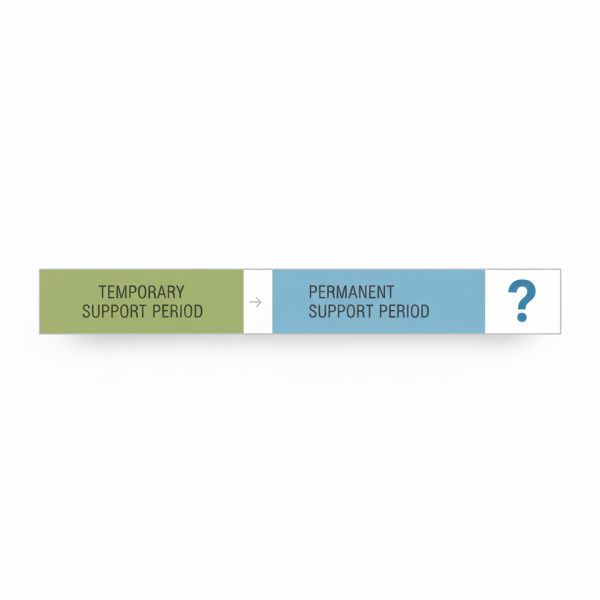
  • What is Spousal Support in California, and Do I Qualify for Alimony?

    What is Spousal Support in California, and Do I Qualify for Alimony?

    [fusion_builder_container type=”flex” hundred_percent=”no” hundred_percent_height=”no” hundred_percent_height_scroll=”no” align_content=”stretch” flex_align_items=”flex-start” flex_justify_content=”flex-start” flex_wrap=”wrap” hundred_percent_height_center_content=”yes” equal_height_columns=”no” container_tag=”div” hide_on_mobile=”small-visibility,medium-visibility,large-visibility” status=”published” margin_top=”80px” border_style=”solid” box_shadow=”no” box_shadow_blur=”0″ box_shadow_spread=”0″ gradient_start_position=”0″ gradient_end_position=”100″ gradient_type=”linear” radial_direction=”center center” linear_angle=”180″ background_position=”center center” background_repeat=”no-repeat” fade=”no” background_parallax=”none” enable_mobile=”no” parallax_speed=”0.3″ background_blend_mode=”none” background_slider_skip_lazy_loading=”no” background_slider_loop=”yes” background_slider_pause_on_hover=”no” background_slider_slideshow_speed=”5000″ background_slider_animation=”fade” background_slider_direction=”up” background_slider_animation_speed=”800″ video_aspect_ratio=”16:9″ video_loop=”yes” video_mute=”yes” pattern_bg=”none” pattern_bg_style=”default” pattern_bg_opacity=”100″ pattern_bg_blend_mode=”normal” mask_bg=”none” mask_bg_style=”default” mask_bg_opacity=”100″ mask_bg_transform=”left” mask_bg_blend_mode=”normal” absolute=”off” absolute_devices=”small,medium,large” sticky=”off” sticky_devices=”small-visibility,medium-visibility,large-visibility” sticky_transition_offset=”0″ scroll_offset=”0″ animation_direction=”left” animation_speed=”0.3″ animation_delay=”0″ filter_hue=”0″ filter_saturation=”100″ filter_brightness=”100″ filter_contrast=”100″ filter_invert=”0″ filter_sepia=”0″ filter_opacity=”100″ filter_blur=”0″ filter_hue_hover=”0″ filter_saturation_hover=”100″ filter_brightness_hover=”100″ filter_contrast_hover=”100″ filter_invert_hover=”0″ filter_sepia_hover=”0″ filter_opacity_hover=”100″ filter_blur_hover=”0″][fusion_builder_row][fusion_builder_column type=”1_1″ layout=”1_1″ align_self=”auto” content_layout=”column” align_content=”flex-start” valign_content=”flex-start” content_wrap=”wrap” center_content=”no” column_tag=”div” target=”_self” hide_on_mobile=”small-visibility,medium-visibility,large-visibility” sticky_display=”normal,sticky” order_medium=”0″ order_small=”0″ hover_type=”none” border_style=”solid” box_shadow=”no” box_shadow_blur=”0″ box_shadow_spread=”0″ background_type=”single” gradient_start_position=”0″ gradient_end_position=”100″ gradient_type=”linear” radial_direction=”center center” linear_angle=”180″ lazy_load=”none” background_position=”left top” background_repeat=”no-repeat” background_blend_mode=”none” background_slider_skip_lazy_loading=”no” background_slider_loop=”yes” background_slider_pause_on_hover=”no” background_slider_slideshow_speed=”5000″ background_slider_animation=”fade” background_slider_direction=”up” background_slider_animation_speed=”800″ sticky=”off” sticky_devices=”small-visibility,medium-visibility,large-visibility” absolute=”off” filter_type=”regular” filter_hover_element=”self” filter_hue=”0″ filter_saturation=”100″ filter_brightness=”100″ filter_contrast=”100″ filter_invert=”0″ filter_sepia=”0″ filter_opacity=”100″ filter_blur=”0″ filter_hue_hover=”0″ filter_saturation_hover=”100″ filter_brightness_hover=”100″ filter_contrast_hover=”100″ filter_invert_hover=”0″ filter_sepia_hover=”0″ filter_opacity_hover=”100″ filter_blur_hover=”0″ transform_type=”regular” transform_hover_element=”self” transform_scale_x=”1″ transform_scale_y=”1″ transform_translate_x=”0″ transform_translate_y=”0″ transform_rotate=”0″ transform_skew_x=”0″ transform_skew_y=”0″ transform_scale_x_hover=”1″ transform_scale_y_hover=”1″ transform_translate_x_hover=”0″ transform_translate_y_hover=”0″ transform_rotate_hover=”0″ transform_skew_x_hover=”0″ transform_skew_y_hover=”0″ transition_duration=”300″ transition_easing=”ease” scroll_motion_devices=”small-visibility,medium-visibility,large-visibility” animation_direction=”left” animation_speed=”0.3″ animation_delay=”0″ last=”true” border_position=”all” first=”true” min_height=”” link=””][fusion_text columns=”” column_min_width=”” column_spacing=”” rule_style=”” rule_size=”” rule_color=”” hue=”” saturation=”” lightness=”” alpha=”” user_select=”” awb-switch-editor-focus=”” content_alignment_medium=”” content_alignment_small=”left” content_alignment=”left” disable_idd=”no” hide_on_mobile=”small-visibility,medium-visibility,large-visibility” sticky_display=”normal,sticky” class=”” id=”” width_medium=”” width_small=”” width=”” min_width_medium=”” min_width_small=”” min_width=”” max_width_medium=”” max_width_small=”” max_width=”” margin_top_medium=”” margin_right_medium=”” margin_bottom_medium=”” margin_left_medium=”” margin_top_small=”” margin_right_small=”” margin_bottom_small=”” margin_left_small=”” margin_top=”” margin_right=”” margin_bottom=”” margin_left=”” fusion_font_family_text_font=”” fusion_font_variant_text_font=”” font_size=”16px” line_height=”” letter_spacing=”” text_transform=”” text_color=”var(–awb-color6)” animation_type=”” animation_direction=”left” animation_color=”” animation_speed=”0.3″ animation_delay=”0″ animation_offset=”” logics=””]

    What is Spousal Support in California, and Do I Qualify for Alimony?

    When you’re facing divorce, one of the biggest questions keeping you up at night is probably “Will I have to pay alimony?” or “Will I receive alimony?” It’s a loaded question that comes wrapped in anxiety, misconceptions, and often outdated information from well-meaning friends who “heard about someone who had a friend who…”

    Let me clear up the confusion. After nearly 20 years of helping couples navigate California divorces, I can tell you that understanding spousal support doesn’t have to be complicated. But it does require letting go of some myths and understanding what alimony is actually designed to do.

    What exactly is spousal support in California?

    Spousal support, which many people still call alimony, is a payment made by one ex-spouse to the other ex-spouse after a divorce. Notice I said “ex-spouse to ex-spouse”—this has nothing to do with your children.

    Spousal support is meant to help the lower-earning spouse transition from married life to single life over time. Think of it as a financial bridge.

    During your marriage, you and your spouse likely made decisions together about careers, education, staying home with kids, or relocating for one of you to take a job.

    Those decisions created an economic partnership where you shared a certain standard of living.

    When that partnership dissolves, spousal support helps the lower-earning spouse adjust to their new financial reality while they work toward becoming self-supporting.

    A graceful modern bridge over calm water at sunset, representing the path to Qualify for Alimony through Equitable Mediation’s guidance. If you’re navigating divorce and need support understanding alimony eligibility, contact Equitable Mediation today to build your bridge toward financial stability and peace of mind.

    What spousal support is NOT designed to do is punish the higher-earning spouse or create a windfall for the lower-earning spouse. It’s not a penalty. It’s not revenge. And despite what your angry friend might tell you over coffee, it’s not meant to “unjustly enrich” anyone.

    California looks at spousal support as a practical tool to address financial imbalances created during the marriage.

    Who can receive alimony in California?

    This might come as a surprise, but alimony in California is not just for women. Both men and women can receive spousal support in California. The law is gender-neutral, and I’ve helped plenty of husbands receive support from higher-earning wives.

    What matters isn’t your gender – it’s the economic circumstances of your marriage and divorce.

    California family law is designed to examine the financial picture of your marriage.

    Who earned more? Who sacrificed career opportunities? Who has a greater earning capacity in the future?

    These are the questions that matter, not whether you’re male or female.

    So do you qualify for spousal support?

    The simple answer is: it depends on need and ability to pay.

    If there’s a significant income difference between you and your spouse, then the lower-earning spouse can often qualify for spousal support.

    But notice I said “often” and not “always”—because each situation is genuinely unique.

    California mediators (and if you go the lawyer route, courts) consider numerous factors when determining spousal support, and we’ll explore those in depth in other articles. But at a basic level, here’s what you need to understand: spousal support is needs-based.

    This means the court (or you and your spouse in mediation) will look at what the lower-earning spouse needs to maintain a reasonable standard of living, and whether the higher-earning spouse can provide that support while still meeting their own reasonable needs.

    This is where my MBA in finance and our process come in handy during mediation sessions, as we’ll need to assess both of your budgets realistically.

    Overhead view of a person reviewing financial documents and budgets to Qualify for Alimony with Equitable Mediation. If you’re unsure whether you qualify, our mediators will guide you through income analysis and fair spousal support planning—call Equitable Mediation for expert, compassionate assistance today.

    What are your actual monthly expenses? What income will you each have post-divorce? Can the higher-earning spouse actually afford to pay support after covering their own necessary expenses?

    These aren’t just legal questions—they’re financial planning questions that require careful analysis.

    Understanding temporary versus permanent support

    Here’s something that might surprise you: permanent spousal support is becoming increasingly rare in California. I know that contradicts what you might have heard about “permanent alimony,” but the reality is that temporary support is far more common these days.

    Temporary support is precisely what it sounds like – support paid for a limited period of time. The goal is to give the lower-earning spouse time to become self-supporting.

    Maybe that means time to complete a degree, gain work experience, or retrain for a better-paying career.

    The objective is to help you get back on your feet, not to create a lifetime dependency.

    “Permanent” support, which really means “of indefinite duration” rather than “literally forever,” is generally reserved for longer marriages in which one spouse has significantly limited earning capacity due to age, health issues, or decades out of the workforce. In my experience, settlements are moving away from truly open-ended support obligations.

    In my mediation practice, I work with couples to determine what’s actually fair based on the specific circumstances of their marriage.

    How long were you married? What career sacrifices were made? What’s realistic for the supported spouse to achieve in terms of self-sufficiency?

    These conversations are much more productive when you’re working cooperatively in mediation rather than having a judge who doesn’t know you make these deeply personal decisions, or two lawyers duke it out, and grind you to a settlement neither of you is happy with.

    The harsh reality about making ends meet

    This might be difficult to hear, but even with spousal support, you may still struggle to make ends meet after divorce. This is the economic reality of divorce that nobody wants to talk about.

    When you were married, you had one household with shared expenses. After a divorce, you have two households with separate expenses. The same income that supported one home now has to stretch to cover two homes, two sets of utilities, two cable bills, two of everything.

    Two warmly lit homes side by side at dusk, representing divided households and the need to Qualify for Alimony with help from Equitable Mediation. Let our mediators help you find financial balance and fair support so both households can thrive—contact Equitable Mediation today for personalized guidance.

    Add in legal fees if you go the litigation route, and you can see why the math often doesn’t work out neatly.

    This doesn’t mean spousal support isn’t necessary or valuable—it absolutely is. But it does mean you need to approach your divorce with realistic expectations.

    Spousal support helps bridge the income gap, but it rarely maintains the same standard of living you enjoyed during the marriage. Both spouses typically need to adjust their expectations about their post-divorce lifestyle.

    This is precisely why working with a mediator who understands both the financial realities and the emotional challenges of divorce is so valuable.

    I can help you and your spouse look at the actual numbers, understand what’s possible, and create a support arrangement that’s fair and sustainable for both of you – without the false promises or unrealistic expectations that can derail the process.

    Moving forward with clarity

    Understanding what spousal support is, who qualifies, and what it’s designed to accomplish is your first step toward a fair divorce settlement. You don’t need to navigate these questions alone, and you definitely don’t need to turn your divorce into a battlefield to get answers.

    In mediation, we can work through the specifics of your situation—your income, your spouse’s income, your needs, your circumstances—and develop a spousal support arrangement that makes sense for your unique family.

    It’s not about winning or losing. It’s about creating a financial plan that allows both of you to move forward.

    The choice of how to approach your divorce – and the question of spousal support – is yours to make.

    You can choose to hire opposing attorneys and fight it out in court, spending tens of thousands of dollars and years of your life.

    Or you can choose to work cooperatively with a skilled mediator like me who can help you understand California’s spousal support guidelines and reach an agreement that works for both of you.

    Your divorce doesn’t have to be a disaster. And figuring out spousal support doesn’t have to be a mystery.

    [/fusion_text][/fusion_builder_column][fusion_builder_column type=”1_1″ layout=”1_1″ align_self=”auto” content_layout=”column” align_content=”flex-start” valign_content=”flex-start” content_wrap=”wrap” center_content=”no” column_tag=”div” target=”_self” hide_on_mobile=”medium-visibility,large-visibility” sticky_display=”normal,sticky” order_medium=”0″ order_small=”0″ margin_top=”60px” margin_bottom=”60px” hover_type=”none” border_style=”solid” box_shadow=”no” box_shadow_blur=”0″ box_shadow_spread=”0″ background_type=”single” gradient_start_position=”0″ gradient_end_position=”100″ gradient_type=”linear” radial_direction=”center center” linear_angle=”180″ lazy_load=”none” background_position=”left top” background_repeat=”no-repeat” background_blend_mode=”none” background_slider_skip_lazy_loading=”no” background_slider_loop=”yes” background_slider_pause_on_hover=”no” background_slider_slideshow_speed=”5000″ background_slider_animation=”fade” background_slider_direction=”up” background_slider_animation_speed=”800″ sticky=”off” sticky_devices=”small-visibility,medium-visibility,large-visibility” absolute=”off” filter_type=”regular” filter_hover_element=”self” filter_hue_hover=”0″ filter_saturation_hover=”100″ filter_brightness_hover=”100″ filter_contrast_hover=”100″ filter_invert_hover=”0″ filter_sepia_hover=”0″ filter_opacity_hover=”100″ filter_blur_hover=”0″ filter_hue=”0″ filter_saturation=”100″ filter_brightness=”100″ filter_contrast=”100″ filter_invert=”0″ filter_sepia=”0″ filter_opacity=”100″ filter_blur=”0″ transform_type=”regular” transform_hover_element=”self” transform_scale_x_hover=”1″ transform_scale_y_hover=”1″ transform_translate_x_hover=”0″ transform_translate_y_hover=”0″ transform_rotate_hover=”0″ transform_skew_x_hover=”0″ transform_skew_y_hover=”0″ transform_scale_x=”1″ transform_scale_y=”1″ transform_translate_x=”0″ transform_translate_y=”0″ transform_rotate=”0″ transform_skew_x=”0″ transform_skew_y=”0″ transition_duration=”300″ transition_easing=”ease” motion_effects=”W10=” scroll_motion_devices=”small-visibility,medium-visibility,large-visibility” animation_direction=”left” animation_speed=”0.3″ animation_delay=”0″ last=”true” border_position=”all” first=”true” min_height=”” link=””][fusion_builder_row_inner][fusion_builder_column_inner type=”1_1″ layout=”1_1″ align_self=”auto” content_layout=”column” align_content=”flex-start” valign_content=”flex-start” content_wrap=”wrap” center_content=”no” column_tag=”div” target=”_self” hide_on_mobile=”small-visibility,medium-visibility,large-visibility” sticky_display=”normal,sticky” order_medium=”0″ order_small=”0″ padding_top=”50px” padding_right=”20px” padding_bottom=”50px” padding_left=”20px” hover_type=”none” border_style=”solid” border_radius_top_left=”30px” border_radius_top_right=”30px” border_radius_bottom_right=”30px” border_radius_bottom_left=”30px” box_shadow=”no” box_shadow_blur=”0″ box_shadow_spread=”0″ background_type=”single” background_color=”#f4f3ef” gradient_start_position=”0″ gradient_end_position=”100″ gradient_type=”linear” radial_direction=”center center” linear_angle=”180″ lazy_load=”none” background_position=”left top” background_repeat=”no-repeat” background_blend_mode=”none” background_slider_skip_lazy_loading=”no” background_slider_loop=”yes” background_slider_pause_on_hover=”no” background_slider_slideshow_speed=”5000″ background_slider_animation=”fade” background_slider_direction=”up” background_slider_animation_speed=”800″ sticky=”off” sticky_devices=”small-visibility,medium-visibility,large-visibility” absolute=”off” filter_type=”regular” filter_hover_element=”self” filter_hue_hover=”0″ filter_saturation_hover=”100″ filter_brightness_hover=”100″ filter_contrast_hover=”100″ filter_invert_hover=”0″ filter_sepia_hover=”0″ filter_opacity_hover=”100″ filter_blur_hover=”0″ filter_hue=”0″ filter_saturation=”100″ filter_brightness=”100″ filter_contrast=”100″ filter_invert=”0″ filter_sepia=”0″ filter_opacity=”100″ filter_blur=”0″ transform_type=”regular” transform_hover_element=”self” transform_scale_x_hover=”1″ transform_scale_y_hover=”1″ transform_translate_x_hover=”0″ transform_translate_y_hover=”0″ transform_rotate_hover=”0″ transform_skew_x_hover=”0″ transform_skew_y_hover=”0″ transform_scale_x=”1″ transform_scale_y=”1″ transform_translate_x=”0″ transform_translate_y=”0″ transform_rotate=”0″ transform_skew_x=”0″ transform_skew_y=”0″ transition_duration=”300″ transition_easing=”ease” motion_effects=”W10=” scroll_motion_devices=”small-visibility,medium-visibility,large-visibility” animation_direction=”left” animation_speed=”0.3″ animation_delay=”0″ last=”true” border_position=”all” first=”true” min_height=”” link=””][fusion_code]ICA8c3R5bGU+CiAgIAoKICAgIC5zbGlkZXItY29udGFpbmVyIHsKICAgICAgLyptYXgtd2lkdGg6IDcwMHB4OyAqLwogICAgbWFyZ2luOiAwIGF1dG87CiAgICBwb3NpdGlvbjogcmVsYXRpdmU7CiAgICAvKiBiYWNrZ3JvdW5kOiB3aGl0ZTsgKi8KICAgIGJvcmRlci1yYWRpdXM6IDE2cHg7CiAgICAvKiBib3gtc2hhZG93OiAwIDAgMTBweCByZ2JhKDAsIDAsIDAsIDAuMSk7ICovCiAgICBwYWRkaW5nOiAyMHB4IDUwcHg7CiAgICB0ZXh0LWFsaWduOiBsZWZ0OwogICAgb3ZlcmZsb3c6IGhpZGRlbjsKICAgIC8qIGhlaWdodDogNTAwcHg7Ki8KICAgIH0KCiAgICAuc2xpZGUgewogICAgICBwb3NpdGlvbjogYWJzb2x1dGU7CiAgICAgIHRvcDogMDsKICAgICAgbGVmdDogMDsKICAgICAgd2lkdGg6IDEwMCU7CiAgICAgIG9wYWNpdHk6IDA7CiAgICAgIHRyYW5zZm9ybTogdHJhbnNsYXRlWCgxMDAlKTsKICAgICAgdHJhbnNpdGlvbjogYWxsIDAuNXMgZWFzZTsKICAgICAgdmlzaWJpbGl0eTogaGlkZGVuOwogICAgfQoKICAgIC5zbGlkZS5hY3RpdmUgewogICAgICBvcGFjaXR5OiAxOwogICAgICB0cmFuc2Zvcm06IHRyYW5zbGF0ZVgoMCk7CiAgICAgIHZpc2liaWxpdHk6IHZpc2libGU7CiAgICAgIHBvc2l0aW9uOiByZWxhdGl2ZTsKICAgIH0KCiAgICAudGl0bGUgewogICAgY29sb3I6ICMyNDdkYjQ7CiAgICBmb250LXNpemU6IDI2cHg7CiAgICBmb250LXdlaWdodDogNjAwOwogICAgbWFyZ2luLWJvdHRvbTogMThweDsKICAgIHRleHQtYWxpZ246IGNlbnRlcjsKICAgIGxpbmUtaGVpZ2h0OiAxLjJlbTsKfQoKICAgIC5jb250ZW50IHsKICAgICAgZm9udC1zaXplOiAxNnB4OwogICAgICBjb2xvcjogIzMzMzsKICAgICAgbGluZS1oZWlnaHQ6IDEuNjsKICAgIH0KCQoJc3Bhbi5zZXAgewogICAgcGFkZGluZy1sZWZ0OiAyNXB4OwogICAgcGFkZGluZy1yaWdodDogMjVweDsKICAgIGNvbG9yOiAjM2EyZjJhOwogICAgZm9udC1zaXplOiAxOHB4OwogICAgZm9udC13ZWlnaHQ6IG5vcm1hbDsKfQoKICAgIC5hdXRob3IgewogICAgICBkaXNwbGF5OiBmbGV4OwogICAgYWxpZ24taXRlbXM6IGNlbnRlcjsKICAgIG1hcmdpbi10b3A6IDMwcHg7CiAgICBqdXN0aWZ5LWNvbnRlbnQ6IGNlbnRlcjsKICAgIH0KCiAgICAuYXV0aG9yIGltZyB7CiAgICAgIGJvcmRlci1yYWRpdXM6IDUwJTsKICAgICAgd2lkdGg6IDcwcHg7CiAgICAgIGhlaWdodDogNzBweDsKICAgICAgbWFyZ2luLXJpZ2h0OiAxNXB4OwogICAgfQoJCgkuYXV0aG9yLWRldGFpbHMgcCB7CiAgICBtYXJnaW4tYm90dG9tOiAwcHg7Cn0KCiAgICAuYXV0aG9yLWRldGFpbHMgewogICAgICBmb250LXNpemU6IDE1cHg7CiAgICB9CgogICAgLmF1dGhvci1kZXRhaWxzIHN0cm9uZyB7CiAgICAgIGNvbG9yOiAjMjQ3MWViOwogICAgfQoKICAgIC5uYXYgewogICAgICBwb3NpdGlvbjogYWJzb2x1dGU7CiAgICAgIHRvcDogNTAlOwogICAgICB0cmFuc2Zvcm06IHRyYW5zbGF0ZVkoLTUwJSk7CiAgICAgIGZvbnQtc2l6ZTogMzBweDsKICAgICAgY29sb3I6ICNhYWE7CiAgICAgIGN1cnNvcjogcG9pbnRlcjsKICAgICAgei1pbmRleDogMTsKICAgIH0KCiAgICAubmF2LmxlZnQgewogICAgICBsZWZ0OiAyMHB4OwogICAgfQoKICAgIC5uYXYucmlnaHQgewogICAgICByaWdodDogMjBweDsKICAgIH0KCiAgICAubmF2OmhvdmVyIHsKICAgICAgY29sb3I6ICMyNDcxZWI7CiAgICB9CgkKCS5hdXRob3ItZGV0YWlscyAuaGVhZC1kZXN7Cgljb2xvcjogIzI0N2RiNDsgCglmb250LXNpemU6IDMwcHg7IAoJZm9udC13ZWlnaHQ6IDUwMDsKCWZvbnQtZmFtaWx5OiJETSBTZXJpZiBEaXNwbGF5IiwgQXJpYWwsIEhlbHZldGljYSwgc2Fucy1zZXJpZjsKCX0KCQoJLmF1dGhvci1kZXRhaWxzIC5zdWItZGVzewoJbGV0dGVyLXNwYWNpbmc6IDNweDsgCgl0ZXh0LXRyYW5zZm9ybTogdXBwZXJjYXNlOyAKCWZvbnQtc2l6ZTogMTZweDsgCgljb2xvcjogIzNhMmYyYTsKCX0KICA8L3N0eWxlPgoKPGRpdiBjbGFzcz0ic2xpZGVyLWNvbnRhaW5lciI+CiAgPCEtLSBTbGlkZSAxIC0tPgogIDxkaXYgY2xhc3M9InNsaWRlIGFjdGl2ZSI+CiAgICA8ZGl2IGNsYXNzPSJjb250ZW50Ij4KICAgICAgPHA+4oCcWW91IG1heSBoYXZlIHJlc2VhcmNoZWQgaG93IGFsaW1vbnkgd29ya3MgaW4geW91ciBzdGF0ZS4gQnV0IGluIG15IGV4cGVyaWVuY2UsIHJlZ2FyZGxlc3Mgb2Ygd2hldGhlciBhIHN0YXRlIG9mZmVycyBndWlkYW5jZSBvbiBob3cgdG8gcmVzb2x2ZSBhbGltb255LCBvZnRlbiwgY291cGxlcyBuZWdvdGlhdGUgdGhlaXIgb3duIGFncmVlbWVudCB0YWlsb3JlZCB0byB0aGVpciB1bmlxdWUgc2l0dWF0aW9uIGFuZCBjaXJjdW1zdGFuY2VzLjwvcD4KICAgICAgPHA+U28geW91IGhhdmUgYSBsb3Qgb2YgZmxleGliaWxpdHkgYW5kIGNhbiBtYWludGFpbiBhIGxvdCBvZiBjb250cm9sIGlmIHlvdSBuZWdvdGlhdGUgdGhlIHRlcm1zIG9mIGFsaW1vbnkgb3V0IG9mIGNvdXJ0IHdpdGggdGhlIGhlbHAgb2YgYSBza2lsbGVkIHByb2Zlc3Npb25hbCB1c2luZyBhbiBhbHRlcm5hdGl2ZSBkaXNwdXRlIHJlc29sdXRpb24gcHJvY2VzcyBsaWtlIDxhIGhyZWY9Ii9yZXNvdXJjZXMvY29sbGFib3JhdGl2ZS1kaXZvcmNlLXZzLW1lZGlhdGlvbiIgcmVsPSJub29wZW5lciI+ZGl2b3JjZSBtZWRpYXRpb24gb3IgYSBjb2xsYWJvcmF0aXZlIGRpdm9yY2UgPC9hPi48L3A+CiAgICAgIDxwPllvdSBhbmQgeW91ciBzb29uLXRvLWJlIGV4LXNwb3VzZSB3aWxsIG1vcmUgbGlrZWx5IGNvbWUgdG8gYW4gYWxpbW9ueSBhcnJhbmdlbWVudCB0aGF0J3MgYWNjZXB0YWJsZSB0byBib3RoIG9mIHlvdS4iPHA+CiAgICA8L2Rpdj4KICAgIDxkaXYgY2xhc3M9ImF1dGhvciI+CiAgICAgIDxpbWcgc3JjPSIvd3AtY29udGVudC91cGxvYWRzLzIwMjUvMDYvZXF1aXRhYmxlLW1lZGlhdGlvbi10ZWFtLWpvZS1kaWxsb24ud2VicCIgYWx0PSJKb2UgRGlsbG9uIGhlYWRzaG90IiAvPgogICAgICA8ZGl2IGNsYXNzPSJhdXRob3ItZGV0YWlscyI+CiAgICAgICAgPHA+IDxzcGFuIGNsYXNzPSJoZWFkLWRlcyI+IEpvZSBEaWxsb248L3NwYW4+IDxzcGFuIGNsYXNzPSJzZXAiPnw8L3NwYW4+IDxzcGFuIGNsYXNzPSJzdWItZGVzIj5EaXZvcmNlIE1lZGlhdG9yICYgRm91bmRlcjwvc3Bhbj48L3A+CiAgICAgIDwvZGl2PgogICAgPC9kaXY+CiAgPC9kaXY+CiAgPCEtLSBBcnJvd3MgLS0+CiAgPCEtLSA8ZGl2IGNsYXNzPSJuYXYgbGVmdCIgb25jbGljaz0icHJldlNsaWRlKCkiPiYjMTAwOTQ7PC9kaXY+CiAgPGRpdiBjbGFzcz0ibmF2IHJpZ2h0IiBvbmNsaWNrPSJuZXh0U2xpZGUoKSI+JiMxMDA5NTs8L2Rpdj4gLS0+CjwvZGl2PgoKPHNjcmlwdD4KICBsZXQgY3VycmVudFNsaWRlID0gMDsKICBjb25zdCBzbGlkZXMgPSBkb2N1bWVudC5xdWVyeVNlbGVjdG9yQWxsKCcuc2xpZGUnKTsKCiAgZnVuY3Rpb24gc2hvd1NsaWRlKGluZGV4KSB7CiAgICBzbGlkZXMuZm9yRWFjaCgocywgaSkgPT4gewogICAgICBzLmNsYXNzTGlzdC5yZW1vdmUoJ2FjdGl2ZScpOwogICAgfSk7CiAgICBzbGlkZXNbaW5kZXhdLmNsYXNzTGlzdC5hZGQoJ2FjdGl2ZScpOwogIH0KCiAgZnVuY3Rpb24gbmV4dFNsaWRlKCkgewogICAgY3VycmVudFNsaWRlID0gKGN1cnJlbnRTbGlkZSArIDEpICUgc2xpZGVzLmxlbmd0aDsKICAgIHNob3dTbGlkZShjdXJyZW50U2xpZGUpOwogIH0KCiAgZnVuY3Rpb24gcHJldlNsaWRlKCkgewogICAgY3VycmVudFNsaWRlID0gKGN1cnJlbnRTbGlkZSAtIDEgKyBzbGlkZXMubGVuZ3RoKSAlIHNsaWRlcy5sZW5ndGg7CiAgICBzaG93U2xpZGUoY3VycmVudFNsaWRlKTsKICB9Cjwvc2NyaXB0Pg==[/fusion_code][/fusion_builder_column_inner][/fusion_builder_row_inner][/fusion_builder_column][/fusion_builder_row][/fusion_builder_container][fusion_builder_container type=”flex” hundred_percent=”no” hundred_percent_height=”no” hundred_percent_height_scroll=”no” align_content=”stretch” flex_align_items=”flex-start” flex_justify_content=”flex-start” flex_wrap=”wrap” hundred_percent_height_center_content=”yes” equal_height_columns=”no” container_tag=”div” hide_on_mobile=”small-visibility,medium-visibility,large-visibility” status=”published” padding_bottom_medium=”50px” padding_bottom_small=”30px” padding_top=”100px” padding_bottom=”100px” border_style=”solid” box_shadow=”no” box_shadow_blur=”0″ box_shadow_spread=”0″ gradient_start_position=”0″ gradient_end_position=”100″ gradient_type=”linear” radial_direction=”center center” linear_angle=”180″ background_position=”center center” background_repeat=”no-repeat” fade=”no” background_parallax=”none” enable_mobile=”no” parallax_speed=”0.3″ background_blend_mode=”none” background_slider_skip_lazy_loading=”no” background_slider_loop=”yes” background_slider_pause_on_hover=”no” background_slider_slideshow_speed=”5000″ background_slider_animation=”fade” background_slider_direction=”up” background_slider_animation_speed=”800″ video_aspect_ratio=”16:9″ video_loop=”yes” video_mute=”yes” pattern_bg=”none” pattern_bg_style=”default” pattern_bg_opacity=”100″ pattern_bg_blend_mode=”normal” mask_bg=”none” mask_bg_style=”default” mask_bg_opacity=”100″ mask_bg_transform=”left” mask_bg_blend_mode=”normal” absolute=”off” absolute_devices=”small,medium,large” sticky=”off” sticky_devices=”small-visibility,medium-visibility,large-visibility” sticky_transition_offset=”0″ scroll_offset=”0″ animation_direction=”left” animation_speed=”0.3″ animation_delay=”0″ filter_hue=”0″ filter_saturation=”100″ filter_brightness=”100″ filter_contrast=”100″ filter_invert=”0″ filter_sepia=”0″ filter_opacity=”100″ filter_blur=”0″ filter_hue_hover=”0″ filter_saturation_hover=”100″ filter_brightness_hover=”100″ filter_contrast_hover=”100″ filter_invert_hover=”0″ filter_sepia_hover=”0″ filter_opacity_hover=”100″ filter_blur_hover=”0″ admin_label=”FAQ” admin_toggled=”no”][fusion_builder_row][fusion_builder_column type=”1_1″ layout=”1_1″ align_self=”auto” content_layout=”column” align_content=”flex-start” valign_content=”flex-start” content_wrap=”wrap” center_content=”no” column_tag=”div” target=”_self” hide_on_mobile=”small-visibility,medium-visibility,large-visibility” sticky_display=”normal,sticky” order_medium=”0″ order_small=”0″ hover_type=”none” border_style=”solid” box_shadow=”no” box_shadow_blur=”0″ box_shadow_spread=”0″ background_type=”single” gradient_start_position=”0″ gradient_end_position=”100″ gradient_type=”linear” radial_direction=”center center” linear_angle=”180″ lazy_load=”none” background_position=”left top” background_repeat=”no-repeat” background_blend_mode=”none” background_slider_skip_lazy_loading=”no” background_slider_loop=”yes” background_slider_pause_on_hover=”no” background_slider_slideshow_speed=”5000″ background_slider_animation=”fade” background_slider_direction=”up” background_slider_animation_speed=”800″ sticky=”off” sticky_devices=”small-visibility,medium-visibility,large-visibility” absolute=”off” filter_type=”regular” filter_hover_element=”self” filter_hue_hover=”0″ filter_saturation_hover=”100″ filter_brightness_hover=”100″ filter_contrast_hover=”100″ filter_invert_hover=”0″ filter_sepia_hover=”0″ filter_opacity_hover=”100″ filter_blur_hover=”0″ filter_hue=”0″ filter_saturation=”100″ filter_brightness=”100″ filter_contrast=”100″ filter_invert=”0″ filter_sepia=”0″ filter_opacity=”100″ filter_blur=”0″ transform_type=”regular” transform_hover_element=”self” transform_scale_x_hover=”1″ transform_scale_y_hover=”1″ transform_translate_x_hover=”0″ transform_translate_y_hover=”0″ transform_rotate_hover=”0″ transform_skew_x_hover=”0″ transform_skew_y_hover=”0″ transform_scale_x=”1″ transform_scale_y=”1″ transform_translate_x=”0″ transform_translate_y=”0″ transform_rotate=”0″ transform_skew_x=”0″ transform_skew_y=”0″ transition_duration=”300″ transition_easing=”ease” motion_effects=”W10=” scroll_motion_devices=”small-visibility,medium-visibility,large-visibility” animation_direction=”left” animation_speed=”0.3″ animation_delay=”0″ last=”true” border_position=”all” first=”true” min_height=”” link=””][fusion_title title_type=”text” scroll_reveal_effect=”color_change” scroll_reveal_basis=”chars” scroll_reveal_behavior=”always” scroll_reveal_duration=”500″ scroll_reveal_stagger=”200″ scroll_reveal_delay=”0″ scroll_reveal_above_fold=”yes” marquee_direction=”left” marquee_mask_edges=”no” marquee_speed=”15000″ rotation_effect=”bounceIn” display_time=”1200″ highlight_effect=”circle” loop_animation=”once” highlight_animation_duration=”1500″ highlight_width=”9″ highlight_smudge_effect=”no” highlight_top_margin=”0″ title_link=”off” link_target=”_self” hide_on_mobile=”small-visibility,medium-visibility,large-visibility” sticky_display=”normal,sticky” content_align_small=”left” content_align=”left” size=”2″ font_size=”38px” text_color=”var(–awb-color4)” text_shadow=”no” text_shadow_blur=”0″ text_stroke=”no” text_stroke_size=”1″ text_overflow=”none” margin_top=”0px” margin_bottom=”60px” gradient_font=”no” gradient_start_position=”0″ gradient_end_position=”100″ gradient_type=”linear” radial_direction=”center center” linear_angle=”180″ style_type=”default” animation_type=”fade” animation_direction=”static” animation_speed=”1.0″ animation_delay=”0.5″]

    FAQs About Alimony in California

    [/fusion_title][fusion_accordion type=”toggles” hide_on_mobile=”small-visibility,medium-visibility,large-visibility” boxed_mode=”yes” border_size=”2″ border_color=”#d8e8f2″ hover_color=”#f4f3ef” padding_top=”10px” padding_right=”5px” padding_bottom=”10px” padding_left=”5px” title_tag=”h4″ fusion_font_family_title_font=”Poppins” fusion_font_variant_title_font=”600″ title_font_size=”18px” title_color=”var(–awb-color6)” icon_size=”25px” icon_color=”#d8e8f2″ icon_boxed_mode=”no” icon_box_color=”#d8e8f2″ icon_alignment=”right” content_font_size=”16px” content_color=”var(–awb-color6)” toggle_hover_accent_color=”var(–awb-color6)” toggle_active_accent_color=”var(–awb-color6)”][fusion_toggle title=”1. What is alimony in California, and how does it work?” open=”no” title_color=”var(–awb-color8)” content_color=”var(–awb-color8)”]

    Alimony, legally referred to as spousal support or maintenance in California, is a court-ordered financial payment that one spouse provides to the other during separation, divorce proceedings, or after the marriage has been dissolved. The fundamental purpose of these support payments is to assist the lower-earning spouse in maintaining a reasonable standard of living and achieving financial independence following the end of the marital relationship. California Family Code sections 4320 through 4360 govern how spousal maintenance operates within the state’s family law system. The process works in two distinct phases: temporary support during divorce proceedings (sometimes called pendente lite support) and long-term or permanent support established in the final divorce judgment. Courts evaluate numerous factors when making support determinations, including each party’s earning capacity, the marital standard of living, the duration of the marriage, and the financial needs and abilities of both spouses. Unlike child support, which follows specific calculation guidelines, spousal maintenance awards involve considerable judicial discretion based on the unique circumstances of each divorcing couple.

    [/fusion_toggle][fusion_toggle title=”2. How long does alimony last in California?” open=”no” title_color=”var(–awb-color8)” content_color=”var(–awb-color8)”]

    The duration of spousal support payments in California primarily depends on the length of the marriage and the type of support ordered. For marriages lasting fewer than ten years (considered short-term marriages), California courts commonly establish support duration at approximately half the length of the marriage. For example, if a couple was married for six years, the supported spouse might receive maintenance for roughly three years, although this is a general guideline rather than a strict rule. Marriages of ten years or longer are classified as long-duration marriages under California Family Code Section 4336, and these cases receive different treatment. For long-duration marriages, judges retain jurisdiction indefinitely and cannot set a definite termination date at the time of judgment, meaning support could potentially continue for many years depending on circumstances. However, this does not guarantee lifetime alimony; instead, it means the court can revisit and modify the support arrangement as long as the order remains active. Support automatically terminates upon certain events, including the death of either party, the remarriage of the supported spouse, or when the court determines the supported spouse no longer needs assistance or has become self-supporting. The reasonable period for support is determined by how long it would take the supported spouse to obtain the education, training, or work experience necessary to become financially independent.

    [/fusion_toggle][fusion_toggle title=”3. What factors do California courts consider when determining alimony?” open=”no” title_color=”var(–awb-color8)” content_color=”var(–awb-color8)”]

    California judges must evaluate an extensive list of statutory factors outlined in Family Code Section 4320 when determining both the amount and duration of long-term spousal support. These mandatory considerations include the marketable skills and earning capacity of each spouse, along with the job market for those particular skills and any time or expenses required for the supported spouse to acquire education or training for employment. Courts examine the extent to which the supported spouse’s earning capacity was impaired by periods of unemployment during the marriage to permit devotion to domestic duties, recognizing career sacrifices made for the family’s benefit. The standard of living established during the marriage carries significant weight, as courts attempt to allow both parties to maintain a lifestyle reasonably comparable to what they enjoyed while married. Each party’s assets, debts, income from all sources, and overall financial needs are analyzed in detail. The court also considers the duration of the marriage, recognizing that longer marriages typically warrant longer support obligations. The age and health of both spouses factor into determinations, as physical or mental conditions may affect earning ability and financial needs. The ability of the supporting spouse to pay support while meeting their own reasonable needs is balanced against the needs of the spouse seeking support. Additional factors include documented evidence of domestic violence, the balance of hardships to each party, and the goal that the supported spouse become self-supporting within a reasonable period. Tax consequences, though changed by recent federal law, remain relevant for California state tax purposes. Finally, judges may consider any other factors deemed just and equitable in the particular circumstances of the case.

    [/fusion_toggle][fusion_toggle title=”4. Is there a formula for calculating spousal support in California?” open=”no” title_color=”var(–awb-color8)” content_color=”var(–awb-color8)”]

    California employs different approaches for temporary versus permanent spousal support calculations. For temporary support during divorce proceedings, most counties use a computer-based guideline formula, often called the “DissoMaster” or “XSpouse” calculator, which generates a support amount based primarily on the parties’ incomes and certain deductions. A common rough estimate suggests taking 35 to 45 percent of the higher earner’s income and subtracting 40 to 50 percent of the lower earner’s income, though actual calculations involve more complexity. This computerized approach provides consistency and predictability during the interim period while the divorce is pending. However, for long-term or permanent spousal support established in the final divorce judgment, California law explicitly prohibits using a formula. Instead, it requires judges to apply the comprehensive Family Code Section 4320 factors discussed above. Courts must consider each statutory factor and make specific findings about the circumstances of the marriage, earning capacities, needs, standard of living, and other relevant considerations. This means there is no mathematical formula or calculator that can definitively determine permanent support amounts; instead, each case requires individualized analysis of the unique facts and circumstances. The judge exercises considerable discretion in weighing these factors and determining what constitutes a fair and reasonable support arrangement. Spouses can negotiate and agree upon any support amount and duration they find mutually acceptable. Still, if they cannot reach an agreement, the judge must use the multi-factor analysis rather than any predetermined calculation to establish the support order.

    [/fusion_toggle][fusion_toggle title=”5. What is the 10-year rule for alimony in California?” open=”no” title_color=”var(–awb-color8)” content_color=”var(–awb-color8)”]

    The widely misunderstood “ten-year rule” refers to how California courts treat marriages of long duration, defined explicitly in California Family Code Section 4336 as marriages lasting ten years or more from the date of marriage to the date of separation. The misconception is that crossing the ten-year threshold automatically guarantees lifetime alimony payments, but this is legally incorrect. What actually happens for marriages of long duration is that the court retains jurisdiction to review and modify spousal support orders indefinitely, meaning there is no automatic cutoff date for the court’s authority to revisit support. For marriages under ten years, courts commonly set support duration at approximately half the marriage length. Once that period expires, the court generally loses jurisdiction unless the order explicitly reserves jurisdiction. In contrast, for long-duration marriages, even though the judge cannot set a definite termination date at the time of judgment, they can establish a review date when the supported spouse must demonstrate continued need for support or face termination. California public policy has evolved away from the outdated concept of permanent lifetime support, as recognized by case law emphasizing that spousal support should last only as long as reasonably necessary for the supported spouse to become self-supporting. The ten-year milestone is significant because it affects the court’s ongoing jurisdiction over support matters, allowing for continued review and modification based on changing circumstances. Still, it does not create an entitlement to indefinite support regardless of circumstances. Factors such as retirement, remarriage, cohabitation, changes in income, or the supported spouse achieving self-sufficiency can all lead to modification or termination even in long-duration marriages.

    [/fusion_toggle][fusion_toggle title=”6. Does remarriage or cohabitation affect alimony payments in California?” open=”no” title_color=”var(–awb-color8)” content_color=”var(–awb-color8)”]

    Remarriage and cohabitation have distinctly different legal effects on spousal support obligations in California. Under California Family Code Section 4337, if the spouse receiving support remarries, spousal support automatically terminates without requiring a court hearing or further legal proceedings. This automatic termination reflects the legal presumption that the new spouse assumes financial responsibility for supporting the remarried party. The supported spouse has a legal obligation to notify the paying spouse about the remarriage; failure to do so can result in a court order requiring repayment of support improperly received after remarriage. This automatic termination rule applies unless the parties’ divorce settlement agreement states explicitly otherwise—spouses can negotiate arrangements where support continues despite remarriage, though this is uncommon. Past-due support obligations and any vested lump-sum payments remain enforceable despite remarriage. Cohabitation—living with a new romantic partner without marriage—does not automatically terminate support but can provide grounds for modification or termination. Under California Family Code Section 4323, cohabitation with a non-marital partner may be considered a changed circumstance that justifies reducing or ending support payments. The paying spouse must file a motion with the court requesting modification and demonstrate that the supported spouse is cohabitating with a partner in a relationship resembling marriage. The court examines whether cohabitation has reduced the supported spouse’s financial needs because they share living expenses and receive support from their new partner. Simply having a roommate does not necessarily qualify, as courts look for evidence of a romantic, committed relationship involving mutual financial support and sharing of resources. The supported spouse can rebut the presumption by proving they still require support despite the living arrangement. The burden falls on the paying spouse to prove that circumstances have changed sufficiently to warrant modification.

    [/fusion_toggle][fusion_toggle title=”7. Can alimony be modified or terminated in California?” open=”no” title_color=”var(–awb-color8)” content_color=”var(–awb-color8)”]California law permits both modification and termination of spousal support orders when circumstances significantly change. However, the process and requirements differ based on the type of support and the duration of marriage. Either spouse can request modification by filing a Request for Order with the family court that issued the original support judgment. The moving party must demonstrate a “material change of circumstances” since the original support order—substantial changes in either party’s financial situation that make the current support amount unfair or inappropriate. Examples of qualifying changes include the paying spouse experiencing involuntary job loss, significant income reduction, disability, or legitimate retirement (typically around age 65), which may justify decreasing support. Conversely, substantial income increases by either party might warrant modification—the paying spouse’s higher earnings could support increased payments, while the supported spouse’s improved income might justify reduction or termination. Health issues, severe illness, or disability affecting either party’s earning capacity or expenses can trigger modifications. The supported spouse’s failure to make reasonable efforts toward self-sufficiency despite court warnings (known as a Gavron warning under Family Code Section 4320) may lead to reduced support or termination. Courts can assign “imputed income” to a supported spouse who voluntarily remains unemployed or underemployed despite having marketable skills and available employment opportunities. Cohabitation with a new partner, as discussed above, can justify modification even without remarriage. For marriages under ten years, once the support order expires, courts generally lose jurisdiction to modify unless jurisdiction was specifically reserved. For marriages of extended duration (ten years or more), courts retain indefinite authority to review and modify support. Parties can also negotiate modification agreements outside of court, but court approval is required to make the changes legally enforceable. Temporary support orders during divorce proceedings can be modified more easily than final support orders. It’s important to note that modifications typically take effect only from the date of filing the request, not retroactively, so timing matters significantly.[/fusion_toggle][fusion_toggle title=”8. What are the tax implications of alimony payments in California?” open=”no” title_color=”var(–awb-color8)” content_color=”var(–awb-color8)”]

    The tax treatment of spousal support in California is undergoing a significant change that depends on when your divorce agreement is finalized. California recently enacted Senate Bill 711, which will conform California’s tax treatment of spousal support to federal law starting January 1, 2026.

    For divorce agreements or court orders executed on or after January 1, 2019 but before January 1, 2026, there is a split between federal and state tax treatment. Federal law eliminated the tax deduction for alimony payments made by the paying spouse, and recipients no longer report spousal support as taxable income on federal returns. However, California did not conform to these federal changes during this period. For California state income tax purposes, spousal support remained tax-deductible for the paying spouse on their California state return, and the receiving spouse had to report support payments as taxable income on their California state tax return. This created a disconnect between federal and state tax treatment, requiring taxpayers to make adjustments on Schedule CA when filing California returns to account for the different treatment of alimony.

    Starting January 1, 2026, Senate Bill 711 changes this split treatment for new agreements. For any spousal support agreement entered into after December 31, 2025, spousal support will be neither deductible for the paying spouse nor taxable income for the receiving spouse at both the federal and California state level. This creates complete tax neutrality and eliminates the confusing split treatment that existed from 2019 through 2025. The new tax treatment also applies to modifications of existing agreements made after December 31, 2025, but only if the modification expressly provides that Senate Bill 711 applies. If you modify an existing pre-2026 agreement without specifically invoking SB 711, the old split tax treatment should continue to apply to that agreement.

    For divorce or separation agreements executed on or before December 31, 2018, the original tax rules continue to apply at both federal and state levels. Payments remain deductible for the payor and taxable income for the recipient on both federal and California returns, and this federal AGI (Adjusted Gross Income) figure carries over to the California return without adjustment.

    [/fusion_toggle][fusion_toggle title=”9. Who qualifies for alimony in California, and what disqualifies someone?” open=”no” awb-switch-editor-focus=”Qualification for spousal support in California is not automatic and depends on demonstrating financial need and disparity between the spouses’ circumstances. Generally, the spouse with significantly lower income or earning capacity may qualify for support if they can establish that they need financial assistance to maintain a reasonable standard of living while working toward self-sufficiency. Key qualifying factors include a demonstrable income disparity between spouses, where one spouse lacks sufficient property or income to maintain reasonable needs and the marital standard of living. The supported spouse must demonstrate a need for time to acquire education, training, or work experience that will make them employable and self-supporting, especially if they have sacrificed career opportunities during the marriage to fulfill domestic duties or support their partner’s career advancement. Marriages where one spouse is the primary wage earner and the other handles domestic responsibilities or raises children often result in support awards. Courts examine whether the requesting spouse’s earning capacity was diminished during the marriage due to an extended absence from the workforce. Several circumstances can disqualify someone from receiving spousal support or result in denial or termination. If the spouse requesting support has a comparable or higher income, substantial assets, or significant financial resources making support unnecessary, they likely won’t qualify. A valid prenuptial or postnuptial agreement waiving spousal support rights is generally enforceable, disqualifying the spouse from seeking court-ordered support unless the contract was executed under duress, fraud, or other circumstances making it unconscionable. Short-term marriages (especially those under three years) may not warrant support, or support duration may be very limited. Evidence that the supported spouse is not making reasonable good-faith efforts toward self-sufficiency despite court orders can lead to termination, especially with a Gavron warning in effect. Remarriage automatically disqualifies the former spouse from continued support. A supported spouse who has achieved self-sufficiency and no longer requires assistance will have support terminated. Receipt of substantial inheritance, lottery winnings, or other financial windfalls may eliminate the need for support. California law also provides that a spouse convicted of domestic violence against their partner may receive reduced support or be ordered to pay additional support beyond what would usually be awarded. Voluntary unemployment or underemployment when capable of working can result in imputed income, reducing or eliminating support eligibility.” title_color=”var(–awb-color8)” content_color=”var(–awb-color8)”]

    Qualification for spousal support in California is not automatic and depends on demonstrating financial need and disparity between the spouses’ circumstances. Generally, the spouse with significantly lower income or earning capacity may qualify for support if they can establish that they need financial assistance to maintain a reasonable standard of living while working toward self-sufficiency. Key qualifying factors include a demonstrable income disparity between spouses, where one spouse lacks sufficient property or income to maintain reasonable needs and the marital standard of living. The supported spouse must demonstrate a need for time to acquire education, training, or work experience that will make them employable and self-supporting, especially if they have sacrificed career opportunities during the marriage to fulfill domestic duties or support their partner’s career advancement. Marriages where one spouse is the primary wage earner and the other handles domestic responsibilities or raises children often result in support awards. Courts examine whether the requesting spouse’s earning capacity was diminished during the marriage due to an extended absence from the workforce. Several circumstances can disqualify someone from receiving spousal support or result in denial or termination. If the spouse requesting support has a comparable or higher income, substantial assets, or significant financial resources making support unnecessary, they likely won’t qualify. A valid prenuptial or postnuptial agreement waiving spousal support rights is generally enforceable, disqualifying the spouse from seeking court-ordered support unless the contract was executed under duress, fraud, or other circumstances making it unconscionable. Short-term marriages (especially those under three years) may not warrant support, or support duration may be very limited. Evidence that the supported spouse is not making reasonable good-faith efforts toward self-sufficiency despite court orders can lead to termination, especially with a Gavron warning in effect. Remarriage automatically disqualifies the former spouse from continued support. A supported spouse who has achieved self-sufficiency and no longer requires assistance will have support terminated. Receipt of substantial inheritance, lottery winnings, or other financial windfalls may eliminate the need for support. California law also provides that a spouse convicted of domestic violence against their partner may receive reduced support or be ordered to pay additional support beyond what would usually be awarded. Voluntary unemployment or underemployment when capable of working can result in imputed income, reducing or eliminating support eligibility.

    [/fusion_toggle][fusion_toggle title=”10. What are the different types of alimony in California?” open=”no” title_color=”var(–awb-color8)” content_color=”var(–awb-color8)”]

    California recognizes several distinct types of spousal support, each serving different purposes during and after the divorce process. Temporary spousal support, also known as pendente lite support (Latin for “pending litigation”), is awarded. At the same time, the divorce case is actively ongoing, from the time one party files for divorce until the final judgment is entered. This temporary support helps the lower-earning spouse maintain financial stability and pay living expenses during what can be a lengthy divorce process. Courts typically calculate temporary support using standardized guideline formulas based primarily on income differences between the spouses, providing quick determinations without extensive litigation over the numerous Family Code Section 4320 factors. Permanent or long-term spousal support is established in the final divorce judgment and continues after the divorce is finalized. Despite the term “permanent,” this support is not necessarily lifelong but instead continues for whatever duration the court deems appropriate based on a comprehensive analysis of all statutory factors. Long-term support requires a detailed examination of the 4320 factors and cannot be calculated by formula. Rehabilitative alimony is a specific type of support designed to provide financial assistance while the supported spouse obtains education, vocational training, or work experience necessary to become self-sufficient. Courts favor rehabilitative support that has a defined end date and a clear plan for the supported spouse to reenter the workforce or enhance their earning capacity. This type commonly applies in shorter marriages where the lower-earning spouse needs only temporary assistance to reestablish their career. Reimbursement spousal support compensates one spouse for financial contributions made toward the other spouse’s education, training, or career development during the marriage. For example, if one spouse worked to put the other through medical school with the understanding that both would benefit from increased future earnings, reimbursement support acknowledges those contributions. Lump-sum alimony provides a one-time payment or property transfer instead of ongoing monthly fees. This arrangement can give finality and avoid continued financial entanglement between former spouses. Modifiable versus non-modifiable support is another important distinction—parties can negotiate that support payments remain fixed and cannot be modified regardless of changed circumstances, or they can preserve the court’s jurisdiction to modify support as circumstances warrant. Couples can also agree to “Smith-Ostler” orders, which include support based on both a base amount and a percentage of any bonuses, commissions, or additional income earned by the paying spouse. However, these orders can be complicated to administer and enforce.

    [/fusion_toggle][/fusion_accordion][fusion_code]PHN0eWxlPgogIC8qIEZyb250IGVuZCBvbmx5OiBzdGFydCBoaWRkZW4gYW5kIGZhZGUgaW4gKi8KYm9keTpub3QoLmZ1c2lvbi1idWlsZGVyLWxpdmUpIC5mdXNpb24tcGFuZWwgewogIG9wYWNpdHk6IDA7CiAgdHJhbnNpdGlvbjogb3BhY2l0eSAwLjZzIGVhc2Utb3V0Owp9CmJvZHk6bm90KC5mdXNpb24tYnVpbGRlci1saXZlKSAuZnVzaW9uLXBhbmVsLmFuaW1hdGUgewogIG9wYWNpdHk6IDE7Cn0KCi8qIEJ1aWxkZXI6IGFsd2F5cyB2aXNpYmxlLCBldmVuIHdoZW4gdGhlIGNsYXNzIGlzIG9uIGEgY29sdW1uICovCmJvZHkuZnVzaW9uLWJ1aWxkZXItbGl2ZSAuZnVzaW9uLXBhbmVsLAouZnVzaW9uLWJ1aWxkZXItbGl2ZS1lbGVtZW50LmZ1c2lvbi1wYW5lbCwKLmZ1c2lvbi1idWlsZGVyLWxpdmUgLmZ1c2lvbi1idWlsZGVyLWNvbHVtbi5mdXNpb24tcGFuZWwsCi5mdXNpb24tYnVpbGRlci1saXZlIC5mdXNpb24tYnVpbGRlci1jb2x1bW4tb3V0ZXIuZnVzaW9uLXBhbmVsIHsKICBvcGFjaXR5OiAxICFpbXBvcnRhbnQ7Cn0KPC9zdHlsZT4KCjxzY3JpcHQ+Ci8qTGF6eSBMb2FkIEFuaW1hdGlvbiovCmRvY3VtZW50LmFkZEV2ZW50TGlzdGVuZXIoIkRPTUNvbnRlbnRMb2FkZWQiLCBmdW5jdGlvbiAoKSB7CiAgY29uc3QgZWxlbWVudHMgPSBkb2N1bWVudC5xdWVyeVNlbGVjdG9yQWxsKCIuZnVzaW9uLXBhbmVsIik7CgogIGZ1bmN0aW9uIGFuaW1hdGVPblNjcm9sbCgpIHsKICAgIGNvbnN0IHRyaWdnZXJQb2ludCA9IHdpbmRvdy5pbm5lckhlaWdodCAqICgzIC8gNCk7CgogICAgZWxlbWVudHMuZm9yRWFjaChlbCA9PiB7CiAgICAgIGNvbnN0IHJlY3QgPSBlbC5nZXRCb3VuZGluZ0NsaWVudFJlY3QoKTsKICAgICAgaWYgKHJlY3QudG9wIDw9IHRyaWdnZXJQb2ludCAmJiAhZWwuY2xhc3NMaXN0LmNvbnRhaW5zKCJhbmltYXRlIikpIHsKICAgICAgICBlbC5jbGFzc0xpc3QuYWRkKCJhbmltYXRlIik7CiAgICAgIH0KICAgIH0pOwogIH0KCiAgd2luZG93LmFkZEV2ZW50TGlzdGVuZXIoInNjcm9sbCIsIGFuaW1hdGVPblNjcm9sbCk7CiAgYW5pbWF0ZU9uU2Nyb2xsKCk7Cn0pOwogIDwvc2NyaXB0Pgo=[/fusion_code][/fusion_builder_column][/fusion_builder_row][/fusion_builder_container][fusion_builder_container type=”flex” hundred_percent=”no” hundred_percent_height=”no” hundred_percent_height_scroll=”no” align_content=”stretch” flex_align_items=”flex-start” flex_justify_content=”flex-start” flex_wrap=”wrap” hundred_percent_height_center_content=”yes” equal_height_columns=”no” container_tag=”div” hide_on_mobile=”small-visibility,medium-visibility,large-visibility” status=”published” padding_top=”50px” border_style=”solid” box_shadow=”no” box_shadow_blur=”0″ box_shadow_spread=”0″ gradient_start_position=”0″ gradient_end_position=”100″ gradient_type=”linear” radial_direction=”center center” linear_angle=”180″ background_position=”center center” background_repeat=”no-repeat” fade=”no” background_parallax=”none” enable_mobile=”no” parallax_speed=”0.3″ background_blend_mode=”none” background_slider_skip_lazy_loading=”no” background_slider_loop=”yes” background_slider_pause_on_hover=”no” background_slider_slideshow_speed=”5000″ background_slider_animation=”fade” background_slider_direction=”up” background_slider_animation_speed=”800″ video_aspect_ratio=”16:9″ video_loop=”yes” video_mute=”yes” pattern_bg=”none” pattern_bg_style=”default” pattern_bg_opacity=”100″ pattern_bg_blend_mode=”normal” mask_bg=”none” mask_bg_style=”default” mask_bg_opacity=”100″ mask_bg_transform=”left” mask_bg_blend_mode=”normal” absolute=”off” absolute_devices=”small,medium,large” sticky=”off” sticky_devices=”small-visibility,medium-visibility,large-visibility” sticky_transition_offset=”0″ scroll_offset=”0″ animation_direction=”left” animation_speed=”0.3″ animation_delay=”0″ filter_hue=”0″ filter_saturation=”100″ filter_brightness=”100″ filter_contrast=”100″ filter_invert=”0″ filter_sepia=”0″ filter_opacity=”100″ filter_blur=”0″ filter_hue_hover=”0″ filter_saturation_hover=”100″ filter_brightness_hover=”100″ filter_contrast_hover=”100″ filter_invert_hover=”0″ filter_sepia_hover=”0″ filter_opacity_hover=”100″ filter_blur_hover=”0″ admin_label=”Call to Action” admin_toggled=”yes”][fusion_builder_row][fusion_builder_column type=”1_1″ layout=”60.00″ align_self=”auto” content_layout=”column” align_content=”flex-start” valign_content=”flex-start” content_wrap=”wrap” center_content=”no” column_tag=”div” target=”_self” hide_on_mobile=”small-visibility,medium-visibility,large-visibility” sticky_display=”normal,sticky” order_medium=”0″ order_small=”0″ hover_type=”none” border_style=”solid” box_shadow=”no” box_shadow_blur=”0″ box_shadow_spread=”0″ background_type=”single” gradient_start_position=”0″ gradient_end_position=”100″ gradient_type=”linear” radial_direction=”center center” linear_angle=”180″ lazy_load=”none” background_position=”left top” background_repeat=”no-repeat” background_blend_mode=”none” background_slider_skip_lazy_loading=”no” background_slider_loop=”yes” background_slider_pause_on_hover=”no” background_slider_slideshow_speed=”5000″ background_slider_animation=”fade” background_slider_direction=”up” background_slider_animation_speed=”800″ sticky=”off” sticky_devices=”small-visibility,medium-visibility,large-visibility” absolute=”off” filter_type=”regular” filter_hover_element=”self” filter_hue_hover=”0″ filter_saturation_hover=”100″ filter_brightness_hover=”100″ filter_contrast_hover=”100″ filter_invert_hover=”0″ filter_sepia_hover=”0″ filter_opacity_hover=”100″ filter_blur_hover=”0″ filter_hue=”0″ filter_saturation=”100″ filter_brightness=”100″ filter_contrast=”100″ filter_invert=”0″ filter_sepia=”0″ filter_opacity=”100″ filter_blur=”0″ transform_type=”regular” transform_hover_element=”self” transform_scale_x_hover=”1″ transform_scale_y_hover=”1″ transform_translate_x_hover=”0″ transform_translate_y_hover=”0″ transform_rotate_hover=”0″ transform_skew_x_hover=”0″ transform_skew_y_hover=”0″ transform_scale_x=”1″ transform_scale_y=”1″ transform_translate_x=”0″ transform_translate_y=”0″ transform_rotate=”0″ transform_skew_x=”0″ transform_skew_y=”0″ transition_duration=”300″ transition_easing=”ease” motion_effects=”W10=” scroll_motion_devices=”small-visibility,medium-visibility,large-visibility” animation_direction=”left” animation_speed=”0.3″ animation_delay=”0″ last=”true” border_position=”all” first=”true” min_height=”” link=””][fusion_builder_row_inner][fusion_builder_column_inner type=”1_1″ layout=”1_1″ align_self=”auto” content_layout=”column” align_content=”flex-start” valign_content=”flex-start” content_wrap=”wrap” center_content=”no” column_tag=”div” target=”_self” hide_on_mobile=”small-visibility,medium-visibility,large-visibility” sticky_display=”normal,sticky” order_medium=”0″ order_small=”0″ padding_top=”50px” padding_right=”20px” padding_bottom=”50px” padding_left=”20px” hover_type=”none” border_style=”solid” border_radius_top_left=”30px” border_radius_top_right=”30px” border_radius_bottom_right=”30px” border_radius_bottom_left=”30px” box_shadow=”no” box_shadow_blur=”0″ box_shadow_spread=”0″ background_type=”single” background_color=”#d8e8f2″ gradient_start_position=”0″ gradient_end_position=”100″ gradient_type=”linear” radial_direction=”center center” linear_angle=”180″ lazy_load=”none” background_position=”left top” background_repeat=”no-repeat” background_blend_mode=”none” background_slider_skip_lazy_loading=”no” background_slider_loop=”yes” background_slider_pause_on_hover=”no” background_slider_slideshow_speed=”5000″ background_slider_animation=”fade” background_slider_direction=”up” background_slider_animation_speed=”800″ sticky=”off” sticky_devices=”small-visibility,medium-visibility,large-visibility” absolute=”off” filter_type=”regular” filter_hover_element=”self” filter_hue_hover=”0″ filter_saturation_hover=”100″ filter_brightness_hover=”100″ filter_contrast_hover=”100″ filter_invert_hover=”0″ filter_sepia_hover=”0″ filter_opacity_hover=”100″ filter_blur_hover=”0″ filter_hue=”0″ filter_saturation=”100″ filter_brightness=”100″ filter_contrast=”100″ filter_invert=”0″ filter_sepia=”0″ filter_opacity=”100″ filter_blur=”0″ transform_type=”regular” transform_hover_element=”self” transform_scale_x_hover=”1″ transform_scale_y_hover=”1″ transform_translate_x_hover=”0″ transform_translate_y_hover=”0″ transform_rotate_hover=”0″ transform_skew_x_hover=”0″ transform_skew_y_hover=”0″ transform_scale_x=”1″ transform_scale_y=”1″ transform_translate_x=”0″ transform_translate_y=”0″ transform_rotate=”0″ transform_skew_x=”0″ transform_skew_y=”0″ transition_duration=”300″ transition_easing=”ease” motion_effects=”W10=” scroll_motion_devices=”small-visibility,medium-visibility,large-visibility” animation_direction=”left” animation_speed=”0.3″ animation_delay=”0″ last=”true” border_position=”all” first=”true” min_height=”” link=””][fusion_title title_type=”text” scroll_reveal_effect=”color_change” scroll_reveal_basis=”chars” scroll_reveal_behavior=”always” scroll_reveal_duration=”500″ scroll_reveal_stagger=”200″ scroll_reveal_delay=”0″ scroll_reveal_above_fold=”yes” marquee_direction=”left” marquee_mask_edges=”no” marquee_speed=”15000″ rotation_effect=”bounceIn” display_time=”1200″ highlight_effect=”circle” loop_animation=”once” highlight_animation_duration=”1500″ highlight_width=”9″ highlight_smudge_effect=”no” highlight_top_margin=”0″ title_link=”off” link_target=”_self” hide_on_mobile=”small-visibility,medium-visibility,large-visibility” sticky_display=”normal,sticky” content_align_small=”center” content_align=”center” size=”2″ font_size=”38px” text_color=”var(–awb-color4)” text_shadow=”no” text_shadow_blur=”0″ text_stroke=”no” text_stroke_size=”1″ text_overflow=”none” margin_top=”0px” gradient_font=”no” gradient_start_position=”0″ gradient_end_position=”100″ gradient_type=”linear” radial_direction=”center center” linear_angle=”180″ style_type=”default” animation_type=”fade” animation_direction=”static” animation_speed=”1.0″ animation_delay=”0.5″]

    Lay the groundwork for a peaceful divorce

    [/fusion_title][fusion_button link=”/tag/courses-kits” enable_hover_text_icon=”no” title=”Explore Courses” target=”_self” aria_role_button=”0″ alignment=”center” hide_on_mobile=”small-visibility,medium-visibility,large-visibility” sticky_display=”normal,sticky” class=”btn-style-blue” color=”custom” button_gradient_top_color_hover=”var(–awb-color4)” button_gradient_top_color=”var(–awb-custom_color_2)” button_gradient_bottom_color_hover=”var(–awb-color4)” button_gradient_bottom_color=”var(–awb-color4)” linear_angle=”180″ accent_color=”var(–awb-color5)” border_top=”2px” border_right=”2px” border_bottom=”2px” border_left=”2px” border_radius_top_left=”30px” border_radius_top_right=”30px” border_radius_bottom_right=”30px” border_radius_bottom_left=”30px” border_hover_color=”var(–awb-color5)” border_color=”var(–awb-color5)” size=”large” fusion_font_family_button_font=”Poppins” fusion_font_variant_button_font=”700″ font_size=”16px” stretch=”default” margin_top=”22px” icon_position=”left” icon_divider=”no” hover_transition=”none” animation_type=”fade” animation_direction=”static” animation_speed=”1.0″ animation_delay=”0.5″]Explore Courses[/fusion_button][/fusion_builder_column_inner][/fusion_builder_row_inner][/fusion_builder_column][/fusion_builder_row][/fusion_builder_container][fusion_global id=”2082″]